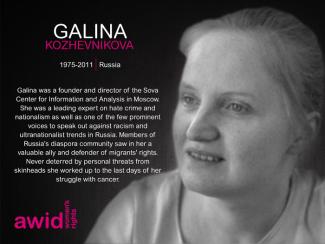
Galina Kozhevnikova
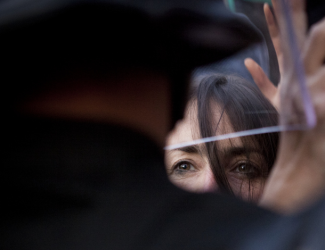
WHRDs are self-identified women and lesbian, bisexual, transgender, queer and intersex (LBTQI) people and others who defend rights and are subject to gender-specific risks and threats due to their human rights work and/or as a direct consequence of their gender identity or sexual orientation.
WHRDs are subject to systematic violence and discrimination due to their identities and unyielding struggles for rights, equality and justice.
The WHRD Program collaborates with international and regional partners as well as the AWID membership to raise awareness about these risks and threats, advocate for feminist and holistic measures of protection and safety, and actively promote a culture of self-care and collective well being in our movements.
WHRDs are exposed to the same types of risks that all other defenders who defend human rights, communities, and the environment face. However, they are also exposed to gender-based violence and gender-specific risks because they challenge existing gender norms within their communities and societies.
We work collaboratively with international and regional networks and our membership
We aim to contribute to a safer world for WHRDs, their families and communities. We believe that action for rights and justice should not put WHRDs at risk; it should be appreciated and celebrated.
Promoting collaboration and coordination among human rights and women’s rights organizations at the international level to strengthen responses concerning safety and wellbeing of WHRDs.
Supporting regional networks of WHRDs and their organizations, such as the Mesoamerican Initiative for WHRDs and the WHRD Middle East and North Africa Coalition, in promoting and strengthening collective action for protection - emphasizing the establishment of solidarity and protection networks, the promotion of self-care, and advocacy and mobilization for the safety of WHRDs;
Increasing the visibility and recognition of WHRDs and their struggles, as well as the risks that they encounter by documenting the attacks that they face, and researching, producing, and disseminating information on their struggles, strategies, and challenges:
Mobilizing urgent responses of international solidarity for WHRDs at risk through our international and regional networks, and our active membership.
Nos membres forment un réseau dynamique de personnes dans le monde entier. Ce sont des chercheur-euse-s, des universitaires, étudiant-e-s, éducateur-trice-s, militant-e-s, femmes et hommes d’affaires, des responsables politiques, des praticien-ne-s du développement, des bailleurs de fonds. Nos membres, de tous âges, font de l’AWID une association féministe mondiale unique.
Nous proposons divers types d’adhésions en fonction du niveau de revenus et selon que vous êtes une personne ou une organisation. À l’heure actuelle, nous comptons plus de 5 000 membres, individuel-lle-s et institutionel-lle-s, issu-e-s de 164 pays.
Nous collaborons aux plaidoyers sur des problématiques spécifiques ; nos membres votent à l’élection des membres de notre conseil d’administration et peuvent également participer à nos actions prioritaires par le truchement de webinaires, d’enquêtes, d’actions urgentes, pour ne citer que quelques exemples.
Nos membres institutionnel-le-s représentent des organisations qui souhaitent faire progresser la justice de genre et les droits humains des femmes. Il s’agit d’organisations de droits des femmes, de l’échelle locale à la scène mondiale, de réseaux communautaires, de grandes institutions internationales, de ministères gouvernementaux, de programmes universitaires, et bien plus encore. Quelque 63 % de nos membres proviennent des pays du Sud et 38 % ont moins de 30 ans.
سيقدم صندوق الوصول الخاص بنا عددًا محدودًا من المنح الدراسية لتمويل مشاركة النشطاء/ الناشطات الذين/ اللواتي لا يستطيعون القيام بذلك، وليس لديهم/ن علاقات مع الممولين/ات الذين/ اللواتي يمكنهم/ن تغطية مشاركتهم/ن. لذلك إذا كان لديك احتمالات أخرى، يرجى استكشافها. سنبذل قصارى جهدنا لتقديم أكبر عدد ممكن من المنح الدراسية، وسنشارك المزيد من المعلومات حول هذه العملية وكيفية التقديم لاحقًا في أوائل العام 2024.
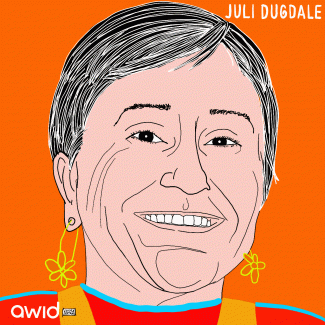
Juli Dugdale was an Australian feminist who practiced intergenerational leadership rooted in principles of feminism, inclusion and equality. She was a leader, peer and mentor for many women and especially young women around the world.
Juli was a dedicated staff member, volunteer and fervent advocate for young women’s leadership with the Young Women's Christian Association (YWCA) movement for over 30 years.
She offered a strong link between the Australian movement and the World YWCA Office. Her trust in the leadership capacity of young women led to a multi-year partnership with the Australian Department of Foreign Affairs and Trade and the creation of the Rise Up manual, a global guide for young women’s transformative leadership, launched in 2018.
Juli passed away in Geneva on 12 August 2019.
“For those who got to work with Juli, it was a privilege. For those who didn’t, be assured that her legacy continues in the work we do every day and in the mission of the YWCA movement.” - YWCA Australia
“Juli Dugdale will forever hold a deep place in many people's hearts in the YWCA movement, especially here in Aotearoa and across the Pacific. Juli had a special relationship with the Pacific and was an incredible supporter of the young women there. She was humble, gracious, loving, caring, dedicated, passionate and had a generous heart. She embodied the YWCA's vision of 'transformative leadership' with extraordinary vision and foresight, and helped empower generations of young women leaders around the world.” - YWCA New Zealand
A number of men who share our commitment to feminism and women’s human rights are members of AWID.
نعم من فضلك. لقد تغير العالم منذ عام 2021 ونحن ندعوك لتقديم مقترح يعكس واقعك وأولوياتك الحالية.
Facebook: @AWIDWomensRights
Instagram: @awidwomensrights
Twitter ES: @awid_es
LinkedIn: Association for Women's Rights in Development (AWID)
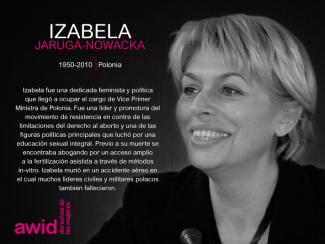
«No adhiero al concepto de “Tercer Mundo”. Hago películas para que las personas (no importa de qué raza o color sean) puedan entenderlas. Para mí, solamente existen explotadores y explotadxs, eso es todo. Hacer una película significa tomar una posición.» - Sarah Maldoror
La innovadora Sambizanga (1972), su «película revolucionaria», sigue la lucha de liberación anticolonial de lxs militantes de Angola y capta la perspectiva de una mujer en el momento histórico en que se encuentra.
«Para muchxs cineastas africanxs, el cine es una herramienta revolucionaria, una educación política para crear consciencia. Se inscribe en la evolución de un Tercer Cine, que se orienta a descolonizar el pensamiento y promover cambios radicales en la sociedad.» - Sarah Maldoror
A lo largo de su carrera, Sarah (junto con otrxs artistas africanxs y caribeñxs) cofundó, en 1956, la primera troupe de teatro negra de Francia. Realizó alrededor de cuarenta películas, incluidos importantes documentales que difundieron la vida y la obra de artistas negrxs, entre lxs cuales se encuentra su amigo y poeta, Aimé Césaire, quien le escribió:
«A Sarah Maldo
que, cámara en mano,
lucha contra la opresión, la alienación
y se planta de cara
frente a la estupidez humana.»
Sarah estaba también dedicada a lograr que las mujeres africanas se apropiaran más del proceso de filmación. En una entrevista, señaló:
«Las mujeres africanas deben estar en todos lados. Deben estar en las imágenes, detrás de la cámara, en la sala de edición, y participar en todas las etapas de la realización de una película. Ellas deben ser quienes hablen sobre sus problemas.»
Sarah dejó un legado formidable para que sea continuado.
Nacida el 19 de julio de 1929, Sarah falleció el 13 de abril de 2020 debido a complicaciones por el coronavirus.
Mira Sambizanga y lee una reseña de la película en un artículo del New York Times de 1973 (solo en ingles)
เราจับตาดูเรื่องนี้และความเสี่ยงอื่นๆอย่างระมัดระวัง และจะนำเสนอข้อมูลด้านสุขภาพและความปลอดภัยที่คลอบคลุมเมื่อมีการเปิดให้ลงทะเบียน เพื่อให้คุณสามารถตัดสินใจได้อย่างมีข้อมูล มากกว่านั้นการจัดประชุมแบบสองรูปแบบ(ออนไลน์และกายภาพ)ถูกออกแบบให้ให้เกิดการมีส่วนร่วมอย่างมีความหมายสำหรับผู้เข้าร่วมที่เลือกจะไม่เดินทาง หรือผู้เข้าร่วมที่ไม่สามารถเดินทางได้

María Digna Montero était une défenseuse Garifuna (d’origine africaine et autochtone) du droit à la terre et membre de l’Organisation fraternelle noire hondurienne (OFRANEH), une organisation communautaire oeuvrant à protéger les communautés Garifunas, leurs droits, leur culture, leurs ressources et leur territoire ancestraux.
María a également enseigné dans l'école locale et été membre du groupe de travail sur l'éducation bilingue interculturelle de l'OFRANEH.
Le 12 octobre 2019, jour de la Résistance autochtone, des inconnus ont tiré à plusieurs reprises sur María, alors qu’elle se trouvait dans l’arrière-cour de sa maison.
Elle est l'une des six défenseuses Garifunas à avoir été assassinées entre septembre et octobre 2019 et selon OFRANEH, ces crimes n’ont fait l’objet d’aucune enquête de la part des autorités. Dans une déclaration officielle, l'organisation a également souligné le lien entre la violence à l’encontre des dirigeants Garifunas et le développement des industries extractives qui exploitent les ressources naturelles de leurs communautés, affirmant que cette violence s’inscrivait dans une "stratégie d'intimidation et d'expulsion systématique" menée par l'État hondurien.
“La tension accrue et les risques croissants pour la sécurité et les droits humains des dirigeants des communautés et des territoires ancestraux sont le résultat de la dépossession, du déplacement et de la criminalisation des communautés et des mégaprojets d'extraction promus par l'État en collaboration avec les entreprises nationales et internationales". - Communiqué de l'OFRANEH, 12 octobre 2019
Nous vous conseillons de demander conseil à un-e avocat-e, de communiquer avec un refuge pour femmes ou un centre d’accueil près de chez vous.
Les HotPeachPages, une ressource en ligne, contiennent des liens vers les refuges pour femmes dans le monde entier. L’AWID ne peut garantir l’exactitude ou la qualité de ces listes, mais elles peuvent constituer un bon point de départ si vous ne connaissez aucune organisation près de chez vous.
Co-create the The 15th AWID International Forum in Bangkok, Thailand.