None On Record

Special Focus

AWID is an international, feminist, membership organisation committed to achieving gender equality, sustainable development and women’s human rights

Young Feminist Activism

Organizing creatively, facing an increasing threat

Young feminist activists play a critical role in women’s rights organizations and movements worldwide by bringing up new issues that feminists face today. Their strength, creativity and adaptability are vital to the sustainability of feminist organizing.

At the same time, they face specific impediments to their activism such as limited access to funding and support, lack of capacity-building opportunities, and a significant increase of attacks on young women human rights defenders. This creates a lack of visibility that makes more difficult their inclusion and effective participation within women’s rights movements.

A multigenerational approach

AWID’s young feminist activism program was created to make sure the voices of young women are heard and reflected in feminist discourse. We want to ensure that young feminists have better access to funding, capacity-building opportunities and international processes. In addition to supporting young feminists directly, we are also working with women’s rights activists of all ages on practical models and strategies for effective multigenerational organizing.

Our Actions

We want young feminist activists to play a role in decision-making affecting their rights by:

  • Fostering community and sharing information through the Young Feminist Wire. Recognizing the importance of online media for the work of young feminists, our team launched the Young Feminist Wire in May 2010 to share information, build capacity through online webinars and e-discussions, and encourage community building.

  • Researching and building knowledge on young feminist activism, to increase the visibility and impact of young feminist activism within and across women’s rights movements and other key actors such as donors.

  • Promoting more effective multigenerational organizing, exploring better ways to work together.

  • Supporting young feminists to engage in global development processes such as those within the United Nations

  • Collaboration across all of AWID’s priority areas, including the Forum, to ensure young feminists’ key contributions, perspectives, needs and activism are reflected in debates, policies and programs affecting them.

Related Content

AWID en 2014: Fortaleciendo la organización de las mujeres por sus derechos en todo el mundo

Background

Why this resource?

While active participants on the front lines of protests and uprisings in the Middle East and North Africa (MENA), women became invisible, absent from processes of formation of the new states, and excluded from decision-making roles, responsibilities, and positions in the aftermath of the uprisings. Except in rare cases, men dominated leadership positions in transitional structures, including the constitutional reform and electoral committees[i]. Subsequent elections brought very few women to parliamentary and ministerial positions.

Additionally, a strong and immediate backlash against women and women’s rights has clearly emerged in the aftermath. The rise of new religious fundamentalist groups with renewed patriarchal agendas aiming to obliterate previous gains of the women’s movements even in countries with longer histories of women’s rights, such as Tunisia, has been very alarming.

The varying contexts of governance and transition processes across the MENA countries presents an important opportunity for women human rights defenders to shape the future of these democracies. However, the lack of prioritization of women’s rights issues in the emerging transitions and the aforementioned backlash have posed a variety of complex challenges for the women’s movements. Faced with these enormous challenges and possibilities, women’s rights activists have been struggling to forge ahead a democratic future inclusive and only possible with women’s rights and equality. The particular historical and contextual legacies that impact women’s movements in each country continue to bear on the current capacities, strategies, and overall preparedness of the women’s movements to take on such a challenge. Burdened with daily human rights violations in one context, with lack of resources and tools in another, with organizational tensions in a third, in addition to the constant attacks on them as activists, women human rights defenders have voiced their desire to be more equipped with knowledge and tools to be effective and proactive in engaging with these fast-changing environments. Conceptual clarity and greater understanding of notions and practices of democratization, transitional justice tools and mechanisms, political governance and participation processes, international and local mechanisms, movement building strategies, constitutional reform possibilities, and secularization of public space and government are important steps to defining future strategic action.

It is clear that feminists and women’s rights activists cannot wait for women’s rights to be addressed after transitions – issues must be addressed as the new power configurations are forming. Experiences of earlier moments of transition, namely from colonial rule, have clearly demonstrated that women’s rights have to be inherently part of the transition movement towards a more just and equal society.

What is included?

This publication represents a research mapping of key resources, publications and materials on transitions to democracy and women’s rights in different countries of the world that have undergone such processes, such as: Indonesia, Chile, South Africa, Nepal, Mexico, Argentina, Poland, Ukraine, as well as within the Middle East and North Africa (MENA). It provides bibliographic information and short summaries of resources which succinctly identify the contextual changes and challenges facing women in those particular transitional moments, as well as clearly delineates the ways in which women’s rights activists sought to confront those challenges and what lessons were learned.

A key criterion in the selection process was the primacy of a women’s rights/feminist perspective; the few exceptions to this rule offer a unique and, we hope, useful, perspective on the issues that women’s rights organizations and activists face in the region.  The texts have been selected to provide a wide range of information, relevant to women human rights defenders working from the grassroots to the international level, across issues (including different case studies and examples), from different perspectives (international human rights bodies, academic institutions, NGO contributions, activists’ experiences, etc.), and at a wide range of levels of complexity, in order to respond to the needs of as many readers as possible.

The mapping clusters resources under six major categories:

  • Transitions to Democracy
  • Political Participation
  • Movement Building
  • Transitional Justice
  • Constitutional/Legal Reform
  • Responses to Fundamentalisms


[i]This and other context points are drawn from the report from Pre AWID Forum meeting on Women’s Rights in Transitions to Democracy: Achieving Rights, Resisting Backlash, collaboratively organized by AWID, the Equality Without Reservation Coalition, Global Fund for Women and Women’s Learning Partnership

Snippet - WITM FAQ - AR

الأسئلة الأكثر شيوعاً

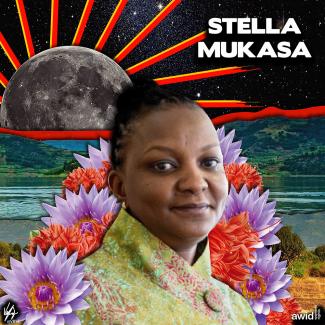
Stella Mukasa

Stella a commencé sa carrière au ministère du Genre et du Développement communautaire en Ouganda. Elle œuvrait auprès des décideurs-euses politiques, pour encourager des réformes législatives, dont celle de la Constitution ougandaise en 1995 qui a entériné certaines des réformes les plus progressives pour les femmes dans la région.

Elle était adorée dans la région tout entière pour ses incessants efforts pour la création et l’application de lois et politiques sensibles au genre. Elle a joué un rôle clé dans l’ébauche de la loi sur les violences domestiques en Ouganda. Elle a aussi contribué à une mobilisation importante en faveur de Constitutions sensibles au genre à la fois en Ouganda et au Rwanda.

Par son travail au Centre international de recherches sur les femmes (International Center for Research on Women, ICRW), elle a abordé les thématiques de la violence à l’égard des enfants. Stella s’est attachée à renforcer les organisations locales qui luttent contre les violences basées sur le genre. Conférencière en Droits genrés et loi à l’université Makerere, elle a également siégé aux conseils d’administration d’Akina Mama wa Afrika, ActionAid International Uganda et l’Open Society Initiative for Eastern Africa.


Stella Mukasa, Uganda

Snippet FEA Georgia's minimum wage (FR)

Le salaire minimum en Géorgie est l’un des plus bas dans le monde. Cette réalité touche surtout les femmes.

Non seulement le pays a un écart de rémunération important entre les genres, mais les femmes travaillent également des heures plus longues et moins réglementées avant de rentrer chez elles pour s'occuper des tâches ménagères et de leur famille. Il n'y a pas de congé de maternité, pas d'augmentation de salaire pour les heures supplémentaires, pas d'assurance-chômage, et pas de congé de maladie ou d'autre protection sociale. Sous la pression d’organisations occidentales, les partis politiques oligarchiques géorgiens ont mis en œuvre des réformes qui détruisent l'État-providence, augmentent les mesures d'austérité et aggravent l'exploitation des travailleur·euses, le tout au profit des grandes entreprises qui applaudissent le pays pour sa «facilité à faire des affaires». Les médias, cooptés par des intérêts privés et corporatifs, sont partiaux sur ces questions ou les réduisent au silence. L'organisation syndicale reste l'une des rares options pour lutter pour les droits humains fondamentaux et pour tenir l'État et les entreprises responsables des violations et persécutions quotidiennes et généralisées contre les travailleur·euses, et en particulier les femmes.

Source: Minimum-Wage et entretien avec Sopo Japaridze dans Open Democracy

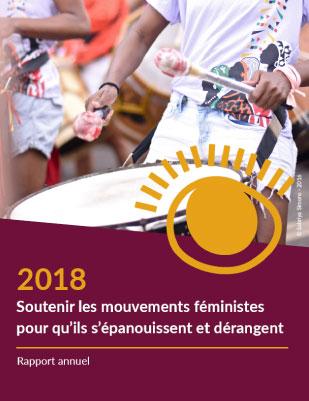
2018 : Soutenir les mouvements féministes pour qu'ils s'épanouïssent et dérangent

Ce rapport retrace et célèbre la première année du nouveau plan stratégique de l'AWID, et fait un retour en arrière sur nos premiers pas vers les objectifs visés, à savoir soutenir les mouvements féministes pour qu'ils prospèrent, remettent en question les programmes anti-droits et co-créent des réalités féministes.

Télécharger le rapport annuel 2018


Nous avons travaillé avec les féministes pour bousculer les programmes anti-droits et avons remporté d'importantes victoires au sein du système des Nations Unies avec l’inclusion, dans un certain nombre de résolutions, de termes novateurs sur la discrimination structurelle, les droits sexuels et les obligations des États. Oui, le système multilatéral est en crise et a besoin d'être sérieusement renforcé, mais ces victoires sont importantes car elles contribuent à la légitimité des revendications féministes et fournissent aux mouvements féministes davantage de points de pression et d'élan pour faire avancer nos programmes.

Nous avons essayé et testé différentes façons d’acquérir des connaissances avec les mouvements féministes à travers des webinaires, des podcasts et des discussions ‘en direct’. Nous avons développé des guides d’animation avec des éducateurs et éducatrices populaires pour récupérer des connaissances dans l'intérêt de la justice sociale et la justice de genre, même sur un sujet aussi opaque en apparence que les flux financiers illicites. Nous avons sollicité des blogs et des opinions sur la façon dont les groupes féministes se financent et se ressourcent, ainsi que fait la lumière sur les menaces qui pèsent sur nos systèmes de droits humains. 

Au sein de l’AWID, nous avons pratiqué le leadership partagé et tiré des leçons de cette approche, et narré le récit des épreuves et des tribulations propres à la codirection d’une organisation mondiale virtuelle. Nous n’avons pas de réponse définitive quant à la forme que revêt le leadership féministe, mais un an plus tard, nous avons conscience que cet engagement continu envers l’apprentissage et l’expérimentation nous a permis de continuer à bâtir une organisation à laquelle nous sommes tou-te-s ravi-e-s de contribuer. 

À l’heure où nous revenons sur l’année qui vient de s’écouler, nous souhaitons remercier tou-te-s nos ami-e-s et allié-e-s, collègues et camarades qui ont donné de leur temps et partagé avec nous leur richesse de savoir et de sagesse. Nous souhaitons remercier nos membres qui ont contribué à l’élaboration de notre plan stratégique et se sont joint-e-s à nous pour formuler des revendications féministes. Ce travail ne pourrait être réalisé sans vous. 

Télécharger le rapport annuel 2018

Twitter Test

أنا ناشط/ة فردي/ة ولا أعمل مع أي مجموعة، منظمة و\ أو حركة في الوقت الحالي. هل عليّ تعبئة الاستطلاع؟

كلا. نقدّر عملك لكننا لا نطلب من الأفراد تعبئة الاستطلاع في الوقت الحالي.

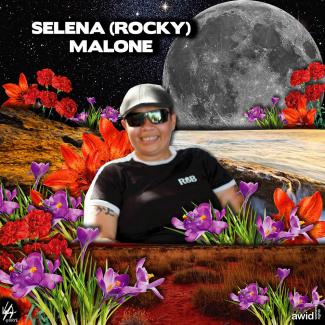
Selena “Rocky” Malone

Rocky showed inspirational leadership and direction in working with Lesbian, Gay, Bisexual, Transgender, Intersex, Queer, Brotherboy and Sistergirl (LGBTIQBBSG) youth at risk.

Rocky started her career with the Queensland Police Service as a Police Liaison Officer. Making a difference was important to her. She led an impressive career working with young LGBTIQBBSG people as the Manager of Open Doors Youth Service.

Rocky worked through complex situations with clients relating specifically to gender and sexual identity. She was a natural in this line of work - a strong community leader, a quiet achiever, a loyal friend, a compassionate nurturer, and a change maker. Rocky was a founding member of IndigiLez Leadership and Support Group.

In 2016 at the Supreme Court in Brisbane, Former High Court Justice Michael Kirby mentioned Rocky by name when praising the work of the LGBTI Legal Service over the years. Rocky fought extremely hard for the human rights of the LGBTIQBBSG community, pushed boundaries and created change in a respectful, loving way.  


Rocky Malone, Australia

Snippet FEA collaborator and allies Photo 5 (EN)

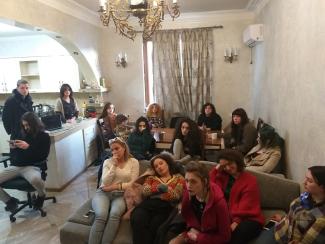
This photo represents a group of 15 workers sitting together in a living room with white walls. Some are sleeping, others are standing, talking with each other, or watching their phones.

2022: Transitions, Sources d’Inspiration et Pouvoir du Collectif

Notre plan stratégique, intitulé “ Les réalités féministes ”, est arrivé à son terme à la fin de l’année 2022. Au cours des cinq dernières années, ce cadre audacieux nous a incité·es à aller au-delà des avenirs féministes et à reconnaître les solutions féministes et les modes de vie qui existent déjà, ici et maintenant. Des réalités qu’il convient de mettre en avant, de célébrer et de populariser. Le projet de récits multimédias Les économies féministes que nous adorons et la plateforme de connaissances Our:Resource sur les modalités autonomes d’obtention de ressources pour l’activisme féministe sont deux exemples de ce travail visionnaire, toujours profondément collectif avec une grande diversité de mouvements féministes.

Téléchargez le rapport annuel 2022


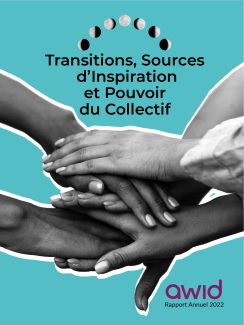
Couverture du rapport annuel 2022 de l'AWID. La couverture est bleu clair et montre un groupe de personnes se donnant la main. Au-dessus du texte « Transitions, Sources  d’Inspiration et Pouvoir du Collectif », il y a un demi-cercle formé de petites lunes, représentant les transitions.

L’année 2022 a été marquée par de nombreuses transitions pour l’AWID. 

En faisant le bilan de ces derniers mois, nous vous invitons à célébrer avec nous des aboutissements heureux et des débuts prometteurs. Les changements et les transitions sont parties prenantes de la vie et des mouvements, que nous voulons accueillir avec intention et soins.

Téléchargez le rapport annuel 2022

Funding Ideas

This page provides ideas and inspiration for how you can fund your participation at the 14th AWID International Forum. 

As you plan the activity you would like to do at the Forum, please also consider how you will fund your participation. Typical Costs include: accommodation, travel, visa, forum registration fees, etc.

It is important to note that this Forum will have many ‘open spaces’ and moments for movements to learn and exchange, but fewer formal sessions. (See “Ways to describe the Forum in your fundraising” below for language to use in your outreach.) 

Work with your current funders:

Reach out to your current donors first : Your best option is always a current funder that you have.

Make sure to do it in advance : We recommend contacting them by early 2020 at the latest. Many funders who support feminist organizations have some budget allocated for Forum travel. Others may be able to include it in renewal grants or through other travel funds.

If your group has funders, tell them that you want to attend the AWID Forum to learn, experience, exchange and network- even if your activity does not get selected for the final program. In order to be able to support your participation, your donors will need to know about it well in advance so tell them right away! (they are already deciding which funds they will distribute in 2020).

Seeking new funders:

If you do not currently have donor support or are not able to secure grants for Forum travel, consider reaching out to new donors. 

Deadlines and requirements vary by funder, and a  grant review process can take many months. If you’re considering applying for new grants, do so as soon as possible.

Creative inspiration:

Feminist movements have long gotten creative with funding our own activism. Here are some ideas that we have gathered to inspire alternative ways of fundraising:

  • Mobilize your community to support participation: fundraise with small contributions from members through community dinners, dance parties, and local shows, events and tours
  • Mobilize your networks by organizing giving circles and crowdsourcing using various online tools like gofundme, indiegogo, plumfund, or kickstarter
  • Cultivate local sources of income, including from individual donors and membership dues    
  • Consider co-funding through strategic partnerships with other community and social justice groups.

For more inspiration, see AWID’s ongoing series on autonomous resourcing, including specific ideas for conference raising participation funds. 

Access Fund:

AWID strives to make the Forum a truly global gathering with participation from diverse movements, regions and generations. To this end, AWID mobilizes resources for a limited Access Fund (AF) to assist Forum participants with the costs of attending the Forum.

AWID’s Access Fund will provide support to a limited number of Forum participants and session/activity facilitators. You can indicate in your application if you would like to apply to the AWID Access Fund. This is not guaranteed, and we strongly encourage you to seek alternative funding for your participation and travel to the Forum.

Even if you apply for the AWID Access Fund, we encourage you to continue to explore other options to fund your participation in the Forum.  Access Fund decisions will be confirmed by the end of June 2020. Please remember that these resources are very limited, and we will be unable to support all applicants. 


Ways to describe the Forum in your fundraising: 

As you reach out to funders or your own networks, here is some sample messaging that may be helpful. Feel free to adapt it in whatever way is useful for you!

The AWID Forum is a co-created feminist movement space that energizes participants in their own activism, and strengthens connections with others across multiple rights and justice movements. Participants get to draw from wells of hope, energy and radical imagination, as well as deepen shared analysis, learning, and build cross-movement solidarity to develop more integrated agendas and advance joint strategies.

Our organization is seeking funds to attend the Forum in order to connect with other activists and movements from around the world, strengthen our strategies, and share our work. We are inspired by past participants, who have described the power of this global feminist gathering:

“Over four days … voices weaved together into a global perspective on the state of gender equality. And when I say global, I mean simultaneous translation into seven languages kind of global  ....”

“It was reminding us that we are not alone. The Forum provided a means of translating collectivity into our movements. Whether across ideologies, identities or borders, our strength is in our vision and our support of one another.”

It is important to note that this Forum will have many ‘open spaces’ and moments for movements to learn and exchange, but fewer formal sessions. While many attendees will not be presenting in formal sessions, there will be invaluable space to learn, strategize, and experience feminist movements’ collective power in action.

Budget considerations: 

When calculating your costs and how much you need to raise, it is important to factor in costs that may come up. Here’s an example of key items to consider:

  • Airfare
  • Forum registration fees (please note that even if you are granted Access Funds by AWID, you will have to cover your registration fee yourself)
  • Visa costs
  • Travel health insurance
  • Local travel to and from the airport (taxis or other transportation)
  • Layover costs, such as hotels and meals if your plane travel requires a long layover
  • Accommodation, including giving yourself a day to recover on either end if you have traveled far
  • Technology, including WiFi access or fees for international communication as needed during travel (AWID will provide WiFi during the Forum)
  • Materials costs for any items (visuals, reports, artwork!) you want to bring, share, or exchange at the Forum 
  • Incidentals and/or per diems to cover food and other items that come up (all lunches and coffee/tea breaks, plus one dinner will be provided by AWID during Forum days) 
  • Accessibility, such as any additional support that may be important to make your travel more comfortable, safe, and secure

We look forward to seeing you at the Forum!


The Forum is a collaborative process

The AWID Forum will now take place 11-14 January 2021 in Taipei .

It is more than a four-day convening. It is one more stop on a movement strengthening journey around Feminist Realities that has already begun and will continue well beyond the Forum dates.

Join us on this journey!
Могу ли я заполнить опрос не на платформе KOBO, а поделиться с вами ответами по электронной почте?

Если у вас нет проблем с доступом к платформе, и/или вы не заполняете анкету на других языках, мы настоятельно рекомендуем вам использовать KOBO для стандартизированного сбора и анализа данных.

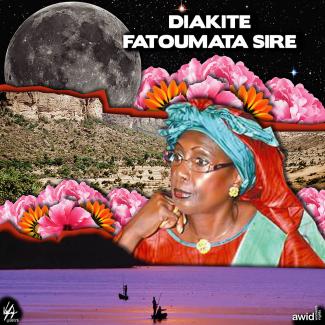
Diakite Fatoumata Sire

Diakite estuvo activamente comprometida con la defensa de las mujeres en la vida política y pública de Mali.

Trabajó para apoyar la capacitación de candidatas electorales y habló en contra de la práctica de la mutilación genital femenina (MGF). Fue una firme defensora de la salud y los derechos reproductivos.


Diakite Fatoumata Sire, Mali

Snippet FEA lines of work Against (ES)

Ilustración un libro rosa que dice "Derechos laborales" con una X roja

VIOLACIONES DE DERECHOS LABORALES

Inna Michaeli

Biography

Inna est une activiste et sociologue féministe queer comptant de nombreuses années d'engagement profond dans les luttes féministes et LGBTQI+, l'éducation politique et l'organisation par et pour les femmes migrantes, ainsi que la libération de la Palestine et la solidarité avec cette dernière. Inna a rejoint l'AWID en 2016 et occupé différents postes, dont celui de directrice des programmes plus récemment. Basée à Berlin, en Allemagne, elle a grandi à Haïfa, en Palestine/Israël, et est née à Saint-Pétersbourg en Russie. Elle porte ces territoires politiques et cette résistance au passé et au présent colonial dans son féminisme et sa solidarité transnationale.

Inna est l'auteure de « Women's Economic Empowerment: Feminism, Neoliberalism, and the State » (« L'autonomisation Économique des Femmes : Féminisme, Néolibéralisme et l’État », Palgrave Macmillan, 2022), un ouvrage basé sur une thèse qui lui a valu un doctorat de l'Université Humboldt de Berlin. En tant qu'universitaire, elle a enseigné des cours sur la mondialisation, la production de connaissances, l'identité et l'appartenance. Inna est titulaire d'un master en études culturelles de l'Université hébraïque de Jérusalem. Elle a été membre du conseil d'administration de +972 Advancement of Citizen Journalism, et l’est actuellement pour Jewish Voice for a Just Peace in the Middle East (en Allemagne). Auparavant, Inna a travaillé avec la Coalition des Femmes pour la Paix et est une passionnée de la mobilisation des ressources pour l'activisme populaire.

Position
Codirectrice Exécutive
Add to stories
Off