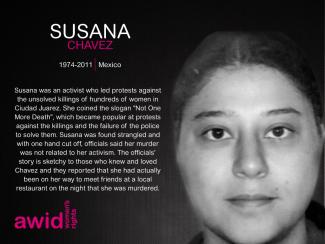
None On Record

Special Focus

AWID is an international, feminist, membership organisation committed to achieving gender equality, sustainable development and women’s human rights

Young Feminist Activism

Organizing creatively, facing an increasing threat

Young feminist activists play a critical role in women’s rights organizations and movements worldwide by bringing up new issues that feminists face today. Their strength, creativity and adaptability are vital to the sustainability of feminist organizing.

At the same time, they face specific impediments to their activism such as limited access to funding and support, lack of capacity-building opportunities, and a significant increase of attacks on young women human rights defenders. This creates a lack of visibility that makes more difficult their inclusion and effective participation within women’s rights movements.

A multigenerational approach

AWID’s young feminist activism program was created to make sure the voices of young women are heard and reflected in feminist discourse. We want to ensure that young feminists have better access to funding, capacity-building opportunities and international processes. In addition to supporting young feminists directly, we are also working with women’s rights activists of all ages on practical models and strategies for effective multigenerational organizing.

Our Actions

We want young feminist activists to play a role in decision-making affecting their rights by:

  • Fostering community and sharing information through the Young Feminist Wire. Recognizing the importance of online media for the work of young feminists, our team launched the Young Feminist Wire in May 2010 to share information, build capacity through online webinars and e-discussions, and encourage community building.

  • Researching and building knowledge on young feminist activism, to increase the visibility and impact of young feminist activism within and across women’s rights movements and other key actors such as donors.

  • Promoting more effective multigenerational organizing, exploring better ways to work together.

  • Supporting young feminists to engage in global development processes such as those within the United Nations

  • Collaboration across all of AWID’s priority areas, including the Forum, to ensure young feminists’ key contributions, perspectives, needs and activism are reflected in debates, policies and programs affecting them.

Related Content

Carmen Griffiths

Carmen dirigeait le Construction Resource and Development Collective et a joué un rôle de premier plan en faveur de la participation des femmes dans l’industrie de la construction en Jamaïque.

Elle a également œuvré à la préparation aux catastrophes de femmes rurales et urbaines. Elle a travaillé en étroite collaboration avec les femmes (en particulier les mères célibataires) pour leur apprendre à utiliser les sangles anti-ouragan ainsi que d’autres technologies pour sécuriser leur foyer. Elle a travaillé dans le domaine de l’eau et de l’assainissement et a été une ardente défenseure d’une gestion durable de l’environnement et du développement.

Elle faisait partie de la Commission Huairou et plaidait en faveur des femmes de la base sur des questions telles que le logement, l'énergie et les moyens de subsistance durables.


Carmen Griffiths, Jamaica

Snippet FEA Avellaneda, Gran Buenos Aires (FR)

Avellaneda, Gran Buenos Aires, Argentina

Coopérative Textile Nadia Echazú

TISSAGE

DES VIES

¿Cuánto tiempo permanecerá abierta la encuesta?

La encuesta permanecerá abierta hasta fines de agosto de 2024. Te pedimos que la respondas dentro de dicho lapso para asegurarte de que tus respuestas se incluyan en el análisis.

Quand pourrai-je m’inscrire au Forum ?

Nous vous fournirons cette information sous peu. Restez à l’écoute ! 


8. Finalize and format

Your comprehensive research product is now all organized and edited. You now want to ensure your findings are visually accessible and appealing to facilitate the dissemination.

In this section

Package your long report for public dissemination

Consider developing smaller products along with your long report.

As mentioned in the “Synthesize your research findings,” AWID often pulls smaller products from the lengthy research report. This allows for wider and easier distribution specialized for key audiences.

Always keep your targeted population in mind: who will read your report?

Examples of smaller products distilled from a larger report:

  • Infographics
  • Online gallery
  • An animation presenting your arguments

1. Think as your audience thinks

People are bombarded with information constantly. Your product will have to be visually compelling to maintain the interest of your audience. Again, having an idea of what you hope to accomplish and who you hope to reach, will allow the designer to create targeted products.

A lengthy written PDF report may seem the only way to present your research, but it could appear overwhelming to most people – especially online.

If you want to share your product with an online community, think about creating memes and infographics to use on social media, blogs and web platforms.

When deciding whether to create smaller products, consider dividing your results into several smaller products that you could share with targeted populations or at different times of the year to reactivate the interest on your product.

2. Work with a professional designer

If you have limited time and a little bit of budget, we recommend hiring a design firm.

It can be tempting for economic reasons to use in-house staff to package your report. However, a professional graphic designer can make a huge difference on how your final product looks and thus on how much impact it will have!

The designer (in-house or hired) must be able to:

  • Show you samples of their previous work that is similar to what you seek.

  • Provide you clear advice on how to present your research based on the content you provide and the audience you are targeting.

  • Suggest additional or different pieces to package your product.

What the designer will need from you:

  • A general idea on what you would like the lengthy report to highlight through visuals and graphics (what are the most important pieces of information, the key findings, for example) and some ideas on the types of smaller products you want to create (brochure, an infographic, a series of viral memes, for example). If possible, show the designer examples of similar documents developed by other organizations.
  • Your budget and time frame.
  • Your organization’s visual guidelines if you have any (logo, official colours, fonts, etc...).
  • A few photos copyright free or access to your photo bank if you have one.
  • Key visuals that need to be included – graphs, tables and other visual graphics drawn from your research.

The designer is a graphic expert. S/he is not necessarily familiar with women’s issues and does not know the results of your research, especially if you hire an external firm.

Communicate what elements of this report is important to you and who is your target. The designer will propose a way to highlight these elements and make the whole piece appealing to your users.

3. Make sure it's consistent

While creating a set of smaller information products, do not forget to link them all together:

  • A shorter version of the report that focuses only on your final results and recommendations should present a link to the final, full report
  • A visually compelling infographic that sends a message on the state of funding for your particular research can link to your website and the related section of the full report. It should be associated with a call to share on social media.
  • A short animation video that uses the data, findings and recommendations from your report should link back to your organization website and social media
  • A series of viral memes that can be distributed online should link back to your report, infographic, shorter report, etc.

It is also important to keep the research staff involved, so they can ensure any offshoot products stay true to the actual findings of the research.

Back to top


Control the quality of the translations

After the design and packaging of the final research report is complete, if any of the wording of content was changed, be sure to re-send to translators.

If you create smaller products, once designed and packaged, you will also need to get the copy translated for those pieces. The translations should be clear enough so the designer can apply to the design, even if she/he does not speak the language.

Once translated, make sure to have your design proofread by a native speaker before sharing it!

Back to top


Previous step

7. Synthesize your research findings

Next step

9. Advocate and tell the world


Estimated time:

• 2-3 months

People needed:

• 1 or more research person(s)
• 1 or more editor
• Design staff or hiring design firm
• Translator(s), if necessary

Resources needed:

• List of online spaces for dissemination


Previous step

7. Synthesize your research findings

Next step

9. Advocate and tell the world


Ready to Go? Worksheet

Download the toolkit in PDF

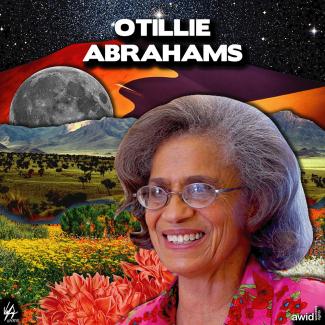
Ottilie Abrahams

Ottilie was a Namibian feminist activist, educator and politician.

Ottilie was one of the founders of the South West African People's Organisation (SWAPO), the Yu Chi Chan Club (an armed revolutionary group); and the South West African National Liberation Front (SWANLIF). She was also a founder of the Namibian Women’s Association and Girl Child Project.

Throughout her life, Ottilie argued for the right to argue, think, contest, and demand. She mobilized women, organized students and teachers and criticized other comrades for their elitism and their corruption.

Ottilie worked ferociously to dismantle patriarchy, and to create a concrete transformative, liberatory, feminist participatory democracy.

Ottilie often said: “I will rest the day I die.”


Ottilie Abrahams, Namibia

Snippet FEA 1 of 3 trans and travesti people (EN)

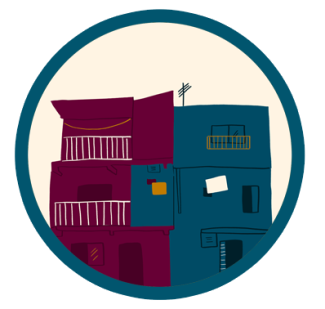
This is an illustration that depicts a burgundy building next to a duck blue building

1 of 3 trans and travesti people in Argentina live in a poor household

Snippet - Intro WITM - PT

Com base na nossa história de 20 anos de mobilização de mais fundos de melhor qualidade para a mudança social liderada por feministas, a AWID convida a participar da nova edição da nossa pesquisa principal:

"Onde está o dinheiro para a organização feminista?"

(WITM)

PARTICIPE NO INQUÉRITO!Veja o tutorial

Please select your language in the upper right corner of the page.

Faut-il être membre de l’AWID pour participer au Forum ?

Non, vous n’avez pas besoin d’être membre de l’AWID pour participer, mais les membres de l’AWID bénéficient d’une réduction sur les frais d’inscription ainsi qu’un certain nombre d’autres avantages.

Apprenez-en davantage sur la façon de devenir membre de l’AWID

Nuestra visión: La justicia económica en un mundo feminista

En nuestra lucha por la justicia de género, económica, social y ambiental, en la paz, lxs feministas sabemos que no existe una sola receta para el éxito sino una gama de posibilidades que pueden y hacen que sucedan los cambios.


El menú de opciones es tan diverso como lo son nuestros movimientos y las comunidades en las que vivimos y luchamos.

Antes de atrevernos a presentar algunas de las formas en que lxs feministas nos imaginamos un mundo diferente, aquí están los principios que sostienen nuestras propuestas:

1. Desarrollo autodeterminado desde lo local hasta lo global

Creemos que no existe un modelo único aplicable a todxs y que todxs tienen derecho a reivindicar la construcción de ese otro mundo posible, como lo expresa el lema del Fondo Mundial..

Esto incluye el derecho a participar en la gobernabilidad democrática y de influir sobre el propio futuro, en el ámbito político, social y cultural.

La autodeterminación económica permite que los pueblos controlen sus recursos naturales y los utilicen de manera colectiva o para los fines que ellos mismos decidan. Además, la autonomía económica de las mujeres es fundamental para mitigar la naturaleza a menudo cíclica de la pobreza y la falta de educación, seguridad y protección.

2. Los derechos, la igualdad sustantiva y la justicia ocupan un lugar central en la economía

El principio de la igualdad sustantiva o de facto forma parte de la Convención sobre la Eliminación de Todas las Formas de Discriminación contra las Mujeres (CEDAW) y de otros instrumentos internacionales de derechos humanos. Es fundamental para el desarrollo y para lograr una economía justa ya que afirma que todos los seres humanos nacen libres e iguales.

La no discriminación forma parte intrínsecamente del principio de igualdad que garantiza que a nadie se le nieguen sus derechos por factores como la raza, el género, el idioma, la religión, la orientación sexual, la identidad de género, las opiniones políticas o de otra clase, el origen nacional o social, la propiedad o el nacimiento.

La dignidad intrínseca de todas las personas sin distinción alguna debe ser afirmada y respetada. Si bien los Estados tienen la responsabilidad de garantizar el uso de los máximos recursos de que disponen para la realización de los derechos humanos, la reivindicación de los derechos y la dignidad configura sobre todo un espacio clave para las luchas de la sociedad civil y la movilización popular.

3. Distribución justa para todxs, sin monopolización (el principio de la anticodicia)

Este principio, que se ejerce mediante esfuerzos organizados para transformar instituciones injustas, guía la recuperación del equilibrio entre «participación» (entrada) y «distribución» (salida) cuando se ha violado cualquiera de esos dos principios.

Implica ponerle un límite a toda acumulación monopólica de capital y otros abusos de la propiedad. Este concepto se apoya en un modelo económico que gira en torno a la ecuanimidad y la justicia.

4. La solidaridad entre feministas y entre movimientos es fundamental

Para que se produzcan cambios, necesitamos redes feministas fuertes y diversas. Necesitamos movimientos que construyan solidaridad desde lo personal hacia lo político, desde lo local a lo global, y viceversa.

La construcción de poder colectivo a través de los movimientos sociales ayuda a convertir la lucha por los derechos humanos, la igualdad y la justicia en una fuerza política para el cambio que no puede ser ignorada.

 «Únicamente los movimientos pueden crear cambios sostenidos a niveles que las políticas y las leyes solas no pueden alcanzar»


Para leer más sobre este tema, consulta Batliwala, S: 2012 «Cambiando el mundo: Conceptos y prácticas de los movimientos de mujeres», 2da edición. AWID.


Ver también

Las 5 grandes amenazas

¿Cómo se originó este proyecto?
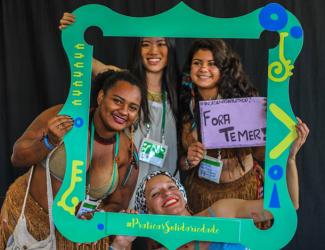
Mary Assaad

Experta en desarrollo social y antropóloga de formación, Mary fue conocida como pionera en la batalla contra la mutilación genital femenina (MGF).

Nacida en 1922 en El Cairo, el trabajo de Mary en el campo del desarrollo comenzó tempranamente, cuando se unió a la Asociación Cristiana de Mujeres Jóvenes (YWCA, por sus siglas en inglés). Fue integrante del Consejo Mundial de Iglesias y se comprometió cada vez más con la cuestión de la salud de las mujeres. Su larga lucha contra la MGF rindió frutos en 2008, cuando Egipto finalmente penalizó este tipo de prácticas.

Se la recuerda como mentora de numerosxs feministas y activistas egipcixs.


Mary Assad, Egypt

Snippet FEA Trans and Travesti people (ES)

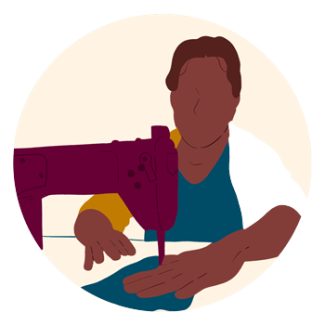
This image represents a faceless person with short dark hair, and dark skin, with a navy blue shirt, and yellow sweater, working behind a burgundy sewing machine on a navy blue piece of fabric

EL CUPO LABORAL TRANS
no está siendo respetado por las empresas

Snippet - WITM To make - AR

لجعل الواقع المركّب لتمويل الأشكال المختلفة من التنظيم النسوي، مرئي

Ma question ne trouve toujours pas de réponse dans cette liste

Pour toute question sur le Forum, merci de nous contacter via notre formulaire de contact en choisissant « 14e Forum de l'AWID » comme sujet de votre message.

Contactez-nous

Contester le modèle de croissance économique

Le contexte

Contestant la prémisse que l'économie d'un pays doit toujours «grandir ou mourir», les propositions de décroissance démystifient le rôle central d’une croissance mesurée par l'augmentation du produit intérieur brut (PIB).

Définition

Le modèle de la décroissance propose une transition vers des niveaux de production et de consommation plus faibles et durables. En substance, il s’agit de restreindre l’espace économique pour laisser plus de latitude à la coopération humaine et aux écosystèmes.

La proposition prévoit ce qui suit :

  • Réduire la production superflue, consommatrice de grandes quantités de ressources et d'énergie, qui génère des émissions destructrices, en particulier dans les pays du Nord (par exemple l’industrie automobile et l’industrie militaire).
  • Réorienter les investissements vers le secteur des services de soins, des infrastructures sociales et de la restauration de l'environnement.

Perspective féministe

Les perspectives féministes sur la théorie et la pratique de la décroissance soutiennent qu'il est également nécessaire de redéfinir et de reconnaître la valeur du travail rémunéré et non rémunéré, sur le marché comme dans le secteur des soins aux personnes. Ceci contribuerait à surmonter les stéréotypes de genre traditionnels, les écarts de salaires en vigueur et les inégalités de revenus qui dévalorisent le travail réalisé dans le domaine des soins.


Pour en savoir plus sur cette proposition :

Mridula Prasad

Mridula était une ardente défenseure de la promotion de la santé des femmes à une époque où le sujet de la santé sexuelle et reproductive des femmes était considéré comme tabou aux Fidji.

C’est elle qui a guidé les premiers travaux du Fiji Women’s Rights Movement sur les droits sexuels et reproductifs. En septembre 1999, le Fonds des Nations Unies pour la population lui a décerné un prix régional pour sa contribution en matière de santé et de droits sexuels et reproductifs. Mridula était une militante affirmée, dévouée et infatigable, passionnée par la santé et l’autonomisation des femmes.

Membre reconnue du mouvement féministe et des mouvements de femmes aux Îles Fidji, nous nous souviendrons toujours de la contribution de Mridula. Elle est décédée de causes naturelles en 2017.

Mridula Prasad, Fiji

Snippet FEA Brisa Escobar Quote (FR)

« Mes rêves et mes objectifs ont toujours été les mêmes que ceux de Lohana Berkins : que la coopérative continue à exister et non à fermer. Continuez à offrir cet endroit à nos collègues travesti, à leur donner du travail et un lieu de soutien»

Brisa Escobar,
présidente de la Coopérative