UN Women / Flickr (CC BY-NC-ND 2.0)
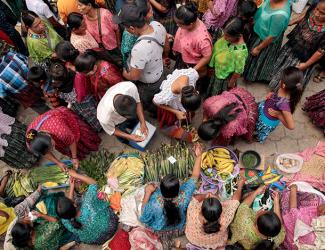
Guatemala - Rural Women Diversify Incomes and Build Resilience
Left
Half
Left

Priority Areas

Supporting feminist, women’s rights and gender justice movements to thrive, to be a driving force in challenging systems of oppression, and to co-create feminist realities.

Building Feminist Economies

Building Feminist Economies is about creating a world with clean air to breath and water to drink, with meaningful labour and care for ourselves and our communities, where we can all enjoy our economic, sexual and political autonomy.


In the world we live in today, the economy continues to rely on women’s unpaid and undervalued care work for the profit of others. The pursuit of “growth” only expands extractivism - a model of development based on massive extraction and exploitation of natural resources that keeps destroying people and planet while concentrating wealth in the hands of global elites. Meanwhile, access to healthcare, education, a decent wage and social security is becoming a privilege to few. This economic model sits upon white supremacy, colonialism and patriarchy.

Adopting solely a “women’s economic empowerment approach” is merely to integrate women deeper into this system. It may be a temporary means of survival. We need to plant the seeds to make another world possible while we tear down the walls of the existing one.


We believe in the ability of feminist movements to work for change with broad alliances across social movements. By amplifying feminist proposals and visions, we aim to build new paradigms of just economies.

Our approach must be interconnected and intersectional, because sexual and bodily autonomy will not be possible until each and every one of us enjoys economic rights and independence. We aim to work with those who resist and counter the global rise of the conservative right and religious fundamentalisms as no just economy is possible until we shake the foundations of the current system.


Our Actions

Our work challenges the system from within and exposes its fundamental injustices:

  • Advance feminist agendas: We counter corporate power and impunity for human rights abuses by working with allies to ensure that we put forward feminist, women’s rights and gender justice perspectives in policy spaces. For example, learn more about our work on the future international legally binding instrument on “transnational corporations and other business enterprises with respect to human rights” at the United Nations Human Rights Council.

  • Mobilize solidarity actions: We work to strengthen the links between feminist and tax justice movements, including reclaiming the public resources lost through illicit financial flows (IFFs) to ensure social and gender justice.

  • Build knowledge: We provide women human rights defenders (WHRDs) with strategic information vital to challenge corporate power and extractivism. We will contribute to build the knowledge about local and global financing and investment mechanisms fuelling extractivism.

  • Create and amplify alternatives: We engage and mobilize our members and movements in visioning feminist economies and sharing feminist knowledges, practices and agendas for economic justice.


“The corporate revolution will collapse if we refuse to buy what they are selling – their ideas, their version of history, their wars, their weapons, their notion of inevitability. Another world is not only possible, she is on her way. On a quiet day, I can hear her breathing”.

Arundhati Roy, War Talk

Related Content

Where does AWID get its funding?

AWID’s work is made possible through the financial support of a wide range of donors including multilateral and bilateral agencies, private foundations and women’s funds.

View a list of our current donors

Snippet - COP30 - Feminist Economic Alternatives Brief - EN

📖 Feminist Economic Alternatives Brief

A tool for feminist activists at COP30 fighting for transformative, equitable and community-centred solutions to address the climate crisis.

Download the Brief

Também disponível em português

I am a women human rights defender (WHRD) and am currently under threat. Where can I go for help?

Women Human Rights Defenders

WHRDs are self-identified women and lesbian, bisexual, transgender, queer and intersex (LBTQI) people and others who defend rights and are subject to gender-specific risks and threats due to their human rights work and/or as a direct consequence of their gender identity or sexual orientation.

WHRDs are subject to systematic violence and discrimination due to their identities and unyielding struggles for rights, equality and justice.

The WHRD Program collaborates with international and regional partners as well as the AWID membership to raise awareness about these risks and threats, advocate for feminist and holistic measures of protection and safety, and actively promote a culture of self-care and collective well being in our movements.


Risks and threats targeting WHRDs  

WHRDs are exposed to the same types of risks that all other defenders who defend human rights, communities, and the environment face. However, they are also exposed to gender-based violence and gender-specific risks because they challenge existing gender norms within their communities and societies.

By defending rights, WHRDs are at risk of:

  • Physical assault and death
  • Intimidation and harassment, including in online spaces
  • Judicial harassment and criminalization
  • Burnout

A collaborative, holistic approach to safety

We work collaboratively with international and regional networks and our membership

  • to raise awareness about human rights abuses and violations against WHRDs and the systemic violence and discrimination they experience
  • to strengthen protection mechanisms and ensure more effective and timely responses to WHRDs at risk

We work to promote a holistic approach to protection which includes:

  • emphasizing the importance of self-care and collective well being, and recognizing that what care and wellbeing mean may differ across cultures
  • documenting the violations targeting WHRDs using a feminist intersectional perspective;
  • promoting the social recognition and celebration of the work and resilience of WHRDs ; and
  • building civic spaces that are conducive to dismantling structural inequalities without restrictions or obstacles

Our Actions

We aim to contribute to a safer world for WHRDs, their families and communities. We believe that action for rights and justice should not put WHRDs at risk; it should be appreciated and celebrated.

  • Promoting collaboration and coordination among human rights and women’s rights organizations at the international level to  strengthen  responses concerning safety and wellbeing of WHRDs.

  • Supporting regional networks of WHRDs and their organizations, such as the Mesoamerican Initiative for WHRDs and the WHRD Middle East and North Africa  Coalition, in promoting and strengthening collective action for protection - emphasizing the establishment of solidarity and protection networks, the promotion of self-care, and advocacy and mobilization for the safety of WHRDs;

  • Increasing the visibility and recognition of  WHRDs and their struggles, as well as the risks that they encounter by documenting the attacks that they face, and researching, producing, and disseminating information on their struggles, strategies, and challenges:

  • Mobilizing urgent responses of international solidarity for WHRDs at risk through our international and regional networks, and our active membership.

Related Content

Astitva Trust defends the rights of sexual minorities groups

Astitva Trust defends the rights of sexual minorities groups

In April 2014, the Astitva Trust along with its President Laxmi Narayan Tripathi, a prominent transgender rights activist, petitioned in support of an Indian Supreme Court judgement that would recognize a third gender. It was a landmark ruling, the Court granting all constitutional rights to transgender persons. "It is the right of every human being to choose their gender,” the Court stated.


Yet even though legally transgenders are equal citizens, they still face extreme discrimination in mainstream society. The Astitva Trust, a community-based organisation of sexual minorities (mainly hijras[1]), aims to eradicate stigma and discrimination of LGBTQ* and especially the transgender community. The organisation works with sexual minority groups, campaigning for their rights, promoting their health and general well-being, helping to improve their living standards and quality of life.
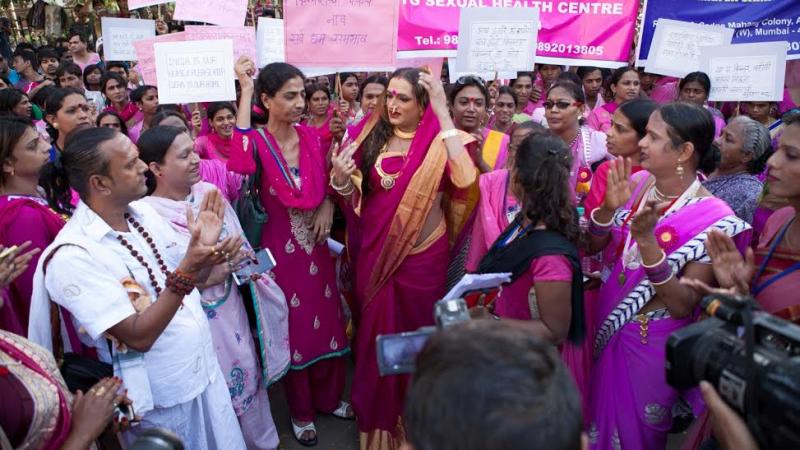
Some of the objectives of the Trust include raising awareness and increasing knowledge of HIV and AIDS and other sexually transmitted infections among sexual minorities; promoting safer sex; and increasing access to community friendly sexual health services. Astitva has so far registered 4652 transgender persons and has networked with 56 transgender organisations in India, providing support in numerous areas.

The organisation is a co-founder and part of the governing board of the Integrated Network for Sexual Minorities, a founder and working group member of Maharashtra Transgender Welfare Board, and a member of both the Asia - Pacific Transgender Network and the Asia Pacific Network of Sex Workers.

In April 2015, Astitva (along with Member of Parliament Trichy Shiva) pushed for a historical unanimous passing of the Rights of Transgender Persons Bill in Rajya Sabha,[2] calling for equal rights of transgender people. Next step is to have it passed in Lok Sabha[3] so the Bill can become law.


Listen to Laxmi Narayan Tripathi TEDx Talk


[1] Hijra is a term used particularly in India to refer to a transgender individual
[2] Upper House of Parliament of India
[3] Lower House of Parliament of India
Region
Asia
South Asia
Source
AWID

Astitva Trust defiende los derechos de los grupos de las minorías sexuales

Astitva Trust defiende los derechos de los grupos de las minorías sexuales

En abril de 2014, el Astitva Trust y su Presidenta Laxmi Narayan Tripathi, destacada activista por los derechos de las personas trans*, presentaron una petición apoyando el reconocimiento de un tercer género por parte de la Corte Suprema de la India. Fue una decisión histórica y a través de ella la Corte reconoció todos los derechos constitucionales a las personas trans*, afirmando que: «Todo ser humano tiene derecho a elegir su género».


Pero aunque para la ley las personas trans* son ciudadanas en pie de igualdad, todavía se enfrentan a una discriminación social extrema. Astitva Trust es una organización comunitaria de minorías sexuales (en su mayoría hijras[1]) cuyo objetivo es erradicar el estima y la discriminación contra las personas LGBTQ* y particularmente contra la comunidad trans*. Trabaja con grupos de las minorías sexuales, defiende sus derechos, promueve su salud y su bienestar integral, y ayuda a mejorar su calidad y sus estándares de vida.

Entre los objetivos de Astitva se cuentan generar conciencia y difundir conocimientos acerca del VIH, el SIDA y otras enfermedades de transmisión sexual entre las minorías sexuales, promover el sexo más seguro, e incrementar el acceso a servicios de salud sexual comunitaria amigables. Hasta el momento, hay 4652 personas trans* registradas en Astitva y la organización mantiene contacto con 56 organizaciones trans* de la India, a las que apoya en numerosos aspectos.

Astitva es una de las fundadoras de la Integrated Network for Sexual Minorities [Red Integrada de Minorías Sexuales] cuyo consejo directivo integra; también es fundadora del Maharashtra Transgender Welfare Board [Comité para el Bienestar de la Población Trans* en Maharashtra], e integrante de su grupo de trabajo; y forma parte de la Asia - Pacific Transgender Network [Red Trans* de Asia y el Pacífico], y de la Asia Pacific Network of Sex Workers [Red de Trabajadoras/es Sexuales de Asia y el Pacífico].

En abril de 2015 y junto con el parlamentario Trichy Shiva, Astitva trabajó para lograr una histórica aprobación unánime del Proyecto de Ley por los Derechos de las Personas Trans* en la Rajya Sabha,[2] que reconoce la igualdad de derechos para las personas tras*. El paso siguiente es lograr su aprobación por parte de la Lok Sabha[3], para que se convierta en ley.


Escucha la charla de TEDx de Laxmi Narayan Tripathi (en inglés)


[1] Hijra es un término que se utiliza particularmente en la India para referirse a una persona trans*
[2] Cámara Alta del Parlamento de la India
[3] Cámara Baja del Parlamento de la India
Source
AWID

Astitva Trust travaille avec des groupes représentant diverses minorités sexuelles

Astitva Trust travaille avec des groupes représentant diverses minorités sexuelles

En avril 2014, l’Astitva Trust et son présidente Laxmi Narayan Tripathi, une éminente activiste des droits des personnes transgenres, ont lancé une pétition pour soutenir un jugement rendu par la Cour suprême de l’Inde qui reconnaissait l’existence d’un troisième genre. Cette décision est historique,  elle prouve que la Cour a accordé l’intégralité des droits constitutionnels à des personnes transgenres. Par ce décret, la Cour affirme ainsi que « tout être humain a le droit de choisir son genre ».


Si la loi leur confère le même statut qu’aux autres citoyen-ne-s, les personnes transgenres sont encore confrontées à une discrimination extrêmement forte dans la société indienne dominante. L’Astitva Trust, une organisation communautaire qui rassemble différentes minorités sexuelles (principalement des hijras[1]), vise à supprimer la stigmatisation et la discrimination qui frappe les LGBTQ* et tout particulièrement la communauté transgenre. L’organisation travaille avec des groupes représentant diverses minorités sexuelles pour mener des campagnes en faveur de leurs droits, de leur santé et de leur bien-être au sens large. Elle contribue également à l’amélioration de la qualité de leur niveau de vie.

Parmi les objectifs du Trust figurent notamment la sensibilisation des minorités sexuelles au VIH/SIDA et aux autres maladies sexuellement transmissibles et la diffusion des connaissances sur ce thème, la promotion de pratiques sexuelles plus sûres et la transformation des services de santé sexuelle pour la communauté en services plus accueillants. Pour l’instant, Astitva compte 4 652 membres transgenres et travaille en réseau avec 56 organisations transgenres indiennes qu’elle aide dans de nombreux domaines.

L’organisation est co-fondatrice et membre du conseil d’administration de l’Integrated Network for Sexual Minorities (réseau intégré pour les minorités sexuelles). Elle a également fondé le Maharashtra Transgender Welfare Board (conseil de la protection sociale des personnes transgenres du Maharashtra), auquel elle participe au titre de membre du groupe de travail. Enfin, le Trust est membre du Réseau transgenre d'Asie-Pacifique (site en anglais) et du Réseau des professionnel-le-s du sexe d’Asie-Pacifique (site en anglais).

En avril 2015, Astitva (avec l’appui du parlementaire Trichy Shiva) a plaidé en faveur de l’adoption historique et unanime du « Rights of Transgender Persons Bill » (« projet de loi sur les droits des personnes transgenres ») à la Rajya Sabha[2], appelant ainsi à l’égalité des droits des personnes transgenres. L’étape suivante consiste désormais à faire adopter ce projet de loi par la Lok Sabha[3] pour qu’il devienne une véritable loi.


Écouter le discours de Laxmi Narayan Tripathi sur TEDx (en anglais)


[1] Le terme Hijra est utilisé, particulièrement en Inde, pour faire référence aux personnes transgenres
[2] La Chambre haute du Parlement indien
[3] La Chambre basse du Parlement indien
Region
Asie
Asie du Sud
Source
AWID

July 2015

Women's Forum on Financing for Gender Equality

  • The Forum took place on 10 July 2015 in Addis Ababa and convened feminists, grassroots women, gender advocates, academics and representatives of women’s rights organizations/networks with specific inputs by UN representatives and other policy makers.
  • The objectives of the Women's Forum were to: share information on the state of play in the latest FfD negotiations; jointly analyze the FfD panorama and follow-up; build a common women’s rights positioning; and strategize on how to meaningfully and substantively engage from a feminist perspective at the Addis FfD Conference.
  • The Women's Forum was organized by the Women's Working Group on FfD, in collaboration with FEMNET, African Women's Development Fund (AWDF) and the Post 2015 Women's Coalition with support from UN Women.
  • Read the Women's Working Group reaction to the Addis Ababa Action Agenda

CSO FfD Forum

  • The CSO FfD Forum took place in Addis Ababa on 11-12 July 2015 and aimed to: inform participating CSOs on the state of play of the official process and coordinate civil society participation in the 3rd FfD Conference; develop a collective CSO Forum Declaration as well as the CSO messages for the FfD Conference Roundtables, the CSO FfD Group-led side events and any other opportunities that might emerge; and plan and organize future areas of CSO engagement on Financing for Development, beyond the 3rd FfD Conference.
  • Read the Declaration from the Addis Ababa Civil Society Forum on Financing for Development
  • For more information, please visit the CSO FfD Group's website or contact the Addis Ababa CSO Coordinating Group (addiscoordinatinggroup@gmail.com).

The Third UN International Conference on Financing for Development

  • The third Conference on Financing For Development took place in Addis Ababa, Ethiopia, from 13-16 July 2015 and focused on: assessing the progress made in the implementation of the 2002 Monterrey Consensus and the 2008 Doha Declaration; addressing new and emerging issues, including in the context of the recent multilateral efforts to promote international development cooperation. Taking into account: the current evolving development cooperation landscape; the interrelationship of all sources of development finance; the synergies between financing objectives across the three dimensions of sustainable development (economic, social and environmental); and the need to support the United Nations development agenda beyond 2015; and reinvigorating and strengthening the financing for development follow-up process.
  • The Addis Ababa Action Agenda was adopted on 15 July 2015 by Heads of State, Governments and High Representatives at the UN.
  • The feeling however from developing countries, CSOs and more specifically women's organisations was that the Addis Ababa Action Agenda failed to meet the target. The Women's Working Group expressed its strong disappointment and demanded structural changes in the global economic governance and development architecture. Read their reaction to the outcome document. Hundreds of civil society organizations and networks from around the world also expressed deep concerns and reservations. Read their response to the outcome document.

I can’t attend the Forum in person, how else can I participate?

More than just an event, the AWID Forum is part of our Feminist Realities Journey, with many spaces to come together, online and offline, for sharing, discussing, strategizing and co-creating feminist realities.

Learn more about the Feminist Realities Journey and everything that will happen before the Forum. Join our mailing list to stay tuned for Post-Forum announcements!

We are exploring options to participate virtually at the Forum and we will share information when we know what we can offer.

Remembering: A Tribute to WHRDs no longer with us

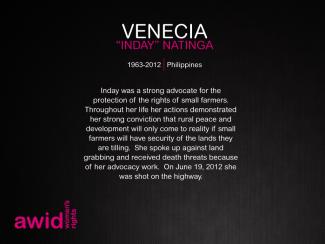
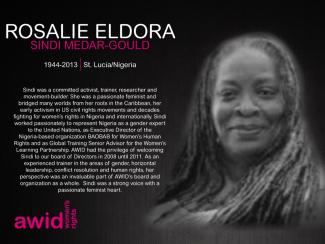
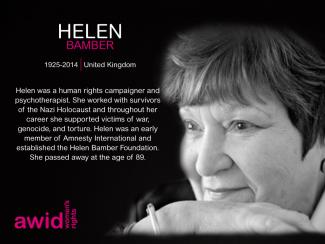
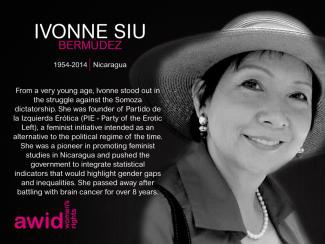
AWID honors feminists and Women Human Rights Defenders (WHRDs) who have died and whose contributions to the advancement of human rights are very much missed.


Celebrating Activists and WHRDs

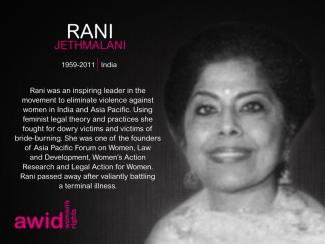
AWID’s WHRD Tribute is a photo exhibition featuring feminist, women’s rights and social justice activists from around the world who are no longer with us. 

The Tribute was first launched in 2012, at AWID’s 12th International Forum, in Turkey. It took shape with a physical exhibit of portraits and biographies of feminists and activists who passed away. The initiative was described by Forum participants as being a unique, moving and energizing way to commemorate our collective history.

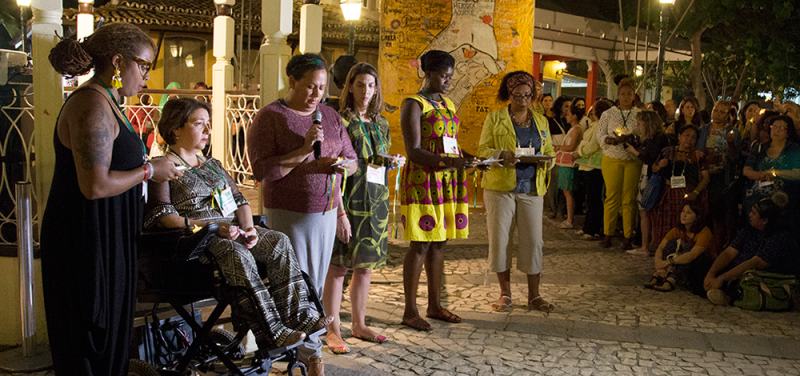
At the 13th International Forum in Brazil, we honored activists and WHRDs with a mural unveiling ceremony in four languages, a dance performance and a Brazilian ritual.

In between the events, the Tribute lives as an online gallery that is updated every year as part of the 16 Days Campaign Against Gender Based Violence (25 November – 10 December).

Contributions from all over the world

Since 2012, through our annual Tribute to Women Human Rights Defenders (WHRDs) no longer with us, over 400 feminists and WHRDs from 11 regions and 80 countries have been featured. 

AWID would like to thank the families and organizations who shared their personal stories and contributed to this memorial. We join them in continuing the remarkable work of these women and forging efforts to ensure justice is achieved in cases that remain in impunity.

Visit the WHRD Tribute online exhibit

The violence and threaths against WHRDs persist

In addition to paying homage to these incredible activists, the Tribute particularly sheds light on the plight of WHRDs who have been assassinated or disappeared.

One third of those featured in the Tribute were activists who have been murdered or disappeared in suspicious circumstances. They were specifically targeted for who they were and the work they did to challenge: 

  • State power
  • Heteronormativity
  • Fundamentalisms
  • Corporations
  • Patriarchy
  • Organized Crime
  • Corruption
  • Militarization…

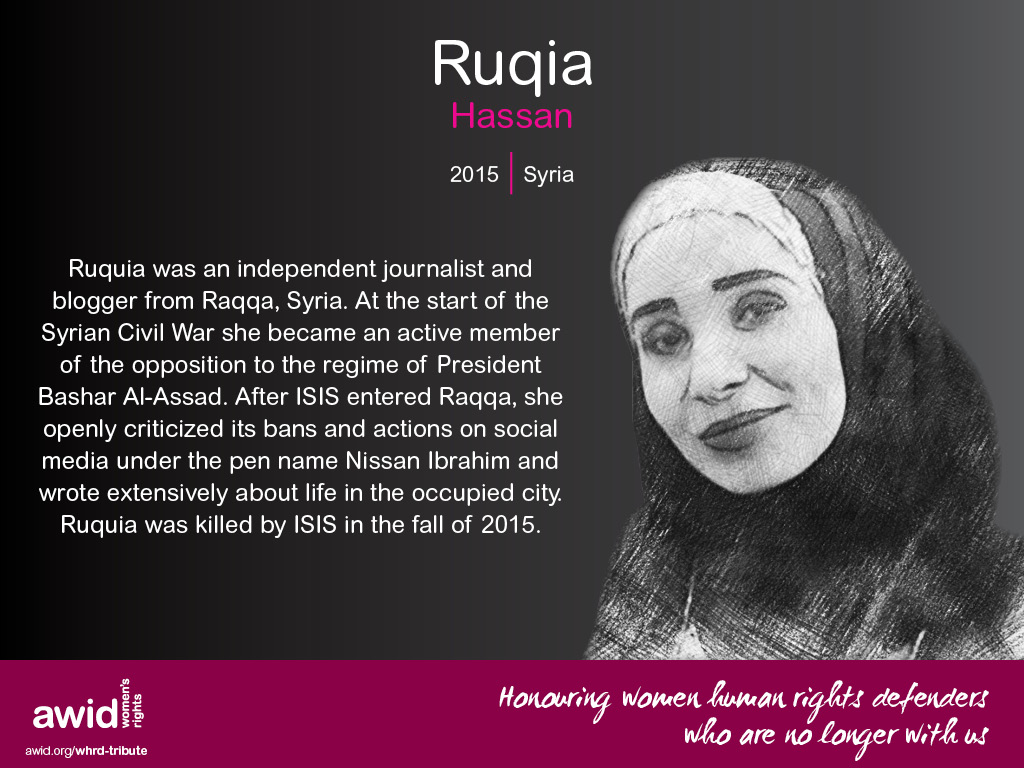
Women like Agnes Torres, from Mexico, was killed because of her gender identity and sexual orientation; or Cheryl Ananayo, an environmental activist from the Philippines was assassinated as she struggled against a mining company; or Ruqia Hassan, a Syrian independent journalist and blogger killed for her criticism of ISIS. And so many others.

With the WHRD Tribute, we bring them all into our collective memory and carry their legacy of struggle as our torch in the feminists’ and women’s rights movements. We recognize that security, safety and self-care must be a priority in all our political agendas. And we call on to governments and international bodies to collectively address violence against feminists and WHRDs.

We believe this is a critical step to ensure the sustainability of our movements for gender equality, women’s rights, and justice for all.

Visit the WHRD Tribute online exhibit

Advancing Movements

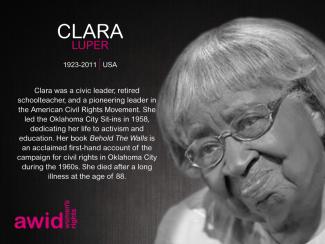
6 Women Human Rights Defenders (WHRDs) across Western and Southeastern Europe have in their lifetime researched, campaigned, participated in and advanced peace and women’s rights movements be it through political and social activism or through dance. We are grateful for the legacy they have left. Please join AWID in honoring these women, their activism and legacy by sharing the memes below with your colleagues, networks and friends and by using the hashtags #WHRDTribute and #16Days.


Please click on each image below to see a larger version and download as a file