None On Record

Young Feminist Activism

Organizing creatively, facing an increasing threat

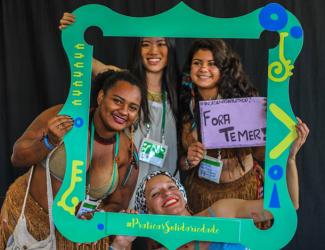
Young feminist activists play a critical role in women’s rights organizations and movements worldwide by bringing up new issues that feminists face today. Their strength, creativity and adaptability are vital to the sustainability of feminist organizing.

At the same time, they face specific impediments to their activism such as limited access to funding and support, lack of capacity-building opportunities, and a significant increase of attacks on young women human rights defenders. This creates a lack of visibility that makes more difficult their inclusion and effective participation within women’s rights movements.

A multigenerational approach

AWID’s young feminist activism program was created to make sure the voices of young women are heard and reflected in feminist discourse. We want to ensure that young feminists have better access to funding, capacity-building opportunities and international processes. In addition to supporting young feminists directly, we are also working with women’s rights activists of all ages on practical models and strategies for effective multigenerational organizing.

Our Actions

We want young feminist activists to play a role in decision-making affecting their rights by:

  • Fostering community and sharing information through the Young Feminist Wire. Recognizing the importance of online media for the work of young feminists, our team launched the Young Feminist Wire in May 2010 to share information, build capacity through online webinars and e-discussions, and encourage community building.

  • Researching and building knowledge on young feminist activism, to increase the visibility and impact of young feminist activism within and across women’s rights movements and other key actors such as donors.

  • Promoting more effective multigenerational organizing, exploring better ways to work together.

  • Supporting young feminists to engage in global development processes such as those within the United Nations

  • Collaboration across all of AWID’s priority areas, including the Forum, to ensure young feminists’ key contributions, perspectives, needs and activism are reflected in debates, policies and programs affecting them.

Related Content

Winnie Madikizela- Mandela

Winnie a été décrite comme une « militante enflammée » qui a combattu le régime de l’apartheid en Afrique du Sud.

Son engagement lui a valu d’être emprisonnée et placée en cellule d’isolement de nombreuses fois.

Affectueusement surnommée Ma’Winnie, elle était connue pour être quelqu’un qui parlait ouvertement des défis auxquels les femmes noires étaient confrontées pendant et après l’apartheid et cela, après avoir elle-même subi ces brutalités en tant que mère, épouse et militante pendant la lutte. Elle a su transcender l'idée couramment répandue selon laquelle le leadership est fondé sur le genre, la classe ou la race. Bien qu’étant une personnalité controversée, elle était connue par son nom xhosa, « Nomzamo », qui signifie « celle qui supporte les épreuves ».

Ma’Winnie continue d’être une source d’inspiration pour de nombreuses personnes, en particulier des jeunes femmes sud-africaines.

Sa mort a impulsé la naissance d’un mouvement qui a pour mantra : « Elle n’est pas morte, elle s’est multipliée ».
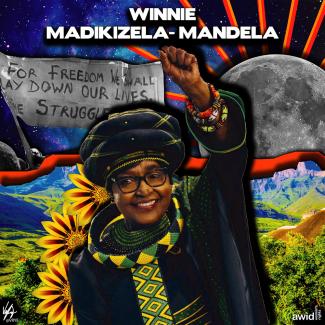


Winnie Madikizela-Mandela, South Africa

Qu'advient-il des propositions envoyées à travers l'appel à activités ??

  1. Les propositions d’activité seront initialement présélectionnées par l’équipe de l’AWID
  2. Les organisateurs·trices des propositions retenues seront ensuite invité·e·s à voter pour choisir les activités finales. Celles qui auront obtenu le plus de votes seront incluses au programme du Forum. L'AWID pourra procéder à quelques ajustements à la sélection finale pour s'assurer que notre programme présente un équilibre adéquat entre les régions, les groupes d'intérêt, les enjeux et les méthodologies.  
  3. Notre Comité contenu et méthodologie du Forum prendra contact avec les organisateurs·trices des propositions sélectionnées pour les aider à développer davantage leurs activités.

Nous mettrons le site à jour avec les informations pertinantes le moment venu.

Snippet FEA NSS Quote (FR)

« Les savoirs et pratiques indigènes ont toujours soutenu la souveraineté alimentaire, et ce savoir-faire est entre les mains des femmes [...] L'écoféminisme pour moi, c'est le respect de tout ce que nous avons autour de nous » -

Mariama Sonko

Can I access and fill the survey from my phone?

Yes, the survey can be accessed using a smartphone.

En su lucha por los derechos humanos enfrentan la injusticia en América Latina

Este año honramos a 19 defensoras de la región de América Latina y el Caribe. De ellas, 16 fueron asesinadas, incluyendo a 6 periodistas y 4 defensoras LGBTQI. Únete a nosotras en la conmemoración de  sus vidas y trabajo,  compartiendo los memes aquí incluidos con tus colegas, amistades y redes; y tuiteando las etiquetas #WHRDTribute y #16Días.


Por favor, haz click en cada imagen de abajo para ver una versión más grande y para descargar como un archivo.

[scald=2398:sdl_editor_representation]
[scald=2396:sdl_editor_representation]
[scald=2393:sdl_editor_representation]
[scald=2390:sdl_editor_representation]
[scald=2389:sdl_editor_representation]
[scald=2388:sdl_editor_representation]


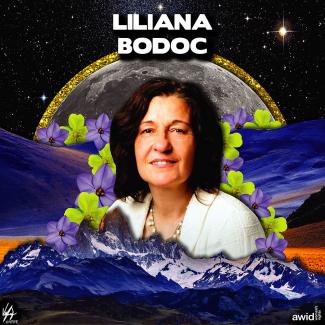
Liliana Bodoc

Liliana was a teacher, a weaver, and a well recognized writer from Argentina.

Her trilogy La saga de los confines received several awards and is unique in the fantasy genre for its use and re-imagining of South American Indigenous mythology.

Liliana’s commitment to feminism was expressed in the diverse, rich and strong women voices in her writing, and particularly in her extensive work for young readers. She also took public positions in favour of abortion, economic justice and gender parity.


Liliana Bodoc, Argentina

Ai-je besoin d’un visa pour assister au Forum à Taipei ?

Vous N’AVEZ PAS besoin d’un visa pour assister au Forum à Taipei si vous détenez un passeport émis par l’un des pays suivants (la durée de séjour autorisée varie d’un pays à l’autre) :

Allemagne, Andorre, Australie, Autriche, Belgique, Belize, Bulgarie, Brunei, Canada, Chili, Chypre, Croatie, Danemark, Espagne, Estonie, Eswatini, État de la Cité du Vatican, États-Unis, Finlande, France, Grèce, Guatemala, Haïti, Honduras, Hongrie, Îles Marshall, Islande, Irlande, Israël, Italie, Japon*, Lettonie, Liechtenstein, Lituanie, Luxembourg, Malaisie, Malte, Monaco, Nauru, Nicaragua, Norvège, Nouvelle-Zélande, Palaos, Paraguay, Pays-Bas, Philippines, Pologne, Portugal, République de Corée, République dominicaine, République tchèque, Roumanie, Royaume-Uni, Russie, Saint-Christophe-et-Niévès, Sainte-Lucie, Saint-Marin, Saint-Vincent-et-les-Grenadines, Singapour, Slovaquie, Slovénie, Suède, Suisse, Tuvalu.

Les personnes détentrices de tout autre passeport AURONT BESOIN D’UN VISA pour se rendre à Taipei.


Remarque :

Une fois inscrit·e au Forum, il est probable que vous receviez un code relatif à l’événement vous permettant de demander un visa en ligne, quelle que soit votre nationalité.

Nous vous donnerons plus d’informations à ce sujet après l’ouverture du processus d’inscription. 


Snippet FEA argentina history cooperatives (EN)

Argentina has a long history of worker-run cooperatives and workplaces.

In 2001, the country experienced one of the worst economic crises in its history.

As a response to the recession and a form of resistance and resilience, workers across the country started occupying their workplaces.

The Nadia Echazú Textile Cooperative was the first cooperative created by and for trans and travesti people in search of economic autonomy and decent living conditions.

It provides work opportunities, access to social security, sustainable income and economic rights for the communities it serves.

¿Tendré oportunidad de compartir mi opinión sobre cuestiones que no se hayan incluido en la encuesta?

Sí, invitamos a compartir más impresiones acerca de alguna cuestión que sea de importancia para ti respondiendo a las preguntas abiertas al término de la encuesta.

WHRDs from the South and Southeast Asian region

7 Women Human Rights Defenders from across the South and Southeast Asian region are honored in this year’s Online Tribute. These defenders have made key contributions to advancing human and women’s rights, indigenous people’s rights, and the right to education. These WHRDs were lawyers, women’s rights activists, scholars, and politicians. Please join AWID in commemorating t their work and legacy by sharing the memes below with your colleagues, networks and friends and by using the hashtags #WHRDTribute and #16Days. 


Please click on each image below to see a larger version and download as a file


Anna Campbell (şehid Hêlîn Qerecox)

Anna creció en Lewes, Sussex (Reino Unido) y se mudó a Bristol, donde se hizo plomera, luego de decidir que no iba a continuar con su carrera de Inglés en la Universidad de Sheffield.

Dedicó mucho de su tiempo a defender a las personas marginadas y sin privilegios, a participar de marchas antifascistas y a ofrecer apoyo a las mujeres de la Granja Dale cuando estuvieron bajo amenaza de desalojo. Vegana y amante de los animales, participó en sabotajes a partidas de caza y su nombre es honrado en el Monumento «Árbol de la vida», de PETA. En mayo de 2017, Anna se trasladó a Rojava llevada por su fuerte compromiso con el empoderamiento de las mujeres, la plena representación de todas las identidades étnicas y la protección del ambiente.

Murió el 15 de marzo de 2018, al ser alcanzada durante un bombardeo aéreo de fuerzas turcas a la ciudad de Afrin, en el norte de Siria. Anna cayó combatiendo junto a las Unidades de Protección de las Mujeres (YPJ).


Anna Campbell (şehid Hêlîn Qerecox), UK

Snippet FEA Life expectancy of a trans and travesti (ES)

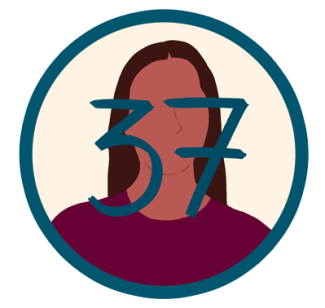
This illustration depicts a faceless person with long dark hair and a burgundy shirt, with the number 37 written across the image (37 being the life expectancy of a trans and travesti person in Argentina)

La expectativa de vida de una persona trans y travesti en Argentina es de 37 años - la edad promedio de la población general es de 77 años.

Comment présenterez-vous et traiterez-vous les données collectées pendant l’enquête?

Les données seront traitées à des fins statistiques, pour mettre en lumière l’état du financement de l’organisation des mouvements féministes dans le monde entier, et ne seront présentées que sous forme agrégée. L’AWID ne publiera pas d’informations relatives à une organisation donnée ni ne divulguera d’informations qui permettraient d’identifier une organisation par le biais de son emplacement ou de caractéristiques qui lui sont propres, sans son accord explicite.

Before you begin

Before starting the WITM research methodology, it is important you prepare the background and know what to expect.


Capacity

With AWID’s WITM research methodology, we recommend that you first review the entire toolkit.

While this toolkit is designed to democratize WITM research, there are capacity constraints related to resources and research experience that may affect your organization’s ability use this methodology.

Use the “Ready to Go?” Worksheet to assess your readiness to begin your own WITM research. The more questions you can answer on this worksheet, the more prepared you are to undertake your research.

Trust

Before beginning any research, we recommend that you assess your organization’s connections and trust within your community.

In many contexts, organizations may be hesitant to openly share financial data with others for reasons ranging from concerns about how the information will be used, to fear of funding competition and anxiety over increasing government restrictions on civil society organizations.

As you build relationships and conduct soft outreach in the lead-up to launching your research, ensuring that your objectives are clear will be useful in creating trust. Transparency will allow participants to understand why you are collecting the data and how it will benefit the entire community.

We highly recommend that you ensure data is collected confidentially and shared anonymously. By doing so, participants will be more comfortable sharing sensitive information with you. 


First step

1. Gather your resources

We also recommend referring to our “Ready to Go?” Worksheet to assess your own progress.

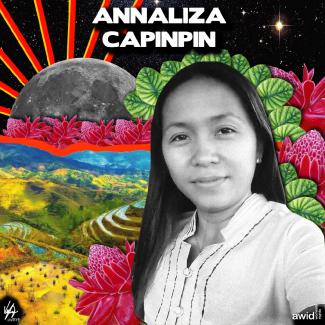
Annaliza Dinopol Gallardo Capinpin

Annaliza était la présidente du Conseil de réforme agraire des pionniers de Mindanao, un groupe de coordination de la ville de Tacurong, aux Philippines.

Mère aimée de quatre enfants, sa communauté se souvient d’Annaliza comme de « celle qui dirige quand personne ne veut diriger, qui parle quand personne ne veut parler, qui a eu le courage d'aider les bénéficiaires de la réforme agraire à acquérir des terres ».

Annaliza a été abattue par des assaillants inconnus devant l'Université d'État de Sultan Kudarat (SKSU) alors qu'elle se rendait au lycée national Salabaca à Esperanza.

Sa famille a déclaré : « Naghihintay pa rin kami ng hustisya para sa kanya » (nous attendons toujours que justice lui soit rendue).