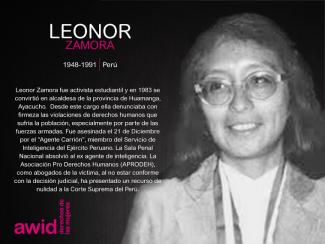
Leonor Zamora
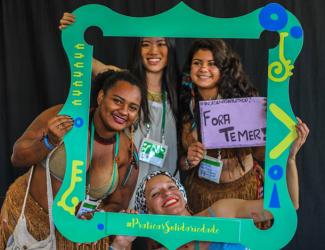
Young feminist activists play a critical role in women’s rights organizations and movements worldwide by bringing up new issues that feminists face today. Their strength, creativity and adaptability are vital to the sustainability of feminist organizing.
At the same time, they face specific impediments to their activism such as limited access to funding and support, lack of capacity-building opportunities, and a significant increase of attacks on young women human rights defenders. This creates a lack of visibility that makes more difficult their inclusion and effective participation within women’s rights movements.
AWID’s young feminist activism program was created to make sure the voices of young women are heard and reflected in feminist discourse. We want to ensure that young feminists have better access to funding, capacity-building opportunities and international processes. In addition to supporting young feminists directly, we are also working with women’s rights activists of all ages on practical models and strategies for effective multigenerational organizing.
We want young feminist activists to play a role in decision-making affecting their rights by:
Fostering community and sharing information through the Young Feminist Wire. Recognizing the importance of online media for the work of young feminists, our team launched the Young Feminist Wire in May 2010 to share information, build capacity through online webinars and e-discussions, and encourage community building.
Researching and building knowledge on young feminist activism, to increase the visibility and impact of young feminist activism within and across women’s rights movements and other key actors such as donors.
Promoting more effective multigenerational organizing, exploring better ways to work together.
Supporting young feminists to engage in global development processes such as those within the United Nations
Collaboration across all of AWID’s priority areas, including the Forum, to ensure young feminists’ key contributions, perspectives, needs and activism are reflected in debates, policies and programs affecting them.
This economical model exploits nature and as it intensifies, so does the inequality between global North with their large corporations, and the global South, where resources are extracted.
Find more on our report on EXTRACTIVE INDUSTRIES
There are sustainable alternatives for the environment and women's rights.
Oeuvrez pour le renforcement des mouvements pour les droits des femmes et contribuez aux transformations en faveur des droits humains.
Por enquanto, o inquérito no KOBO está disponível em árabe, inglês, francês, português, russo e espanhol. Terá a oportunidade de selecionar um dos idiomas no início do inquérito.
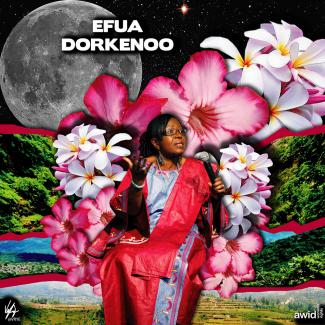
Affectionately known as “Mama Efua”, her work to end Female Genital Mutilation (FGM) movement spanned three decades and helped bring international attention and action to end this harmful practice.
In 1983 Efua co-founded FORWARD (The Foundation for Women’s Health, Research and Development), which became a leading organisation in the battle to raise awareness about FGM. Her 1994 book, “Cutting the Rose: Female Genital Mutilation,” is considered the first on FGM and, featured in Columbia University’s “Africa’s 100 Best Books for the 20th Century”.
Originally from Ghana and a nurse by training, Efua joined the WHO in 1995 and successfully pushed for FGM to go on the agendas of WHO member states. She also worked closely with the Nigerian government in formulating a comprehensive National Policy that laid the groundwork for Nigeria’s anti-FGM laws, still in place today.
Her ground breaking work culminated in an Africa-led campaign, “The Girl Generation,” which is committed to ending FGM within a generation. Efua demonstrated how one person can become the unifying voice for a movement, and her wise words - “shared identity can help bring activists from different backgrounds together with a common sense of purpose” – are more relevant than ever.
Cliquez sur l'image pour ouvrir le rapport complet en PDF
 |
|
Téléchargez le rapport PDF «Vers un écosystème de financement féminist» |
Où en sommes -nous aujourd'hui ? |
Où nous voulons être |
Financement actuel, par secteur |
 |
 |
 |
Striking against all odds: the story of Solidarity Network’s unprecedented win.
In January 2022, the Solidarity Network organized a strike with 400 workers. Their main demand? To increase wages. The strike was called following months of unsuccessful talks with the Georgian Ministry of Social Affairs as part of a labor dispute.
After weeks of protesting, negotiating, speaking to the media, withstanding backlash, and enduring the blistering cold of Georgian winter, the workers won unprecedented concessions from the government: wage increase, paid maternity leave, the covering of transportation costs, no lay-offs, compensation for strike days, and more.
The strike did not only result in material gains, it also left the workers feeling united and empowered to stand up for themselves and fight for dignified working conditions now and in the future. They became a source of inspiration for all workers across the country.
You can read more about their victory here.
Expand your boundaries. AWID members increasingly represent a diverse and vibrant cross-section of feminists working on land rights, workers’ rights, sexual rights and bodily autonomy, among other issues. By joining us as a member, you can connect your struggles across movements.
يركّز استطلاع "أين المال" على وقائع التمويل للتنظيمات النسوية، تسأل أغلبية الأسئلة عن تمويل مجموعتكم/ن بين الأعوام 2021-2023. سوف تحتاجون أن تكون لديكم/ن معلومات معيّنة عند تعبئة الاستطلاع مثل ميزانيتكم/ن السنوية ومصادر التمويل الأساسية.
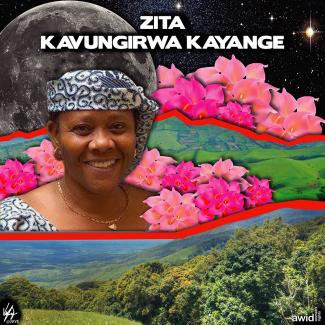
Zita fue una activista por los derechos de las mujeres que defendió los derechos de las mujeres rurales en el Gran Kivu.
Fue la primera directora ejecutiva de UWAKI, una organización de mujeres muy conocida. A través de su trabajo con la Red de Mujeres por los Derechos y la Paz (RFDP) y el Foro de Mujeres por la Paz de Kivu del Sur, dedicó su vida a ayudar a restablecer la paz en la zona oriental de la República Democrática del Congo. Se manifestó firmemente en contra del uso de la violencia sexual como arma de guerra.
En 2006, se propuso como candidata en las primeras elecciones democráticas del país. Aunque no ganó, siguió defendiendo los derechos de las mujeres y la comunidad de Kivu del Sur la recuerda con cariño.
We strive to make the AWID Forum a truly global gathering with participation from a diverse array of movements, regions and generations. To this end, AWID mobilizes resources for a limited Access Fund (AF) to assist some participants with the costs of attending the Forum.
The 14th AWID International Forum will take place 11-14 January 2021, in Taipei, Taiwan.
For this AWID Forum, there will be no application process.
In addition, AWID will fund approximately 100 participants from the Forum’s location. Forum Committee Members (Content and Methodology, Access and Host) as well as those in the Artists Working Group [link] are also granted Access Fund support.
We have listed other ideas on how to fund your participation at the AWID Forum on the Funding Ideas page.
La Organización Sindical de Trabajadoras del Sexo (OTRAS) es el primer sindicato de trabajadoras del sexo de la historia de España. Nació de la necesidad de garantizar los derechos sociales, legales y políticos de las trabajadoras sexuales en un país donde los movimientos de extrema derecha están cada vez más fuertes.
Después de años de luchas contra el sistema legal español y los grupos abolicionistas del trabajo sexual que solicitaron su cierre, OTRAS finalmente obtuvo su estatus legal como sindicato en 2021.
¿Su objetivo? Despenalizar el trabajo sexual y garantizar condiciones y entornos de trabajo dignos para todxs lxs trabajadorxs sexuales.
El sindicato representa a más de 600 trabajadorxs sexualxs, muchxs de lxs cuales son inmigrantes, racializadxs y sexo/genero disidentes.
Celebramos el derecho de todas las personas a elegir sus identidades, relaciones, metas, trabajos, sueños y placeres, y lo que hacen con su mente, cuerpo y espíritu. Trabajamos por el acceso a los recursos, a la información, y a ambientes seguros y habilitantes que permitan que esto suceda.
Мы запрашиваем эти данные, чтобы облегчить просмотр ответов, избежать дублирования и иметь возможность связаться с вашей организацией в случае, если вы не смогли завершить опрос и/или если у вас возникли сомнения или дополнительные вопросы. Здесь вы можете узнать больше о том, как мы используем личную информацию, которую собираем в ходе нашей работы.
Bessy también fue integrante de Arcoíris, una organización que apoya a la comunidad LGBTI+. También fue una persona de referencia para la Plataforma Derechos Aquí y Ahora de Honduras, y abogó enérgicamente por la ciudadanía plena de las personas trans, y por la aprobación de una ley de identidad de género que permitiera a las personas trans cambiar su identidad de género legalmente.
"Desde principios de año [2019] la comunidad trans ha sufrido una serie de ataques, por defender, por reivindicar derechos". - Rihanna Ferrera (hermana de Bessy)
Bessy era una trabajadora sexual, y a principios de julio de 2019, fue asesinada a tiros por dos hombres mientras trabajaba en las calles de Comayagüela. Quienes la asesinaron fueron posteriormente arrestados.
Bessy es una de las muchxs defensorxs de los derechos LGBTI+ en Honduras que fueron asesinadxs por su identidad y su trabajo. Otras compañeras han sido: Cynthia Nicole, Angy Ferreira, Estefanía "Nia" Zúñiga, Gloria Carolina Hernández Vásquez, Paola Barraza, Violeta Rivas y Sherly Montoya.
El caso de Bessy es emblemático por su injusticia y por reflejar un problema mucho más amplio, que es el de la violencia sistemática a la que se enfrenta la comunidad LGBTI+ en Honduras, ya que el Estado ni garantiza los derechos que ofrece y ni brinda protección. Esto ha creado una cultura de impunidad.
A pesar de los riesgos a los que se enfrentan lxs defensorxs LGBTI+ en Honduras, continúan a diario con su trabajo para desafiar y resistir la violencia, y luchar contra el estigma y la discriminación.
"Si muero, que sea por algo bueno y no por algo inútil. No quiero morir huyendo, como unx cobarde. Si muero, quiero que la gente diga que morí luchando por lo que es mío". - integrante de Arcoíris.