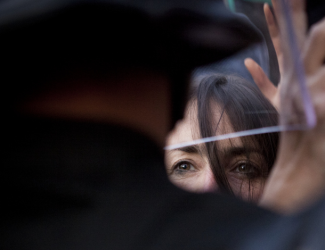
Philippe Leroyer | Flickr (CC BY-NC-ND 2.0)

Women Human Rights Defenders

WHRDs are self-identified women and lesbian, bisexual, transgender, queer and intersex (LBTQI) people and others who defend rights and are subject to gender-specific risks and threats due to their human rights work and/or as a direct consequence of their gender identity or sexual orientation.

WHRDs are subject to systematic violence and discrimination due to their identities and unyielding struggles for rights, equality and justice.

The WHRD Program collaborates with international and regional partners as well as the AWID membership to raise awareness about these risks and threats, advocate for feminist and holistic measures of protection and safety, and actively promote a culture of self-care and collective well being in our movements.


Risks and threats targeting WHRDs  

WHRDs are exposed to the same types of risks that all other defenders who defend human rights, communities, and the environment face. However, they are also exposed to gender-based violence and gender-specific risks because they challenge existing gender norms within their communities and societies.

By defending rights, WHRDs are at risk of:

  • Physical assault and death
  • Intimidation and harassment, including in online spaces
  • Judicial harassment and criminalization
  • Burnout

A collaborative, holistic approach to safety

We work collaboratively with international and regional networks and our membership

  • to raise awareness about human rights abuses and violations against WHRDs and the systemic violence and discrimination they experience
  • to strengthen protection mechanisms and ensure more effective and timely responses to WHRDs at risk

We work to promote a holistic approach to protection which includes:

  • emphasizing the importance of self-care and collective well being, and recognizing that what care and wellbeing mean may differ across cultures
  • documenting the violations targeting WHRDs using a feminist intersectional perspective;
  • promoting the social recognition and celebration of the work and resilience of WHRDs ; and
  • building civic spaces that are conducive to dismantling structural inequalities without restrictions or obstacles

Our Actions

We aim to contribute to a safer world for WHRDs, their families and communities. We believe that action for rights and justice should not put WHRDs at risk; it should be appreciated and celebrated.

  • Promoting collaboration and coordination among human rights and women’s rights organizations at the international level to  strengthen  responses concerning safety and wellbeing of WHRDs.

  • Supporting regional networks of WHRDs and their organizations, such as the Mesoamerican Initiative for WHRDs and the WHRD Middle East and North Africa  Coalition, in promoting and strengthening collective action for protection - emphasizing the establishment of solidarity and protection networks, the promotion of self-care, and advocacy and mobilization for the safety of WHRDs;

  • Increasing the visibility and recognition of  WHRDs and their struggles, as well as the risks that they encounter by documenting the attacks that they face, and researching, producing, and disseminating information on their struggles, strategies, and challenges:

  • Mobilizing urgent responses of international solidarity for WHRDs at risk through our international and regional networks, and our active membership.

Related Content

Comment l’AWID a-t-elle débuté ?

L’AWID a fait ses débuts en 1982 et s’est transformée au fil du temps.

Pour mieux connaître notre histoire

Lire « From WID to GAD to Women's Rights: The First 20 Years of AWID » (disponible uniquement en anglais).

Guadalupe Campanur Tapia

Guadalupe was an environmental activist involved in the fight against crime in Cherán, Mexico.

Guadalupe helped to overthrow the local government in April 2011 and participated in local security patrols including those in municipal forests.  She was among the Indigenous leaders of Cherán, who called on people to defend their forests against illegal and merciless logging. Her work for seniors, children, and workers made her an icon in her community.

She was killed in Chilchota, Mexico about 30 kilometers north of her hometown of Cherá.
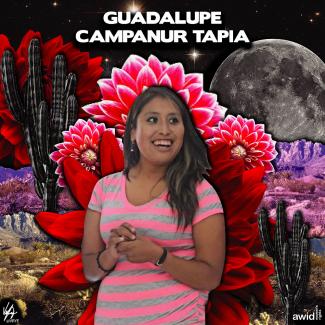


Guadalupe Campanur Tapia, Mexico

Snippet FEA Objectives NSS Advocacy (FR)

LE PLAIDOYER

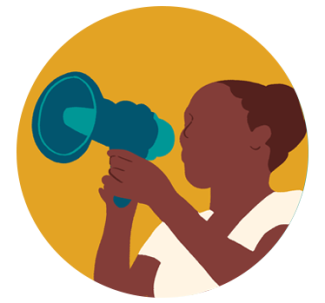
Yellow circle with illustration of a brown woman with a white t-shirt holding a blue loudspeaker.
Influencer les politiques et promouvoir un accès plus équitable à la terre pour les femmes travaillant dans l'agriculture

Do I have to respond to all questions at once or can I come back to complete it later?

If you wish to save your responses and come back to the survey later, you are able to do this whenever needed. KOBO will save your draft responses on the top left corner of the survey page and reload your record when you return to the survey. Just make sure to continue from the same computer and browser.

Can AWID provide funding for my development project?

No, we regret that AWID is not a funding organization.

We and cannot review funding proposals or requests.

We encourage you to browse our list of donors that may potentially fund your women's rights organizing.

View our list of donors

More resources are available from the Priority Area “Resourcing Feminist Movements

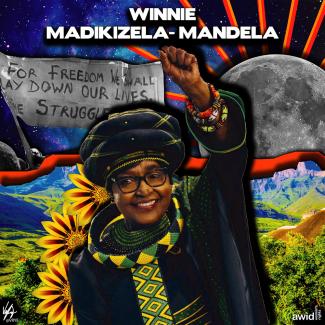
Winnie Madikizela- Mandela

A Winnie la han descripto como una «militante agitadora» que luchó contra el régimen  del apartheid en Sudáfrica.

Fue encarcelada numerosas veces y en varias ocasiones fue encerrada en celdas de aislamiento. Ma’Winnie, como la recuerdan afectuosamente, era conocida por hablar abiertamente sobre los desafíos que las mujeres negras enfrentaron durante y después del apartheid, habiendo sido ella misma sometida a esas brutalidades como madre, esposa y activista durante la lucha. Fue más allá del concepto erróneo que sostiene que el liderazgo está basado en el género, la clase o la raza. A pesar de haber sido una figura controvertida, es recordada por muchxs por su nombre en xhosa, «Nomzamo», que significa «la que soporta las pruebas».

Ma’Winnie sigue siendo una inspiración para muchxs, especialmente las jóvenes sudafricanas.

Su muerte incentivó un creciente movimiento bajo el lema: «Ella no murió, se multiplicó».


Winnie Madikizela-Mandela, South Africa

Snippet FEA FEMINIST COOPERATIVISM (EN)

FEMINIST

COOPERATIVISM

When work and
solidarity go together

He respondido la encuesta, pero cambié de opinión y deseo que se retire nuestra respuesta, ¿qué hago?

Si por algún motivo deseas que retiremos y borremos tus respuestas, tienes todo el derecho a hacerlo. Puedes contactarnos a través del formulario disponible aquí indicando «Encuesta WITM (¿Dónde está el dinero?) » en el título del mensaje, y procederemos a retirar y borrar tu respuesta.

Soy una joven feminista, ¿hay lugar para mí en AWID?

Las activistas feministas jóvenes son la parte medular del trabajo de AWID

De hecho, el 38% de nuestra membresía tienene menos de 30 años de edad.

Creemos que lxs activistas jóvenes son el presente y el futuro de la lucha por los derechos de las mujeres. Mediante nuestro programa «Activismo Joven Feminista» que atraviesa todos los aspectos de nuestro trabajo, promovemos a líderes jóvenes en el movimiento mundial por los derechos de las mujeres. A la vez, al definir a este programa como una de nuestras Áreas Prioritarias, contribuimos con nuevos análisis a los debates actuales para asegurarnos que las jóvenes activistas feministas sean capaces de articular sus prioridades y darle voz a los temas que les preocupan.

Conoce más sobre el Programa de Activismo Joven Feminista

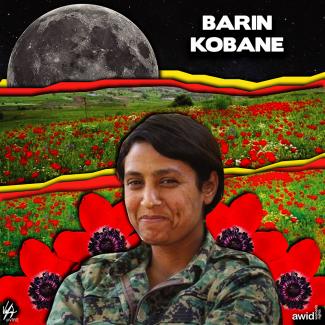
Barin Kobane

Barin était membre de l’unité de combat exclusivement féminine des Unités de protection du peuple kurde (YPG).

Elle a été tuée alors qu’elle était en service actif.

La journaliste libanaise Hifaa Zuaiter a écrit : « Barin représente tout ce que nous avons entendu à propos du courage des femmes kurdes et sa mort représente bien plus que le meurtre d’un-e rival-e ou une perte résultant d’une lutte politique ou ethnique. L’exhibition monstrueuse de sa dépouille par un groupe de rebelles syriens  provient du fait qu’en tant que femme combattant sur un champ de bataille réservé aux hommes, elle a osé menacer l’hégémonie masculine ».


Barin Kobane, Kurdistan

Snippet FEA In numbers (ES)

EN CIFRAS

Puis-je communiquer cette enquête à d’autres?

Oui, n’hésitez pas à le faire! Nous vous encourageons à communiquer le lien vers l’enquête à vos réseaux. Plus les points de vue exprimés et collectés seront divers, plus notre compréhension du paysage du financement de l’organisation des mouvements féministes sera exhaustive.

Je suis en train de rédiger un rapport de recherche. L’AWID peut-elle m’aider ?

L’AWID fournit une profusion de ressources pour vous aider dans votre recherche.

Nous vous invitons à explorer nos sections Domaines prioritaires et Informez-vous ou utlisez l'outil de recherche pour trouver des informations sur un suject spécifique.

Nous recommendons particulièrement la consultation de notre boîte à outils « Où est l’argent pour les droits des femmes ? » (« Where Is The Money for Women's Rights? », WITM). Cette boîte à outils est une méthodologie de recherche autogérée  pour soutenir les individus et les organisations qui souhaitent mener leur propre recherche sur les tendances de financement en adaptant la méthodologie de recherche de l’AWID à une région, une question ou une population spécifique.

Explorez la boîte à outils WITM

Anna Campbell (şehid Hêlîn Qerecox)

Anna grew up in Lewes, Sussex (UK) and, after deciding not to pursue her English degree at Sheffield University, she moved to Bristol and became a plumber.

She spent much of her time defending the marginalised and under-privileged, attending anti-fascist rallies, and offering support to the women of Dale Farm when they were threatened with eviction. A vegan and animal lover, she attended hunt sabotages and her name is honoured on PETA's 'Tree of Life' Memorial. Anna went to Rojava in May 2017 with a strong commitment to women's empowerment, full representation of all ethnicities and protection of the environment.

Anna died on March 15, 2018 when she was hit by a Turkish airstrike in the town of Afrin, northern Syria. Anna was fighting with the Women's Protection Forces (YPJ), when she was killed.


Anna Campbell (şehid Hêlîn Qerecox), UK

Snippet Intro The Feminist Realities Magazine (FR)

Magazine des Réalités Féministes

À l’AWID, nous concevons ces réalités féministes comme les exemples vivants des mondes que nous savons possibles. Nous concevons ces diverses réalités féministes comme des revendications et des incarnations d’espoir et de pouvoir.  Elles sont ancrées dans les multiples manières de vivre, de penser et de faire autrement, que ce soit au niveau  des expressions quotidiennes de nos modes de vie ou nos manières d'être en relations les un.e.s avec les autres ou au niveau de systèmes alternatifs de gouvernance et de justice.

Les Réalités féministes combattent les systèmes de pouvoir dominants tels que le patriarcat, le capitalisme et la suprématie blanche. 

Télécharger le magazine complet (PDF)

Feuilleter le magazine

Snippet - WITM To share - AR

لمشاركة تجاربكم/ن المعاشة بما يتعلق بتمويل منظمتكم/ن