AWID Forum: Co-creating Feminist Futures

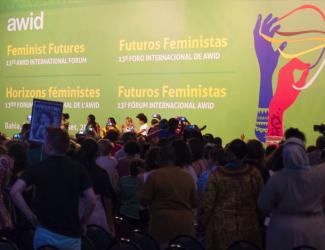
In September 2016, the 13th AWID international Forum brought together in Brazil over 1800 feminists and women’s rights advocates in a spirit of resistance and resilience.

This section highlights the gains, learnings and resources that came out of our rich conversations. We invite you to explore, share and comment!


What has happened since 2016?

One of the key takeaways from the 2016 Forum was the need to broaden and deepen our cross-movement work to address rising fascisms, fundamentalisms, corporate greed and climate change.

With this in mind, we have been working with multiple allies to grow these seeds of resistance:

And through our next strategic plan and Forum process, we are committed to keep developing ideas and deepen the learnings ignited at the 2016 Forum.

What happens now?

The world is a much different place than it was a year ago, and it will continue to change.

The next AWID Forum will take place in the Asia Pacific region (exact location and dates to be announced in 2018).

We look forward to you joining us!

About the AWID Forum

AWID Forums started in 1983, in Washington DC. Since then, the event has grown to become many things to many peoples: an iterative process of sharpening our analyses, vision and actions; a watershed moment that reinvigorates participants’ feminisms and energizes their organizing; and a political home for women human rights defenders to find sanctuary and solidarity.

Learn more about previous Forums
Related Content

Snippet Elimination of Discrimination_Fest (EN)

The Elimination of Discrimination Against Sex Workers

Kay Thi Win, Asia Pacific Network of Sex Workers (APNSW)
Thin Pa Pa Htun, Aye Myanmar Association
Xiao Shuang, Northeast Transgender Support Network
Cathy Ketepa, Friends Frangipani Inc. PNG
Rajeshwari Prajapati, Society for Women Awareness Nepal (SWAN)

watch panel

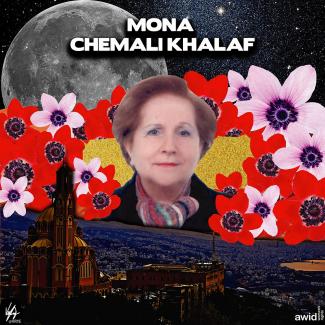
Mona Chemali Khalaf

Mona était économiste et consultante indépendante sur les questions de genre et de développement.

Elle a été professeure d'économie et directrice de l'Institut d'études féminines du monde arabe à l'Université libanaise américaine. Elle est décédée subitement le 6 janvier 2018.

Des amis et d'anciens collègues disent de Mona: « Pour lui rendre hommage, la meilleure chose à faire est de continuer à faire ce qu'elle a commencé: l'égalité de genre, à tout prix. 


Mona Chemali Khalaf, Lebanon

CFA FAQ - Travelling to Bangkok - AR

السفر إلى بانكوك

Snippet Feminist Art Walk_fest (ES)

Paseo de las Artes Feministas

Como parte de nuestro compromiso de lograr una interacción más profunda con artistas y la práctica de la creación conjunta de las Realidades Feministas, AWID colaboró con un grupo de trabajo de artisvistas para promover y fortalecer las agendas y realidades feministas en sus comunidades y movimientos a través de sus expresiones creativas. Nuestra intención en este punto es reunir a creativxs feministas en un espacio pujante y valiente donde puedan desarrollarse y vivir en libertad, y donde puedan romper las narrativas tóxicas para sustituirlas por alternativas transformadoras.

Paseo de las Artes Feministas

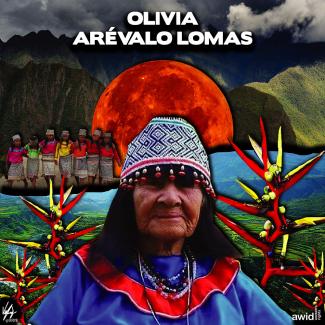
Olivia Arévalo Lomas

Olivia was the spiritual leader of the Shipibo Konibo indigenous peoples.

A wise Indigenous woman and grandmother, she was known for cultivating traditional medicine and the sacred songs of her people (Íkaros). Olivia Arevalo was an active defender of the cultural and environmental rights of her people. Olivia’s murder occurred in a context of territorial conflict between the Shipibo community and companies that desire to take over their land to cultivate palm oil.

Members of her community have said: “Her death is an aggression against the entire Shipibo community. She was the living memory of her people”.


Olivia Arévalo Lomas, Peru

سؤالي لم تتم الإجابة عليه هنا

لمزيد من الأسئلة، يرجى استخدام نموذج الاتصال. سنستمر في تحديث هذه الوثيقة بناءً على الاستفسارات التي نتلقاها منك!

Snippet Feminist Art_Fest (EN)

Arte Feminista

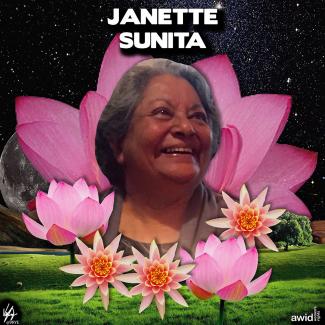
Janette Sunita

De la India, Janette era enérgica, extraordinaria, compasiva y amorosa.

Su intolerancia de la injusticia y su firme compromiso de defender los derechos de todas las personas la llevaron a trabajar en TARSHI (una ONG que trabaja en temas de la sexualidad y la salud y derechos sexuales y reproductivos) durante más de 15 años. Janette dirigió con destreza las finanzas, los recursos humanos y los aspectos operativos del trabajo de TARSHI, atravesando hábilmente la laberíntica burocracia a la que están sometidas las ONG indias.

Lxs integrantes de su equipo recuerdan que «Ella se quedaba vigilando, de manera que pudiéramos seguir el rumbo en aguas abiertas. Mujer de muchos talentos, Janette no sólo nos ayudó a conseguir nuestra propia oficina sino que también la diseñó para una utilización óptima». Amaba viajar y a los animales, y estaba interesada en la terapia asistida por animales.


Janette Sunita, India

Snippet - CSW68 - Follow the Money - EN

Follow the Money:

Illicit Financial Flows & Anti-Rights Actors

📅Monday, March 11
🕒4:30 - 6pm EST

Organisers: AWID, IJSC and NAWI
🏢 Church Center of the United Nations, 777 United Nations Plaza, New York, 11th Floor
(French and Spanish interpretation available)

Snippet “Gender Ideology” Narratives (FR)

Les discours sur l’ « Idéologie du Genre » :

Pendant des décennies, les universitaires et défenseur·euse·s féministes ont développé d’importantes notions liées au genre afin de comprendre et combattre l’oppression et la discrimination. Ces notions sont maintenant devenues la cible d’acteur·ice·s antidroits qui prétendent que les rôles de genre patriarcaux oppressifs relèvent du « bon sens », peignant stratégiquement toutes les autres idées, normes culturelles et formes de vie sociale comme une idéologie dangereuse et conspirationniste.

Lisez le dossier sur Les Discours Sur L’ « Idéologie Du Genre » : Une Menace Pour Les Droits Humains

Téléchargez ici

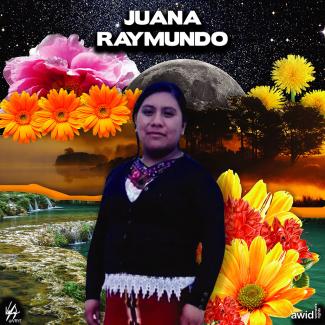
Juana Raymundo

Membre de la communauté autochtone maya ixil, Juana était infirmière professionnelle et coordinatrice du Comité de développement des agriculteurs (CODECA)

CODECA est une organisation de défense des droits humains composée d'agriculteurs autochtones et vouée à la promotion des droits à la terre et du développement rural pour les familles autochtones dans la microrégion de Nebaj Quiché. Elle a d'abord rejoint le CODECA en tant que membre de la Juventud de CODECA (branche de la jeunesse). 

Au moment de son décès, elle venait d’être élue membre du Comité exécutif du Mouvement de libération des peuples (MLP).

Le corps de Juana a été retrouvé par des voisins au bord d’une petite rivière sur la route située près de Nebaj et du village d’Acambalam, au Guatemala. Selon le CODECA, son corps portait des traces de torture.


Juana Raymundo, Guatemala

Snippet - CSW68 - March 13 - EN

Day 3

13th March

Snippet FEA A Caring Economy (EN)

A CARING

ECONOMY

Feminists Centering Care in the Economy:
A Cross-Movement Dialogue

What if we reimagined ways of caring for our communities?

What if the economy was not about someone else’s profit but about care for our individual and collective wellbeing? These stories are about building communities of care with and for people who are historically and presently excluded, disenfranchised and dehumanized by both state and society. These are the stories of feminists centering care in the economy.

Madiha El Safty

Madiha was a prominent Professor of Sociology who actively engaged with civil society as an advocate for women’s rights in the Arab region.

She chaired the Alliance for Arab Women and was a member of the Committee on Civil Society and the Committee on the Development of Minia Governorate with the National Council for Women. She produced numerous papers that shed light on, and analyzed, gender inequalities and discrimination against women.

She is remembered fondly by colleagues, students and friends.


Madiha El Safty, Egypt