None On Record

Special Focus

AWID is an international, feminist, membership organisation committed to achieving gender equality, sustainable development and women’s human rights

Young Feminist Activism

Organizing creatively, facing an increasing threat

Young feminist activists play a critical role in women’s rights organizations and movements worldwide by bringing up new issues that feminists face today. Their strength, creativity and adaptability are vital to the sustainability of feminist organizing.

At the same time, they face specific impediments to their activism such as limited access to funding and support, lack of capacity-building opportunities, and a significant increase of attacks on young women human rights defenders. This creates a lack of visibility that makes more difficult their inclusion and effective participation within women’s rights movements.

A multigenerational approach

AWID’s young feminist activism program was created to make sure the voices of young women are heard and reflected in feminist discourse. We want to ensure that young feminists have better access to funding, capacity-building opportunities and international processes. In addition to supporting young feminists directly, we are also working with women’s rights activists of all ages on practical models and strategies for effective multigenerational organizing.

Our Actions

We want young feminist activists to play a role in decision-making affecting their rights by:

  • Fostering community and sharing information through the Young Feminist Wire. Recognizing the importance of online media for the work of young feminists, our team launched the Young Feminist Wire in May 2010 to share information, build capacity through online webinars and e-discussions, and encourage community building.

  • Researching and building knowledge on young feminist activism, to increase the visibility and impact of young feminist activism within and across women’s rights movements and other key actors such as donors.

  • Promoting more effective multigenerational organizing, exploring better ways to work together.

  • Supporting young feminists to engage in global development processes such as those within the United Nations

  • Collaboration across all of AWID’s priority areas, including the Forum, to ensure young feminists’ key contributions, perspectives, needs and activism are reflected in debates, policies and programs affecting them.

Related Content

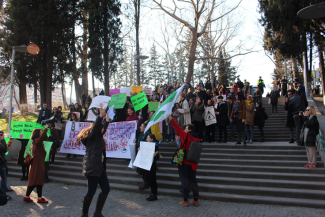
Snippet FEA Workers demonstrations in Georgia 3 (EN)

The photo shows a demonstration with a crowd holding green and white posters.

Snippet - WITM About the survey - AR

عن الاستطلاع

  • عالمي ومتنوع يعكس وقائع التمويل للتنظيم النسوي على المستوى العالمي ومقسّم حسب المناطق
  • مقسم حسب النطاق يضع أصوات، وجهات النظر والتجارب المعاشة للحركات النسوية في المركز ويسلط الضوء على ثروتها، شجاعتها وتنوّعها، كل واحدة في نطاقها
  • مشترك: تم تطوير وتجربة الاستطلاع باستشارة أعضاء/ عضوات جمعية حقوق المرأة في التنمية والشركاء/ الشريكات في الحركة
  • تكميلي يساهم ويعزّز الأدلة المتواجدة عن وضع التمويل للحركات النسوية والنسائية وحركات العدالة الجندرية من النشطاء/ الناشطات، الممولين/ات النسويين/ات والحلفاء/ الحليفا
  • متعدد اللغات متاح باللغة العربية، الانجليزية، الفرنسية، البرتغالية، الروسية والاسبانية
  • إعطاء الأولوية للخصوصية والأمان نحن ملتزمون/ات بالحفاظ على سرية وسلامة بياناتك. اقرأ/ي سياسة الخصوصية الخاصة بنا لمعرفة المزيد حول التدابير التي نتخذها لضمان حماية معلوماتك.
  • متاح متاح لأشخاص مع درجات سمع، حركة، رؤية، وقدرات فكرية مختلفة، ويحتاج تقريباً 30 دقيقة لإتمامه.
  • قابل للنسخ يمكن للحركات نسخ الاستطلاع لما يتناسب مع نطاقاتها. ستكون أدوات الاستطلاع متاحة لإجراء أبحاث إضافية ومناصرة مشتركة.

Key opposition discourses

Ultra conservative actors have developed a number of discourses at the international human rights level that call on arguments manipulating religion, culture, tradition, and national sovereignty in order to undermine rights related to gender and sexuality.

Anti-rights actors have increasingly moved away from explicitly religious language. Increasingly, we see regressive actors - who may previously have derided human rights concepts - instead manipulating and co-opting these very concepts to further their objectives.


Protection of the family

This emerging and successful discourse appears innocuous, but it functions as a useful umbrella theme to house multiple patriarchal and anti-rights positions. The ‘protection of the family’ theme is thus a key example of regressive actors’ move towards holistic and integrated advocacy.

The language of ‘protection of the family’ works to shift the subject of human rights from the individual and onto already powerful institutions.

It also affirms a unitary, hierarchical, and patriarchal conception of the family that discriminates against family forms outside of these rigid boundaries. It also attempts to change the focus from recognition and protection of the rights of vulnerable family members to non-discrimination, autonomy, and freedom from violence in the context of family relations.

The Right to Life

The Holy See and a number of Christian Right groups seek to appropriate the right to life in service of an anti-abortion mission.  Infusing human rights language with conservative religious doctrine, they argue that the right to life, as set out in the Universal Declaration of Human Rights and the International Covenant on Civil and Political Rights, applies at the moment of conception.

The discourse has no support in any universal human rights instrument. Yet this is an appealing tactic for anti-rights actors, because the right to life cannot be violated under any circumstances and is a binding legal standard.

Sexual rights

Anti-rights actors use a number of rhetorical devices in their campaign to undermine sexual rights: they argue that sexual rights do not exist or are ‘new rights,’ that they cause harm to children and society, and/or that these rights stand in opposition to culture, tradition or national laws.

Conservative actors engaged in advocacy at the UN attack the right to comprehensive sexuality education from several directions. They claim that CSE violates ‘parental rights’, harms children, and that it is not education but ideological indoctrination. They also claim that comprehensive sexuality education is pushed on children, parents, and the United Nations by powerful lobbyists seeking to profit from services they provide to children and youth.

Attempts to invalidate rights related to sexual orientation and gender identity have proliferated. Ultra conservative actors argue that application of long-standing human rights principles and law on this issue constitutes the creation of ‘new rights’; and that the meaning of rights should vary radically because they should be interpreted through the lens of ‘culture’ or ‘national particularities.’

Reproductive Rights

Christian Right organizations have been mobilizing against reproductive rights alongside the Holy See and other anti-rights allies for several years. They often argue that reproductive rights are at heart a form of Western-imposed population control over countries in the global South. Ironically, this claim often originates from U.S. and Western Europe-affiliated actors, many of whom actively work to export their fundamentalist discourses and policies.

Regressive actors also cite to ‘scientific’ arguments from ultra-conservative think tanks, and from sources that rely on unsound research methodologies, to suggest that abortion causes an array of psychological, sexual, physical, and relational side effects.

Protection of children and parental rights

Just as anti-rights actors aim to construct a new category of ‘protection of the family,’ they are attempting to construct a new category of ‘parental rights,’ which has no support in existing human rights standards.

This discourse paradoxically endeavours to use the rights protections with which children are endowed, as articulated in the Convention on the Rights of the Child, to support the rights of parents to control their children and limit their rights.

Violence against women

Increasingly, anti-rights actors are attempting to infiltrate and subvert standards and discourses developed by women human rights defenders, such as violence against women (VAW).

At the Commission on the Status of Women and other spaces, one rhetorical move is to treat VAW as a concept in which to embed anti-reproductive rights and patriarchal arguments. Ultra conservative actors, for example, have argued that non-heteronormative or traditional intimate partner relationships are a risk factor for violence, and emphasize that fathers are necessary to protect families from violence.

Gender and ‘gender ideology’

The Holy See has set off a sustained critique of gender, ‘gender ideology’, ‘gender radicals,’ and gender theory, and anti-rights actors often read the term as code for LGBTQ rights. Gender is used by the religious right as a cross-cutting concept that links together many of their discourses. Increasingly, the hysteria on this subject fixates on gender identity and trans rights.

Complementarity and human dignity

Complementarity of the sexes is a discourse employed by a number of ultra-conservative actors today. Its rhetoric is structured around an assumption of difference: men and women are meant to have differing but complementary roles in marriage and family life, and with respect to their engagement in the community and political and economic life.

Reference to ‘natural’ roles is meant to fundamentally reject universal human rights to equality and non-discrimination.

It is also used to justify State and non-State violations of these rights, and non-compliance with respect to State obligations to eliminate prejudices and practices based on stereotyped roles for men or women.

National sovereignty and anti-imperialism

This discourse suggests that national governments are being unjustly targeted by UN bodies, or by other States acting through the UN. This is an attempt to shift the subject of human rights from the individual or marginalized community suffering a rights violation to a powerful and/or regressive institution - i.e. the state, in order to justify national exceptions from universal rights or to support state impunity. 

Religious freedom

Anti-rights actors have taken up the discourse of freedom of religion in order to justify violations of human rights. Yet, ultra-conservative actors refer to religious freedom in a way that directly contradicts the purpose of this human right and fundamentally conflicts with the principle of the universality of rights. The inference is that religious liberty is threatened and undermined by the protection of human rights, particularly those related to gender and sexuality.

The central move is to suggest that the right to freedom of religion is intended to protect a religion rather than those who are free to hold or not hold different religious beliefs.

Yet under international human rights law, the right protects believers rather than beliefs, and the right to freedom of religion, thought and conscience includes the right not to profess any religion or belief or to change one’s religion or belief.

Cultural rights and traditional values

The deployment of references to culture and tradition to undermine human rights, including the right to equality, is a common tactic amongst anti-rights actors. Culture is presented as monolithic, static, and immutable, and it is is often presented in opposition to ‘Western norms.’

Allusions to culture by anti-rights actors in international policy debates aim to undermine the universality of rights, arguing for cultural relativism that trumps or limits rights claims. Regressive actors’ use of cultural rights is founded on a purposeful misrepresentation of the human right. States must ensure that traditional or cultural attitudes are not used to justify violations of equality, and human rights law calls for equal access, participation and contribution in all aspects of cultural life for all, including women, religious, and racial minorities, and those with non-conforming genders and sexualities.

Subverting ‘universal’

Anti-rights actors in international policy spaces increasingly manipulate references to universal or fundamental human rights to reverse the meaning of the universality of rights.

Rather than using the term universal to describe the full set of indivisible and interrelated human rights, ultra conservative actors employ this term to instead delineate and describe a subset of human rights as ‘truly fundamental.’ Other rights would thus be subject to State discretion, ‘new’ rights or optional. This discourse is especially powerful as their category of the truly universal remains unarticulated and hence open to shifting interpretation.


Other Chapters

Read the full report
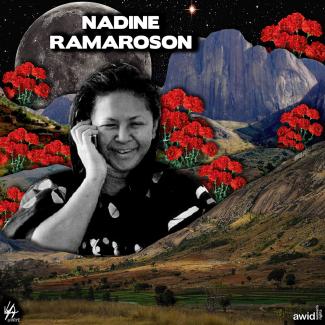
Nadine Ramaroson

Son soutien aux femmes et aux personnes les plus vulnérables de sa communauté a fait que Nadine était un modèle pour beaucoup. Elle était déterminée à aider les pauvres et les sans-abri en particulier.

Bien que sa mort ait été déclarée comme étant accidentelle, la famille Ramaroson, sur l’initiative de son père André Ramaroson, a mené une enquête qui a mis en évidence des preuves de son assassinat. Elle serait décédée dans un accident mortel survenu entre Soanierano - Ivongo et Ste Marie - une histoire qui a été réfutée par sa famille. Elle avait reçu de nombreuses menaces de mort pour ses positions politiques résolues. L’affaire est toujours en cours auprès des tribunaux à Antananarivo (la capitale de Madagascar).


Nadine Ramaroson, Madagascar

What happens to the activity proposals submitted through the CfA?

  1. Activity proposals will initially be screened by AWID staff.
  2. Organizers of shortlisted proposals will then be invited to participate in a voting process, to choose among the shortlisted activities. Those with the most votes will be included in the Forum program. AWID may make a few adjustments to the final selection to ensure our program has an adequate balance across regions, constituencies, issues and methodologies.  
  3. Our Forum Content and Methodology Committee will reach out to the organizers of selected proposals to support them in further developing their activities.

We will update the outcomes of this process in the website in due time.

Snippet FEA Unfair Policies (ES)

Escalas de justicia rosa

POLÍTICAS INJUSTAS

Qual é o objetivo do inquérito WITM?

O objetivo principal do inquérito WITM é chamar a atenção para o estado financeiro dos diversos movimentos feministas, de direitos das mulheres, de justiça de género, de LBTQI+ e de aliados globalmente, e com base nisto, fortalecer ainda mais o argumento para transferir mais recursos de melhor qualidade e poder para os movimentos feministas.

When development initiatives, religious fundamentalisms and the state of women’s rights collide

Nuestro nuevo documento de investigación El diablo se esconde en los detalles aborda la falta de conocimientos sobre los fundamentalismos religiosos en el sector del desarrollo, y se propone comprender mejor de qué manera estos fundamentalismos inhiben el desarrollo y, en particular, los derechos de las mujeres. Propone recomendaciones para que quienes trabajan en temas de desarrollo desafíen la labor de los fundamentalismos y eviten fortalecerlos inadvertidamente. [CTA download link: Leer el documento completo]


Seven pointers to consider


Graphic1 1. Control of women’s bodies, sexuality, and choice are “warning signs” of rising fundamentalisms.
2. Neoliberal economic policies have a particularly negative impact on women, and fuel the growth of religious fundamentalisms. Graphic2
Graphic3 3. Choosing religious organizations as default for partnerships builds their legitimacy and access to resources, and supports their ideology, including gender ideology.
4.Everyone has multiple identities and should be defined by more than just their religion. Foregrounding religious identities tends to reinforce the power of religious fundamentalists. Graphic4
Graphic5 5. Religion, culture, and tradition are constantly changing, being reinterpreted and challenged. What is dominant is always a question of power.
6. Racism, exclusion, and marginalization all add to the appeal of fundamentalists’ offer of a sense of belonging and a “cause”. Graphic6
Graphic7 7. There is strong evidence that the single most important factor in promoting women’s rights and gender equality is an autonomous women’s movement.


Auge global de los fundamentalismos religiosos.

El Diablo se esconde en los detalles proporciona detalles de las graves violaciones a los derechos humanos y, en particular, de las violaciones a los derechos de las mujeres, causados por los fundamentalismos auspiciados por los Estados, así como por actores fundamentalistas no estatales como milicias, organizaciones comunitarias confesionales e individuos. La profundización fundamentalista de normas sociales atávicas y patriarcales está provocando el aumento de la violencia contra las mujeres, las niñas y las defensoras de derechos humanos (WHRDs). El informe propuesta estas ideas clave para abordar el problema:

  • [icon] Fundamentalismos religiosos están ganando terreno en el seno de las comunidades
  • [icon] Sistemas políticos
  • [icon] Escenarios internacionales, con efectos devastadores para la gente común y para las mujeres en particular.


Los agentes de desarrollo deben actuar urgentemente.

Quienes trabajan en el desarrollo están de capacidad de asumir una posición más firme. Su capacidad colectiva para reconocer y enfrentar conjuntamente a los fundamentalismos religiosos resulta crucial para promover la justicia social, económica y de género y los derechos humanos de todas las personas en el marco del desarrollo sostenible.   Resulta fundamental promover que el poder y los privilegios se entiendan desde la óptica del feminismo interseccional y aplicar esta comprensión a los interrogantes sobre religión y cultura. Las organizaciones de mujeres ya poseen conocimientos y estrategias para oponerse a los fundamentalismos. Quienes trabajan en el desarrollo deberían apoyarse en estos e invertir en coaliciones enfocadas en múltiples temáticas. Lo anterior, les ayudará a alcanzar nuevos horizontes.

Become a member - Spanish (homepage block)

Afíliate

Al unirte a AWID, te sumas a un proceso organizativo feminista mundial, un poder colectivo surgido del trabajo entre movimientos y basado en la solidaridad.

Afíliate hoy mismo

Sainimili Naivalu

« J’ai constaté la discrimination dans la rue, que ce soit par des taquineries ou des agressions verbales qui y ont lieu. Je me suis aussi faite plein d’ami·e·s et j’y ai rencontré plusieurs personnes. Il se peut que ce soit dangereux là-bas, mais je suis une survivante, et pour le moment, c’est là où je suis. » -  Sainimili Naival

Sainimili Naivalu était une activiste féministe des droits des personnes handicapées issue du village de Dakuibeqa, sur l’île de Beqa aux Fidji.

Elle a demandé aux responsables et acteurs politiques de fournir des politiques et des services adaptés au handicap, comme la construction de rampes dans les villes et les villages afin d'accroître leur accessibilité. Les barrières physiques n’étaient pas les seules qu’elle aspirait à modifier. Sur la base de sa propre expérience, elle savait que des changements plus difficiles devaient être menés dans les sphères économiques et sociales. Bon nombre des défis avec lesquels sont aux prises les personnes handicapées trouvent leurs racines dans les attitudes discriminantes et stigmatisantes. 

Survivante et combattante, Sainimili a contribué à co-créer des réalités féministes qui renforcent l’inclusion et font évoluer les attitudes par rapport à l’égalité des personnes handicapées. Elle a été membre de la Spinal Injury Association of Fiji (SIA) ainsi que participé à la formation « Démarrez votre entreprise » de l’Organisation internationale du Travail à Suva via le projet « Pacific Enable » (le Pacifique rend possible) du Forum Asie-Pacifique sur le handicap. Elle a ainsi pu transformer ses idées en une entreprise qui lui était propre. Elle était commerçante sur l’étal de marché 7 de Suva, offrant des services de manucure, tout en gérant un stand au marché des femmes SIA pour y vendre de l’artisanat, des suls et des objets historiques. Sainimili planifiait d’élargir son commerce et de devenir une employeuse majeure de personnes handicapées. 

Outre son activisme, elle était également médaillée de tennis de table et une récente championne.

Avec sa personnalité vive, Sainimili était unique. On savait toujours lorsqu’elle était dans la pièce car ses rires et ses histoires étaient la première chose qu’on pouvait remarquer. -  Michelle  Reddy

Sainmili est décédée en 2019.