.
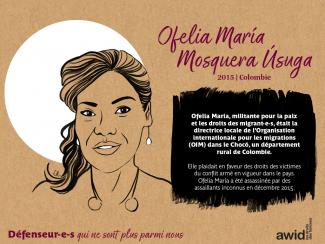
WHRDs are self-identified women and lesbian, bisexual, transgender, queer and intersex (LBTQI) people and others who defend rights and are subject to gender-specific risks and threats due to their human rights work and/or as a direct consequence of their gender identity or sexual orientation.
WHRDs are subject to systematic violence and discrimination due to their identities and unyielding struggles for rights, equality and justice.
The WHRD Program collaborates with international and regional partners as well as the AWID membership to raise awareness about these risks and threats, advocate for feminist and holistic measures of protection and safety, and actively promote a culture of self-care and collective well being in our movements.
WHRDs are exposed to the same types of risks that all other defenders who defend human rights, communities, and the environment face. However, they are also exposed to gender-based violence and gender-specific risks because they challenge existing gender norms within their communities and societies.
We work collaboratively with international and regional networks and our membership
We aim to contribute to a safer world for WHRDs, their families and communities. We believe that action for rights and justice should not put WHRDs at risk; it should be appreciated and celebrated.
Promoting collaboration and coordination among human rights and women’s rights organizations at the international level to strengthen responses concerning safety and wellbeing of WHRDs.
Supporting regional networks of WHRDs and their organizations, such as the Mesoamerican Initiative for WHRDs and the WHRD Middle East and North Africa Coalition, in promoting and strengthening collective action for protection - emphasizing the establishment of solidarity and protection networks, the promotion of self-care, and advocacy and mobilization for the safety of WHRDs;
Increasing the visibility and recognition of WHRDs and their struggles, as well as the risks that they encounter by documenting the attacks that they face, and researching, producing, and disseminating information on their struggles, strategies, and challenges:
Mobilizing urgent responses of international solidarity for WHRDs at risk through our international and regional networks, and our active membership.
.
«Si podemos heredar un trauma, ¿podemos heredar una huella relacionada con el amor?»
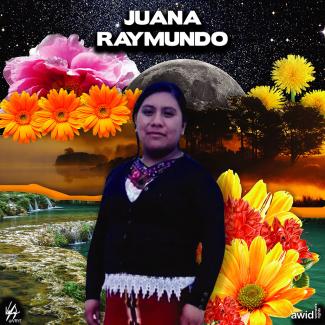
Juana fue una indígena maya ixil, enfermera profesional y coordinadora del Comité de Desarrollo Campesino – CODECA de la microrregión de Nebaj Quiché.
El comité es una organización de derechos humanos formada por granjerxs indígenas dedicada a promover los derechos sobre la tierra y el desarrollo rural para las familias indígenas. Inicialmente, Juana se unió a CODECA como integrante de su rama juvenil, la Juventud de CODECA. Al momento de su muerte, había sido elegida para ser parte del Comité Ejecutivo del Movimiento de Liberación de los Pueblos (MLP).
Su cuerpo fue encontrado por lxs vecinxs, junto a un pequeño río en el camino cerca de Nebaj y Villa Acambalam, en Guatemala. Según CODECA, el cuerpo de Juana mostraba signos de tortura.
Faye is a passionate Pan-African feminist, active in movements for women's rights, racial justice, migrant and labor rights, and environmental justice. Her activism builds on the legacy of the struggle against apartheid in South Africa and the aftermath of the apartheid era in Zimbabwe.
In 2019, Faye joined AWID as the Director of Finance, Operations and Development, and strived to ensure that AWID upholds the feminist principles and values in all of its operations. She brings over 20 years of experience in feminist leadership, strategy, and all aspects of finance and organizational development.
Faye is a committed Board Member of UAF-Africa and other women's rights organizations. She previously held a Head of Finance and Operations roles at Paediatric Adolescent Treatment for Africa and JASS - Just Associates Inc. in Southern Africa. She also held Directorship roles for International Computer Driving Licence (ICDL) in Central and Southern Africa. She holds a Bcompt in Accounting Science from University of South Africa and is a member of the Southern African Institute for Business Accountants.
Mientras el capitalismo heteropatriarcal continúa forzándonos al consumismo y el acatamiento, observamos que nuestras luchas están siendo compartimentadas y separadas por fronteras tanto físicas como virtuales.

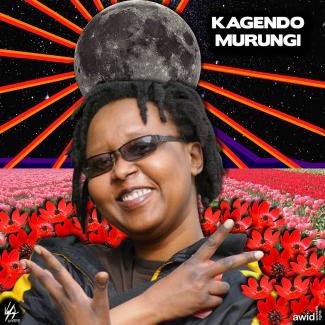
Sa famille et ses ami-e-s se souviennent de Kagendo comme d'une activiste, féministe, artiste et cinéaste africaine acharnée
Elle a consacré plus de 20 ans à défendre les droits et la dignité des personnes LGBTIQ d'Afrique et des personnes non conformes du genre. Les collègues de Kagendo se souviennent d'elle comme une personne à la personnalité joviale, à la conviction sans faille et qui aimait la vie. Kagendo est décédée de cause naturelle chez elle à Harlem le 27 décembre 2017.
L'écrivaine et activiste kényane, Shailja Patel, a commenté son décès en ces termes « Tout au long de sa vie, l'engagement de Kagendo à établir des liens entre toutes les formes d’oppressions et à montrer comment le colonialisme a favorisé l'homophobie sur le continent africain, a contribué à rapprocher le Kenya d’un pays où les personnes queer et les femmes indépendantes pourraient vivre et prospérer. »
Juhi es una entusiasta de las tecnologías. Posee una licenciatura en Ingeniería Informática de la Universidad Tecnológica de Gujarat y formación de posgrado en Telecomunicaciones Inalámbricas y Gestión de Proyectos del Instituto Universitario Humber. Apasionada de la resolución de problemas y de mantenerse a la vanguardia en el panorama tecnológico en constante evolución, Juhi se ha encontrado recorriendo diversas industrias como técnica en Tecnologías de la Información. Ha tenido oportunidad de aplicar sus competencias técnicas en distintos entornos, siempre abrazando los nuevos desafíos con entusiasmo. Más allá de los códigos y los circuitos, le encantan las aventuras de la vida. Explorar nuevos lugares y culturas es para ella una bocanada de aire fresco. Ya sea que se trate de descubrir alguna joya oculta en la ciudad, de probar algún plato exótico o de embarcarse en algún deporte de aventura, Juhi siempre está predispuesta a vivir nuevas experiencias.
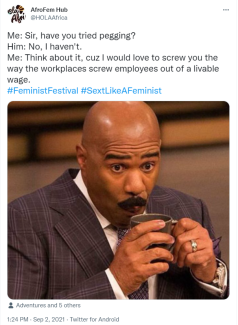
Yo: Señor, ¿probó por el culo?
Él: No, no probé.
Yo: Piénselo, porque me gustaría cogérmelo / joderlo tal como a lxs trabajadorxs nos cogen / joden en los trabajos cuando lo que nos pagan no alcanza para vivir.
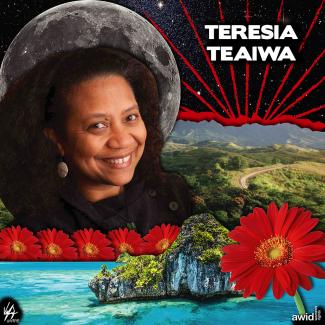
Described by the Guardian as one of Kiribati’s national icons, Teresia was a fearless advocate who worked closely with feminist groups in Fiji.
She used her research to address the issues of feminism and gender in the Pacific, as well as being co-editor of the International feminist Journal of Politics. Her influence spanned the academic frontier as well as social justice movements in the Oceania region.
Michelle est une féministe d'Asie du Sud-Est qui aime concerterer pour rassembler des gens et susciter des conversations en faveur du changement social et du partage des connaissances féministes, à travers l'art, la poésie, la musique et les jeux. Forte d'une expérience en plaidoyer digital et en développement de stratégies de communication, elle a contribué à des initiatives en matière de droits digitaux, de recherche sur les droits humains et de création de coalitions de la société civile dans toute l'Asie du Sud-Est. Elle est titulaire d'une licence de droit de l'Université nationale de Singapour, aime se balader dans des rues au hasard de la ville et apprécie un peu trop le café.
Moriviví is a collective of young female artists, working on public art since April 2013. Based in Puerto Rico, we’ve gained recognition for the creation of murals and community led arts.
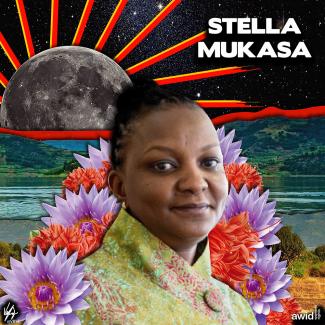
Stella comenzó su carrera en el Ministerio de Género y Desarrollo Comunitario en Uganda colaborando con lxs legisladores en reformas legales, incluida la Constitución de Uganda de 1995, que estableció algunas de las reformas más progresistas para las mujeres en la región.
Stella es respetada y admirada en toda la región por sus incansables esfuerzos para crear y hacer cumplir leyes y políticas que tomen en cuenta cuestiones de género. También desempeñó un papel clave en la redacción de la Ley de Violencia Doméstica de Uganda y en la movilización de apoyo para las constituciones sensibles al género tanto en Uganda como en Ruanda.
A través de su trabajo con el Centro Internacional para la Investigación sobre la Mujer (ICRW, por sus siglas en inglés), abordó la violencia contra lxs niñxs y trabajó para fortalecer las capacidades de las organizaciones de base que abordan la violencia de género. Stella fue profesora en cursos sobre derechos de género y la ley, en la Universidad Makerere, y formó parte de las juntas directivas de Akina Mama wa Afrika, ActionAid International Uganda y Open Society Initiative para África Oriental.
During her 38-year career, Debbie Stothard, has worked with diverse communities and activists to engage states, IGOs and other stakeholders throughout Asia, Africa, Europe, and the Americas on human rights and justice. Her work is focused on the thematic priorities of business and human rights, atrocity prevention, and women’s leadership. Accordingly, she has either facilitated or been a resource person at nearly 300 training events in the past 15 years. Most of these were grassroots-oriented workshops delivered in the field, focused on human rights advocacy, economic literacy and business and human rights, and transitional justice and atrocity prevention. Her work in transitional justice and atrocity prevention has mainly focused on Burma/Myanmar, however she has provided advice on responses to other country situations around the world.
During 1981 – 1996, Debbie worked as a crime reporter, student organizer, policy analyst, academic, government advisor and food caterer in Malaysia and Australia while volunteering for human rights causes. In 1996, she founded ALTSEAN-Burma which spearheaded a range of innovative and empowering human rights programs. This includes ALTSEAN’s ongoing intensive leadership program for diverse young women from Burma, which in the past 22 years, has helped strengthen and expand women’s leadership in conflict-affected zones. She served as a member of the Board of the International Federation for Human Rights (FIDH) for 9 years as Deputy Secretary-General (2010-2013) and Secretary-General (2013 – 2019) during which she promoted the mission and profile of FIDH at approximately 100 meetings and conferences per year.
En colaboración con la artista Naadira Patel, creamos un álbum que resalta algunos momentos de las últimas cuatro décadas de apoyo a los movimientos feministas por parte de AWID.