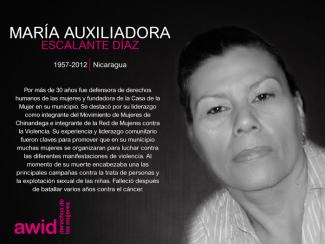
Maria Auxiliadora Escalante Diaz
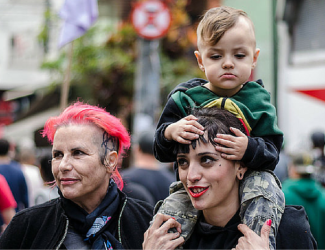
Over the past few years, a troubling new trend at the international human rights level is being observed, where discourses on ‘protecting the family’ are being employed to defend violations committed against family members, to bolster and justify impunity, and to restrict equal rights within and to family life.
The campaign to "Protect the Family" is driven by ultra-conservative efforts to impose "traditional" and patriarchal interpretations of the family, and to move rights out of the hands of family members and into the institution of ‘the family’.
Since 2014, a group of states have been operating as a bloc in human rights spaces under the name “Group of Friends of the Family”, and resolutions on “Protection of the Family” have been successfully passed every year since 2014.
This agenda has spread beyond the Human Rights Council. We have seen regressive language on “the family” being introduced at the Commission on the Status of Women, and attempts made to introduce it in negotiations on the Sustainable Development Goals.
AWID works with partners and allies to jointly resist “Protection of the Family” and other regressive agendas, and to uphold the universality of human rights.
In response to the increased influence of regressive actors in human rights spaces, AWID joined allies to form the Observatory on the Universality of Rights (OURs). OURs is a collaborative project that monitors, analyzes, and shares information on anti-rights initiatives like “Protection of the Family”.
Rights at Risk, the first OURs report, charts a map of the actors making up the global anti-rights lobby, identifies their key discourses and strategies, and the effect they are having on our human rights.
The report outlines “Protection of the Family” as an agenda that has fostered collaboration across a broad range of regressive actors at the UN. It describes it as: “a strategic framework that houses “multiple patriarchal and anti-rights positions, where the framework, in turn, aims to justify and institutionalize these positions.”
Fin 2019, les événements en Indonésie - notamment les signes d’intensification de la militarisation et de reculs des droits LGBTQ – nous ont amené·e·s à questionner la capacité de l’AWID à maintenir un environnement sécurisé et accueillant pour les divers·es participant·e·s que nous voulons rassembler au Forum.
Après un examen attentif, la Direction de l’AWID a décidé en novembre 2019 de faire évoluer le lieu de tenue du 14ème Forum international de l’AWID, de Bali à Taipei.
Taipei dispose de fortes capacités logistiques et est accessible pour beaucoup de voyageurs·ses (avec une facilitation de procédure de visa électronique pour les conférences internationales).
Pour plus d’informations :
Asociación de Mujeres Afrodescendientes del Norte del Cauca (ASOM)

To strengthen our collective voice and power for more and better funding for feminist, women's rights, LBTQI+ and allied organizing globally
Contenu lié
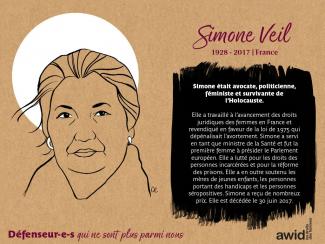
Huffington Post: Mort de Simone Veil: l'ancienne ministre de la Santé est décédée ce vendredi
Le Monde: Mort de Simone Veil, icône de la lutte pour les droits des femmes

("exchange hand")
Term of the black communities of the Northern Cauca for the minga, the collective work based on solidarity and mutual support.
El 11 de julio de 2024, tuvimos una conversación increíble con grandes feministas sobre el estado del ecosistema de financiación y el poder de la investigación "¿Dónde está el dinero?".
Le agradecemos de manera especial a Cindy Clark (Thousand Currents), Sachini Perera (RESURJ), Vanessa Thomas (Black Feminist Fund), Lisa Mossberg (SIDA) y Althea Anderson (Hewlett Foundation).
Recuerda: ¡la encuesta permanecerá abierta hasta el 31 de agosto de 2024!
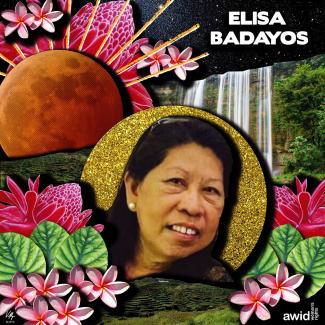
She also served as an organiser of urban poor communities in Cebu Province, and worked with Desaparecidos, an organization of families of the disappeared.
Elisa and two of her colleagues were killed on November 28, 2017 by two unidentified men at Barangay San Ramon, Bayawan city in the Negros Oriental province during a mission to investigate alleged land rights abuses in the area.
She is survived by four children.

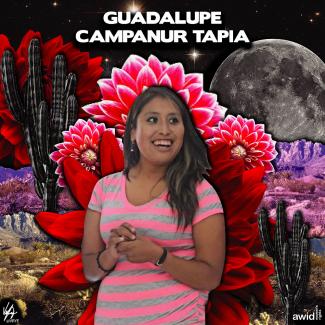
Guadalupe fue una activista ambiental comprometida en la lucha contra el crimen en Cherán, México.
En abril de 2011 ayudó a derrocar el gobierno local, y participó en patrullas locales de seguridad, que abarcaban los bosques municipales. Era unx de lxs líderes indígenas de Cherán que llamaban a la población a defender sus bosques contra la tala forestal ilegal y despiadada. Su trabajo en defensa de adultxs mayores, niñxs y trabajadorxs la convirtió en un ícono de su comunidad.
Fue asesinada en Chilchota, México, aproximadamente 30 kilómetros al norte de su ciudad natal de Cherán.
Les Femmes Maintiennent les Soins | Les Soins Soutiennent la Vie | La Vie Soutient l'Économie | Qui s'Occupe des Femmes ? | Pas Une de Moins1 | Ensemble | Déjeuner du Dimanche
1Nenhuna a menos se traduit littéralement par « pas une femme de moins » ou « ni una menos » en espagnol - un célèbre slogan féministe en Amérique latine qui a émergé en Argentine en réponse à l'augmentation de la violence sexiste.
No. Valoramos tu trabajo, pero no estamos buscando respuestas de personas a título individual por el momento.
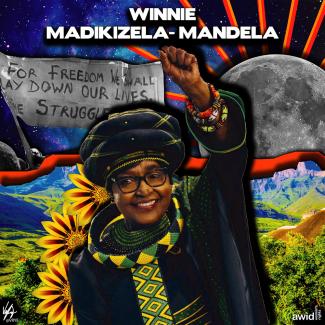
Winnie a été décrite comme une « militante enflammée » qui a combattu le régime de l’apartheid en Afrique du Sud.
Son engagement lui a valu d’être emprisonnée et placée en cellule d’isolement de nombreuses fois.
Affectueusement surnommée Ma’Winnie, elle était connue pour être quelqu’un qui parlait ouvertement des défis auxquels les femmes noires étaient confrontées pendant et après l’apartheid et cela, après avoir elle-même subi ces brutalités en tant que mère, épouse et militante pendant la lutte. Elle a su transcender l'idée couramment répandue selon laquelle le leadership est fondé sur le genre, la classe ou la race. Bien qu’étant une personnalité controversée, elle était connue par son nom xhosa, « Nomzamo », qui signifie « celle qui supporte les épreuves ».
Ma’Winnie continue d’être une source d’inspiration pour de nombreuses personnes, en particulier des jeunes femmes sud-africaines.
Sa mort a impulsé la naissance d’un mouvement qui a pour mantra : « Elle n’est pas morte, elle s’est multipliée ».