Flickr/Leonardo Veras (CC BY 2.0)

Special Focus

AWID is an international, feminist, membership organisation committed to achieving gender equality, sustainable development and women’s human rights

Protection of the Family

The Issue

Over the past few years, a troubling new trend at the international human rights level is being observed, where discourses on ‘protecting the family’ are being employed to defend violations committed against family members, to bolster and justify impunity, and to restrict equal rights within and to family life.

The campaign to "Protect the Family" is driven by ultra-conservative efforts to impose "traditional" and patriarchal interpretations of the family, and to move rights out of the hands of family members and into the institution of ‘the family’.

“Protection of the Family” efforts stem from:

  • rising traditionalism,
  • rising cultural, social and religious conservatism and
  • sentiment hostile to women’s human rights, sexual rights, child rights and the rights of persons with non-normative gender identities and sexual orientations.

Since 2014, a group of states have been operating as a bloc in human rights spaces under the name “Group of Friends of the Family”, and resolutions on “Protection of the Family” have been successfully passed every year since 2014.

This agenda has spread beyond the Human Rights Council. We have seen regressive language on “the family” being introduced at the Commission on the Status of Women, and attempts made to introduce it in negotiations on the Sustainable Development Goals.


Our Approach

AWID works with partners and allies to jointly resist “Protection of the Family” and other regressive agendas, and to uphold the universality of human rights.

In response to the increased influence of regressive actors in human rights spaces, AWID joined allies to form the Observatory on the Universality of Rights (OURs).  OURs is a collaborative project that monitors, analyzes, and shares information on anti-rights initiatives like  “Protection of the Family”.

Rights at Risk, the first OURs report, charts a map of the actors making up the global anti-rights lobby, identifies their key discourses and strategies, and the effect they are having on our human rights.   

The report outlines “Protection of the Family” as an agenda that has fostered collaboration across a broad range of regressive actors at the UN.  It describes it as: “a strategic framework that houses “multiple patriarchal and anti-rights positions, where the framework, in turn, aims to justify and institutionalize these positions.”


Related Content

Remembering: A Tribute to WHRDs no longer with us

AWID honors feminists and Women Human Rights Defenders (WHRDs) who have died and whose contributions to the advancement of human rights are very much missed.


Celebrating Activists and WHRDs

AWID’s WHRD Tribute is a photo exhibition featuring feminist, women’s rights and social justice activists from around the world who are no longer with us. 

The Tribute was first launched in 2012, at AWID’s 12th International Forum, in Turkey. It took shape with a physical exhibit of portraits and biographies of feminists and activists who passed away. The initiative was described by Forum participants as being a unique, moving and energizing way to commemorate our collective history.

At the 13th International Forum in Brazil, we honored activists and WHRDs with a mural unveiling ceremony in four languages, a dance performance and a Brazilian ritual.

In between the events, the Tribute lives as an online gallery that is updated every year as part of the 16 Days Campaign Against Gender Based Violence (25 November – 10 December).

Contributions from all over the world

Since 2012, through our annual Tribute to Women Human Rights Defenders (WHRDs) no longer with us, over 400 feminists and WHRDs from 11 regions and 80 countries have been featured. 

AWID would like to thank the families and organizations who shared their personal stories and contributed to this memorial. We join them in continuing the remarkable work of these women and forging efforts to ensure justice is achieved in cases that remain in impunity.

Visit the WHRD Tribute online exhibit

The violence and threaths against WHRDs persist

In addition to paying homage to these incredible activists, the Tribute particularly sheds light on the plight of WHRDs who have been assassinated or disappeared.

One third of those featured in the Tribute were activists who have been murdered or disappeared in suspicious circumstances. They were specifically targeted for who they were and the work they did to challenge: 

  • State power
  • Heteronormativity
  • Fundamentalisms
  • Corporations
  • Patriarchy
  • Organized Crime
  • Corruption
  • Militarization…

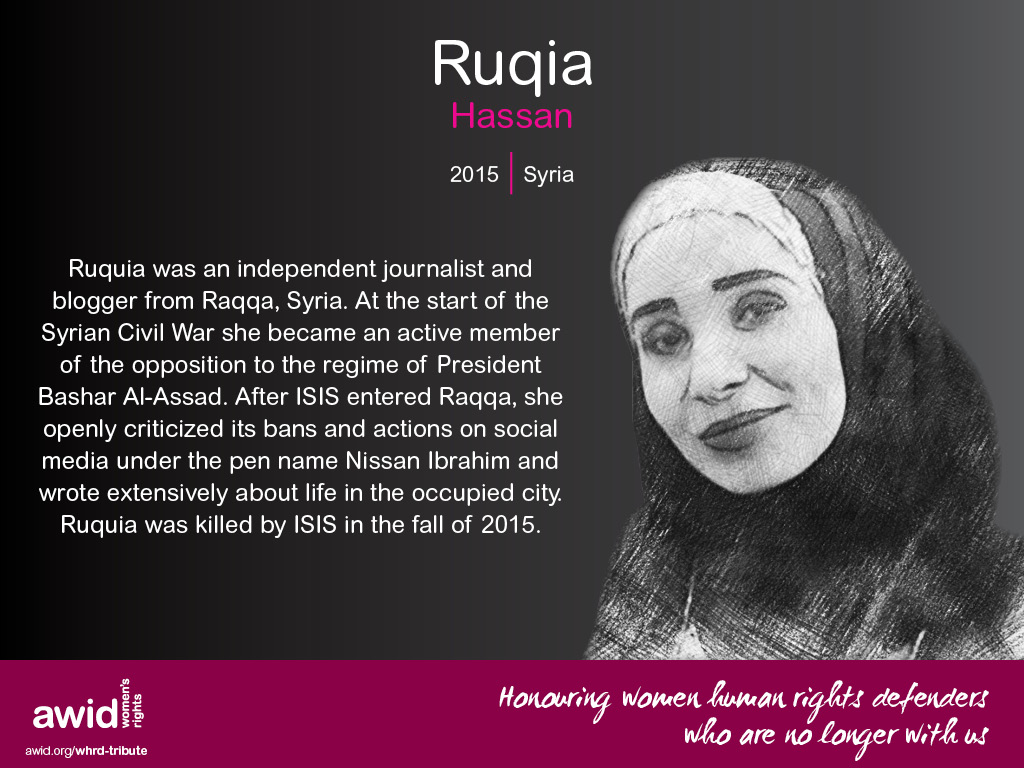
Women like Agnes Torres, from Mexico, was killed because of her gender identity and sexual orientation; or Cheryl Ananayo, an environmental activist from the Philippines was assassinated as she struggled against a mining company; or Ruqia Hassan, a Syrian independent journalist and blogger killed for her criticism of ISIS. And so many others.

With the WHRD Tribute, we bring them all into our collective memory and carry their legacy of struggle as our torch in the feminists’ and women’s rights movements. We recognize that security, safety and self-care must be a priority in all our political agendas. And we call on to governments and international bodies to collectively address violence against feminists and WHRDs.

We believe this is a critical step to ensure the sustainability of our movements for gender equality, women’s rights, and justice for all.

Visit the WHRD Tribute online exhibit

Our group, organization and/or movement is not registered, should we take the survey anyway?

Absolutely, we want to hear about your experience with resourcing.

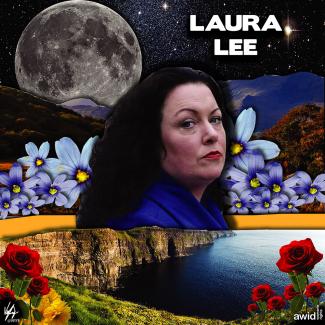
Laura Lee

Laura was a leading activist and lawyer who campaigned fearlessly for the decriminalisation of sex work in Ireland.

She is remembered as “a freedom fighter for sex workers, a feminist, a mother to a daughter and a needed friend to many.” 

Laura advocated for individuals in the sex industry to be recognised as workers deserving of rights. She advanced demands for decriminalisation, including initiating a judicial review at Belfast’s high court in respect of the provisions criminalising the purchase of sex.  Laura stated that her intention was to bring the case to the European Court of Human Rights.


Laura Lee, Ireland

En quelles langues les informations seront-elles disponibles sur le Forum ?

Anglais, français, espagnol et chinois mandarin.

Snippet FEA Ecofeminism (FR)

Afrique de l’Ouest

NOUS SOMMES LA SOLUTION


ÉCOFÉMINISME :

Le Respect de Tout ce que Nous Avons Autour de Nous

En su lucha por los derechos humanos enfrentan la injusticia en América Latina

Este año honramos a 19 defensoras de la región de América Latina y el Caribe. De ellas, 16 fueron asesinadas, incluyendo a 6 periodistas y 4 defensoras LGBTQI. Únete a nosotras en la conmemoración de  sus vidas y trabajo,  compartiendo los memes aquí incluidos con tus colegas, amistades y redes; y tuiteando las etiquetas #WHRDTribute y #16Días.


Por favor, haz click en cada imagen de abajo para ver una versión más grande y para descargar como un archivo.

[scald=2398:sdl_editor_representation]
[scald=2396:sdl_editor_representation]
[scald=2393:sdl_editor_representation]
[scald=2390:sdl_editor_representation]
[scald=2389:sdl_editor_representation]
[scald=2388:sdl_editor_representation]


¿Qué entienden por financiamiento externo?

El financiamiento externo incluye donaciones y otras formas de financiamiento provenientes de fundaciones filantrópicas, gobiernos, donantes bilaterales, multilaterales y corporativos y de donantes individuales, ya sea que estos se encuentren radicados en tu país o en el exterior. Excluye aquellos recursos que las agrupaciones, organizaciones o movimientos generan de manera autónoma como, por ejemplo, cuotas de membresía, contribuciones voluntarias del personal, afiliadxs o adherentes, colectas comunitarias, alquiler de espacios propios o venta de servicios. Para consultar más referencias, en la propia encuesta se encuentran incluidas las definiciones de los distintos tipos de financiamiento y descripciones breves de distintos tipos de donantes.

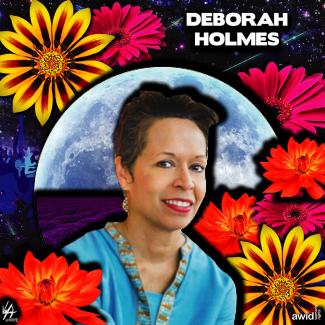
Deborah Holmes

Al momento de su muerte, luego de una corta pero denodada batalla contra el cáncer, Deborah era la Jefa de Comunicaciones y Participación en la Women’s Funding Network (WFN, Red de financiamiento para mujeres).

Deborah también trabajó para el Fondo Global de Mujeres entre 2008 y 2017. Era sumamente querida y respetada por el consejo asesor, el personal y lxs colaboradorxs de la organización.

Kavita Ramdas, anterior directora ejecutiva del Fondo, acertadamente señaló que Deborah era un «pequeño paquete que explotaba de calidez, generosidad, inteligencia, estilo y un apasionado compromiso por unir la belleza con la justicia. Ella entendía el poder de las historias. El poder de la voz de las mujeres. El poder de la experiencia vivida. El poder de levantarse de las cenizas y decirle a otrxs que era posible. Y todavía nos levantamos».

Musimbi Kanyoro, actual directora ejecutiva del Fondo Global de Mujeres, añadió: «Hemos perdido a una hermana y su vida ilumina valores que nos unen y nos inspiran. Al reunirnos para llorar el fallecimiento de Deborah, recordemos y celebremos su notable, audaz y apasionada vida».


Deborah Holmes, USA

Qu'advient-il des propositions envoyées à travers l'appel à activités ??

  1. Les propositions d’activité seront initialement présélectionnées par l’équipe de l’AWID
  2. Les organisateurs·trices des propositions retenues seront ensuite invité·e·s à voter pour choisir les activités finales. Celles qui auront obtenu le plus de votes seront incluses au programme du Forum. L'AWID pourra procéder à quelques ajustements à la sélection finale pour s'assurer que notre programme présente un équilibre adéquat entre les régions, les groupes d'intérêt, les enjeux et les méthodologies.  
  3. Notre Comité contenu et méthodologie du Forum prendra contact avec les organisateurs·trices des propositions sélectionnées pour les aider à développer davantage leurs activités.

Nous mettrons le site à jour avec les informations pertinantes le moment venu.

Snippet FEA Mariama Sonko (FR)

Nous avons le plaisir de vous présenter Mariama Sonko, agricultrice rurale, éco-féministe et défenseuse des droits humains, vivant actuellement à Niaguis, une ville du sud-ouest du Sénégal.

Ayant grandi dans une famille et une communauté rurale d’agriculteur·rices, elle a été témoin du rôle essentiel des femmes dans la production alimentaire et la conservation des semences depuis son plus jeune âge, tout en étant immergée dans le travail de la terre.

Mariama défend les savoirs agricoles locaux et les pratiques paysannes depuis les années 90. En tant que mère de 5 enfants, la nourriture qu'elle cultive elle-même est la principale source de subsistance de sa famille.

Elle est actuellement présidente de Nous Sommes la Solution et s'engage à promouvoir les pratiques agroécologiques et l'agriculture familiale, à encourager la souveraineté alimentaire, la biodiversité et la préservation des semences paysannes, et à exiger un accès équitable aux ressources et à la terre à travers l'Afrique de l'Ouest.

Source: AWID’s Feminist Realities Festival Crear | Résister | Transform - Day 2/ 2ème jour/ 2º día

WHRDs from the South and Southeast Asian region

7 Women Human Rights Defenders from across the South and Southeast Asian region are honored in this year’s Online Tribute. These defenders have made key contributions to advancing human and women’s rights, indigenous people’s rights, and the right to education. These WHRDs were lawyers, women’s rights activists, scholars, and politicians. Please join AWID in commemorating t their work and legacy by sharing the memes below with your colleagues, networks and friends and by using the hashtags #WHRDTribute and #16Days. 


Please click on each image below to see a larger version and download as a file


Ma langue ne fait pas partie des langues officielles de l’enquête, et j’ai du mal à y répondre - que puis-je faire?

L’AWID est engagée en faveur de la justice linguistique, et nous regrettons que l’enquête WITM ne puisse, à l’heure actuelle, être accessible dans d’autres langues. Cependant, si vous avez besoin d’une aide à la traduction ou que vous souhaitez participer à l’enquête dans une autre langue, n’hésitez pas à nous contacter à l’adresse witm@awid.org.

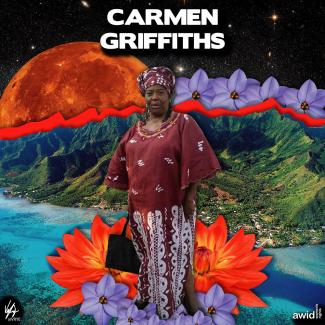
Carmen Griffiths

Carmen dirigeait le Construction Resource and Development Collective et a joué un rôle de premier plan en faveur de la participation des femmes dans l’industrie de la construction en Jamaïque.

Elle a également œuvré à la préparation aux catastrophes de femmes rurales et urbaines. Elle a travaillé en étroite collaboration avec les femmes (en particulier les mères célibataires) pour leur apprendre à utiliser les sangles anti-ouragan ainsi que d’autres technologies pour sécuriser leur foyer. Elle a travaillé dans le domaine de l’eau et de l’assainissement et a été une ardente défenseure d’une gestion durable de l’environnement et du développement.

Elle faisait partie de la Commission Huairou et plaidait en faveur des femmes de la base sur des questions telles que le logement, l'énergie et les moyens de subsistance durables.


Carmen Griffiths, Jamaica

Ai-je besoin d’un visa pour assister au Forum à Taipei ?

Vous N’AVEZ PAS besoin d’un visa pour assister au Forum à Taipei si vous détenez un passeport émis par l’un des pays suivants (la durée de séjour autorisée varie d’un pays à l’autre) :

Allemagne, Andorre, Australie, Autriche, Belgique, Belize, Bulgarie, Brunei, Canada, Chili, Chypre, Croatie, Danemark, Espagne, Estonie, Eswatini, État de la Cité du Vatican, États-Unis, Finlande, France, Grèce, Guatemala, Haïti, Honduras, Hongrie, Îles Marshall, Islande, Irlande, Israël, Italie, Japon*, Lettonie, Liechtenstein, Lituanie, Luxembourg, Malaisie, Malte, Monaco, Nauru, Nicaragua, Norvège, Nouvelle-Zélande, Palaos, Paraguay, Pays-Bas, Philippines, Pologne, Portugal, République de Corée, République dominicaine, République tchèque, Roumanie, Royaume-Uni, Russie, Saint-Christophe-et-Niévès, Sainte-Lucie, Saint-Marin, Saint-Vincent-et-les-Grenadines, Singapour, Slovaquie, Slovénie, Suède, Suisse, Tuvalu.

Les personnes détentrices de tout autre passeport AURONT BESOIN D’UN VISA pour se rendre à Taipei.


Remarque :

Une fois inscrit·e au Forum, il est probable que vous receviez un code relatif à l’événement vous permettant de demander un visa en ligne, quelle que soit votre nationalité.

Nous vous donnerons plus d’informations à ce sujet après l’ouverture du processus d’inscription. 
 

Snippet FEA Bio fertilizer and Sum-Pack (EN)

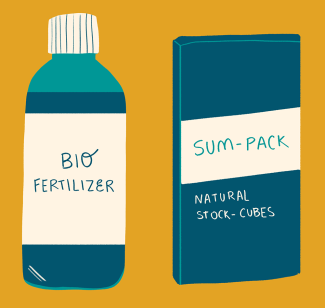
ILLUSTRATION OF NSS Products: Bio fertilizer and Sum-Pack - Natural stock cubes

Before you begin

Before starting the WITM research methodology, it is important you prepare the background and know what to expect.


Capacity

With AWID’s WITM research methodology, we recommend that you first review the entire toolkit.

While this toolkit is designed to democratize WITM research, there are capacity constraints related to resources and research experience that may affect your organization’s ability use this methodology.

Use the “Ready to Go?” Worksheet to assess your readiness to begin your own WITM research. The more questions you can answer on this worksheet, the more prepared you are to undertake your research.

Trust

Before beginning any research, we recommend that you assess your organization’s connections and trust within your community.

In many contexts, organizations may be hesitant to openly share financial data with others for reasons ranging from concerns about how the information will be used, to fear of funding competition and anxiety over increasing government restrictions on civil society organizations.

As you build relationships and conduct soft outreach in the lead-up to launching your research, ensuring that your objectives are clear will be useful in creating trust. Transparency will allow participants to understand why you are collecting the data and how it will benefit the entire community.

We highly recommend that you ensure data is collected confidentially and shared anonymously. By doing so, participants will be more comfortable sharing sensitive information with you. 


First step

1. Gather your resources

We also recommend referring to our “Ready to Go?” Worksheet to assess your own progress.

How much time does the survey take to complete?

The estimated time to complete the survey is 30 minutes.