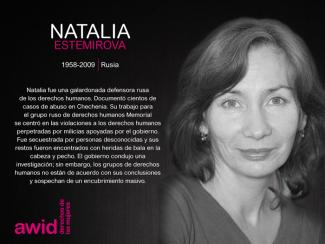
Natalia Estemirova
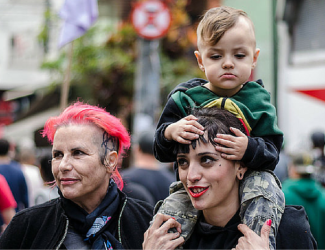
Over the past few years, a troubling new trend at the international human rights level is being observed, where discourses on ‘protecting the family’ are being employed to defend violations committed against family members, to bolster and justify impunity, and to restrict equal rights within and to family life.
The campaign to "Protect the Family" is driven by ultra-conservative efforts to impose "traditional" and patriarchal interpretations of the family, and to move rights out of the hands of family members and into the institution of ‘the family’.
Since 2014, a group of states have been operating as a bloc in human rights spaces under the name “Group of Friends of the Family”, and resolutions on “Protection of the Family” have been successfully passed every year since 2014.
This agenda has spread beyond the Human Rights Council. We have seen regressive language on “the family” being introduced at the Commission on the Status of Women, and attempts made to introduce it in negotiations on the Sustainable Development Goals.
AWID works with partners and allies to jointly resist “Protection of the Family” and other regressive agendas, and to uphold the universality of human rights.
In response to the increased influence of regressive actors in human rights spaces, AWID joined allies to form the Observatory on the Universality of Rights (OURs). OURs is a collaborative project that monitors, analyzes, and shares information on anti-rights initiatives like “Protection of the Family”.
Rights at Risk, the first OURs report, charts a map of the actors making up the global anti-rights lobby, identifies their key discourses and strategies, and the effect they are having on our human rights.
The report outlines “Protection of the Family” as an agenda that has fostered collaboration across a broad range of regressive actors at the UN. It describes it as: “a strategic framework that houses “multiple patriarchal and anti-rights positions, where the framework, in turn, aims to justify and institutionalize these positions.”
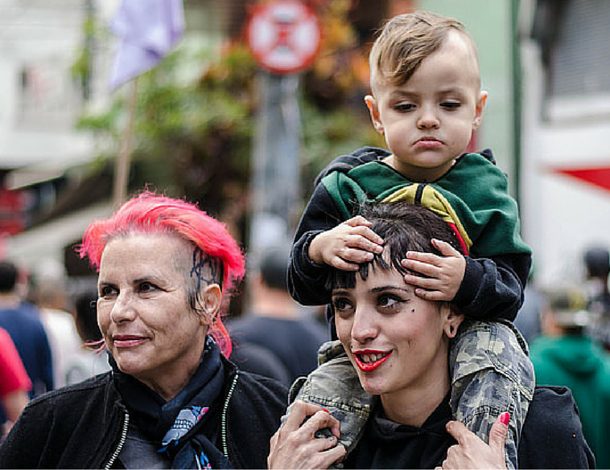
Feminist, women’s rights, gender justice, LBTQI+ and allied movements around the world are at a critical juncture, facing a powerful backlash on previously-won rights and freedoms. Recent years have brought the rapid rise of authoritarianism, violent repression of civil society, criminalization of women and gender-diverse human rights defenders, escalating war and conflict in many parts of our world, continued perpetuation of economic injustices, and the intersecting health, ecology and climate crises.
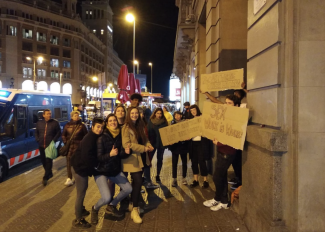
The Sex Workers' Trade Union Organisation (Organización de Trabajo Sexual, OTRAS) is the first union of sex workers in the history of Spain. It was born out of the need to ensure social, legal and political rights for sex workers in a country where far-right movements are on the rise.
After years of struggles against the Spanish legal system and anti-sex workers groups who petitioned to shut it down, OTRAS finally obtained its legal status as a union in 2021.
Its goal? To decriminalize sex work and to ensure decent working conditions and environments for all sex workers.
The union represents over 600 professional sex workers, many of whom are migrant, trans, queer and gender-diverse.
We celebrate everyone's right to choose their identities, relationships, goals, work, dreams and pleasures, and what they do with their mind, body and spirit. We believe in working towards access to resources, information and safe and enabling environments that allow this to happen.
Bienvenue à Crear | Résister | Transform : un festival dédié aux mouvements féministes !
L'AWID s'engage à créer un espace en ligne qui nous invite et nous pousse tou·te·s à faire preuve de courage, de curiosité, de générosité et de responsabilité partagée.
Nous vous invitons à créer à nos côtés des espaces sans harcèlement ni violence, où chacun·e est respecté·e dans son identité et son expression de genre, sa race, ses capacités, sa classe, sa religion, sa langue, son ethnicité, son âge, sa profession, son type d'éducation, sa sexualité, sa taille et son apparence physique. Des espaces où nous reconnaissons les inégalités de notre monde et où nous nous efforçons de les transformer au gré de nos propres interactions avec les autres.
Soyez là les un·e·s pour les autres en étant activement à l’écoute. Essayons de nous sentir proches, même si tout est virtuel. Pour cela, vous aurez accès à l’interprétation de la discussion et à des moyens de communications ouverts (comme la boîte de dialogue et autres outils) pour réagir et échanger. Nous vous recommandons de porter des écouteurs ou un casque pendant la séance pour mieux entendre les autres et vous faire entendre. Dans la mesure du possible, essayez de fermer votre messagerie électronique ou toute autre distraction pendant que vous prenez part à la discussion.
Célébrons les multiples façons dont le savoir se manifeste dans nos vies. Nous vous invitons à aborder la conversation avec curiosité et ouverture d’esprit pour apprendre des autres, en se permettant de désapprendre et de réapprendre à travers ces échanges, comme une manièrede commencer à construire collectivement des connaissances.
Nous nous engageons à adopter une approche holistique de l'accessibilité en tenant compte des différents besoins physiques, linguistiques, mentaux et de sécurité. Nous voulons un espace qui accueille des personnes d'origines, de croyances, de capacités et d'expériences différentes. Nous anticiperons au mieux mais vous demanderons également de nous communiquer vos besoins, et nous ferons de notre mieux pour y répondre.
Nous nous engageons tou·te·s individuellement et collectivement à respecter la vie privée de chacun·e· et à demander le consentement des autres avant de partager des images ou du contenu qui les concerne, générés au cours de la conversation.
Créer un environnement sécurisé, respectueux et agréable durant ces conversations est la responsabilité de tou·te·s .
Si vous remarquez qu'une personne a un comportement discriminatoire ou offensant, veuillez contacter la personne de référence qui vous sera indiquée en début de session.
Tout·e participant·e qui utilisera un langage ou des images abusives sera exclu·e de la conversation et ne sera pas réadmis·e. Nous n’aurons plus de relations avec cette personne de quelque manière que ce soit.

1 |
Provide AWID members, movement partners and funders with an updated, powerful, evidence-based, and action-oriented analysis of the resourcing realities of feminist movements and current state of the feminist funding ecosystem. |
2 |
Identify and demonstrate opportunities to shift more and better funding for feminist organizing, expose false solutions and disrupt trends that make funding miss and/or move against gender justice and intersectional feminist agendas. |
3 |
Articulate feminist visions, proposals and agendas for resourcing justice. |
Al unirme a AWID, espero poder ayudar a la movilización del movimiento feminista. No solo para las mujeres privilegiadas, sino para TODAS las mujeres y activistas feministas.- Angelina Mootoo, feminista interseccional y caribeña, Guyana/EEUU
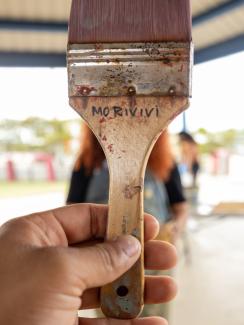
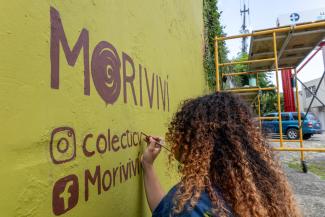
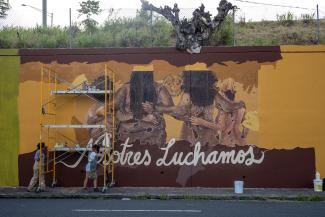
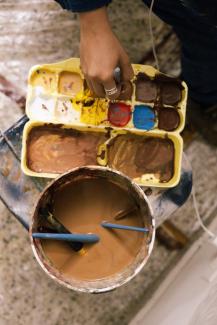
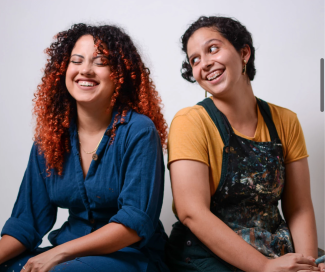
Colectivo Moriviví is an all women artistic collective. Our artistic production consists of muralism, community-led muralism, and protest performance/actions. Our work is about democratizing art and bringing the narratives of Puerto Rican communities to the public sphere to create spaces in which they are validated. We believe that through artivism we can promote consciousness on social issues and strengthen our collective memory.
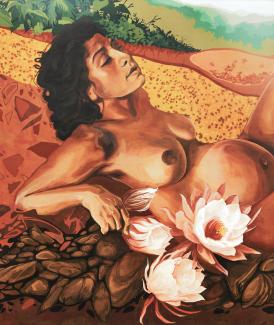
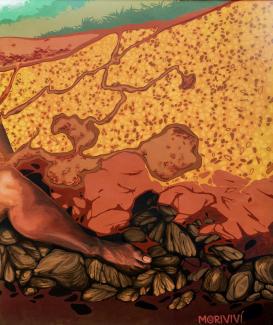
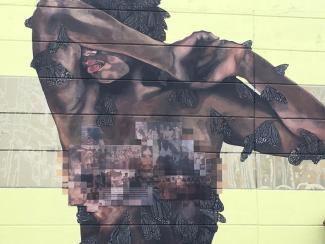
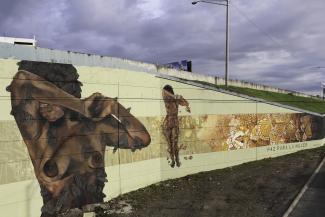
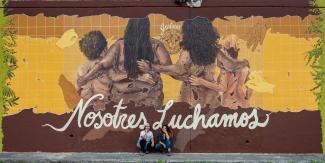
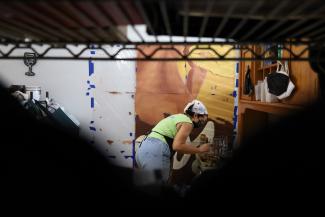
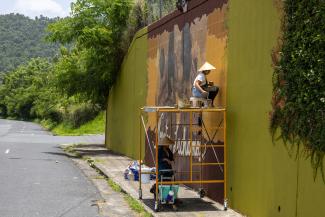
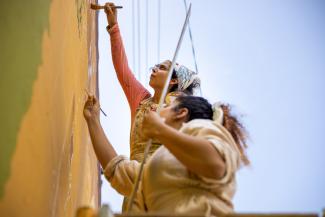
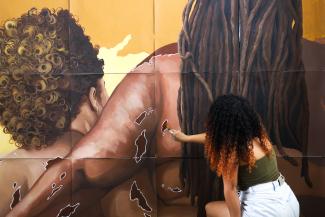
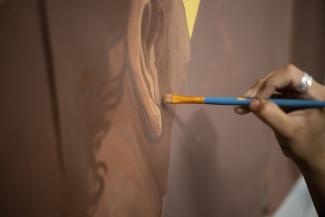
As part of their participation in AWID’s Artist Working Group, Colectivo Morivivi gathered a diverse group of members, partners and staff to facilitate a collaborative process of dreaming into, informing, and deciding on the content for a community mural through a multi-stage co-creation process. The project began with a remote conceptualization with feminists from different parts of the planet brought together by AWID, and then it evolved to its re-contextualization and realization in Puerto Rico. We were honored to have the input of local artists Las Nietas de Nonó(@lasnietasdenono), the participation of local women in the Community Painting Session, the logistics support from the Municipality of Caguas, and FRIDA Young Feminist Fund’s additional support to the collective.
The mural explores the transcendence of borders by presenting bodies like a map, in an embrace that highlights the intersection of the different feminist manifestations, practices and realities.
We also thank Kelvin Rodríguez, who documented and captured the different stages of this project in Puerto Rico:

There are many reasons why your response to the WITM survey matters. The survey offers the opportunity to share your lived experience of mobilizing funding to support your organizing; claim your power as an expert on how money moves and who it reaches; and contribute to collective and consistent advocacy to funders moving more and better funding. Over the last two decades, AWID’s WITM research has proven to be a key resource for activists and funders. We wholeheartedly invite you to join us in its third iteration to highlight the actual state of resourcing, challenge false solutions, and point out how funding must change for movements to thrive and meet the complex challenges of our times.
Vous avez des questions concernant le Forum de l’AWID ou les activités connexes ? Nous avons des réponses !