Left
Half
Left

Special Focus

AWID is an international, feminist, membership organisation committed to achieving gender equality, sustainable development and women’s human rights

Memory as Resistance: A Tribute to WHRDs no longer with us

AWID’s Tribute is an art exhibition honouring feminists, women’s rights and social justice activists from around the world who are no longer with us. 


In 2020, we are taking a turn

This year’s tribute tells stories and shares narratives about those who co-created feminist realities, have offered visions of alternatives to systems and actors that oppress us, and have proposed new ways of organising, mobilising, fighting, working, living, and learning.

49 new portraits of feminists and Women Human Rights Defenders (WHRDs) are added to the gallery. While many of those we honour have passed away due to old age or illness, too many have been killed as a result of their work and who they are.

This increasing violence (by states, corporations, organized crime, unknown gunmen...) is not only aimed at individual activists but at our joint work and feminist realities.

The stories of activists we honour keep their legacy alive and carry their inspiration forward into our movements’ future work.

Visit the online exhibit

The portraits of the 2020 edition are designed by award winning illustrator and animator, Louisa Bertman

AWID would like to thank the families and organizations who shared their personal stories and contributed to this memorial. We join them in continuing the remarkable work of these activists and WHRDs and forging efforts to ensure justice is achieved in cases that remain in impunity.

“They tried to bury us. They didn’t know we were seeds.” - Mexican Proverb 


The Tribute was first launched in 2012

It took shape with a physical exhibit of portraits and biographies of feminists and activists who passed away at AWID’s 12th International Forum, in Turkey. It now lives as an online gallery, updated every year.

To date, 467 feminists and WHRDs are featured.

Visit the online exhibit

Related Content

Our values - Justice and systemic change

Justice and systemic change

We work towards a world based on social, environmental, and economic justice; and interdependence, solidarity, and respect. We work towards dismantling systems of oppressive power and against all its manifestations, including patriarchy, fundamentalisms, militarisms, fascisms and corporate power that threaten our lives and our world. We want a just world where resources and power are shared in ways that enable everyone to thrive.

Andaiye

Andaiye' en swahili significa 'una hija vuelve a casa'. Nació como Sandra Williams el 11 de septiembre de 1942 en Georgetown, Guyana, y cambió su nombre por el de 'Andaiye' en 1970, cuando los movimientos del Black Power [Poder Negro] arrasaron en su país y en la región del Caribe. 

Andaiye fue considerada una figura transformadora al frente de las luchas por la liberación y la libertad. Fue una de lxs primerxs integrantes y líder activa de la Working People’s Alliance [Alianza de la Gente Trabajadora] (WPA, por sus siglas en inglés), un partido socialista de la Guyana que luchó contra el régimen autoritario existente y continuó,  a lo largo de su vida, centrando su activismo en la justicia para la clase trabajadora y los derechos de las mujeres rurales, y en la superación de las barreras étnicas entre las mujeres Indo y Afro-Guyanesas.

Andaiye fue cofundadora de la Red Thread Women [Hilo Rojo Mujeres], una organización que aboga para que el trabajo de cuidados de las mujeres fuese remunerado justamente, también trabajó en la Universidad de West Indies y con el CARICOM. Andaiye señaló, sin ningún temor a desafiar a los gobiernos, los desequilibrios de género en las juntas estatales, la discriminación de lxs trabajadorxs sexuales en las leyes existentes, reclamó el derecho al aborto en Jamaica, y se pronunció abiertamente contra los acuerdos comerciales como el Caribbean Single Market and Economy [Mercado y Economía Únicos del Caribe] (CSME, por sus siglas en inglés) que permitía la libre circulación de las trabajadoras domésticas migrantes, pero no otorgaba esos mismos derechos a sus hijxs. 

Andaiye publicó varios ensayos académicos, escribió columnas de prensa y también editó  los últimos libros de Walter Rodney, un activista político guyanés y líder de la AMP, que fue asesinado en 1980. Andaiye sobrevivió a un cáncer y fue una de lxs fundadorxs de la Guyana Cancer Society [Sociedad de Guyana Contra el Cáncer] y del Cancer Survivors’ Action Group [Grupo de Acción de Sobrevivientes del Cáncer]. También fue integrante de la Junta Directiva de la Caribbean Association for Feminist Research and Action [Asociación Caribeña para la Investigación y la Acción Feminista] (CAFRA, por sus siglas en inglés), y Directora del Help and Shelter [Ayuda y Refugio] e integrante de la Junta Directiva de la Guyana National Commission on Women [Comisión Nacional de Guyana sobre las Mujeres]. Andaiye recibió varios premios a lo largo de su vida, entre ellos, la Flecha de Oro de los Logros de Guyana (el cuarto premio nacional más importante del país).

Andaiye falleció el 31 de mayo de 2019 a la edad de 77 años. Los homenajes que posteriormente le rindieron activistas, amigxs y personas inspiradas por su vida dan cuenta, elocuentemente, de su asombroso legado y su hermosa humanidad.

Algunos ejemplos:

"Andaiye tuvo un profundo efecto en mí... fue tantas cosas: una educadora, una luchadora; me enseñó a ser autocrítica, a pensar con más claridad, me enseñó sobre la supervivencia, sobre lo increíble que puede ser el coraje, sobre la compasión, a ir más allá de las apariencias externas y a tratar a la gente como personas y no dejarse distraer por su estatus, clase, raza... o cualquier otra cosa". Peggy Antrobus, activista feminista, autora, académica, Barbados.

"El tipo de idealismo convencido que Andaiye expresó, su voluntad de confrontar el mundo y su creencia obstinada en  que realmente lo puedes cambiar... Esa política de la esperanza... ¿De qué otra forma podemos rendir homenaje a su vida, legado y memoria si no es haciendo nuestro trabajo de forma ética y con una autocrítica continua? Y situando el trabajo de cuidados de las mujeres en el centro de todo esto." - Tonya Haynes, Barbados.

"Puedo escuchar sus ocurrencias en nuestro entusiasmo colectivo. Así, a través de las lágrimas, puedo reír. Mis más profundas reverencias a ti, querida Andaiye, gracias por todo. Te deseo amor y luz para el viaje de tu espíritu. Saluda a Walter y a todxs lxs ancestrxs". - Carol Narcisse, Jamaica.

Leer otros tributos a Andaiye (en inglés)

Body

Exposición en el Jardín de los Placeres

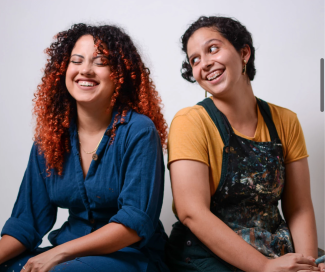
Estas obras son un trabajo colaborativo de fotografías e ilustraciones realizadas por Siphumeze y Katia durante el confinamiento. Muestran narrativas negras queer de sexo y placer, bondage, sexo seguro, juguetes, salud mental y sexo, y mucho más. Fueron creadas para acompañar la antología Touch.

Mental Health
“Mental Health” [«Salud mental»]
Sex and Spirtuality
“Sex and Spirituality” [«Sexo y espiritualidad»]
Orgasm
“Orgasm” [«Orgasmo»]

About the Artists:

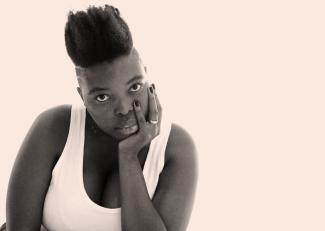
Siphumeze Khundayi portrait
Siphumeze Khundayi es una creadora de arte, fotógrafa y facilitadora interesada en las formas creativas de unir el diálogo y la práctica artística en relación con la identidad queer africana.
 
Es directora creativa de HOLAAfrica!, una colectiva en línea mujerista panafricanista.
 
Sus trabajos de performance individual y en colaboración han sido presentados en numerosos festivales y espacios teatrales, tales como el Ricca Ricca Festival de Japón.
 
En 2017 y 2018 dirigió dos producciones que fueron nominadas a los Naledi Theatre Awards y, en 2020, obtuvo un premio Standard Bank Ovation.
 
Como fotógrafa, participó en Italia en una exposición grupal titulada Flowers of my Soul, organizada por The Misfit Project. Produjo tres publicaciones para HOLAAfrica!, y sus trabajos fueron publicados dentro y como tapa del Volume Two: As You Like de las Gerald Kraak Anthologies.
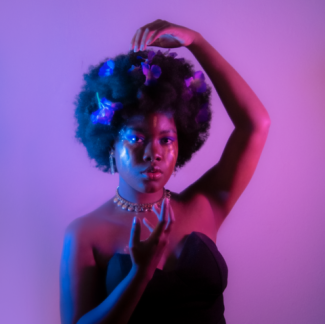
katia portrait
Katia Herrera es una artista visual digital de 21 años, de la ruidosa ciudad de Santo Domingo, en la República Dominicana. A pesar de que se autodefine como introvertida, su obra es notablemente estruendosa en un mundo que intenta acallar las voces negras. Con títulos como “Black Woman” [«Mujer Negra»], “You Own the Moon” [«La Luna es Tuya»], “Earth Goddess” [«Diosa de la Tierra»], “Forever” [«Por Siempre»] y “Universe Protector” [«Protectora del Universo»], el legado de Herrera estará marcado por su pasión por poner de manifiesto la resistencia y la perseverancia de las personas negras del pasado y del presente, en contraposición a la narrativa de que la piel negra debería solamente ser asociada con la esclavitud.
 
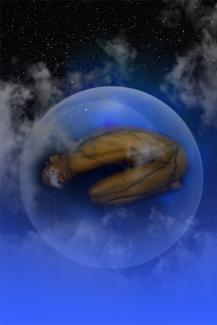
Una de sus obras más hermosas y vivazmente tituladas, “Universe Protector”, representa al alma negra como una entidad divina plena de fortaleza, poder y grandeza. En su juventud, su amor por el diseño gráfico se vio estimulado por el talento artístico de su madre y su padre, y por el programa Photoshop que habían descargado en su computadora para su trabajo profesional de fotografía.

Snippet FEA Union Otras Photo Panel (ES)

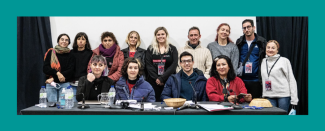
Un panel de 13 personas de pie detrás de una silla de conferencia. Sobre la mesa hay hojas de papeles, micrófonos y botellas de agua. Detrás de ellos se puede ver una pared blanca y cortinas negras.

Miembrxs del sindicato OTRAS

هل عليّ الإجابة على جميع الأسئلة مرة واحدة أو يمكنني العودة الى الاستطلاع؟

يمكنكم/ن حفظ اجوبتكم/ن والعودة للاستطلاع متى أردتم/ن ذلك. KOBO بحفظ مسودات إجاباتك في الزاوية العلوية اليسرى من صفحة الاستطلاع وإعادة تحميل سجلك عند العودة إلى الاستطلاع.

Join the Feminist Realities journey (Forum page)

Únete al viaje por las Realidades feministas

Este Foro de AWID celebrará y difundirá las realidades feministas que nos rodean en diferentes etapas de desarrollo.

Únete a nosotrxs

Paula Andrea Rosero Ordóñez

« C’[elle] était une personne qui se caractérisait par son travail acharné en faveur de la défense des droits humains et la construction de la paix à Nariño, notamment dans la municipalité de Samaniego-Nariño »  - Jorge Luis Congacha Yunda pour Página10

Paula Andrea Rosero Ordóñez était avocate au sein du bureau du Ministère public à Samaniego, Nariño, l’agence principale qui défend les droits des citoyen·ne·s en Colombie.

Elle s’est concentrée sur les droits civils et politiques, les enjeux d’impunité et de justice, et a contribué à dévoiler les abus de pouvoir, dont la corruption.  Elle a également participé à des projets de construction de la paix dans sa ville natale, Samaniego, comme le Conseil municipal pour la paix et le Bureau municipal de femmes. 

Paula a reçu des menaces de mort après avoir exposé une gestion irrégulière des ressources, de même que porté plainte contre des actes de corruption au sein de l’Hôpital Lorencita Villegas dans la municipalité de Nariñense. Elle a été assassinée le 20 mai 2019, lorsque deux hommes se sont approchés d’elle et l’ont abattue à bout portant. 

Body

Colectivo Morivivi

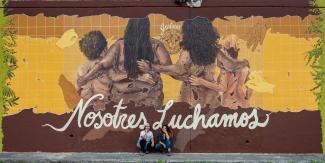
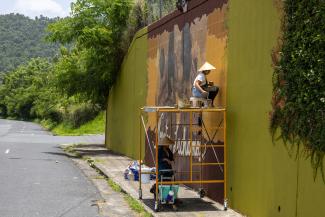
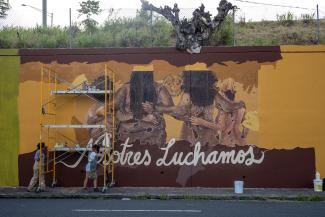
Colectivo Moriviví est un collectif artistique de femmes. Notre production artistique comprend du muralisme, du muralisme communautaire et des performances/actions de manifestation. Notre travail consiste à démocratiser l'art et à amener les récits des communautés portoricaines dans la sphère publique afin de créer des espaces où ils seront validés. Nous croyons qu’à travers l'artivisme, nous pouvons promouvoir la sensibilisation aux questions sociales et renforcer notre mémoire collective.

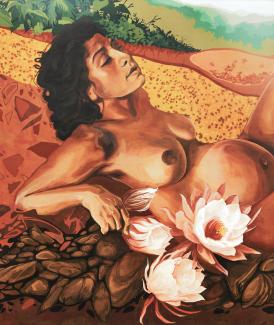
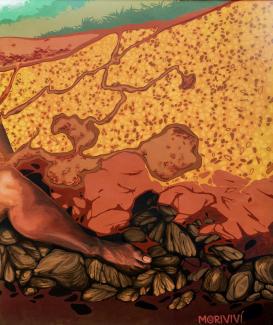
“Cacibajagua” 2017, Mural Project. Jiangxi, China
“Cacibajagua” 2017, Projet mural. Jiangxi, Chine
“Cacibajagua” 2017, Mural Project. Jiangxi, China
“Cacibajagua” 2017, Projet mural. Jiangxi, Chine
“Paz para la Mujer” 2015, collaboration with Coordinadora Paz para la Mujer Organization. Santurce,
“Paz para la Mujer” (“Paix pour la Femme”) 2015, collaboration avec l’organisation Paz para la Mujer. Santurce, Porto Rico


“Paz para la Mujer” 2015, collaboration with Coordinadora Paz para la Mujer Organization. Santurce, Puerto Rico
“Paz para la Mujer” (“Paix pour la Femme”) 2015, collaboration avec l’organisation Paz para la Mujer. Santurce, Porto Rico
Collectivo Moriri Artwork

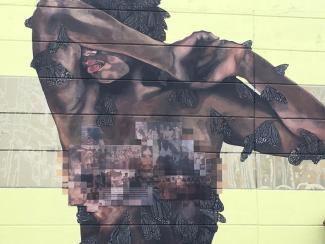
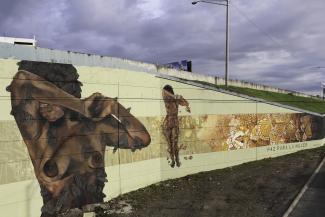
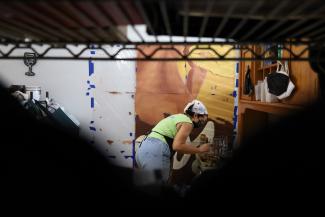
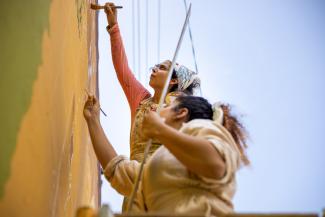
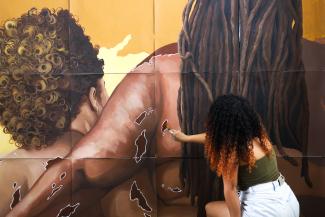
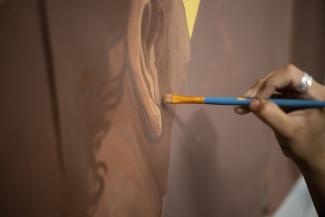
Dans le cadre de sa participation au Groupe de Travail d’Artistes d'AWID, le Colectivo Moriviví a réuni un groupe divers de membres, partenaires et personnel pour faciliter un processus collaboratif visant à imaginer, documenter et déterminer le contenu d'une fresque communautaire par le biais d'un processus de co-création en plusieurs étapes. Le projet a commencé par une conceptualisation à distance avec des féministes de différentes régions du monde réuni·e·s par l'AWID, avant d'évoluer vers sa re-contextualisation et sa réalisation à Porto Rico. Nous avons eu l'honneur de bénéficier de la contribution des artistes locaux·ales Las Nietas de Nonó(@lasnietasdenono), de la participation des femmes locales à la session de peinture communautaire, du soutien logistique de la municipalité de Caguas et du soutien supplémentaire du FRIDA | The Young Feminist Fund.
 
La fresque explore la transcendance des frontières en présentant les corps tels des cartes, dans une étreinte qui met en évidence l'intersection des différentes manifestations, pratiques et réalités féministes.
 
Nous remercions également Kelvin Rodríguez, qui a documenté et capturé les différentes étapes de ce projet à Porto Rico : 

Collectivo Moriri Artwork

À propos du Colectivo Morivivi 

Colectivo Morivivi portrait
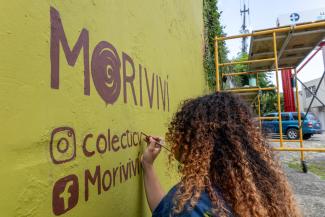
Moriviví est un collectif de jeunes femmes artistes qui travaille sur l'art public depuis Avril 2013. Basé·e·s à Porto Rico, nous sommes reconnu·e·s pour la création de fresques et d'arts dirigés par la communauté.
 
Le groupe a débuté dans les festivals d'art urbain locaux. Au fur et à mesure que notre travail devenait plus populaire, les organisations et les dirigeant.e.s communautaires ont commencé à nous contacter. Au départ, nous étions huit lycéen·ne·s qui voulaient peindre une fresque ensemble. Cependant, en huit ans de travail acharné, nous avons été confronté·e·s à de nombreux défis. Nous sommes aujourd’hui dans une période de transition. Au cours de l'année qui vient, nous souhaitons restructurer le collectif en interne. Notre objectif est d'ouvrir de nouvelles opportunités pour les collaborateurs·trices et d'étayer notre processus de prise de décisions par un nouveau système d'évaluation. À long terme, nous aspirons à devenir une école alternative de pratiques artistiques pour celles et ceux souhaitant s'immerger dans la production artistique communautaire.

Snippet FEA Principles of work Transparency (FR)

Un parapluie rose

TRANSPARENCE

Реалии обеспечения ресурсами и состояние финансирования феминистских движений быстро меняются – является ли этот опрос единичным?

Нет, не является. Он основан на 20-летней истории AWID по мобилизации более объемного и качественного финансирования для социальных изменений под руководством феминисток(-ов) и является третьим этапом исследования «Где деньги для феминистских организаций?». Наша цель – проводить опрос «Где деньги?» каждые 3 года.

Contributors of toolkit (WITM landing page)

Nous tenons à remercier les personnes qui ont contribué à ce projet et qui ont fourni de précieux conseils :

  • Angelika Arutyunova
  • Cindy Clark
  • Kamardip Singh
  • Martin Redfern
  • Pei Yao Chen
  • Srilatha Batliwala
  • Veronica Vidal

Télécharger la Boîte à outils en PDF

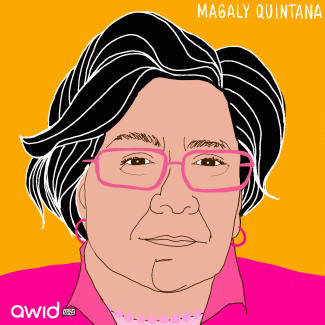
Magaly Quintana

Magaly Quintana was known by many in Nicaragua as ‘La Maga’ (meaning wizard). She was a feminist historian, activist, and an unyielding defender of women’s rights demanding justice for the victims of femicide.

Magaly was committed to documenting and building statistics on women and girls who were killed as a result of sexual violence in the country. 

“She rebuilt the life of each one, of their families, to show those lives that had been torn away.” - Dora María Téllez

Magaly also criticized the government for reforming Law 779 addressing violence against women. A product of the hard work of Nicaraguan women’s movements, this law included important provisions to criminalize femicide before its reform. She argued that legislative reforms weakened the law and limited the definition of femicides to homicides, as a result invisibilizing violent crimes against women.

Magaly’s feminist organizing began in the early 1980s. She was the director of Catholic Women for the Right to Choose, advocating for the right to therapeutic abortion after it was banned in 2006. In 2018, she supported the protests against Daniel Ortega’s government.

Magaly was born in May 1952 and passed away in May 2019.

“See you later, my dearest Magaly Quintana. Thanks so much, thanks for your legacy. We’ll see you again, as strong and powerful as ever.”- Erika Guevara Rosas (American Director of Amnesty International)

Body

Anti-Rights Trends in Regional Human Rights Systems

Chapter 6

In the African Commission and the Inter-American System, anti-rights actors push essentialist notions of culture and gender to hamper progress on rights and undermine accountability. As we see, anti-rights actors are exerting influence in regional human rights systems, as well as international spaces. 

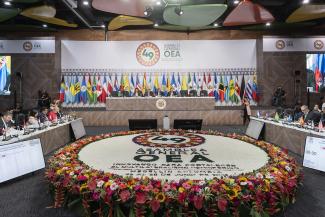
2019 JUN 27 Meeting of the Summit Implementation Review Group in Colombia
© Juan Manuel Herrera/OAS/Flickr
2019 JUN 27 Meeting of the Summit Implementation Review Group in Colombia

The African Commission on Human and Peoples' Rights has begun framing women’s and sexual rights as jeopardising its ability to deal with “real rights” and contrary to “African values”,   setting a worrying anti-rights precedent. The withdrawal of the Coalition of African Lesbians’ observer status is an example of this trend, and points to the way space for feminist, Pan-Africanist engagement is being stifled. 

In the Organization of American States (OAS) and the Inter-American Human Rights System, anti-rights strategies include the NGOization of religious groups, the use of secular discourses, and the co-optation of discrimination frameworks. Anti-rights influence has materialized in a number of ways, including the intimidation of trans activists and the blocking the introduction of progressive language in resolutions.

Table of Contents

  • Silencing Feminists in the African Human Rights System
  • Anti-rights Groups in Latin America: Organization of American States (OAS) General Assembly and the Inter-American Human Rights System
     

Read Full Chapter >

Snippet FEA Audio Story 4 (EN)

Listen to this story here: