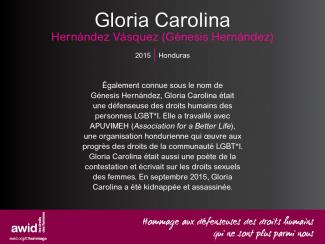
Gloria Carolina Hernández Vásquez
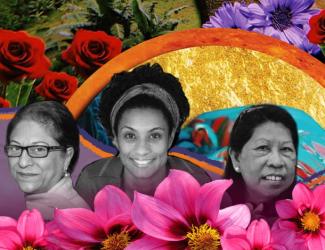
AWID’s Tribute is an art exhibition honouring feminists, women’s rights and social justice activists from around the world who are no longer with us.
This year’s tribute tells stories and shares narratives about those who co-created feminist realities, have offered visions of alternatives to systems and actors that oppress us, and have proposed new ways of organising, mobilising, fighting, working, living, and learning.
49 new portraits of feminists and Women Human Rights Defenders (WHRDs) are added to the gallery. While many of those we honour have passed away due to old age or illness, too many have been killed as a result of their work and who they are.
This increasing violence (by states, corporations, organized crime, unknown gunmen...) is not only aimed at individual activists but at our joint work and feminist realities.
The portraits of the 2020 edition are designed by award winning illustrator and animator, Louisa Bertman.
AWID would like to thank the families and organizations who shared their personal stories and contributed to this memorial. We join them in continuing the remarkable work of these activists and WHRDs and forging efforts to ensure justice is achieved in cases that remain in impunity.
“They tried to bury us. They didn’t know we were seeds.” - Mexican Proverb
It took shape with a physical exhibit of portraits and biographies of feminists and activists who passed away at AWID’s 12th International Forum, in Turkey. It now lives as an online gallery, updated every year.
To date, 467 feminists and WHRDs are featured.
How movements are resisting fascist agendas in relation to climate change.
📅 Tuesday, November 11, 2025
📍 Beira Rio Hotel, Belém, Pará
"No era una persona. Era una potencia". - Así recuerda unx compañerx activista a Navleen Kumar.
Con integridad y compromiso, trabajó durante más de una década para proteger y restaurar las tierras de los pueblos indígenas (adivasi) en el distrito de Thane, un área arrebatada por los propietarios y promotores inmobiliarios a través de medios como la coerción y la intimidación. Luchó contra esta injusticia y estos crímenes a través de intervenciones legales en diferentes tribunales, y descubrió que la manipulación de los registros de las tierras era una característica recurrente en la mayoría de los casos de adquisición de terrenos. En uno de los casos, el de los Wartha (una familia tribal), Navleen descubrió que la familia había sido engañada con la complicidad de funcionarixs gubernamentales.
Así, a través de su trabajo, ayudó a restituir la tierra a la familia Wartha, y siguió dedicándose a otros casos de transferencias de tierras adivasi.
"Su artículo sobre el impacto de la alienación de la tierra en las mujeres y las niñas y niños adivasi traza la historia y las complejidades de la alienación tribal desde la década de los 70, cuando las familias de clase media comenzaron a trasladarse a los suburbios de Mumbai, que se extendían mientras el valor de la propiedad en la ciudad aumentaba de forma exponencial.Los complejos de viviendas proliferaron en estos suburbios, y lxs integrantes de las comunidades tribales, que eran analfabetxs, pagaron el precio por ello. El costo de las tierras de primera, cerca de las líneas de ferrocarril, alcanzó un precio elevado y los constructores se abalanzaron sobre este cinturón como buitres, arrebatando de forma ilegal las tierras a las comunidades tribales y otrxs residentes locales ". - Jaya Menon, Comisión de Justicia y Paz.
Durante el curso de su activismo, Navleen recibió numerosas amenazas y sobrevivió a varios atentados contra su vida. A pesar de ello, siguió trabajando no sólo en lo que era importante para ella, sino que además contribuyó a cambiar la vida y la realidad de las muchas personas a las que apoyó en su lucha por la justicia social.
Navleen murió apuñalada el 19 de junio de 2002 en su edificio de departamentos. Dos gánsteres locales fueron arrestados por su asesinato.
您若持有下列國家的護照,可免簽入境台灣到台北參與論壇活動(請留意持免簽可停留的天數各國不同):
安道爾、澳大利亞、奧地利、比利時、保加利亞、汶萊、加拿大、智利、克羅埃西亞、賽普勒斯、捷克、丹麥、愛沙尼亞、 史瓦濟蘭、芬蘭、法國、德國、希臘、瓜地馬拉、海地、宏都拉斯、匈牙利、冰島、愛爾蘭、以色列、義大利、日本*、韓國、拉脫維亞、列支頓斯登、立陶宛、盧森堡、馬爾他、馬歇爾群島、摩納哥、荷蘭、紐西蘭、尼加拉瓜、挪威、帛琉、巴拉圭、菲律賓、波蘭、葡萄牙、羅馬尼亞、俄國、聖馬利諾、斯洛伐克、斯洛維尼亞、西班牙、瑞典、瑞士、吐瓦魯、英國、美國、梵蒂岡城國、貝里斯、多明尼加、馬來西亞、諾魯、聖克里斯多福及尼維斯、聖塔露西亞、聖文森和格瑞納丁、新加坡。
未持有上述國家護照的人士來台北須申請簽證。
請留意:
在您完成論壇註冊手續後,無論您國籍為何,應會收到與論壇參與相關的一組號碼,用於申請來台灣的電子簽證。
論譠開放報名的時間我們會另行通知。
The 3 Women Human Rights Defenders (WHRDs) from the Pacific we are featuring in this year's Online Tribute have worked in the media, campaigned for disability rights and advocated for women’s rights. Their contributions are missed and we honor them in this Tribute. Please join AWID in commemorating these WHRDs, their work and legacy by sharing the memes below with your colleagues, networks and friends and by using the hashtags #WHRDTribute.
Please click on each image below to see a larger version and download as a file


Oui ! Nous explorons actuellement des technologies innovantes qui permettront une connexion et une participation considérables.
¿Quieren juntar a distintas personas para fortalecer la resistencia? Esta metodología de talleres ofrece ejercicios grupales para incrementar el conocimiento y el poder colectivos, con opciones para adaptarlos a las distintas necesidades.
Movimientos que marchan en todo el mundo por la justicia climática.
📅 Sábado, 15 de noviembre de 2025
📍 Varias ubicaciones
« Le privé est politique » - tel est le mantra féministe que personnifiait la fougueuse et courageuse Nadyn Jouny. Nadyn avait personnellement vécu la douleur de la violence structurelle des systèmes juridiques qui refusent aux femmes de jouir de leurs droits.
Lorsqu’elle décide de demander le divorce, les tribunaux religieux chiites – conformément aux lois relatives au statut personnel du Liban – lui refusent la garde de son jeune fils Karam. Comme tant d’autres femmes au Liban et d’autres pays, Nadyn s’est retrouvée dans la situation douloureuse et insoutenable de devoir abandonner ses droits sur son enfant pour pouvoir quitter une relation abusive et non voulue. Mais Nadyn s’est battue, jusqu’au dernier jour.
Elle s’est servie de ses compétences médiatiques pour devenir la voix de celles qui n’en ont pas dans leur combat contre un droit de la famille discriminant, tant au Liban qu’à l’étranger. Nadyn a cofondé le groupe autofinancé « Protecting Lebanese Women » (PLW) et s’est alliée à d’autres mères libanaises vivant des situations similaires. Ensemble, elles ont cherché à sensibiliser la société en manifestant pour leurs droits devant les tribunaux religieux et attirant l’attention des médias sur les très grandes injustices qu’elles subissaient.
Nadyn a également collaboré avec ABAAD – Resource Center for Gender Equality, une autre organisation libanaise pour les droits des femmes, à l’occasion de campagnes pour la défense des droits des femmes, l’égalité dans le droit de la famille et la garde des enfants, et contre le mariage forcé et précoce.
Pour nombre de ses collègues, elle « symbolisait le combat d’une mère libanaise contre toutes les formes de répression et de misogynie » (en anglais), utilisant « son expérience personnelle et sa propre trajectoire d’autonomisation pour donner aux autres l’espoir qu’elles peuvent être des catalyseuses de changement positif ». - ABAAD – Resource Center for Gender Equality, Liban
Nadyn a tragiquement perdu la vie dans un accident de voiture le 6 octobre 2019, alors qu’elle se rendait à une manifestation contre les augmentations de taxes injustifiées, dans un pays qui connaît déjà une crise financière croissante. Nadyn Jouny n’avait que 29 ans au moment de son décès.
Este kit incluye ejemplos de mensajes para ser utilizados en Twitter, Facebook y LinkedIn, como así también imágenes que puedes usar para acompañar a estos mensajes.
La utilización de este kit es muy simple. Solo tienes que seguir estos pasos:
Descarga aquí tus imágenes favoritas:
Twitter
Facebook
Instagram
Combina estos mensajes con las imágenes para Twitter
Yo voy al #AWIDForum. Es EL lugar para conectar con los movimientos por los derechos de las mujeres y la justicia social ¡Únete a mi!: http://forum.awid.org/forum16/es
¡Ya quiero re-imaginar los #FuturosFeministas c/ otrxs activistas x los DD. de las mujeres y la justicia social en el #AWIDForum! Únete: http://forum.awid.org/forum16/es
Me entusiasma poder asistir al Foro de AWID el próximo mes de mayo ¡Ahora ya podemos registrarnos! ¡Únete a mi! http://forum.awid.org/forum16/es
Se encuentra abierta la inscripción para participar del #AWIDForum! en Costa do Sauípe, Brasil, 8-11 de sept 2016: http://forum.awid.org/forum16/es
Únete al #AWIDForum, un encuentro histórico global de activistas x los derechos de las mujeres y la justicia social: http://forum.awid.org/forum16/es
Únete al #AWIDForum para celebrar los logros de nuestros movimientos y las lecciones aprendidas para seguir avanzando http://forum.awid.org/forum16/es
El #AWIDForum, no es solo un evento sino una oportunidad para confrontar la opresión y promover el avance de la justicia: http://forum.awid.org/forum16/es
Únete al #AWIDForum para celebrar, pensar estrategias y renovar nuestros movimientos y a nosotrxs mismxs: http://forum.awid.org/forum16/es
Construyamos juntxs los #FuturosFeministas. Inscríbete al #AWIDForum. Costa do Sauípe, Brasil: http://forum.awid.org/forum16/es
Únete a nosotrxs para re-imaginar y crear juntxs los #FuturosFeministas en el #AWIDForum. Inscríbete: http://forum.awid.org/forum16/es
#FuturosFeministas: aprovecha el momento en el #AWIDForum para promover nuestras visiones de un mundo mejor: http://forum.awid.org/forum16/es
Seremos 2000 activistas de movimientos sociales en el #AWIDForum, pensando estrategias para nuestros #FuturosFeministas http://forum.awid.org/forum16/es
Somos mucho más que una sola lucha. Únete a nosotrxs en el #AWIDForum: http://forum.awid.org/forum16/es
Únete al #AWIDForum, un espacio para pensar estrategias entre movimientos y hacer uso de nuestro poder colectivo: http://forum.awid.org/forum16/es
Movilicemos la solidaridad y el poder colectivo entre movimientos sociales en el #AWIDForum: http://forum.awid.org/forum16/es
Rompamos el aislamiento entre nuestros movimientos. Re-imaginemos y creemos juntxs nuestros futuros en el #AWIDForum: http://forum.awid.org/forum16/es
Solidaridad es un verbo. Pongámosla en acción en el #AWIDForum: http://forum.awid.org/forum16/es
Donantes se comprometen con los derechos de las mujeres y los movimientos sociales en el #AWIDForum: http://forum.awid.org/forum16/es
Los medios de comunicación y los movimientos amplifican los #FuturosFeministas en el #AWIDForum: http://forum.awid.org/forum16/es
Combina estos mensajes con las imágenes para Facebook
Estos mensajes pueden ser usados en Twitter también vía mensaje privado directo, ya que allí no hay límites de carácteres.
Descarga tus imágenes favoritas para usar en Instagram
We will share information about the program, the spaces, and the way for everyone to participate in shaping them, as soon as we can, and ways for you to participate in shaping them - on the road to the Forum, and during the Forum. Please stay tuned!
Mientras el capitalismo heteropatriarcal continúa forzándonos al consumismo y el acatamiento, observamos que nuestras luchas están siendo compartimentadas y separadas por fronteras tanto físicas como virtuales.
Y con los desafíos adicionales presentados por una pandemia global que todavía deben ser superados, esta estrategia de «divide y vencerás» ha sido favorable para la proliferación de la explotación en muchas áreas.
No obstante esto, desde el 1° hasta el 30 de septiembre de 2021, un festival para movimientos feministas! de AWID nos llevó a un viaje sobre lo que significa encarnar nuestras realidades en espacios virtuales. En el Festival se reunieron activistas feministas de todo el mundo, no solo para compartir experiencias de libertades duramente conquistadas, de resistencias y de solidaridades más allá de las fronteras, sino para articular lo que podría ser una forma transnacional de compañerismo.
Esta solidaridad tiene el potencial de desafiar las fronteras, tejiendo una visión del futuro que es transformadora, porque es abolicionista [del complejo industrial carcelario] y anticapitalista. A lo largo de un mes, a través de las infraestructuras digitales que ocupamos con nuestra cuiridad / queeridad, nuestra resistencia y nuestros imaginarios, el Festival nos mostró una forma de desviarnos de los sistemas que nos hacen cómplices de la opresión de otras personas y de nosotrxs mismxs.
Si bien Audre Lorde nos enseñó que las herramientas del amo nunca desarmarán la casa del amo, Sara Ahmed nos demostró que podemos utilizarlas en forma indebida. Dado que teníamos que dar espacio a la asamblea, y a pesar de todas las otras demandas sobre nuestro tiempo, fue posible imaginar una disrupción de la realidad del capitalismo heteropatriarcal.
Ahora bien, si entendemos la asamblea como una forma de placer, entonces, se hace posible establecer el vínculo entre el placer transgresor y la resistencia transnacional/transdigital: entre las clases de placer que desafían las fronteras por un lado, y la cuiridad / queeridad, lo camp, las luchas por la tierra y los movimientos indigenistas, el anticapitalismo y la organización política anticolonial por el otro.
Esta edición intentó captar un sentido de cómo el ejercicio de la asamblea en el Festival adoptó múltiples formas e imaginaciones. Además de contar con las colaboraciones directas de algunxs de sus conferencistas y soñadorxs, trajimos a una plétora de otras voces del Sur global para que conversaran sobre muchos de sus temas y sujetxs. Lo que sigue es una muestra de algunos de los paneles del Festival que más nos inspiraron.
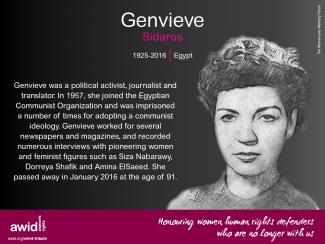
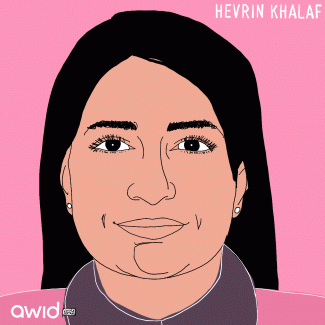
Hevrin Khalaf was a prominent Syrian Kurdish political leader in the autonomous region of Rojava where Kurdish women are risking their lives to resist the Turkish offensive and build a feminist system.
She was Secretary-General of the Future Syria Party (FSP), a group that aimed to build bridges, reconcile different ethnic groups and work towards a “democratic, pluralistic, and decentralized Syria.”
Hevrin was a symbol of this reconciliation effort. She also worked to promote equality between women and men and was a representative for visiting journalists, aid workers, and diplomats.
Hevrin was also a civil engineer from Derik, and was one of the founders of the Foundation for Science and Free Thought in 2012.
On 12 October 2019 she was tortured and murdered by the Turkish-backed militia, Ahrar al-Sharqiya during a military operation against Syrian Democratic Forces in Rojava.
“The killing of Khalaf is a turning point in Syria’s modern history. It once again demonstrated the old Kurdish proverb “no friends but the mountains.” I will always be a friend of Khalaf and her vision of a better world.” - Ahed Al Hendi
After assessing your organization’s capacity and research goals, you may choose to conduct a survey as one of the methods of data collection for your research analysis.
In this section:
- Why conduct a survey?
- Identify your survey population 1. Online survey 2. Paper survey
- Create your questions 1. Short and clear questions 2. Simple and universal language 3. "Closed" and "open" questions 4. Logical organization 5. Less than 20 mins 6. Simple and exciting
- Test and translate 1. Your advisors 2. Draft and test 3. Translation
- Target the right population 1. Sample size 2. Degree of participation 3. Database and contact list
A survey is an excellent way to gather information on individual organizations to capture trends at a collective level.
For example, one organization’s budget size does not tell you much about a trend in women’s rights funding, but if you know the budgets of 1,000 women’s rights organizations or even 100, you can start to form a picture of the collective state of women’s rights funding.
As you develop your survey questions, keep in mind the research framing that you developed in the previous section.
Remember: Your framing helps you determine what information you are trying to procure through your survey. The data collected from this survey should allow you to accomplish your goals, answer your key questions, and create your final products.
This is an important step – the clearer you are about which populations you want to survey, the more refined your questions will be.
Depending on your research goals, you may want to create separate surveys for women’s rights organizations, women’s funds and donors. Or you may want to focus your survey on women’s groups and collect interviews for women’s funds and donors, as a survey for each population can be resource-intensive.
The questions you ask women’s groups may be different than ones you would ask women’s funds. If you plan on surveying more than one population, we encourage you to tailor your data collection to each population.
At the same time, some key questions for each population can and should overlap in order to draw comparative analysis from the answers.
If you can reach your survey population online, it is useful and efficient to create an online survey.
We recommend two online tools, both which offer free versions:
Survey Gizmo allows you to convert your data for SPSS, a statistical software useful for advanced data analysis
Your data analyst person(s) will be the best person(s) to determine which tool is best for your survey based on staff capacity and analysis plans.
For accessibility, consider making a PDF form version of your survey that you can attach via email. This ensures organizations that have sporadic internet connections or those that pay for it by the minute can download the survey and complete it without requiring a constant online connection.
You may decide that an online approach is not sufficiently accessible or inclusive enough for your popuation.
In this case, you will need to create a paper survey and methods to reach offline populations (through popular events or through post, with pre-stamped envelopes for returning).
Make it easy for participants to complete your survey.
If the questions are confusing or require complex answers, you risk having participants leave the survey unfinished or providing answers that are unusable for your analysis.
Ensure your questions only ask for one item of information at a time.
For example:
- What is your organization’s budget this year?
Easy to answer: participant can easily locate this information for their organization, and it is only asking for one item of information.- What percentage of your budget have you identified as likely sources for funding for your organization, but are still unconfirmed?
Confusing and difficult to answer: are you asking for a list of unconfirmed funding sources or percentage of funding that is likely but unconfirmed?
This information is difficult to obtain: the respondent will have to calculate percentages, which they may not have on hand. This increases the risk that they will not complete the survey.
Many words and acronyms that are familiar to you may be unknown to survey participants, such as “resource mobilization”, “WHRD”, and “M&E”, so be sure to choose more universal language to express your questions.
If you must use industry lingo – phrases and words common to your colleagues but not widely known – then providing a definition will make your survey questions easier to understand.
Be sure to spell out any acronyms you use. For example, if you use WHRD, spell it out as “Women’s Human Rights Defenders".
Closed questions:
Only one response is possible (such as “yes,” “no” or a number). Survey participants cannot answer in their own words and they typically have to choose from predetermined categories that you created or enter in a specific number. Responses to closed questions are easier to measure collectively and are often quantitative.
Example of a closed question: What is your organization’s budget?
Open-ended questions:
These are qualitative questions that are often descriptive. Respondents answer these questions entirely in their own words. These are more suitable for interviews than surveys.
They are harder to analyze at a collective level as compared to closed-end questions, especially if your survey sample is large. However, by making open-ended questions very specific, you will make it easier to analyze the responses.
Whenever possible, design your survey questions so that participants must select from a list of options instead of offering open-ended questions. This will save a lot of data cleaning and analysis time.
Example of open-ended question: What specific challenges did you face in fundraising this year?
Familiarize yourself with different types of questions
There are several ways to ask closed-ended questions. Here are some examples you can review and determine what fits best for the type of data you want to collect:
If you plan to conduct this research at regular intervals (such as every two years), we recommend developing a baseline survey that you can repeat in order to track trends over time.
Set 1: Screening questions
Screening questions will determine the participant’s eligibility for the survey.
The online survey options we provided allow you to end the survey if respondents do not meet your eligibility criteria. Instead of completing the survey, they will be directed to a page that thanks them for their interest but explains that this survey is intended for a different type of respondent.
For example, you only want women’s rights groups in a given location to take this survey. The screening questions can determine the location of the participant and prevent respondents from other locations from continuing the survey.
Set 2: Standardized, basic demographic questions
These questions would collect data specific to the respondent, such as name and location of organization. These may overlap with your screening questions.
If resources permit, you can store these answers on a database and only ask these questions the first year an organization participates in your survey.
This way when the survey is repeated in future years, it is faster for organizations to complete the entire survey, increasing chances of completion.
Set 3: Standardized and mandatory funding questions
These questions will allow you to track income and funding sustainability. Conducted every year or every other year, this allows you to capture trends across time.
Set 4: Special issues questions
These questions account for current context. They can refer to a changing political or economic climate. They can be non-mandatory funding questions, such as attitudes towards fundraising.
For example, AWID’s 2011 WITM Global Survey asked questions on the new “women & girls” investment trend from the private sector.
The shorter, the better: your survey shouldn’t exceed 20 minutes to ensure completion and respect respondents’ time.
It is natural to get excited and carried away by all the types of questions that could be asked and all the information that could be obtained. However, long surveys will lead to fatigue and abandonment from participants or loss of connection between participants and your organization.
Every additional question in your survey will add to your analytical burden once the survey is complete.
General tips
- Ask for exact budgets instead of offering a range (in our experience, specific amounts are more useful in analysis).
- Specify currency! If necessary, ask everyone to convert their answers to the same currency or ask survey takers to clearly state the currency they are using in their financial answers.
- Ensure you collect enough demographic information on each organization to contextualize results and draw out nuanced trends.
For example, if you are analyzing WITM for a particular country, it will be useful to know what region each organization is from or at what level (rural, urban, national, local) they work in order to capture important trends such as the availability of greater funding for urban groups or specific issues.
Involving your partners from the start will allow you to build deeper relationships and ensure more inclusive, higher quality research.
They will provide feedback on your draft survey, pilot test the survey, and review your draft research analysis drawn from your survey results and other data collection.
These advisors will also publicize the survey to their audiences once it is ready for release. If you plan on having the survey in multiple languages, ensure you have partners who use those languages.
If you decide to do both survey and interviews for your data collection, your advisor-partners on your survey design can also double as interviewees for your interview data collection process.
After your survey draft is complete, test it with your partners before opening it up to your respondents. This will allow you to catch and adjust any technical glitches or confusing questions in the survey.
It will also give you a realistic idea of the time it takes to take the survey.
Once the survey is finalized and tested in your native language, it can be translated.
Be sure to test the translated versions of your survey as well. At least some of your pilot testers should be native speakers of the translated languages to ensure clarity.
Your survey sample size is the number of participants that complete your survey.
Your survey sample should reflect the qualities of the larger population you intend to analyze.
For example: you would like to analyze the millions of women’s rights groups in Valyria but you lack the time and resources to survey every single one.
Instead, you can survey only 500 of the Valyrian women’s rights groups – a sample size - to represent the qualities of all the women’s groups in the region.
Recommended sample size
Although it is not necessary to determine your exact sample size before you launch your survey, having a size in mind will allow you to determine when you have reached enough participants or whether you should extend the dates that the survey is available, in case you feel that you have not reached enough people.
Even more important than size of a sample is the degree to which all members of the target population are able to participate in a survey.
If large or important segments of the population are systematically excluded (whether due to language, accessibility, timing, database problems, internet access or another factor) it becomes impossible to accurately assess the statistical reliability of the survey data.
In our example: you need to ensure all women’s groups in Valyria had the opportunity to participate in the survey.
If a segment of women’s groups in Valyria do not use internet, and you only pull participants for your sample through online methods, then you are missing an important segment when you have your final sample, thus it is not representative of all women’s groups in Valyria.
You cannot accurately draw conclusions on your data if segments of the population are missing in your sample size; and ensuring a representative sample allows you to avoid this mistake.
To gain an idea of what the makeup of women’s groups for your area of research (region, population, issue, etc) looks like, it may be useful to look at databases.
By understanding the overall makeup of women’s groups that you plan to target, you can have an idea of what you want your sample to look like - it should be like a mini-version of the larger population.
After participants have taken your survey, you can then gauge if the resulting population you reached (your sample size) matches the makeup of the larger population. If it doesn’t match, you may then decide to do outreach to segments you believe are missing or extend the window period that your survey is open.
Do not be paralyzed if you are unsure of how representative your sample size is – do your best to spread your survey as far and wide as possible.

4. Collect and analyze your data