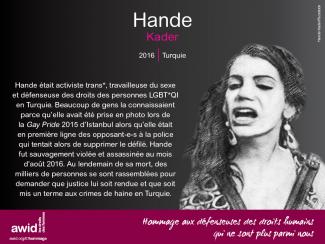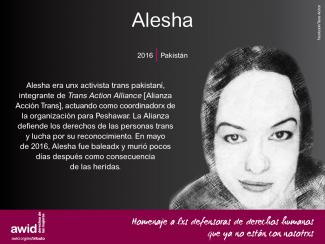
Alesha
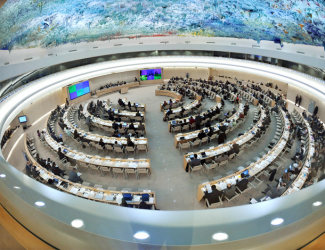
The Human Rights Council (HRC) is the key intergovernmental body within the United Nations system responsible for the promotion and protection of all human rights around the globe. It holds three regular sessions a year: in March, June and September. The Office of the UN High Commissioner for Human Rights (OHCHR) is the secretariat for the HRC.
Debating and passing resolutions on global human rights issues and human rights situations in particular countries
Examining complaints from victims of human rights violations or activist organizations on behalf of victims of human rights violations
Appointing independent experts (known as “Special Procedures”) to review human rights violations in specific countries and examine and further global human rights issues
Engaging in discussions with experts and governments on human rights issues
Assessing the human rights records of all UN Member States every four and a half years through the Universal Periodic Review
AWID works with feminist, progressive and human rights partners to share key knowledge, convene civil society dialogues and events, and influence negotiations and outcomes of the session.
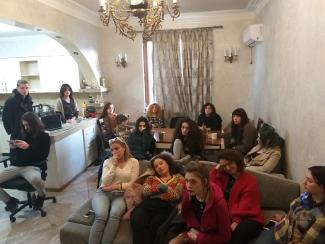
Our new research paper The Devil is in the Details addresses knowledge gaps around religious fundamentalisms within the development sector, and aims to improve understanding of how they constrain development and women’s rights in particular. It provides recommendations for ways development actors can avoid inadvertently strengthening and instead challenge fundamentalisms. [CTA download link: Read the full paper]
| Graphic1 | 1. Control of women’s bodies, sexuality, and choice are “warning signs” of rising fundamentalisms. |
| 2. Neoliberal economic policies have a particularly negative impact on women, and fuel the growth of religious fundamentalisms. | Graphic2 |
| Graphic3 | 3. Choosing religious organizations as default for partnerships builds their legitimacy and access to resources, and supports their ideology, including gender ideology. |
| 4.Everyone has multiple identities and should be defined by more than just their religion. Foregrounding religious identities tends to reinforce the power of religious fundamentalists. | Graphic4 |
| Graphic5 | 5. Religion, culture, and tradition are constantly changing, being reinterpreted and challenged. What is dominant is always a question of power. |
| 6. Racism, exclusion, and marginalization all add to the appeal of fundamentalists’ offer of a sense of belonging and a “cause”. | Graphic6 |
| Graphic7 | 7. There is strong evidence that the single most important factor in promoting women’s rights and gender equality is an autonomous women’s movement. |
The Devil is in the Details details the grave human rights violations, and violations of women’s rights in particular, caused by state-sponsored fundamentalism, as well as by fundamentalist non-state actors such as militias, religious community organizations, and individuals. Fundamentalist reinforcement of regressive, patriarchal social norms are leading to the rise of violence against women, girls, and women human rights defenders (WHRDs). The paper highlights these key insights for addressing the problem:
Development actors are in a position to take a strong role in this. The collective capacity of development actors to recognize and collaboratively address religious fundamentalisms is vital for advancing social, economic, and gender justice and the human rights of all people in sustainable development. It is vital to promote intersectional feminist understandings of power and privilege, and to apply these to questions of religion and culture. Women’s organizations already have knowledge and strategies to counter fundamentalisms development actors should build on this, and invest in cross-issue coalitions to help them reach new heights.