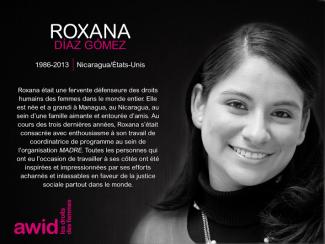
Roxana Diaz Gomez
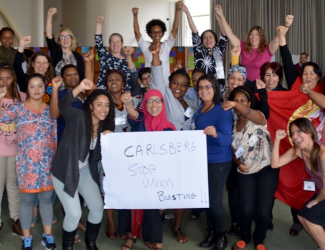
Women human rights defenders (WHRDs) worldwide defend their lands, livelihoods and communities from extractive industries and corporate power. They stand against powerful economic and political interests driving land theft, displacement of communities, loss of livelihoods, and environmental degradation.
Extractivism is an economic and political model of development that commodifies nature and prioritizes profit over human rights and the environment. Rooted in colonial history, it reinforces social and economic inequalities locally and globally. Often, Black, rural and Indigenous women are the most affected by extractivism, and are largely excluded from decision-making. Defying these patriarchal and neo-colonial forces, women rise in defense of rights, lands, people and nature.
WHRDs confronting extractive industries experience a range of risks, threats and violations, including criminalization, stigmatization, violence and intimidation. Their stories reveal a strong aspect of gendered and sexualized violence. Perpetrators include state and local authorities, corporations, police, military, paramilitary and private security forces, and at times their own communities.
AWID and the Women Human Rights Defenders International Coalition (WHRD-IC) are pleased to announce “Women Human Rights Defenders Confronting Extractivism and Corporate Power”; a cross-regional research project documenting the lived experiences of WHRDs from Asia, Africa and Latin America.
"Women Human Rights Defenders confronting extractive industries: an overview of critical risks and Human Rights obligations" is a policy report with a gender perspective. It analyses forms of violations and types of perpetrators, quotes relevant human rights obligations and includes policy recommendations to states, corporations, civil society and donors.
"Weaving resistance through action: Strategies of Women Human Rights Defenders confronting extractive industries" is a practical guide outlining creative and deliberate forms of action, successful tactics and inspiring stories of resistance.
The video “Defending people and planet: Women confronting extractive industries” puts courageous WHRDs from Africa, Asia, and Latin America in the spotlight. They share their struggles for land and life, and speak to the risks and challenges they face in their activism.
Challenging corporate power: Struggles for women’s rights, economic and gender justice is a research paper outlining the impacts of corporate power and offering insights into strategies of resistance.
AWID acknowledges with gratitude the invaluable input of every Woman Human Rights Defender who participated in this project. This project was made possible thanks to your willingness to generously and openly share your experiences and learnings. Your courage, creativity and resilience is an inspiration for us all. Thank you!
ภาษาที่ AWID ใช้งานคือ ภาษาอังกฤษ ภาษาฝรั่งเศส และภาษาสเปน โดยภาษาไทยจะถูกเพิ่มเข้ามาในฐานะภาษาท้องถิ่น รวมถึงภาษามือและมาตราการในการช่วยให้เข้าถึงอื่นๆ โดยภาษาอื่นๆอาจถูกเพิ่มเข้ามาหากมีงบประมาณเพียงพอ สามารถเข้ามาดูการอัปเดทว่ามีการเพิ่มภาษาอื่นใดบางได้เรื่อยๆ เราใส่ใจในความยุติธรรมด้านภาษาและจะพยายามให้มีภาษามากที่ที่สุดเท่าที่งบประมาณจะสามารถครอบคลุมได้ เราหวังว่าเราจะสามารถสร้างโอกาสมากมายให้พวกเราสามารถสื่อสารกันหรือนำเสนอในภาษาของตัวเองได้
กรุณาคำนวณค่าใช้จ่ายโดยรวมถึงค่าเดินทางมายังกรุงเทพมหานคร ค่าที่พัก ค่าเบี้ยเลี้ยง ค่าวีซ่า ค่าสนับสนุนในการเข้าถึงต่างๆ และอื่นๆ ยังไม่รวมถึงค่าลงทะเบียนที่จะมีการประกาศเร็วๆนี้ โรงแรมในบริเวณสุขุมวิท กรุงเทพฯ มีราคาตั้งแต่ 1,700-6,800 บาทต่อคืน สำหรับการพักสองคน
โดยหากเป็นสมาชิก AWID จะได้รับส่วนลดค่าลงทะเบียน หากคุณยังไม่ได้เป็นสมาชิก เราขอเชิญชวนให้คุณสมัครสมาชิกและเข้าร่วมชุมชนเฟมินิสต์ระดับโลก
Dans cette sélection de films, vous découvrirez les voix de réalisatrices qui ne se contentent pas de restituer les réalités féministes palpitant dans chaque recoin de ce territoire vaste et divers, mais explorerez aussi des oeuvres qui, dans leur conception même, s'interrogent sur le pourquoi, le qui et le comment du cinéma ou de l'audiovisuel. Ces femmes comprennent le cinéma comme un outil de lutte, comme quelque chose de plus que de simples images à apprécier sur un écran. Pour ces réalisatrices ou collectifs de cinéastes, le cinéma et l'audiovisuel constituent un outil capable de promouvoir la discussion, d'ouvrir un débat, bref, une ressource pour la pédagogie populaire et féministe.
Publication de la version zéro du document final, mars 2015
AWID ฟอรัม ตลอดมาเป็นพื้นที่ที่ไม่กลัวการสนทนาที่จำเป็น หรือหัวข้อที่ท้าทาย เรายินดีรับข้อเสนอเหล่านี้เมื่อผู้จัดกิจกรรมสามารถรักษาพื้นที่สำหรับผู้เข้าร่วมด้วยความเคารพ ปลอดภัย และอย่างระมัดระวัง
Consultez notre guide : « Un tout petit guide pour l’organisation de festivals féministes internationaux et d’événements en ligne. »
Related content
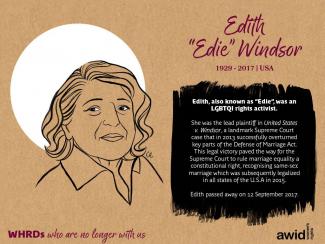
The Guardian: Edith Windsor, icon of gay rights movement, dies aged 88
Rolling Stone: Edith Windsor, Same-Sex Marriage Activist, Dead at 88
BBC: Edie Windsor: Gay rights trailblazer dies aged 88
The New Yorker: Postscript: Edith Windsor, 1929-2017
The Guardian: Goodbye, Edie Windsor. Thank you for never giving up
Love and Justice: Edith Windsor talks with Ariel Levy - The New Yorker Festival - The New Yorker (Video)
Remembering Edie Windsor (Video)
Development financing has specific threats and opportunities for women's and all people’s human rights. Transformative development financing and policies can make an important contribution to the systemic changes that are needed to ensure the respect, protection and fulfillment of women’s human rights.
2015 is an important year for the FfD process. The Third International Conference on FfD took place from 13-16 July 2015 in Addis Ababa, Ethiopia and governments are finalising the post-2015 development agenda including agreements on how the new Sustainable Development Goals will be financed.
The current stage of the FfD process is an important opportunity to establish a financing framework that will ensure effective financing for the implementation of the post 2015 agenda and the Sustainable Development Goals (SDGs). It is also an opportunity to address the structural conditions, and systemic changes needed, for the full implementation of other agendas and commitments such as Human Rights Conventions, and the Beijing Platform for Action.
Over the last 13 years, women’s rights and feminist organizations have actively engaged in the FfD process.

เราตระหนักดีถึงอุปสรรคในทางปฏิบัติและความทุกข์ทางอารมณ์ในการเดินทางระหว่างประเทศ โดยเฉพาะอย่างยิ่งจากซีกโลกใต้ โดย AWID กำลังทำงานร่วมกับ TCEB (สำนักงานส่งเสริมการจัดประชุมและนิทรรศการของประเทศไทย) เพื่อสนับสนุนผู้เข้าร่วมฟอรัมในการขอวีซ่า ข้อมูลอื่นๆเกี่ยวกับการขอวีซ่าจะถูกนำเสนอในช่วงที่เปิดให้ลงทะเบียน รวมถึงสถานที่และวิธีการขอวีซ่า
CARING ECONOMIESLAND AND AGROECOLOGYFEMINIST COOPERATIVISMFEMINIST UNION ORGANIZING