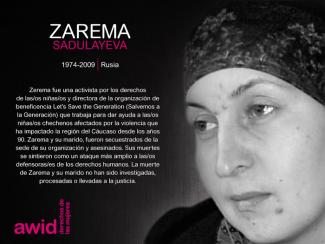
Zarema Sadulayeva
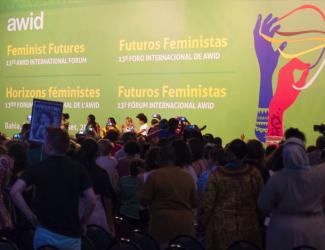
In September 2016, the 13th AWID international Forum brought together in Brazil over 1800 feminists and women’s rights advocates in a spirit of resistance and resilience.
This section highlights the gains, learnings and resources that came out of our rich conversations. We invite you to explore, share and comment!
One of the key takeaways from the 2016 Forum was the need to broaden and deepen our cross-movement work to address rising fascisms, fundamentalisms, corporate greed and climate change.
With this in mind, we have been working with multiple allies to grow these seeds of resistance:
And through our next strategic plan and Forum process, we are committed to keep developing ideas and deepen the learnings ignited at the 2016 Forum.
AWID Forums started in 1983, in Washington DC. Since then, the event has grown to become many things to many peoples: an iterative process of sharpening our analyses, vision and actions; a watershed moment that reinvigorates participants’ feminisms and energizes their organizing; and a political home for women human rights defenders to find sanctuary and solidarity.
“Nous Sommes la Solution a une vision d'une Afrique où, solidairement, les femmes rurales impliquées dans la prise de décision peuvent cultiver, transformer, vendre et consommer les produits de l'agriculture familiale tout en préservant l'environnement, pour un développement harmonieux et durable”
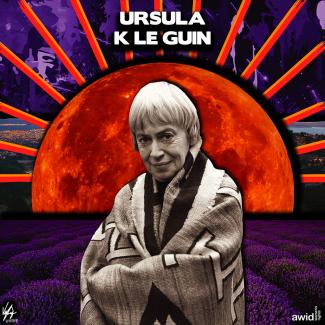
Ursula fue una novelista estadounidense que trabajó principalmente con los géneros de fantasía y ciencia ficción.
Encontró la fama con La mano izquierda de la oscuridad, novela en la cual imagina una sociedad futura donde la gente es ambisexual: no tienen un sexo fijo. Indaga en los efectos del género y el sexo en la sociedad, y fue uno de los primeros grandes libros feministas de ciencia ficción. Ursula fue una inspiración por su escritura subversiva y original y también por los temas sobre feminismo y libertad a los que les daba tanta importancia.
En un discurso que pronunció en 1983 en el Mills College, en California, les dijo a las graduadas: «¿Por qué una mujer libre con formación universitaria debería o luchar contra el macho o servirlo? ¿Por qué ella debería vivir su vida en los términos de él? Espero que ustedes vivan sin la necesidad de dominar y sin la necesidad de ser dominadas».
English body
No. Valoramos muchísimo su trabajo, pero no estamos buscando respuestas de fondos de mujeres/feministas por el momento. Alentamos a compartir la encuesta con sus socios beneficiarios y con sus redes feministas.
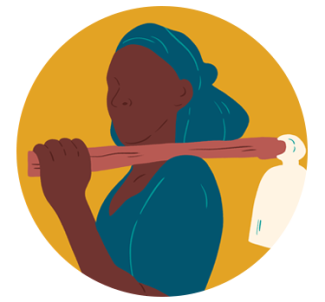
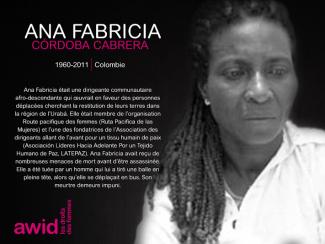
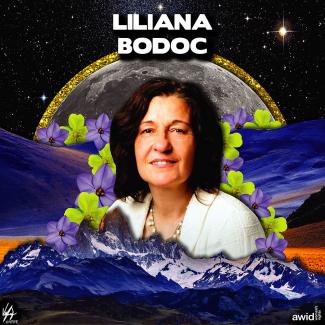
Liliana était enseignante argentine, tisseuse et également une écrivaine reconnue.
Sa trilogie « La saga des confins » a reçu plusieurs prix. Son œuvre est la seule dans le domaine littéraire fantastique à avoir eu recours et ré-imaginé la mythologie autochtone sud-américaine.
L’engagement de Liliana envers le féminisme s’est exprimé à travers les voix féminines diverses, riches et fortes de ses écrits, et en particulier dans le cadre de ceux à destination du jeune public. Elle a également pris position publiquement en faveur de l'avortement, de la justice économique et de l’égalité de genre.
Une étudiante, une scénariste, une leader, une avocate. Les quatre femmes auxquelles nous rendons hommage ci-dessous avait toutes leur propre façon de vivre leur activisme, mais elles avaient en commun la promotion et la défense des droits des personnes lesbiennes, gaies, bisexuelles, trans*, queer et intersexes. Nous vous invitons à vous joindre à nous pour commémorer ces défenseuses, leur travail et l'héritage qu’elles nous ont laissé. Faites circuler ces mèmes auprès de vos collègues et amis ainsi que dans vos réseaux et twittez en utilisant les hashtags #WHRDTribute et #16Jours.
S'il vous plaît cliquez sur chaque image ci-dessous pour voir une version plus grande et pour télécharger comme un fichier


Oui, l’enquête est accessible depuis les téléphones intelligents.
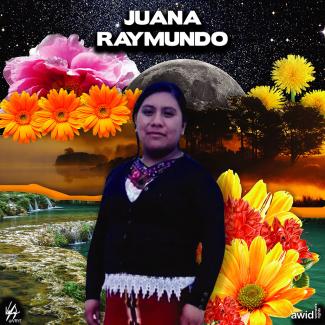
Juana was an Indigenous Mayan Ixil, professional nurse and coordinator of the Farmers’ Development Committee (Comité de Desarrollo Campesino – CODECA).
CODECA is a human rights organisation of Indigenous farmers dedicated to promoting land rights and rural development for Indigenous families) in the Nebaj Quiché micro-region. She first joined CODECA as a member of its youth branch (Juventud de CODECA). At the time of her death had been elected to be part of the Executive Committee of the Movement for the Liberation of Peoples (MLP).
Juana’s body was found by neighbours by a small river on the road near Nebaj and Acambalam Village, Guatemala. According to CODECA, her body showed signs of torture.
6 Women Human Rights Defenders (WHRDs) across Western and Southeastern Europe have in their lifetime researched, campaigned, participated in and advanced peace and women’s rights movements be it through political and social activism or through dance. We are grateful for the legacy they have left. Please join AWID in honoring these women, their activism and legacy by sharing the memes below with your colleagues, networks and friends and by using the hashtags #WHRDTribute and #16Days.
Please click on each image below to see a larger version and download as a file


As the WITM survey is focused on resourcing realities for feminist organizations, most questions ask about your group’s funding between 2021–2023. You will need to have this information with you to fill out the survey (e.g., your annual budgets and key sources of funding).
L'Argentine a une longue histoire d’autogestion et de coopérativisme, avec des lieux de travail dirigés par et pour les travailleur·euses.
En 2001, le pays a connu l'une des pires crises économiques de son histoire.
En réponse à la récession et comme forme de résistance et de résilience, les travailleur·euses de tout le pays ont commencé à occuper leurs lieux de travail.
La Coopérative Textile Nadia Echazú a été la première coopérative créée par et pour les personnes trans et travesti en quête d'autonomie économique et de conditions de vie dignes.
Elle offre des opportunités d'emploi, l’accès à la sécurité sociale, des revenus durables et des droits économiques aux communautés qu'elle sert.