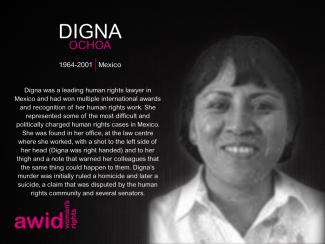
Digna Ochoa
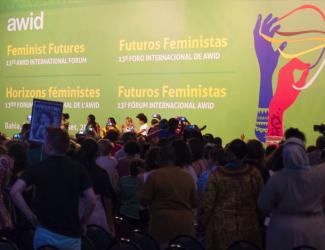
In September 2016, the 13th AWID international Forum brought together in Brazil over 1800 feminists and women’s rights advocates in a spirit of resistance and resilience.
This section highlights the gains, learnings and resources that came out of our rich conversations. We invite you to explore, share and comment!
One of the key takeaways from the 2016 Forum was the need to broaden and deepen our cross-movement work to address rising fascisms, fundamentalisms, corporate greed and climate change.
With this in mind, we have been working with multiple allies to grow these seeds of resistance:
And through our next strategic plan and Forum process, we are committed to keep developing ideas and deepen the learnings ignited at the 2016 Forum.
AWID Forums started in 1983, in Washington DC. Since then, the event has grown to become many things to many peoples: an iterative process of sharpening our analyses, vision and actions; a watershed moment that reinvigorates participants’ feminisms and energizes their organizing; and a political home for women human rights defenders to find sanctuary and solidarity.
AGROECOLOGY AND FOOD SOVEREIGNTY AS RESISTANCE |
Today, large-scale industrial food production uses single-crop plantations, genetically modified organisms and other pesticides that destroy the land and knowledge of local communities. |
Agroecology is a resistance to corporate-driven agriculture. It prioritizes smaller scale agriculture, multiple crops and diversified food production, and the centering of local knowledge and practices. Agroecology goes hand-in-hand with demands for food sovereignty, or the “right of peoples to healthy and culturally appropriate food produced through ecologically sound and sustainable methods, and their right to define their own food and agriculture systems”(Via Campesina, Declaration of Nyéléni).
The role of women, indigenous and rural communities and people of color from the Global South is absolutely essential when it comes to food systems. Feminist agroecologists are working to dismantle oppressive gender roles and systems of patriarchy embedded within food production. As shown by the heroines of NSS, they are generating a liberatory agroecology by strengthening community resilience, empowering women peasants and farmers, and preserving local traditions, territories, and knowledge of food-producing communities.
Yes, we still want to hear from you regardless of whether you received funding in all three, two or only one of the years between 2021 and 2023.
In our 2015 Online Tribute to Women Human Rights Defenders No Longer With Us we are commemorating four women from Sub-Saharan Africa, three of whom were murdered due to their work and/or who they were in their gender identity and sexual orientation. Their deaths highlight the violence LGBT persons often face in the region and across the globe. Please join AWID in honoring these women, their activism and legacy by sharing the memes below with your colleagues, networks and friends and by using the hashtags #WHRDTribute and #16Days.
Please click on each image below to see a larger version and download as a file


自2019年年末在印尼發生的一連串事件中,我們觀察到了當地軍事緊張與對同志權益的反彈跡象,AWID希望多元的與會者能在論壇齊聚一堂,但這讓我們自問是否能為與會者維持合理安全和讓人感到被歡迎的環境。
經過仔細商討後,AWID董事會在2019年11月決定將第十四屆AWID國際論壇的舉辦地點由峇里島改至台北。
台北擁有穩健的勤務服務能力,對旅客友善(針對國際論壇參與者提供便利的電子簽證流程)。
更多資訊請見以下 :
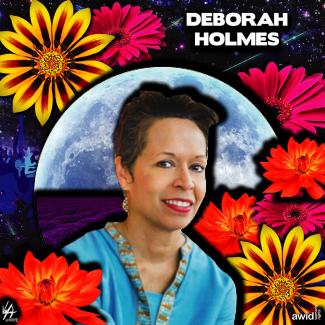
Jusqu’à son décès, à la suite d’une lutte brève mais agressive contre le cancer, Deborah était la directrice de la communication et de la mobilisation au Women’s funding network (le réseau de financement des femmes), WFN.
Entre 2008 et 2017, elle avait également travaillé auprès du Fonds mondial pour les femmes. Deborah était extrêmement appréciée et respectée par le conseil d'administration, l’équipe et les partenaires du Fonds mondial pour les femmes.
Kavita Ramdas, ex-PDG a déclaré, à juste titre, que Deborah était « la combinaison unique d’un être mêlant chaleur, générosité, intelligence et style, avec un engagement passionné pour faire fusionner la beauté et la justice. Elle avait compris le pouvoir des histoires. Le pouvoir de la voix des femmes. Le pouvoir de l'expérience vécue. Le pouvoir de renaître de ses cendres et de dire aux autres que c'était possible. Et nous continuons à nous relever. »
Musimbi Kanyoro, l'actuelle PDG du Fonds mondial pour les femmes, a ajouté: « Nous avons perdu une sœur et sa vie illumine des valeurs qui nous unissent et nous inspirent tou-te-s. Alors que nous sommes tou-te-s réuni-e-s pour pleurer le décès de Deborah, souvenons-nous et célébrons sa vie remarquable, audacieuse et passionnée. »
Solicitamos estos datos para facilitar el análisis de las respuestas, para evitar duplicaciones y para contactar a su organización en caso de que no hayan podido completar el cuestionario o de que tengan dudas u otras preguntas. Puedes consultar más detalles acerca de cómo utilizamos la información personal que recolectamos a través de nuestro trabajo aquí.
In 2013, we published three global reports. These reports confirm that women’s rights organizations are doing the heavy lifting to advance women’s rights and gender equality by using diverse, creative and long-term strategies, all while being underfunded.
Our 2010 global survey showed that the collective income of 740 women’s organizations around the world totaled only USD 104 million. Compare this with Greenpeace International, one organization with a 2010 budget of USD 310 million1. Imagine the impact these groups could have if they were able to access all the financial resources they need and more?
AWID’s WITM research has catalyzed increased funding for women’s rights organizing. WITM research was a driving force behind the Catapult crowdfunding platform, which has raised USD 6.5 million for women’s rights. The Dutch Government cited WITM research as a reason for its unprecedented MDG 3 Fund of EU 82 million. WITM research has also led to the creation of several new funds: FRIDA – The Young Feminist Fund, the Indigenous Women’s Fund, Fundo Elas, the Mediterranean Women’s Fund and the Rita Fund.
While the WITM research has shed important light on the global funding landscape, AWID and partners have identified the need to dig deeper, to analyze funding trends by region, population and issue. In response, organizations are now using AWID’s WITM research methodology to do their own funding trends analyses. For example, in November 2013, Kosova Women’s Network and Alter Habitus – Institute for Studies in Society and Culture published Where is the Money for Women’s Rights? A Kosovo Case Study.
At the same time, AWID continues to collaborate with partners in Where is the Money for Indigenous Women’s Rights (with International Indigenous Women’s Forum and International Funders for Indigenous Peoples) and our upcoming Where is the Money for Women’s Rights in Brazil? (with Fundo Elas).
Several organizations have also conducted their own independent funding trends research, deepening their understanding of the funding landscape and politics behind it. For example, the South Asian Women’s Fund was inspired by AWID’s WITM research to conduct funding trends reports for each country in South Asia, as well as a regional overview. Other examples of research outside of AWID include the collaboration between Open Society Foundations, Mama Cash, and the Red Umbrella Fund to produce the report Funding for Sex Workers Rights, and the first-ever survey on trans* and intersex funding by Global Action for Trans* Equality and American Jewish World Service.
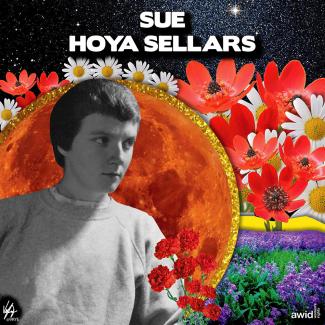
Sue was an artist, activist and teacher born in 1936 in Maryland, USA.
Sue created art for women, about women. As a lesbian feminist, and for a time, a separatist, she was committed to creating women-only spaces. In 1976 she purchased land that is still held by women who visit to make art. Sue took a fierce stand on the protection of women and girls.
With her groundbreaking futuristic, classical and anthropological approach, she filled any room she entered with intellect, authentic eccentricity, unforgiving wit, and humor. Her ideas about consciousness and creativity continue to inspire many people.
Elle est ouverte jusqu’à la fin août 2024. Merci d’y répondre avant cette date butoir, afin que vos réponses soient incluses dans l’analyse.
Now that you have analyzed all your data – from your survey, interviews, desk research and potentially other sources – you can create your final product.
In this section:
- Create your final product
1. Write clearly
2. Make it pretty- Gather review and inputs
1. Polish your results
2. Facilitate the feedback
Your final product will be the document that will summarize, analyze and criticize your data. That will be the piece that you will share with your community to present and explain your research to your audience.
At AWID, we often write a comprehensive written report that analyzes each set of data and synthesizes all of our findings, then later create smaller products, such as infographics and summaries (explained in the subsequent section “Finalize and format”).
Importance of the editor
An editor will proofread, ensure concise writing, conduct fact-checking, point out inconsistencies that need to be resolved, arrange the flow of the document and possibly suggest titles.
Your editor should preferably be someone who understands and knows your WITM work but who was not directly involved in the research. This will bring in a fresh perspective.
Use the data collected to create graphs and tables. These type of visuals are a compelling way to highlight the main findings of your research and validate your analysis.
Source relevant images that can illustrate your report.
Highlight key-numbers and/or powerful testimonials.
Remember: The more accessible your product is, the more people will want to read (and share!) it.
At this point, you have collected all your data, analyzed it and transformed it into your final product, likely in a long report.
Before moving on to the next steps – you should share your final research product with your advisor organizations, activists, and donors.
This is a great moment to check the following points:
Once you have inputted all feedback from your advisors, be sure to run it by your editor once more.
This will now be the final, completed version of your report. If you intend to publish the final report in other languages, now is the time to send it for translation.
This is a significant contribution from your advisors. Consider offering them some form of recognition.

• 2 - 5 months
• 1 or more research person(s)
• 1 Editor (or web-editor if you create an online product)
• Translator(s), if done in more than one language
• List of advisor organizations, activists, and donors.
• Concept note (from “Frame your research” section)
• Survey topline results
• Prepared interview questions
• Interview results
• Desk research data
• All other data used in report
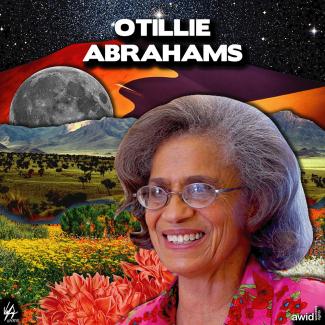
Ottilie fue una activista feminista, educadora y política de Namibia.
Fue una de las fundadoras de la Organización Popular del Sudoeste Africano (SWAPO), del Club Yu Chi Chan (un grupo armado revolucionario) y del Frente Nacional de Liberación del Sudoeste Africano (SWANLIF). También fue una de las fundadoras de la Asociación de Mujeres de Namibia y del Proyecto Niñas. A lo largo de su vida, Ottilie defendió el derecho a discutir, a pensar, a disputar y a exigir. Movilizó a las mujeres, organizó a estudiantes y docentes y criticó a otrxs camaradas por su elitismo y su corrupción.
Ottilie trabajó intensamente para desmantelar el patriarcado y para crear una democracia participativa concreta, feminista, transformadora y liberadora.
A menudo decía: «Descansaré cuando muera».
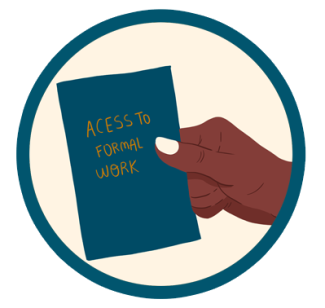
Only 18% of trans and travesti people in Argentina have access to formal work.