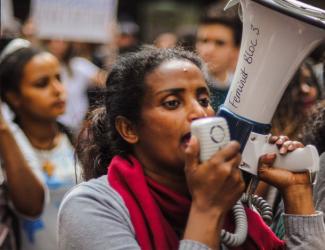
Anit-Racism Movement (ARM) / Flickr (CC BY-NC-ND 2.0)

Priority Areas

Supporting feminist, women’s rights and gender justice movements to thrive, to be a driving force in challenging systems of oppression, and to co-create feminist realities.

Resourcing Feminist Movements

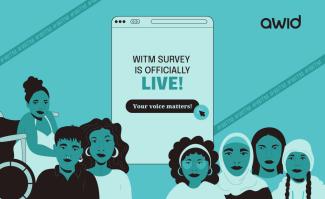
Banner image announcing that WITM Survey is live.


The “Where is the Money?” #WITM survey is now live! Dive in and share your experience with funding your organizing with feminists around the world.

Learn more and take the survey


Around the world, feminist, women’s rights, and allied movements are confronting power and reimagining a politics of liberation. The contributions that fuel this work come in many forms, from financial and political resources to daily acts of resistance and survival.


AWID’s Resourcing Feminist Movements (RFM) Initiative shines a light on the current funding ecosystem, which range from self-generated models of resourcing to more formal funding streams.

Through our research and analysis, we examine how funding practices can better serve our movements. We critically explore the contradictions in “funding” social transformation, especially in the face of increasing political repression, anti-rights agendas, and rising corporate power. Above all, we build collective strategies that support thriving, robust, and resilient movements.


Our Actions

Recognizing the richness of our movements and responding to the current moment, we:

  • Create and amplify alternatives: We amplify funding practices that center activists’ own priorities and engage a diverse range of funders and activists in crafting new, dynamic models  for resourcing feminist movements, particularly in the context of closing civil society space.

  • Build knowledge: We explore, exchange, and strengthen knowledge about how movements are attracting, organizing, and using the resources they need to accomplish meaningful change.

  • Advocate: We work in partnerships, such as the Count Me In! Consortium, to influence funding agendas and open space for feminist movements to be in direct dialogue to shift power and money.

Related Content

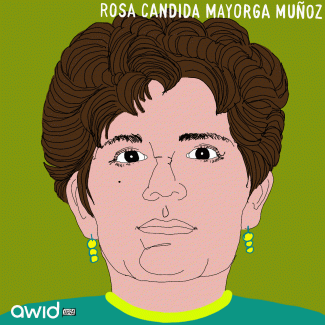
Rosa Candida Mayorga Muñoz

Rosa Candida Mayorga Muñoz was a Guatemalan social worker, union leader and labor rights defender. She was affectionately called Rosita and she inspired change. 

In the 1980’s, Rosa became the first female member of the Executive Committee of the Union of Workers of the Institute of National Electrification (STINDE), a union she first joined to advocate for women’s labor rights. For her, this meant fighting for equal opportunities in a company where many women faced a discriminatory and violent system created by company authorities. Rosa had also suffered sexual harassment in her workplace, both by co-workers and managers. She was not to be kept quiet though. 

Rosa continued fighting and was part of the effort to mould the struggle into a more specific form, that of the INDE-STINDE Collective Pact of Working conditions. This pact was a pioneer, the first in Guatemala to typify the concept of (sexual) harassment. It serves as a reference for the Guatemalan legislation on labor matters and is an encouragement for other unions.

“She had no fighting tools other than her own ideals... Many times she was intimidated, harassed to put the fight aside, but her courage generated the image of hope for grassroots unionists. Rosita created an image of respect, not only within her union, but before the authorities of the institution, before the women's movement; she was recognized as a pioneer of the trade union women's movement, in a space that had been more dominated by men.” - Maritza Velasquez, ATRAHDOM

Rosa passed away on 4 April 2018 at the age of 77.  
ฉันเสนอกิจกรรมไปในฟอรัมที่ผ่านมา ฉันยังจำเป็นต้องสมัครใหม่อีกครั้งหรือไม่

กรุณาสมัครใหม่อีกครั้ง โลกได้เปลี่ยนไปจากปี 2564 และเราขอเชิญชวนให้คุณเสนอกิจกรรมที่ถ่ายทอดความจริงและสิ่งที่คุณให้ความสำคัญในปัจจุบัน

CFA FAQ - Accessibility and Health - Thai

สุขภาพและการช่วยในการเข้าถึง

CFA 2023 - breadcrumbs Menu _ FAQ-thai

Snippet - WITM Who should - EN

Who should take this survey*?

The survey is for groups, organizations and movements working specifically or primarily for the rights of women, LBTQI+ people and on gender justice in all contexts, at all levels, and in all regions. If this is one of the core pillars of your group, collective, network or any other type of organization - whether registered or not, newly formed or long-standing, we invite you to take this survey.

Girl in a jacket

*At this time, we are not asking for responses from individuals or funders.

Learn more about the survey:
Consult the F.A.Q.

Snippet - WITM Survey will remain open - EN

Watch the "Where is the Money?" Webinar now.

On July 11, 2024, we had an amazing conversation with great feminists on the state of the funding ecosystem and the power of "Where is the Money?" research.

Special thanks to Cindy Clark (Thousand Currents), Sachini Perera (RESURJ), Vanessa Thomas (Black Feminist Fund), Lisa Mossberg (SIDA), and Althea Anderson (Hewlett Foundation).

Watch here! 

Watch with Arabic interpretation.

We re-grant money to grantee partners and identify as a feminist and/or women’s fund, should we take the survey?

No, we very much appreciate your work but are not asking for responses from women’s and feminist funds at this time. We do encourage you to share the survey with your grantee partners and feminist networks.

Is my participation confidential?

Absolutely. Your responses will be deleted at the end of data processing and analysis, and used for research purposes only. Data will NEVER be shared outside of AWID and will be only processed by AWID staff and consultants working on the WITM project. We prioritize your privacy and security. Our detailed privacy policy is available here.

Snippet - WITM why - RU

Почему Мне Следовало Бы Пройти Этот Опрос?

Snippet - WITM To Strengthen - PT

Para fortalecer a nossa voz e poder coletivos para obter mais recursos de melhor qualidade para a organização feminista, de direitos das mulheres, de LBTQI+ e de aliados globalmente.

Solidarity: membership why page

Solidarity 

We take a position in solidarity with each other and diverse struggles for justice and freedoms. We strive to mobilize and strengthen collective action and practice meaningful ways of working with each other.

Snippet - WITM Why now_col 2 - PT

O financiamento dos movimentos feministas é fundamental para garantir uma presença mais justa e pacífica, e um futuro liberto.

Na última década, os financiadores investiram significativamente mais dinheiro na igualdade de género; no entanto, apenas 1% do financiamento filantrópico e de desenvolvimento foi efetivamente direcionado para apoiar diretamente mudanças sociais lideradas por feministas

Na busca da abundância, e para acabar com esta escassez crónica, o inquérito WITM é um convite para os defensores do feminismo e da justiça de género se envolverem no percurso da recolha coletiva de testemunhos e de casos para mobilizar mais recursos financeiros de melhor qualidade e recuperar o poder no ecossistema de financiamento neste momento. Em solidariedade com os movimentos que continuam invisibilizados, marginalizados e sem acesso a financiamento central, de longo prazo, flexível e baseado em fundos fiduciários, o inquérito WITM destaca o estado efetivo dos recursos, desafia soluções falsas e aponta.

Publications - Homepage - eng

Publications

Kindle for your feminist fire! Browse AWID’s research on funding, WHRDs, movement building, fundamentalisms, economic justice, feminist monitoring & evaluation and more

Read more

Какую цель преследует опрос «Где деньги?»

Ключевая цель исследования – осветить финансовое положение различных феминистских движений, инициатив за права женщин, гендерную справедливость, ЛГБТКИ+ и смежных движений по всему миру и, основываясь на этом, еще больше усилить аргументы в пользу увеличения объема денежных средств и передачи власти феминистским движениям.

FRMag - Looking at me Looking at Safe Spaces

Looking at me Looking at Safe Spaces

by Judyannet Muchiri

October last year I left for Kenya to begin what I have come to think of as my most important work yet. (...)

Read

artwork: “Healing Together” by Upasana Agarwal >

هل يمكن أن تعبئ مجموعة واحدة الاستطلاع أكثر من مرة واحدة؟

كلا. نطلب فقط تعبئة استطلاع واحد لكل مجموعة.

Ours report 2021 summary

Today, a complex and evolving network of anti-rights actors is exerting more influence in international and regional spaces as well as domestic politics. Anti-rights actors are entering multilateral spaces (spaces where multiple countries come together for international collaboration) to transform and undermine them from the inside out. They employ a range of persuasive discourses to gain legitimacy, often co-opting the language of rights and justice to hide their true agendas.

This report is the second in a series on human rights trends reports produced by the Observatory on the Universality of Rights (OURs). As well as analysis of key anti-rights actors, discourses, strategies, and impacts, the report features inspiring short stories of feminist action, and knowledge-building exercises to help strengthen our collective resistance.

Read Full Report

The effect on our rights has already been grave, but this is not a done deal. We can all play a part in resisting anti-rights agendas and reclaiming our rights. 

Join the collective call-to-action today! 

Sign Call to Action
 

Могу ли я пройти опрос со своего телефона?

Да, доступ к опросу можно получить с помощью смартфона.

فقدان الكلام | كلمة العدد

كلمة العدد

فقدان الكلام

بدأنا التخطيط لعدد المجلّة هذا مع نانا داركوا قُبيل مهرجان «ابدعي، قاومي، غيٍّري: مهرجان للحراكات النسوية» لجمعية «حقوق المرأة في التنمية» AWID، وانطلقنا وقتها من سؤالٍ هو بالأحرى ملاحظة حول حالة العالم، ورغبة في تغيير الاعتقادات السائدة: لماذا لا تزال جنسانيّاتنا وملذّاتنا تخضع للترويض والتجريم مع أنّه يتمّ تذكيرنا مراراً وتكراراً بأنّها لا تأتي بأيّ قيمة أو تطوّر؟ واستنتجنا أنّ جنسانيّاتنا، لمّا تتجسّد، فيها ما يتعارض مع النظام العالمي الذي ما زال يتجلّى من خلال ضوابط الحدود، والتمييز العنصري في توزيع اللقاح، والاستعمار الاستيطاني، والتطهير العرقي، والرأسمالية المُستشرية. هل يمكننا إذاً القول إنّ لجنسانيّاتنا قدرةٌ تعطيليّة؟ وهل يصحّ هذا القول عندما ننظر إلى واقع حركاتنا التي يتمّ الاستيلاء عليها ومأسستها في سعيها للتزوّد بالموارد؟

Read more

Terei a oportunidade de partilhar os meus pensamentos sobre questões que não são abordadas pelas perguntas do inquérito?

Sim, encorajamo-lo a partilhar mais sobre questões importantes para si ao responder à(s) pergunta(s) aberta(s) no final do inquérito.