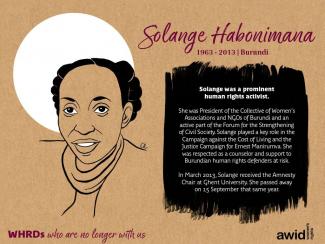
Solange Habonimana
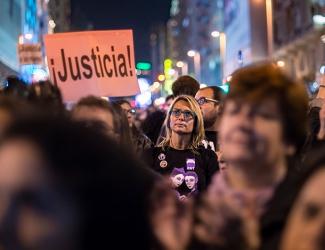
Across the globe, feminist, women’s rights and gender justice defenders are challenging the agendas of fascist and fundamentalist actors. These oppressive forces target women, persons who are non-conforming in their gender identity, expression and/or sexual orientation, and other oppressed communities.
Discriminatory ideologies are undermining and co-opting our human rights systems and standards, with the aim of making rights the preserve of only certain groups. In the face of this, the Advancing Universal Rights and Justice (AURJ) initiative promotes the universality of rights - the foundational principle that human rights belong to everyone, no matter who they are, without exception.
We create space for feminist, women’s rights and gender justice movements and allies to recognize, strategize and take collective action to counter the influence and impact of anti-rights actors. We also seek to advance women’s rights and feminist frameworks, norms and proposals, and to protect and promote the universality of rights.
Gopika is an Indian feminist activist & campaigner in the field of gender justice and human rights. Her experience is rooted in working with women & diverse young people on issues including access to justice, sexual & gender-based violence, gender & sexuality, resourcing feminist activism and labor rights. Gopika has played advisory roles on funding feminist movements, including at FRIDA | The Young Feminist Fund and the Global Resilience Fund; and previously managed the Resourcing Feminist Movements program at AWID. She is passionate about the intersection of feminist activism & creative practice, and was an editor and Equitable Practices Lead for the 'Bystander Anthology' by South Asian graphic story-telling group Kadak Collective. She has recently discovered a deep love for climbing outdoors and continues to learn and grow through this journey. Gopika is based in Bangalore, India.
WHRDs are self-identified women and lesbian, bisexual, transgender, queer and intersex (LBTQI) people and others who defend rights and are subject to gender-specific risks and threats due to their human rights work and/or as a direct consequence of their gender identity or sexual orientation.
WHRDs are subject to systematic violence and discrimination due to their identities and unyielding struggles for rights, equality and justice.
The WHRD Program collaborates with international and regional partners as well as the AWID membership to raise awareness about these risks and threats, advocate for feminist and holistic measures of protection and safety, and actively promote a culture of self-care and collective well being in our movements.
WHRDs are exposed to the same types of risks that all other defenders who defend human rights, communities, and the environment face. However, they are also exposed to gender-based violence and gender-specific risks because they challenge existing gender norms within their communities and societies.
We work collaboratively with international and regional networks and our membership
We aim to contribute to a safer world for WHRDs, their families and communities. We believe that action for rights and justice should not put WHRDs at risk; it should be appreciated and celebrated.
Promoting collaboration and coordination among human rights and women’s rights organizations at the international level to strengthen responses concerning safety and wellbeing of WHRDs.
Supporting regional networks of WHRDs and their organizations, such as the Mesoamerican Initiative for WHRDs and the WHRD Middle East and North Africa Coalition, in promoting and strengthening collective action for protection - emphasizing the establishment of solidarity and protection networks, the promotion of self-care, and advocacy and mobilization for the safety of WHRDs;
Increasing the visibility and recognition of WHRDs and their struggles, as well as the risks that they encounter by documenting the attacks that they face, and researching, producing, and disseminating information on their struggles, strategies, and challenges:
Mobilizing urgent responses of international solidarity for WHRDs at risk through our international and regional networks, and our active membership.
Pour revendiquer votre pouvoir en tant qu’experte sur la situation du financement des mouvements féministes.
We have been contacted by global and regional partners about some ideas for pre-Forum convenings and we will share more information about these ideas soon.
Many beautiful things emerged from the 2016 Black Feminisms Forum (BFF) that was organized by an Advisory Group and funded by AWID. Some of the independent organizing that arose from the BFF include Black feminist organizing in Brazil. While we won’t have another BFF this year, we remain committed to sharing some key learnings with anyone interested in continuing work around Black feminist organizing.

 La dotación de recursos de los movimientos feministas es fundamental para garantizar una presencia más justa y pacífica y un futuro en libertad. En las últimas décadas, los donantes comprometieron una cantidad más considerable de dinero para la igualdad de género; sin embargo, apenas el 1% del financiamiento filantrópico y para el desarrollo se ha destinado real y directamente a dotar de recursos al cambio social encabezado por los feminismos.
Para luchar por la abundancia y acabar con esta escasez crónica, la encuesta ¿Dónde está el dinero? es una invitación a lxs promotorxs feministas y por la justicia de género a sumarse al proceso de la construcción colectiva de razones fundadas y evidencias para movilizar más y mejores fondos y recobrar el poder en el ecosistema de financiamiento de hoy. En solidaridad con los movimientos que continúan invisibilizados, marginados y sin acceso a financiamiento básico, a largo plazo, flexible y fiduciario, la encuesta ¿Dónde está el dinero? pone de relieve el estado real de la dotación de recursos, impugna las falsas soluciones y señala cómo los modelos de financiamiento necesitan modificarse para que los movimientos prosperen y puedan hacer frente a los complejos desafíos de nuestro tiempo.
Nos entusiasma compartir nuestro nuevo Plan Estratégico (2023-2027) con el mundo. Próximamente, AWID anunciará a nuestra comunidad y membresía al respecto.
La Asociación para los Derechos de las Mujeres y el Desarrollo es una organización feminista mundial, de membresía, que se dedica a brindar apoyo a los movimientos.
Por más de 35 años hemos formado parte de un increíble ecosistema de movimientos feministas que trabajan para alcanzar la justicia de género y los derechos humanos de las mujeres de todo el mundo.
AWID imagina un mundo donde las realidades feministas florezcan, donde los recursos y el poder sean compartidos de maneras que permitan a todxs, y a las generaciones futuras, prosperar y concretar plenamente su potencial con dignidad, amor y respeto, y donde la Tierra nutra la vida en toda su diversidad.
Nuestra misión es apoyar a los movimientos feministas, de derechos de las mujeres y por la justicia de género para que progresen y para que sean una fuerza impulsora de retos a los sistemas de opresión y para la creación conjunta de realidades feministas.
Desarrollamos nuestro trabajo a través de estas tácticas:
Hacemos uso colaborativo de nuestro acceso, poder, recursos y relaciones para influir estratégicamente sobre las políticas y las prácticas. Nos proponemos impulsar agendas feministas a través de nuestro trabajo con quienes tienen poder de decisión política, con financiadoras y con activistas en los espacios regionales y mundiales. Para reforzar nuestro poder e influencia colectivos, también procuramos influir sobre los movimientos feministas y de derechos de las mujeres para que pongan en lugar central a los movimientos históricamente oprimidos.
Utilizamos nuestro poder de convocatoria para facilitar el diálogo y pensar estrategias sobre temas clave. Conectamos a nuestra membresía y aliadxs entre sí, para que compartan e intercambien recursos, ideas y acciones sobre temas relevantes. Organizamos y facilitamos espacios en los que participan y se fortalecen diversos movimientos, espacios para imaginar y concebir nuevos futuros, para desarrollar tácticas de influencia efectivas y para crear juntxs agendas y procesos transformadores.
Trabajamos para movilizar a nuestra membresía y a los movimientos que apoyamos para fortalecer la acción colectiva en solidaridad con causas feministas y con lxs defensorxs que están en peligro. Construimos colaboraciones de largo plazo, nos comprometemos en la escucha activa y la solidaridad continua. Trabajamos con defensorxs para construir conocimiento, redes de apoyo y solidaridad para la protección y el bienestar.
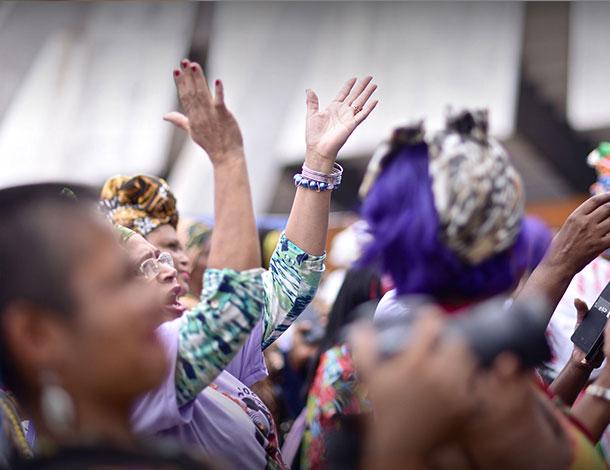
Reconocemos el valor único y estratégico de las iniciativas culturales y creativas en la lucha contra la opresión y la injusticia. Trabajamos con artistas que le dan un lugar central a las voces feministas y a las narrativas de la comunidades históricamente oprimidas. En esta táctica emergente, vemos al arte y la expresión creativa como algo que nos ayuda a concebir un mundo donde las realidades feministas siguen floreciendo y sigan siendo celebradas.
Nuestras iniciativas trabajan en las intersecciones de escenarios de cambio que buscamos abordar, de los movimientos que priorizamos y de las tácticas que usamos:
Monitoreamos, documentamos y hacemos visible cómo están operando y aglutinándose lxs actorxs anti-derechos en los espacios multilaterales y apoyamos a los movimientos feministas, de derechos de las mujeres y por la justicia de género y sus aliadxs para contrarrestar esa influencia e impacto.
Desde perspectivas como el extractivismo, la justicia impositiva y la rendición de cuentas corporativa, construimos conocimiento sobre el poder corporativo y su influencia; abogamos por que las empresas asuman sus responsabilidad así como por la distribución equitativa de la riqueza, y amplificamos las propuestas feministas para lograr economías justas.
Desarrollamos análisis accesibles y orientados a la acción acerca del estado del financiamiento para los movimientos feministas. Nos proponemos influir sobre las políticas y prácticas de las financiadoras, incrementar y sostener el financiamiento para el cambio social feminista, y apoyar las necesidades y estrategias de los movimientos.
Además del impacto que pretendemos tener en el mundo, AWID está expresamente comprometida con el fortalecimiento de nuestro propio aprendizaje y resiliencia organizacionales, para poder fortalecer mejor a los movimientos feministas del mundo.
¡Muchas Gracias!
Sin el generoso aporte y apoyo de nuestros donantes, nuestro trabajo no sería posible.
The 14th AWID International Forum will take place 20-23 September 2021 in Taipei, Taiwan.
Identify and demonstrate opportunities to shift more and better funding for feminist organizing, expose false solutions and disrupt trends that make funding miss and/or move against gender justice and intersectional feminist agendas.
.
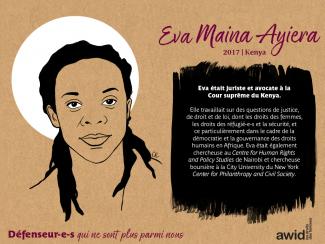
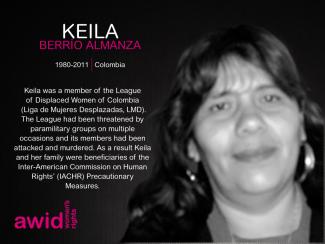
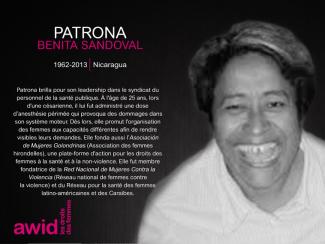
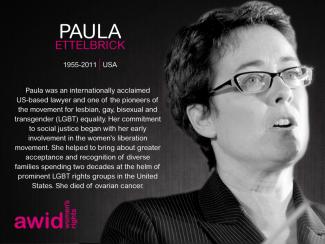
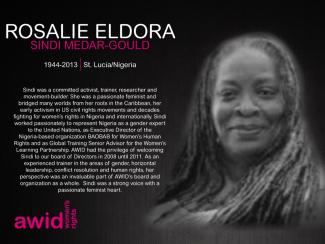
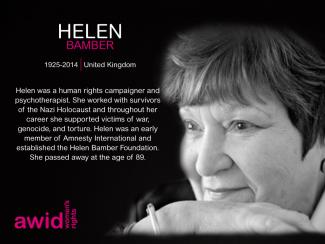
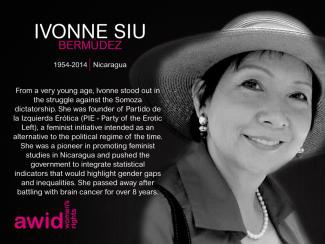
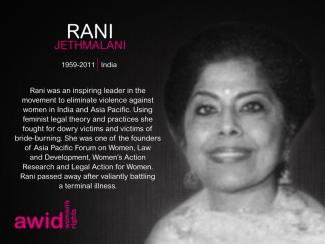
L’AWID rend hommage aux féministes et défenseur-e-s des droits humains qui ne sont plus parmi nous, et dont les contributions à l’avancement des droits humains nous font cruellement défaut.
L’hommage se présente sous forme d’une exposition de portraits d’activistes du monde entier qui ne sont plus parmi nous qui ont lutté pour les droits des femmes et la justice sociale.
Célébré en 2012 à l’occasion du lancement du 12e Forum international de l’AWID en Turquie, le premier hommage aux défenseur-e-s des droits humains a pris la forme d’une exposition de portraits et de biographies de féministes et d’activistes disparu-e-s. Des participant-e-s au Forum ont décrit cette initiative comme « une manière à la fois unique, émouvante et vivifiante de célébrer notre histoire collective ».
Lors du 13e Forum international au Brésil, nous avons célébré les activistes féministes et les défenseur-e-s des droits humains qui nous ont quitté-e-s ou qui ont été assassiné-e-s avec une cérémonie de dévoilement d’une peinture murale, un spectacle de danse et un rituel brésilien.
Entre la tenue de ces différents événements, l’hommage continue sous forme d’une galerie en ligne, mise à jour chaque année à l’occasion de la campagne de 16 jours d’action contre la violence basée sur le genre (25 novembre-10 décembre).
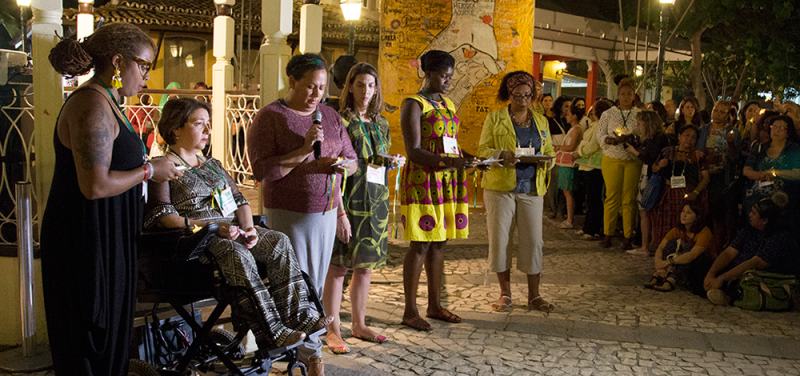
Depuis 2012, plus de 400 féministes et défenseur-e-s des droits humains issues de 11 régions et 80 pays ont été incluses dans notre Hommage.
L’AWID tient à remercier les familles et les organisations qui ont partagé leurs histoires personnelles et contribué à cette commémoration. Nous nous engageons auprès d’elles à poursuivre le travail remarquable de ces militant-e-s et nous ne ménagerons aucun effort pour que justice soit faite dans les cas qui demeurent impunis.
Visitez l’expo de l’hommage en ligne
Outre l’hommage rendu à ces incroyables activistes, nous souhaitons faire la lumière sur le sort de ces défenseur-e-s des droits humains qui ont disparu ou ont été assassin-é-es.
Un tiers des activistes présenté-e-s dans cet hommage ont été assassiné-e-s ou sont disparu-e-s dans des circonstances obscures. Iels ont été visé-e-s personnellement, en raison du travail qu’iels réalisaient afin de défier :
Ce fut notamment le cas d’Agnes Torres, du Mexique, assassinée en raison de son identité de genre et de son orientation sexuelle, de Cheryl Ananayo, une militante écologiste originaire des Philippines, assassinée alors qu’elle luttait contre une société minière, ou encore de Ruqia Hassan, une journaliste indépendante et bloggeuse syrienne, assassinée pour avoir critiqué l’Etat. Et de très nombreu-x-ses autres.
Avec cet hommage aux défenseur-e-s des droits humains, nous inscrivons tou-s-tes ces activistes dans notre mémoire collective et portons l’héritage de leurs luttes comme le flambeau qui éclaire les actions de nos mouvements féministes et en faveur des droits des femmes. Nous reconnaissons que la sécurité, la sûreté et le souci de soi doivent être des priorités dans l’ensemble de nos programmes politiques, et appelons ainsi tous les gouvernements et les organes internationaux à lutter contre la violence contre les féministes et les défenseur-e-s des droits humains.

“Nous Sommes la Solution a une vision d'une Afrique où, solidairement, les femmes rurales impliquées dans la prise de décision peuvent cultiver, transformer, vendre et consommer les produits de l'agriculture familiale tout en préservant l'environnement, pour un développement harmonieux et durable”
Agrupaciones, organizaciones y movimientos que trabajan específica o primordialmente por los derechos de las mujeres, las niñas, la justicia de género, las personas LBTQI+ y demás personas aliadas en todas las regiones y en todos los ámbitos, ya sean estas de nueva creación o de larga data.
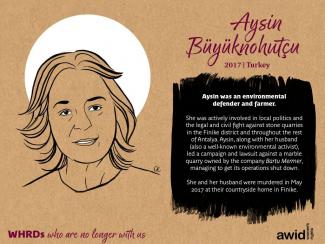
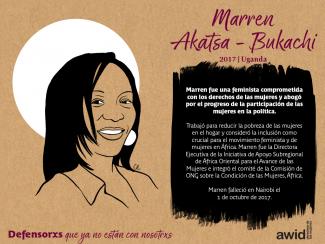
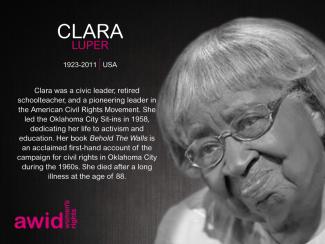
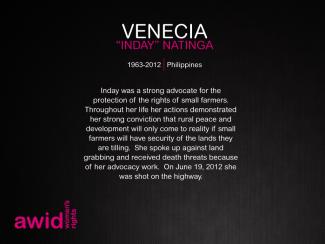
Ces défenseuses ont fait campagne pour les droits fonciers et ont lutté pour les droits des femmes et des peuples autochtones. Elles se sont opposées aux industries extractives, ont écrit de la poésie et se sont battues pour que l'amour prévale. L'une d'entre elles nous a quitté il y a dix-neuf ans. Nous vous invitons à vous joindre à nous pour rendre hommage à ces défenseuses, à leur travail et à l’héritage qu’elles nous ont laissé. Faites circuler ces mèmes auprès de vos collègues et amis ainsi que dans vos réseaux et twittez en utilisant les hashtags #WHRDTribute et #16Jours.
S'il vous plaît cliquez sur chaque image ci-dessous pour voir une version plus grande et pour télécharger comme un fichier


Alexandra is an anglo-colombian feminist with over 20 years of experience in local, national and international HIV and sexual and reproductive health and rights programming. She has extensive experience in resource mobilization and donor relations with private philanthropic foundations and multilateral agencies on behalf of international, national and local NGOs, predominantly in Latin America and the Caribbean. Prior to AWID, Alexandra worked at Fundación Si Mujer, a feminist abortion provider and educator in Colombia, RedTraSex and the International HIV/AIDS Alliance.
Alexandra has a BA in International Relations and Development Studies from Sussex University and a MSc in Public Health from the London School of Hygiene and Tropical Medicine. In rare moments when she is not working or parenting, she loves to swim, eat and has recently begun to play Zelda: Breath of the Wild with her son.
We and cannot review funding proposals or requests.
We encourage you to browse our list of donors that may potentially fund your women's rights organizing.
More resources are available from the Priority Area “Resourcing Feminist Movements”
The Women’s Working Group on Financing for Development (WWG on FfD), an alliance of women’s rights organizations and networks, was launched in October 2007 to advocate for the advancement of gender equality, women’s empowerment and human rights in the FfD related UN processes.
‘A geopolitical Analysis of Financing for Development’ by Regions Refocus 2015 and Third World Network (TWN) with DAWN.
The Zero Draft Language Map, by Regions Refocus
‘Addis Ababa financing conference: Will the means undermine the goals?‘ by RightingFinance
AWID is closely monitoring the global COVID 19 situation and for now anticipates continuing with the Forum as planned.
If at any moment the situation demands something different, we will let you know right away.
The 14th AWID International Forum is scheduled to take place 20-23 September 2021 in Taipei,.

Resources to support feminist movements, policy-makers, and allies!