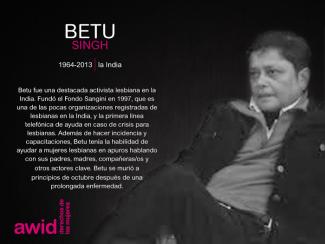
Betu Singh
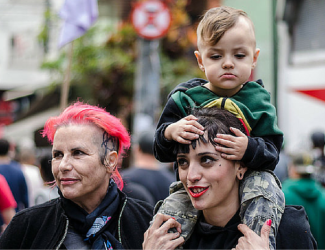
Au cours des dernières années, nous avons observé une nouvelle tendance inquiétante dans les espaces internationaux consacrés aux droits humains. Les discours axés sur « la protection de la famille » sont en effet utilisés pour défendre des violations des droits de membres de la famille, pour renforcer et justifier l’impunité des auteurs de ces violations et pour restreindre l’égalité des droits au niveau de la vie familiale.
La campagne en faveur de la « Protection de la famille » est motivée par une volonté conservatrice d’imposer des conceptions « traditionnelles » et patriarcales de la famille et de priver les membres de la famille de leurs droits pour les transférer à « l’institution familiale ».
Depuis 2014, un groupe d’Etats travaille de front dans les espaces dédiés aux droits humains sous le nom de « Group of Friends of the Family » (Groupe des ami-e-s de la famille) ; des résolutions sur la « Protection de la famille » ont été adoptées chaque année depuis 2014.
Ce programme s’est propagé au-delà du Conseil des droits humains. Nous avons observé l’introduction d’un discours régressif autour de la « famille » à la Commission sur la condition de la femme, ainsi que des tentatives d’introduction dans les négociations sur les Objectifs de développement durable.
L’AWID travaille avec des partenaires et des allié-e-s pour s’opposer ensemble à la « Protection de la famille » et à d’autres programmes régressifs et défendre l’universalité des droits humains.
En réponse à l’influence croissante d’acteurs régressifs au sein des espaces dédiés aux droits humains, l’AWID a rejoint des allié-e-s afin de créer l’Observatoire sur l'Universalité des droits (OURs) (site en anglais). L’OURs est un projet de collaboration qui surveille, analyse et diffuse les informations concernant les initiatives anti-droits telles que la « Protection de la famille ».
Le premier rapport de l’OURs, Nos droits en danger, trace une cartographie des acteurs et actrices qui constituent le lobby mondial anti-droits et identifie leur réthorique et stratégies clés ainsi que leur impact sur les droits humains.
Le rapport précise que le programme de « Protection de la famille » a développé une collaboration entre un large éventail d’acteurs régressifs aux Nations Unies, qu’il décrit comme « un cadre stratégique abritant des positions anti-droits et patriarcales multiples, où le cadre vise entre autres à légitimer et institutionnaliser ces positions. »
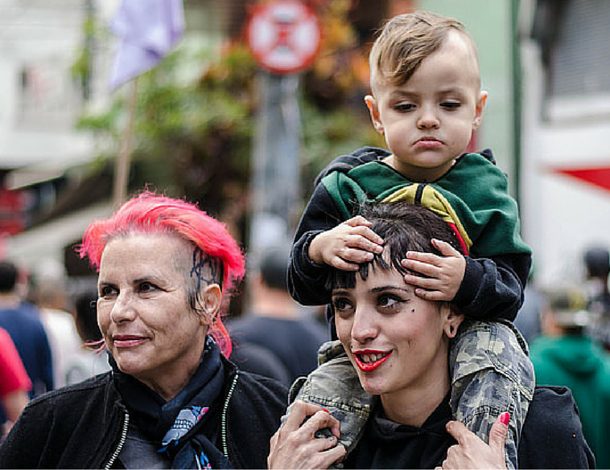
Cliquez sur l'image pour ouvrir le rapport complet en PDF
 |
|
Téléchargez le rapport PDF «Vers un écosystème de financement féminist» |
Où en sommes -nous aujourd'hui ? |
Où nous voulons être |
Financement actuel, par secteur |
 |
 |
 |
The Nadia Echazú Textile Cooperative carries the name of a pioneer in the struggle for trans rights in Argentina. In many ways, the work of the cooperative celebrates her life and legacy.
Nadia Echazú had a remarkable activist trajectory: she was one of the co-founders of "El Teje", the first trans newspaper in Latin America, alongside Lohana Berkins, Diana Sacayán and Marlene Wayar. Nadia was part of the Argentinian Association of Travestis, Transexual and Transgender people (Asociación de Travestis y Transexuales de Argentina, ATTA) and founded The Organization of Travestis and Transgender People of Argentina (Organización de Travestis y Transexuales de Argentina, OTTRA).
Shortly after her death, her fellow activists founded the cooperative in her name, to honor the deep mark she left on trans and travesti activism in Argentina.
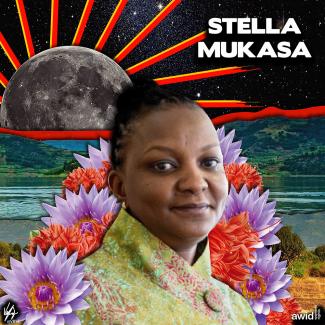
Stella comenzó su carrera en el Ministerio de Género y Desarrollo Comunitario en Uganda colaborando con lxs legisladores en reformas legales, incluida la Constitución de Uganda de 1995, que estableció algunas de las reformas más progresistas para las mujeres en la región.
Stella es respetada y admirada en toda la región por sus incansables esfuerzos para crear y hacer cumplir leyes y políticas que tomen en cuenta cuestiones de género. También desempeñó un papel clave en la redacción de la Ley de Violencia Doméstica de Uganda y en la movilización de apoyo para las constituciones sensibles al género tanto en Uganda como en Ruanda.
A través de su trabajo con el Centro Internacional para la Investigación sobre la Mujer (ICRW, por sus siglas en inglés), abordó la violencia contra lxs niñxs y trabajó para fortalecer las capacidades de las organizaciones de base que abordan la violencia de género. Stella fue profesora en cursos sobre derechos de género y la ley, en la Universidad Makerere, y formó parte de las juntas directivas de Akina Mama wa Afrika, ActionAid International Uganda y Open Society Initiative para África Oriental.
We strive to make the AWID Forum a truly global gathering with participation from a diverse array of movements, regions and generations. To this end, AWID mobilizes resources for a limited Access Fund (AF) to assist some participants with the costs of attending the Forum.
The 14th AWID International Forum will take place 11-14 January 2021, in Taipei, Taiwan.
For this AWID Forum, there will be no application process.
In addition, AWID will fund approximately 100 participants from the Forum’s location. Forum Committee Members (Content and Methodology, Access and Host) as well as those in the Artists Working Group [link] are also granted Access Fund support.
We have listed other ideas on how to fund your participation at the AWID Forum on the Funding Ideas page.
Não, apreciamos o seu trabalho, mas, de momento, não solicitamos respostas de indivídues.
Sindicato Red de Solidaridad
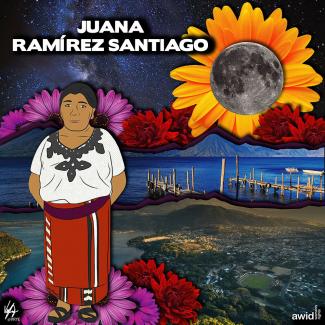
Ayant co-fondé le réseau Red de Mujeres Ixiles de Nebaj, une organisation de défense des droits des femmes autochtones, membre de l’Initiative mésoaméricaine des femmes défenseur-e-s des droits humains (IM-Defensoras en espagnol), Juana était actuellement membre de son conseil d’administration.
Elle était également sage-femme et mère de 7 enfants. Juana avait reçu des menaces de mort qui avaient été signalées au bureau du procureur. Juana est la troisième défenseure autochtone assassinée dans la région en 2018. L'Ombudsman pour le Guatemala a signalé qu'au total 20 défenseur-e-s ont été tué-e-s dans le pays cette année.
Juana Ramírez Santiago a été abattue par des assaillants non identifiés alors qu'elle traversait un pont à Nebak, Quiché, au Guatemala. Les enquêtes visant à identifier les auteurs sont en cours.
The co-creation of our feminist realities starts with ourselves and how we treat each other. We are dedicated to creating and protecting safe and supportive spaces for our communities both online and in person. We also consider that safe and welcoming spaces are co-owned and co-created.
We expect our members to act in a manner that is ethical, responsible and consistent with the values of AWID and assume collective responsibility to ensure an atmosphere of mutual respect and solidarity.
Connect with others, help break isolation and further solidarity. It’s easy to feel lost and alone, and a little friendliness and responsiveness goes a long way.
Interact and engage peacefully. Differences in opinion will naturally arise, so please think of these differences as useful for expanding your thinking and ways of seeing the world.
Help build a space that recognizes and validates multiple lived experiences and diversities of bodies and gender expressions. Recognize that we all carry intersectional identities.
Use inclusive language. Be respectful of how people want to be referred to in terms of gender identity or expression (like pronouns), and practice inclusive language.
Listen and make adjustments in your behavior and ways of engaging if someone says they feel uncomfortable. Don’t ask others questions that you wouldn't want to be asked yourself.
Help challenge oppressive behavior, which includes harassment, verbal or physical violence, violation of consent, and any action that perpetuates classism, ageism, ableism, racism, misogyny, heterosexism, transphobia and other oppressions. If needed, please reach out to AWID staff.
Practice speaking and listening with an open mind and heart and without judgement.
Be honest, open and heartfelt. Speak and share authentically about your experiences, your challenges, your hopes and dreams, and your vision for your own life and your community.
Practice active listening and self-awareness. Be aware of how much time and space you are taking up- leave room for others, practice active listening and learning.
Be mindful and credit others for their work and activism. Remember that we are all working collectively to contribute to change-- Ensure that you recognize the contribution of others and credit them when appropriate e.g. in discussions, or in articles, pictures etc.
Stay safe! We encourage you to take measures to protect yourself online and in person, especially if you have reason to believe that speaking out will put you in danger. Members may use aliases or profile images that conceal their identity. For more information please refer to the “Digital Security First Aid Kit for Human Rights Defenders” produced by APC - Association for Progressive Communications.
Respect the privacy needs of others! Do not share or forward any information without explicit permission.
We take a position in solidarity with each other and diverse struggles for justice and freedoms. We strive to mobilize and strengthen collective action and practice meaningful ways of working with each other.
We believe in a full application of the principle of rights including those enshrined in international laws and affirm the belief that all human rights are interrelated, interdependent and indivisible. We are committed to working towards the eradication of all discriminations based on gender, sexuality, religion, age, ability, ethnicity, race, nationality, class or other factors.
We strive for transparency, responsible use of our resources, fairness in our collaborations and accountability and integrity with our members, partners, funders and the movements with(in) which we work. We are committed to reflecting on our experiences, sharing our learnings openly, and striving to change our practices accordingly.
We believe that for feminist movements to be transformative and strong we must continue to work across our similarities and differences. We also must interrogate power and privilege both within and outside our movements.
We celebrate everyone's right to choose their identities, relationships, goals, work, dreams and pleasures, and what they do with their mind, body and spirit. We believe in working towards access to resources, information and safe and enabling environments that allow this to happen.
We work towards a world based on social, environmental, and economic justice; and interdependence, solidarity, and respect. We work towards dismantling systems of oppressive power and against all its manifestations, including patriarchy, fundamentalisms, militarisms, fascisms and corporate power that threaten our lives and our world. We want a just world where resources and power are shared in ways that enable everyone to thrive.
Please note:
AWID reserves the right to delete comments, suspend or revoke membership when our community guidelines have been violated. AWID members are not authorised to represent AWID in any official capacity unless stipulated in writing. Members cannot use AWID spaces to proselytize or recruit members to join a religious faith or organisation. Members cannot use AWID spaces to request funds for personal use although links to external fundraising efforts or activism campaigns are permissible.
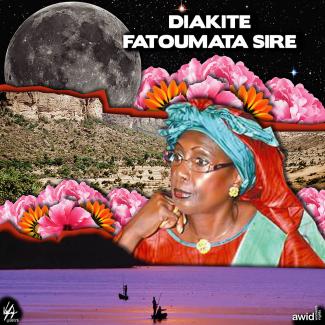
Diakite was actively involved in advocating for women in political and public life in Mali.
She worked to support training of women candidates in elections, and spoke out against the practice of Female Genital Mutilation (FGM). She was a strong proponent of reproductive health and rights.