
Mia Berden
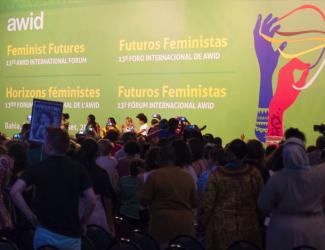
En septiembre de 2016, 1800 feministas y activistas por los derechos de las mujeres de todos los rincones de nuestros movimientos se congregaron en las costas de Bahia, en el 13º Foro Internacional de AWID.
En esta sección se destacan los logros, los aprendizajes y los recursos que surgieron de las ricas conversaciones mantenidas. Te invitamos a analizar, compartir y comentar.
Uno de los aportes más importantes del Foro fue la necesidad de ampliar y profundizar nuestro trabajo entre movimientos, frente a la confluencia de los fascismos en auge, fundamentalismos, codicia corporativa y cambio climático.
Nuestras Iniciativas Semilla han ayudado a 20 ideas que surgieron en el Foro para crecer en forma de acciones concretas
El vídeo «Defendiendo a las Personas y al Planeta» y la guía «Tejiendo la resistencia a través de la acción» estan protagonizados por defensoras de derechos humanos y presentan estrategias concretas para confrontar al poder corporativo
Con nuestras animaciones El estado de nuestros movimientos feministas y Justicia climática y ambiental, los movimientos ahora tienen herramientas creativas para apoyar su trabajo.
La compilación de las expresiones artísticas «Los Movimientos Importan», sigue inspirando una organización más fuerte y creativa en todo el mundo.
Los movimientos también pueden beneficiarse de nuevas metodologías para imaginar nuestros futuros feministas (¡pronto!)
AWID se ha comprometido, mediante su próximo plan estratégico y su proceso del Foro, a continuar y profundizar las relaciones, las lecciones y los procesos iniciados en el Foro 2016 y basándonos en el momento actual.
Los Foros de AWID comenzaron en 1983 en Washington DC. Desde entonces, el evento ha crecido hasta convertirse en muchas cosas para muchas personas: un proceso iterativo para darle forma a nuestros análisis, objetivos y acciones; un hito crucial que fortalece los feminismos de lxs participantes e infunde energías a sus procesos de organización; un hogar político donde lxs defensoras de derechos humanos encuentran un santuario y solidaridad.
Octubre de 2014: Inicio del proceso preparatorio intergubernamental para la tercera Conferencia Internacional sobre la Financiación para el Desarrollo

Para compartir tu experiencia con el financiamiento de tu organización.
Tenue des autres sessions de rédaction du document final d’Addis-Abeba
Pour plus d’informations, voir le « guide du routard des OSC » (le CSO Hitchhiker’s Guide – en anglais).

Feminist, women’s rights, gender justice, LBTQI+ and allied movements around the world are at a critical juncture, facing a powerful backlash on previously-won rights and freedoms. Recent years have brought the rapid rise of authoritarianism, violent repression of civil society, criminalization of women and gender-diverse human rights defenders, escalating war and conflict in many parts of our world, continued perpetuation of economic injustices, and the intersecting health, ecology and climate crises.
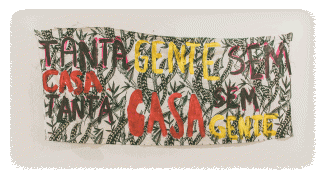
Nació en Bahía, la parte noreste de Brasil. Es inmigrante, activista social y madre de 8 hijxs.
Carmen experimentó la falta de vivienda a los 35 años, después de migrar sola a São Paulo. Esto la llevó a convertirse en una feroz defensora de las comunidades vulnerables, marginalizadas e invisibilizadas más afectadas por la crisis de la vivienda. Eventualmente se convirtió en una de las fundadoras del MSTC en 2000.
Como organizadora política visionaria y líder actual del MSTC, el trabajo de Carmen ha puesto al descubierto la crisis de la vivienda de la ciudad y ha inspirado a otrxs sobre diferentes formas de organizar y gestionar las ocupaciones.
Se mantuvo firme al frente de varias ocupaciones. Uno de ellos es la Ocupación 9 de Julho, que ahora sirve como escenario para la democracia directa y un espacio donde todxs pueden ser cuidadxs, escuchadxs, apreciadxs y trabajar juntos.
Carmen ha sido celebrada durante mucho tiempo por su audacia al devolver la vida a edificios abandonados en el corazón de São Paulo.
¡Si quieres saber más sobre Carmen, puedes seguir su cuenta de Instagram!

The 14th Forum theme is “Feminist Realities: our power in action”.
We understand Feminist Realities as the different ways of existing and being that show us what is possible, despite dominant power systems, and in defiance and resistance to them. We understand these feminist realities as reclamations and embodiments of hope and power, and as multi-dimentional, dynamic and rooted in specific contexts and historical moments.
Read more about Feminist Realities
1 |
Provide AWID members, movement partners and funders with an updated, powerful, evidence-based, and action-oriented analysis of the resourcing realities of feminist movements and current state of the feminist funding ecosystem. |
2 |
Identify and demonstrate opportunities to shift more and better funding for feminist organizing, expose false solutions and disrupt trends that make funding miss and/or move against gender justice and intersectional feminist agendas. |
3 |
Articulate feminist visions, proposals and agendas for resourcing justice. |

We have always worked towards ensuring that our Forums are co-developed with partners, movements and our priority constituencies.
For our upcoming Forum, we aim to deepen and strengthen that spirit and practice of co-creation and collaboration. We also recognize the need to improve the balance between the inclusion of many voices and experiences with room for participants and staff to breathe, take pause and enjoy some downtime.
This Forum will be different in the following ways:
There are many reasons why your response to the WITM survey matters. The survey offers the opportunity to share your lived experience of mobilizing funding to support your organizing; claim your power as an expert on how money moves and who it reaches; and contribute to collective and consistent advocacy to funders moving more and better funding. Over the last two decades, AWID’s WITM research has proven to be a key resource for activists and funders. We wholeheartedly invite you to join us in its third iteration to highlight the actual state of resourcing, challenge false solutions, and point out how funding must change for movements to thrive and meet the complex challenges of our times.
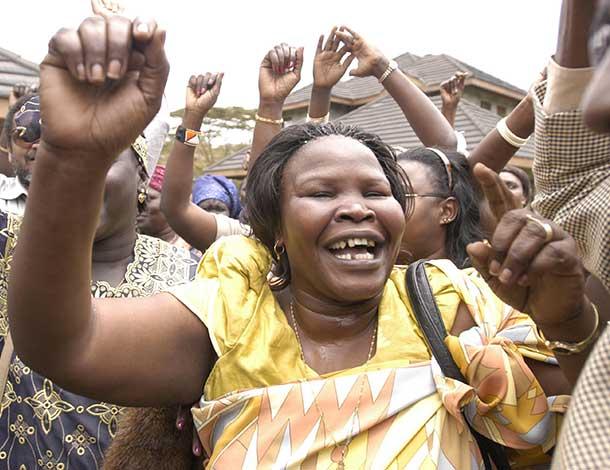
The in-focus section features the pressing issues affecting women, girls and transgender people around the world, and shines a spotlight on the critical work being carried out by women's rights movements.
AWID and Mama Cash are advisory partners who offer ideas to the Guardian editorial team and help link the Guardian team with diverse women’s rights advocates, organizations and movements around the world.
With the Guardian’s global reach of over 82 million unique browsers a month and its position of influence with policy makers, AWID and Mama Cash see this partnership as an important opportunity to:
If you would like to share suggestions for women’s rights issues, strategies, process or events that you would like to see covered by the in-focus section, you can pitch your ideas here. All suggestions collected through this online form will be shared directly with the Guardian editorial team.The Guardian is solely responsible for all journalistic output and all editorial content is strictly independent.
If you have questions about this project, email: contact@awid.org and/or hello@mamacash.org.