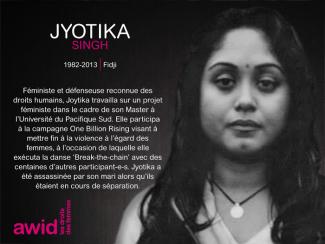
Jyotika Singh
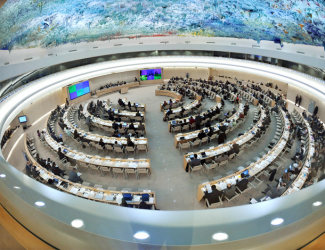
El Consejo de Derechos Humanos (CDH) es el cuerpo intergubernamental del sistema de las Naciones Unidas responsable de la promoción y protección de todos los derechos humanos en todo el mundo. El HRC se reúne en sesión ordinaria tres veces al año, en marzo, junio y septiembre. La La Oficina del Alto Comisionado para los Derechos Humanos (ACNUDH) es la secretaría del Consejo de Derechos Humanos.
Debate y aprueba resoluciones sobre cuestiones mundiales de derechos humanos y el estado de los derechos humanos en determinados países
Examina las denuncias de víctimas de violaciones a los derechos humanos o las de organizaciones activistas, quienes interponen estas denuncias representando a lxs víctimas.
Nombra a expertos independientes que ejecutarán los «Procedimientos Especiales» revisando y presentado informes sobre las violaciones a los derechos humanos desde una perspectiva temática o en relación a un país específico
Participa en discusiones con expertos y gobiernos respecto a cuestiones de derechos humanos.
A través del Examen Periódico Universal, cada cuatro años y medio, se evalúan los expedientes de derechos humanos de todos los Estados Miembro de las Naciones Unidas
Se está llevarando a cabo en Ginebra, Suiza del 30 de junio al 17 de julio de 2020.
AWID trabaja con socios feministas, progresistas y de derechos humanos para compartir conocimientos clave, convocar diálogos y eventos de la sociedad civil, e influir en las negociaciones y los resultados de la sesión.
La encuesta está orientada a agrupaciones, organizaciones y movimientos que trabajan específica o primordialmente por los derechos de las mujeres, las personas LBTQI+ y la justicia de género, en todos los contextos, en todos los ámbitos y en todas las regiones. Si alguno de estos es el pilar fundamental de tu agrupación, colectivo, red o cualquier otro tipo de organización —ya sea que esté registrada, sea de reciente creación o de larga data—, te invitamos a responder la encuesta.

*En esta oportunidad, no estamos solicitando respuestas de individuos ni de fondos feministas o de mujeres.
Obtén más información sobre la encuesta:
Consultar las preguntas frecuentes
¿Qué pasaría si volviéramos a imaginar formas de cuidar a nuestras comunidades?
¿Y si la economía no estaría enfocada en la ganancia de una pequeña élite sino en el cuidado de nuestro bienestar individual y colectivo, y de la Naturaleza?
Estas historias tratan de la construcción de comunidades de cuidado con y para las personas que históricamente y actualmente están excluidas, privadas de sus derechos y deshumanizadas tanto por el Estado como por la sociedad.
Estas son las historias de las feministas que centran el cuidado en la economía.
To claim your power as an expert on the state of resourcing for feminist movements
Lorsque vous arriverez au centre-ville de São Paulo, vous verrez le bâtiment Ocupação 9 de Julho (Occupation de l’Avenue du 9 Juillet), un espace culturel et un site important dans la lutte pour le logement social.
C'est le travail du Mouvement des Travailleur·euses Sans-Abri (Movimento dos Sem-Teto do Centro, MSTC), un mouvement de plus de 2000 personnes qui agit dans le centre-ville et convertit les espaces abandonnés en logements pour les travailleur·euses à faible revenu, les enfants, femmes, adultes, personnes âgées, migrant·e·s et réfugié·e·s. Dans ce bâtiment en particulier, 122 familles sont nourries et logées.
 While funders committed significantly more money to gender equality over the last decade, still only 1% of philanthropic and development funding has actually been moved to directly resource feminist-led social change.
In solidarity with movements that continue to be invisibilized, marginalized and without access to core, long-term, flexible and trust-based funding, the WITM survey highlights the actual state of resourcing, challenges false solutions, and points to how funding models must change for movements to thrive and meet the complex challenges of our times.
Black women community organizing in the Cauca Valley in Colombia can be traced back to the country's colonial past, which is marked by the racism, patriarchy, and capitalism that sustained slavery as a means to exploit the region’s rich soils. These organizers are the heroines of a broad movement for black autonomy - one that fights for the sustainable use of the region's forests and natural resources as vital to their culture and livelihood.
For 25 years, the Association of Afro-Descendant Women of the Northern Cauca (Asociación de Mujeres Afrodescendientes del Norte del Cauca, ASOM) has been dedicated to bringing power to Afro-Colombian women’s organizing in northern Cauca.
They became established in 1997 as a response to ongoing human rights violations, the absence of public policies, inadequate management of natural resources, and the lack of opportunities for women in the territory.
They have forged the struggle to secure ethnic-territorial rights, to end violence against women, and gain recognition of women’s roles change-making peace-building in Colombia.
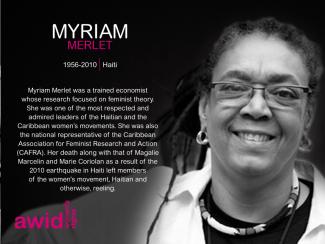
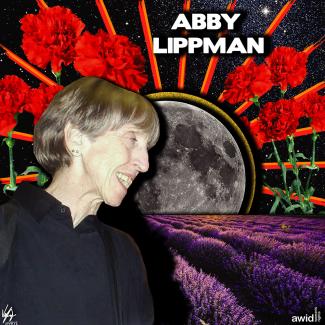
Abby fue una feminista y activista por los derechos humanos pionera, y antes epidemióloga de McGill University.
Abby era conocida por defender causas sociales, y por sus lúcidas críticas a las tecnologías reproductivas y otros temas médicos. En particular, hizo campaña contra lo que ella denominó la «genetización» de las tecnologías reproductivas, contra la terapia de reemplazo hormonal, y a favor de más y mejor investigación antes de la aprobación de descubrimientos tales como las vacunas contra el virus del papiloma humano.
Cuando falleció, sus amigxs y colegas la describieron afectuosamente como una «ardiente defensora» de la salud de las mujeres.
Provide AWID members, movement partners and funders with an updated, powerful, evidence-based, and action-oriented analysis of the resourcing realities of feminist movements and current state of the feminist funding ecosystem.
Identify and demonstrate opportunities to shift more and better funding for feminist organizing, expose false solutions and disrupt trends that make funding miss and/or move against gender justice and intersectional feminist agendas.
Articulate feminist visions, proposals and agendas for resourcing justice.
Término de las comunidades negras del Norte del Cauca para la minga, el trabajo colaborativo en fincas, basado en el apoyo mutuo y la solidaridad.
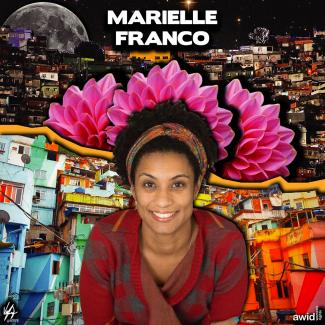
Marielle était une femme politique brésilienne, féministe lesbienne et militante des droits humains.
Marielle était une critique virulente de la brutalité policière et des exécutions extrajudiciaires. Sa politique, ouvertement féministe, centrée sur les personnes noires et les favelas était une source d’espoir pour les groupes marginalisés de Rio de Janeiro, actuellement gouvernée par un gouvernement conservateur et un maire évangélique.
Le 14 mars 2018, après avoir prononcé un discours à Rio de Janeiro, Marielle Franco et son chauffeur ont été assassinés, abattus par balles. Suite à la nouvelle de leur mort, les foules sont descendues dans les rues en criant « Marielle presente! » (Marielle est ici !) et ont exigé que justice soit faite.
En savoir plus sur Marielle et la situation au Brésil
AWID began preparing this annual report just as the global pandemic began to unravel how we gather, organize and live our lives. It is impossible to review what we have done without COVID-19 tinting our assessment.
Download the full 2019 Annual review

It is an urgently needed affirmation that there are other, more just ways of organizing our lives. During 2019 hundreds of groups shared their experiences and proposals for feminist realities with us, ranging from radical networks of community support in Latin America facilitating self-managed abortion, to practices of community-centered economies in Indonesia and community-centered food systems in India and the US, to a re-imagination and new practice of harm-free rites of passage in Sierra Leone. These are the experiences that will chart a path forward for a “new normal”.
Yet long histories of oppression and violence can make it difficult to imagine the possible. A key part of our work in 2019 was to spark these explorations through a toolkit AWID launched to support groups interested in unearthing the stories and aspirations that are the building blocks of feminist propositions.
Through the Observatory on the Universality of Rights, Feminists for a Binding Treaty, Count Me In! and other alliances, AWID has continued to push back against unfettered corporate power and fascist and fundamentalist agendas that undermine women’s rights and gender justice. With dim prospects for transformative change through multilateral processes and limited responsiveness from most states, we are redoubling our efforts to ensure that feminist movements, in all their diversity, are resourced in ways that match the critical roles they play - supporting their communities, demanding rights and responding to crises. In 2019 we introduced feminist principles and approaches to ground-breaking funds like the Spotlight Initiative and the Equality Fund, and succeeded in leveraging resources through feminist reality seed grant funding from feminist funders.
As we look ahead, it is clear that the context is calling for a transformation of our organizing strategies:
AWID is embarking on a new membership model that lowers barriers to access and emphasizes opportunities for engagement and cross-member connection. We will continue to experiment with different online tools and processes for building community. Cross-movement engagement will stay at the center of our work. AWID’s actions in solidarity with oppressed movements and identities, even and especially where these are marginalized in feminist movements, are important to drive change and support broad and inclusive movements for all.
We are resilient, we adapt, and we show up for each other. And we have to keep doing better. Thank you to all who are part of the journey with us.
Download the full 2019 Annual review