Palwasha Tokhi
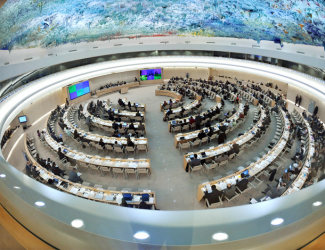
El Consejo de Derechos Humanos (CDH) es el cuerpo intergubernamental del sistema de las Naciones Unidas responsable de la promoción y protección de todos los derechos humanos en todo el mundo. El HRC se reúne en sesión ordinaria tres veces al año, en marzo, junio y septiembre. La La Oficina del Alto Comisionado para los Derechos Humanos (ACNUDH) es la secretaría del Consejo de Derechos Humanos.
Debate y aprueba resoluciones sobre cuestiones mundiales de derechos humanos y el estado de los derechos humanos en determinados países
Examina las denuncias de víctimas de violaciones a los derechos humanos o las de organizaciones activistas, quienes interponen estas denuncias representando a lxs víctimas.
Nombra a expertos independientes que ejecutarán los «Procedimientos Especiales» revisando y presentado informes sobre las violaciones a los derechos humanos desde una perspectiva temática o en relación a un país específico
Participa en discusiones con expertos y gobiernos respecto a cuestiones de derechos humanos.
A través del Examen Periódico Universal, cada cuatro años y medio, se evalúan los expedientes de derechos humanos de todos los Estados Miembro de las Naciones Unidas
Se está llevarando a cabo en Ginebra, Suiza del 30 de junio al 17 de julio de 2020.
AWID trabaja con socios feministas, progresistas y de derechos humanos para compartir conocimientos clave, convocar diálogos y eventos de la sociedad civil, e influir en las negociaciones y los resultados de la sesión.
The menstrual cycle usually lasts between 27 and 30 days. During this time, the period itself would only go on for five to seven days. During the period, fatigue, mood swings, and cramps are the result of inflammation.
In traditional Javanese culture, this is the moment for women to rest and take care of themselves. During this moment, a woman would take Kunyit Asam, a jamu or herbal drink to soothe the inflammation. This elixir consists of turmeric and tamarind boiled together in a pot.
I still remember my first period - it was one day before graduation day in elementary school. I remember pedaling my bike feeling something warm running between my thighs. When I arrived home I did all I could to clean myself and then put on a menstrual pad. My mother came home from work about four hours later. I told her what had happened. She looked me in the eye and asked how I felt. I told her that it was painful, that my body was swollen in every place. Then she asked me to go with her to the backyard. I followed her to our little jungle, my mother sat down on the soil and smiled.
“See this slender leaf? This is the leaf of Kunyit, *empon-empon that leaves the yellow stain on your fingers. What’s most important is not the leaf, but the roots. You dig the soil and slowly grab the roots.”, my mother showed me how to pick Kunyit or Turmeric roots. Then we went to the kitchen where she boiled water along with some tamarind. While waiting for it to boil, she showed me how to wash and grate the orangey-yellow root. Then, we put the grated turmeric into the boiling tamarind water. “Tomorrow, you can make it for yourself. This will help you to feel better!”.
I remember the first time I tasted it - a slightly bitter taste but also sour. My mother always served it warm. She would also put some in a big bottle which I would place on my stomach or lower back for further relief. For days after, my mother’s hands and mine were yellow. My friends could always tell every time I got period because my hands would be yellow.
A year after my first period, I found out that you could get the bottled version in convenience stores. Still, I made my own Kunyit Asam every time I had my period because the one in the convenience stores was cold. It did not smell of wet soil and warm kitchen.
Fast forward, I am a 26 year old woman who casually makes this drink for friends when they have their periods. I’ve made some for my housemates and I’ve delivered some for friends who live in different towns. I do not grow turmeric roots in my garden, but I have grown and shared the love from my mom. What was once from garden to cup is now from *pasar to cup.
A couple of days ago, I asked my mother who taught her how to make the jamu.
“Who else? Yang Ti*! Your grandmother was not just a teacher”, said my mom. I was never close to my grandmother. She passed away when I was eight. All I knew from my mom was that she was a math teacher who had to teach courses after work. I had this image of my grandmother as a hard worker who was kind of distant with her children. My mom did not disagree with that but explained it came from her survival instinct as a mother. “She tried to make time. She tried. She taught me how to make jamu so I could take care of myself and my sisters”.
My mother is the second child out of seven, six of whom are girls. The reason my grandmother taught her is so that all of her children could take care of each other. While my mother was taught how to make the drink, my mother’s older sister was taught how to plant turmeric. Yang Ti knew which one loved the smell of soil more and which one loved the smell of the kitchen. My mother was the latter. She learned how to plant from my aunt, her older sister.
My grandfather worked in a bank but he got laid off when he was in his 40s. So, my grandmother had to do a side-hustle to support their children. My mother was in high school at that time when Yang Ti woke her and her older sister up at dawn. “Would you help me to pick some roots?”. Of course nobody said no. Especially if it was your mother, especially if you were born in Javanese culture where saying “no” sounded like a bad word. Together, the three of them went to the backyard, and they harvested empon - empon, rhizome, that was buried inside the soil. She grew many kinds of rhizome; temu lawak, temu putih, ginger, galangal, kunci, kencur, and kunyit. That was the day where my mother realized that her mother was never far away from her.
That was the day where she could spend more time with her mother. There, in the garden. There, in the kitchen.
“We’re sending these for Ibu Darti, the lady who lives across the river. Kunyit Asam for her and her daughters.”, said my grandmother to my mother and my aunt that day. They poured the Turmeric-Tamarind warm drink into a tall thermos and later my grandmother would deliver it on the way to school.
Over time, my grandmother got more orders for jamu. Everybody in the family helped her to make and deliver her jamu. The small business lasted only a few years, but that was what paid for my mother and her siblings’ education.
Today, my mother, who got laid off just a few days before I wrote this piece, harvested Turmeric and other roots. She’s making her Turmeric Tamarind drink from her kitchen.
My phone rang in the middle of this afternoon, a couple minutes after I boiled the rest of my grated turmeric. Today is one day after my period.
“Ingka, have you washed your pot after boiling those turmeric? It would forever be yellow if you don’t wash it right away!”
*empon-empon = roots like ginger, turmeric, etc. coming from the Javanese word “Empu” which means, something or someone that has deep knowledge.
*jamu = Indonesia’s traditional elixir made of roots, barks, flowers, seeds, leaves, and fruits.
*Yang Ti = Javanese term for grandmother, taken from the term “Eyang Putri” the female you look up to.
*pasar = the word for traditional market in Indonesian.
The more women support other women, the quicker we’ll see progress. Together we are stronger and make even more impact.
Oeuvrez pour le renforcement des mouvements pour les droits des femmes et contribuez aux transformations en faveur des droits humains.
Да, доступ к опросу можно получить с помощью смартфона.

Es una gran satisfacción para AWID compartir contigo nuestro Informe Anual 2014.
En el año que pasó, nuestro trabajo abarcó desde la construcción de conocimientos en temáticas de derechos humanos de las mujeres hasta la amplificación de las respuestas a la violencia contra las defensoras de derechos humanos, y continuamos fortaleciendo a los movimientos feministas y por los derechos de las mujeres en todo el mundo.
Lee el informe para conocer mejor cómo desarrollamos las capacidades de nuestra membresía y de nuestras bases de apoyo en general, cómo presionamos con fuerza para que los derechos de las mujeres estuvieran en la agenda de los procesos internacionales más importantes de desarrollo y derechos humanos, y cómo ayudamos a incrementar la cobertura de las temáticas y los procesos organizativos por los derechos de las mujeres en distintos medios. En el informe encontrarás una muestra panorámica de nuestros proyectos y algunas cifras concretas que demuestran nuestro impacto.
La colaboración ocupa un lugar central en todo lo que hacemos y esperamos con entusiasmo continuar trabajando juntas el año próximo para llevar a nuestros movimientos al nivel que sigue.
A pesar de un panorama cada vez más problemático, existen importantes señales de esperanza para avanzar en las agendas de los derechos de las mujeres. Las activistas por los derechos de las mujeres continúan siendo vitales para abrir espacios que les permitan reclamar un cambio estructural, sostener a sus comunidades, oponerse a la violencia y mantener las conquistas fundamentales. Existen también oportunidades muy importantes para influir sobre nuevas/os actoras/es y movilizar mayores recursos para apoyar a las organizaciones por los derechos de las mujeres.
Es en este contexto que la acción colectiva firme y los procesos de organización entre activistas por los derechos de las mujeres siguen siendo decisivos.

Estoy sinceramente entusiasmada con los logros conseguidos por AWID desde 1982 y espero poder hacer aunque sea una modesta contribución a su ardua tarea en favor de las mujeres y de la igualdad de género.” — Aleksandra Miletic-Santic, Bosnia y Herzegovina

"[Ella] era una persona que se caracterizaba por su arduo trabajo a favor de la defensa de los derechos humanos y la construcción de la paz en Nariño, especialmente en el municipio de Samaniego-Nariño". - Jorge Luis Congacha Yunda para Página10.
Paula se especializó en los derechos civiles y políticos, las problemáticas de la impunidad y la justicia, y contribuyó a descubrir abusos de poder, incluida la corrupción. Paula participó también en proyectos para la consolidación de la paz en su ciudad natal, Samaniego, a través del Consejo Municipal de Paz y la Junta Municipal de Mujeres.
Paula recibió amenazas de muerte tras exponer el manejo irregular de los recursos y de denunciar actos de corrupción en el Hospital Lorencita Villegas del municipio nariñense. Fue asesinada el 20 de mayo de 2019, cuando dos hombres se acercaron y le dispararon a corta distancia.
Striking against all odds: the story of Solidarity Network’s unprecedented win.
In January 2022, the Solidarity Network organized a strike with 400 workers. Their main demand? To increase wages. The strike was called following months of unsuccessful talks with the Georgian Ministry of Social Affairs as part of a labor dispute.
After weeks of protesting, negotiating, speaking to the media, withstanding backlash, and enduring the blistering cold of Georgian winter, the workers won unprecedented concessions from the government: wage increase, paid maternity leave, the covering of transportation costs, no lay-offs, compensation for strike days, and more.
The strike did not only result in material gains, it also left the workers feeling united and empowered to stand up for themselves and fight for dignified working conditions now and in the future. They became a source of inspiration for all workers across the country.
You can read more about their victory here.
The artwork is a photography and illustration collaboration between Siphumeze and Katia during lockdown. The work looks at black queer sex and plesure narratives, bondage, safe sex, toys, mental health and sex and many more. It was created to accompany the Anthology Touch.





Expand your boundaries. AWID members increasingly represent a diverse and vibrant cross-section of feminists working on land rights, workers’ rights, sexual rights and bodily autonomy, among other issues. By joining us as a member, you can connect your struggles across movements.
Sim, encorajamo-lo a partilhar mais sobre questões importantes para si ao responder à(s) pergunta(s) aberta(s) no final do inquérito.
L’AWID a commencé à préparer ce rapport annuel au moment même où la pandémie mondiale commençait à bouleverser nos modes de rassemblement, d’organisation et de vie. Nous ne pouvons donc passer en revue notre travail sans prendre en compte l’influence de la COVID-19 dans notre évaluation.
Téléchargez le rapport annuel 2019 complet (PDF)
Elle est une affirmation urgente de l’existence d’autres façons, plus justes, d’organiser nos vies. En 2019, des centaines de groupes ont partagé avec nous leurs expériences et leurs propositions : des réseaux radicaux de soutien communautaire en Amérique latine, qui facilitent l’avortement autogéré, aux pratiques économiques centrées sur les communautés en Indonésie et aux systèmes alimentaires communautaires en Inde et aux États-Unis, en passant par une réinvention et une nouvelle pratique de rites de passage sans danger en Sierra Leone. Ce sont ces expériences qui traceront la voie d’une « nouvelle norme ».
Pour autant, les historiques d'oppression et de violence peuvent rendre l'imagination des possibles compliquée. Un élément clé de notre travail en 2019 a été d’initier ces pistes via la boîte à outils visant à soutenir les groupes qui cherchent à dénicher des histoires et des aspirations, piliers de propositions féministes.
Au sein de l'Observatoire de l'universalité des droits (OURs), de Feminists for a Bing Treaty (Féministes pour un traité contraignant), de Count Me In ! (Comptez sur moi!) et d’autres alliances, l’AWID n’a pas cessé de contrer le pouvoir débridé des entreprises et les agendas fascistes et fondamentalistes qui mettent à mal les droits des femmes et la justice de genre. Dans un contexte de perspectives sombres pour un changement transformateur par les processus multilatéraux et de capacités limitées à réagir pour la plupart des États, nous redoublons d'efforts pour nous assurer que les mouvements féministes, dans toute leur diversité, soient dotés de ressources adaptées aux rôles majeurs qu'ils jouent – en soutenant leurs communautés, en réclamant des droits et en répondant aux crises. En 2019, nous avons introduit des principes et des approches féministes aux fonds révolutionnaires tels que l'Initiative Spotlight et le Fonds Égalité. Nous avons de plus réussi à mobiliser des ressources via des aides à l’amorçage de réalités féministes, financées par des bailleurs féministes.
À l’heure où nous nous penchons vers l'avenir, le contexte appelle clairement à une transformation de nos stratégies d'organisation :
L’AWID se lance dans un nouveau modèle d'adhésion qui permet un meilleur accès et met l'accent sur les opportunités d'engagement et de connexion entre membres. Nous continuerons d'expérimenter différents outils et processus en ligne pour renforcer notre communauté. Et l'engagement inter-mouvements restera au cœur de notre travail. Nos actions solidaires envers les mouvements et les identités opprimées, même et surtout lorsqu’ils sont marginalisés, sont importantes pour conduire le changement et soutenir des mouvements, inclusifs pour tou·te·s.
Nous sommes résilient·e·s, nous nous adaptons et nous sommes présent·e·s les un·e·s pour les autres. Nous devrons continuer à faire encore mieux. Merci à toutes les personnes qui nous accompagnent dans cette aventure.
Carol Thomas était une pionnière de la défense des droits sexuels et reproductifs des femmes en Afrique du Sud. Gynécologue aguerrie et fondatrice du WomenSpace, elle pratiquait et promouvait des modes de prestation de soins aux femmes non traditionnels, en proposant des soins à la fois de haute qualité, empathiques et accessibles.
« Elle inscrivait cela non seulement dans la joie de la grossesse et des nouveaux bébés, mais également dans les angoisses de la stérilité, des accouchements prématurés et des cancers féminins et dans le déchirement des fausses couches et des mortinaissances. » -Helen Moffett
Carol fonctionnait selon de nouveaux paradigmes, mettant au centre de sa pratique les besoins des femmes ayant le moins d’accès aux services et aux droits dans la société :
« L’environnement socioéconomique dans lequel nous nous trouvons majoritairement implique que les femmes supportent un fardeau disproportionné de maladies et du chômage... En tant que femme noire précédemment désavantagée, je comprends très bien ce qui se passe dans nos communautés. » - Carol Thomas
Son entreprise sociale innovante «iMobiMaMa», s’étant mérité de nombreux prix, prend appui sur les kiosques de téléphonie mobile et la technologie interactive pour connecter directement les femmes avec les services, l’information et le soutien en soins prénataux et de santé sexuelle dans les communautés de toute l’Afrique du Sud.
Carol soutenait les femmes à la fois lors des grossesses désirées et non désirées, et a encadré de nombreux·ses infirmier·ère·s et médecins au cours de sa vie.
On la décrivait également comme la gynécologue chez qui se rendre « pour les trans qui souhaitaient des soins trans affirmatifs. Elle savait y faire lorsque tant d’autres butaient sur les pronoms ou les mots à employer. Ses couvertures chaudes, son écoute attentive et ses mots qui tombaient toujours justes étaient vraiment réconfortants. » - Marion Lynn Stevens
On disait de Carol Thomas qu’elle était au point culminant de sa carrière lorsqu’elle est décédée, le 12 avril 2019, des complications d’une double transplantation pulmonaire.
Les très nombreux hommages qui lui ont été rendus suite à son décès inattendu faisaient mention qu’elle était, entre autres :
« un modèle à suivre, une guerrière, une innovatrice, une leader dynamique, une rebelle, une boule d’énergie, une brillante scientifique, une doctoresse bienveillante ».
Nul doute que Carol Thomas restera dans nos mémoires et que nous lui rendrons hommage pour avoir été tout cela, et bien plus.
La Organización Sindical de Trabajadoras del Sexo (OTRAS) es el primer sindicato de trabajadoras del sexo de la historia de España. Nació de la necesidad de garantizar los derechos sociales, legales y políticos de las trabajadoras sexuales en un país donde los movimientos de extrema derecha están cada vez más fuertes.
Después de años de luchas contra el sistema legal español y los grupos abolicionistas del trabajo sexual que solicitaron su cierre, OTRAS finalmente obtuvo su estatus legal como sindicato en 2021.
¿Su objetivo? Despenalizar el trabajo sexual y garantizar condiciones y entornos de trabajo dignos para todxs lxs trabajadorxs sexuales.
El sindicato representa a más de 600 trabajadorxs sexualxs, muchxs de lxs cuales son inmigrantes, racializadxs y sexo/genero disidentes.
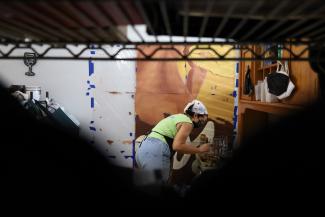
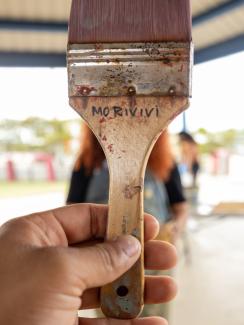
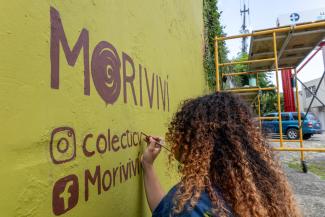
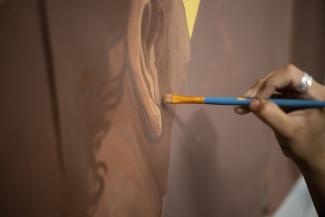
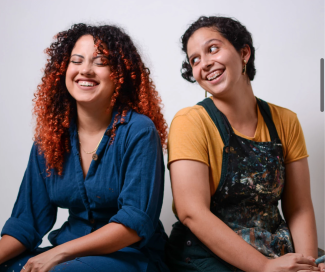
El Colectivo Moriviví es una colectiva de solo mujeres. Nuestra producción artística consiste en muralismo, muralismo comunitario y acciones/performances de protesta. Nuestro trabajo tiene como objetivo democratizar el arte y llevar a la esfera pública las narrativas de las comunidades de Puerto Rico, para generar espacios en donde sean validadas. Creemos que, a través del artivismo, podemos promover conciencia sobre temas sociales y fortalecer nuestra memoria colectiva.
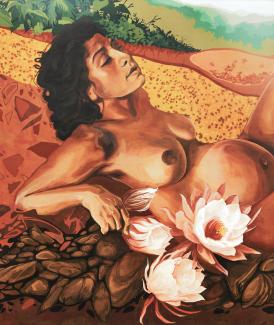
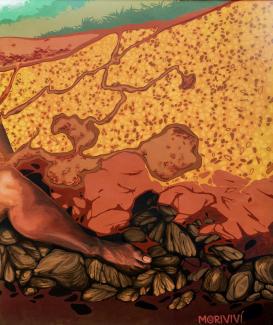
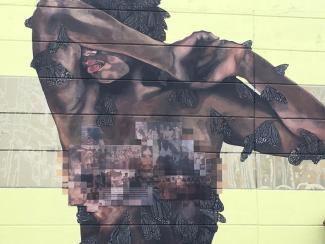
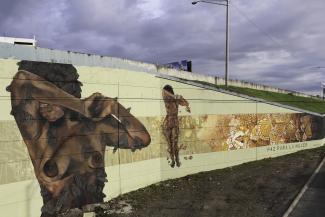

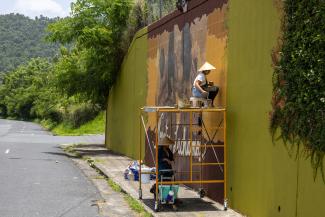
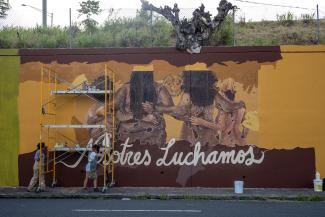
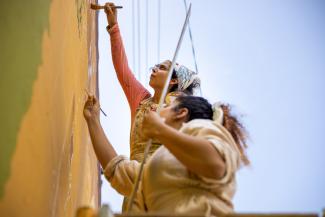
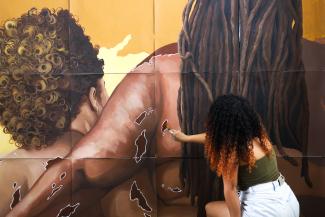
En el marco de su participación en el Grupo de Trabajo Artístico de AWID, el Colectivo Moriviví convocó a un grupo diverso de afiliadxs, asociadxs y personal de AWID y facilitó un proceso colaborativo de imaginación, configuración y decisión sobre el contenido para la creación de un mural comunitario, a través de un proceso de creación conjunta en múltiples etapas. El proyecto comenzó con una conceptualización remota con feministas de diferentes zonas del planeta reunidxs por AWID, y luego evolucionó hacia su recontextualización y realización en Puerto Rico. Nos honra haber contado con la contribución de las artistas locales Las Nietas de Nonó (@lasnietasdenono), la participación de mujeres locales en la Sesión de Pintura Comunitaria, el apoyo logístico de la Municipalidad de Caguas, y el apoyo adicional al colectivo, brindado por FRIDA Young Feminist Fund.
El mural explora la trascendencia de las fronteras, al presentar cuerpos como un mapa en un abrazo que realza la intersección de las distintas manifestaciones, prácticas y realidades feministas.
Agradecemos también a Kelvin Rodríguez, quien documentó y captó las diferentes etapas de este proyecto en Puerto Rico:

Celebramos el derecho de todas las personas a elegir sus identidades, relaciones, metas, trabajos, sueños y placeres, y lo que hacen con su mente, cuerpo y espíritu. Trabajamos por el acceso a los recursos, a la información, y a ambientes seguros y habilitantes que permitan que esto suceda.
سيتم جمع المعطيات لأهداف إحصائية لتسليط الضوء على وضع التمويل للحركات النسوية العالمية وسيتم عرضها فقط بشكل إجمالي. لن تنشر AWID المعلومات عن اي منظمة محددة ولن تعرض أي من المعلومات التي ستمكّن من التعرّف على منظمة عن طريق موقعها أو صفاتها دون موافقة المنظمة.
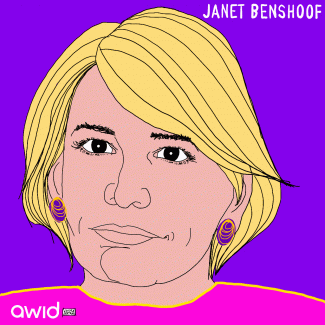
Janet Benshoof was a human rights lawyer from the United States and an advocate for women’s equality, sexual and reproductive rights.
She campaigned to broaden access to contraceptives and abortions across the world, and battled anti-abortion rulings and in the American territory of Guam. She was arrested in 1990 for opposing her country’s most restrictive abortion law, but won an injunction at the local court in Guam that blocked the law and eventually won at the Ninth Circuit Court of Appeals, striking down the law for good.
“The women in Guam are in a very tragic situation. I never intend to be quiet about that.” - Janet Benshoof for People Magazine
Janet established landmark legal precedents including the US Food and Drug Administrations’ approval of emergency contraception, as well as the application of international law to ensure the rights of rape victims in the Iraqi High Tribunal’s prosecution of Saddam-era war crimes.
Janet was President and founder of the Global Justice Center, as well as founder of the Center for Reproductive Rights, the world’s first international human rights organization focused on reproductive choice and equality. She served 15 years as Director of the American Civil Liberties Union’s Reproductive Rights Project, where she spearheaded litigation shaping US constitutional law on gender equality, free speech, and reproductive rights.
“Janet was known for her brilliant legal mind, her sharp sense of humor, and for her courage in the face of injustice.” - Anthony D. Romero
Named one of the “100 Most Influential Lawyers in America” by the National Law Journal, Janet was the recipient of numerous awards and honors.
She was born in May 1947 and passed away in December 2017.