A general view of participants at the 16th session of the Human Rights Council in Geneva, Switzerland.
Análisis Especiales
AWID es un organización feminista internacional de membresía, que brinda apoyo a los movimientos que trabajan para lograr la justicia de género y los derechos de las mujeres en todo el mundo.
El Consejo de Derechos Humanos (CDH) es el cuerpo intergubernamental del sistema de las Naciones Unidas responsable de la promoción y protección de todos los derechos humanos en todo el mundo. El HRC se reúne en sesión ordinaria tres veces al año, en marzo, junio y septiembre. La La Oficina del Alto Comisionado para los Derechos Humanos (ACNUDH) es la secretaría del Consejo de Derechos Humanos.
El CDH trabaja de la siguiente forma:
Debate y aprueba resoluciones sobre cuestiones mundiales de derechos humanos y el estado de los derechos humanos en determinados países
Examina las denuncias de víctimas de violaciones a los derechos humanos o las de organizaciones activistas, quienes interponen estas denuncias representando a lxs víctimas.
Nombra a expertos independientes que ejecutarán los «Procedimientos Especiales» revisando y presentado informes sobre las violaciones a los derechos humanos desde una perspectiva temática o en relación a un país específico
Participa en discusiones con expertos y gobiernos respecto a cuestiones de derechos humanos.
A través del Examen Periódico Universal, cada cuatro años y medio, se evalúan los expedientes de derechos humanos de todos los Estados Miembro de las Naciones Unidas
Se está llevarando a cabo en Ginebra, Suiza del 30 de junio al 17 de julio de 2020.
AWID trabaja con socios feministas, progresistas y de derechos humanos para compartir conocimientos clave, convocar diálogos y eventos de la sociedad civil, e influir en las negociaciones y los resultados de la sesión.
Con nuestrxs socixs, nuestro trabajo será:
◾️ Monitorear, rastrear y analizar actores, discursos y estrategias anti-derechos y su impacto en las resoluciones
◾️ Desarrollar conjuntamente una labor de promoción conjunta para contrarrestar a los actores anti-derechos y debatir más a fondo las conclusiones del Informe de Tendencias de OUR de 2017
◾️ Apoyar, coordinar y desarrollar de manera colaborativa el Caucus feminista emergente en el CDH
Sylvia Rivera était une militante pour les droits civiques, travestie et travailleuse du sexe.
Connue comme la drag queen de couleur de New York, Sylvia était une infatigable et féroce défenseure des marginalisé·e·s et exclu·e·s au début des années 1970, alors que le mouvement pour les « droits des gays » prenait de l’ampleur aux États-Unis.
Dans un discours bien connu prononcé pour Chistopher Street Day en 1973, Sylvia s’est exclamée, parmi une foule de membres de la communauté LGBT :
« Vous me dites tous d’aller me cacher, la queue entre les jambes.
Je ne supporterai plus ces conneries.
On m’a battue.
On m’a cassé le nez.
On m’a jetée en prison.
J’ai perdu mon travail.
J’ai perdu mon appartement.
Tout ça pour la libération gay, et vous me traitez de la sorte?
C’est quoi votre putain de problème à tous?
Réfléchissez à ça! »
En 1969, à l’âge de 17 ans, Sylvia a participé aux célèbres émeutes de Stonewall en jetant, paraît-il, le deuxième cocktail molotov en signe de protestation contre la descente de la police dans le bar gay de Manhattan. Elle a continué à être une figure centrale des soulèvements qui ont suivi, organisant des rassemblements et ripostant aux brutalités policières.
En 1970, Sylvia a collaboré avec Marsha P. Johnson à la création de Street Transvestite Action Revolutionaries (S.T.A.R.), collectif et organisation politique qui mettait sur pied des projets de soutien mutuel pour les personnes trans vivant dans la rue, celles et ceux aux prises avec la toxicomanie ou en détention, et spécialement pour les personnes trans de couleur et celles et ceux vivant dans la pauvreté.
Refusant les étiquettes, Sylvia a incité les personnes du mouvement de libération gay à penser différemment, et ce, tout au long de sa vie. Elle a déclaré :
« J’ai quitté ma maison en 1961, à l’âge de 10 ans. Je me suis démenée sur la 42e rue. Le début des années 1960 n’était pas génial pour les drag queens, les garçons efféminés ou les garçons qui se maquillaient comme on le faisait. À l’époque, on se faisait battre par la police, par tout le monde. Je n’ai pas vraiment fait mon coming out en tant que drag queen avant la fin des années 1960. C’était vraiment la débandade lorsque des drag queens se faisaient arrêter. Je me rappelle la première fois où je me suis fait arrêter, je n’étais même pas habillée entièrement en drag. Je marchais dans la rue et les flics m’ont tout simplement attrapée. Les gens maintenant prétendent que je suis une lesbienne, parce que je suis avec Julia, ce à quoi je leur je réponds : « Non, je suis juste moi. Je ne suis pas une lesbienne. » J’en ai marre d’être étiquetée. Je ne suis même pas en faveur de l’étiquette de transgenre. J’en ai marre de vivre avec des étiquettes. Je veux juste être qui je suis. Je suis Sylvia Rivera »
Par son activisme et son courage, Sylvia Rivera a présenté un miroir où se reflétait tout ce qui n’allait pas dans la société, mais aussi la possibilité d’une transformation. Sylvia est née en 1951 et décédée en 2002.
Anti-rights actors adopt a double strategy. As well as launching outright attacks on the multilateral system, anti-rights actors also undermine human rights from within. Anti-rights actors engage with the aim of co-opting processes, entrenching regressive norms, and undermining accountability.
Anti-rights actors’ engagement in international human rights spaces has a principal purpose: to undermine the system and its ability to respect, protect and fulfill human rights for all people, and to hold member states accountable for violations. Some anti-rights tactics operate from outside the UN and include delegitimization and political pressure to defund the UN, or to withdraw from international human rights agreements. In recent years, anti-rights actors have also gained increasing influence inside the UN. Their inside tactics include training of delegates, distortion of human rights frameworks, watering down human rights agreements, infiltrating NGO committees, applying for ECOSOC status under neutral names, infiltrating youth spaces, and lobbying to place anti-rights actors in key positions.
Table of Contents
Institutionalization of Anti-rights Actors in UN Mechanisms
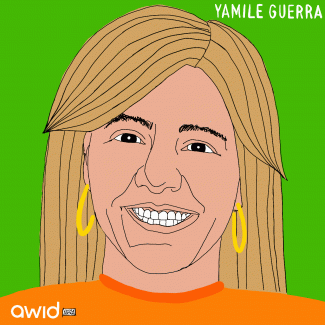
Yamile Guerra was a well-known lawyer, community leader and political activist in the Santander region of Colombia.
She was actively working to resolve disputes between local communities and developers, advocating against illegal land appropriation. Yamile had occupied various political posts, including as the Secretary General for the Santander government in Bogota and also aspired for the Mayor’s Office of Bucaramanga. In the last few years of her life, Yamile became increasingly active in environmental causes, particularly in the defense of the biodiverse wetlands of Santurbán against development, a region which supplies nearly 2 million people with freshwater.
According to her family and friends, Yamile received daily threats against her life and had asked the authorities for protection.
“She was very very aware of this issue [land litigation] and she said many times that she felt insecure.” - Alixon Navarro Munoz, journalist and friend of Guerra family
On July 20, 2019 Yamile was shot to death by two men in Floridablanca, Santander. She had just finished discussing a land dispute with them. A suspect was later arrested for her murder and admitted to being paid to carry out her assassination. According to reports, Yamile was the third member of her family to have been killed in relation to land disputes. Her father, Hernando Guerra was murdered several years previously.
Yamile’s assassination is part of a wave of violence and systematic killing of hundreds of social activists and human rights defenders in Colombia. According to the Institute for Development and Peace Studies (INDEPAZ), at the time of Yamile’s death, over 700 community leaders and human rights activists had been killed since the country signed a peace agreement in August 2016. Most were murdered for confronting illegal drug trafficking and mining operations, with indigenous people, Afro-Colombians and women human rights defenders being most at risk.
Less than a week after Yamile’s death, thousands of Colombians marched all over towns and cities, holding up black and white photos of activists who had been killed, with signs that read: "Without leaders there can be no peace" and "No more bloodshed”.
Yamile Guerra was only 42 years old at the time of her assassination.
Я прошла(-шел) опрос, но передумала(-л) и хочу отозвать ответы – что мне делать?
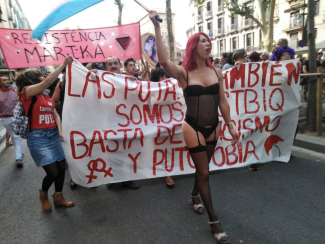
Linda Porn is yet another heroine of feminist union organizing and sex worker activism nationally (in Spain) and transnationally.
Originally from Mexico, she has been living in Spain since the 2000s. She is a sex worker, an activist, a single mother and a multidisciplinary artist. Drawing from these different identities, she uses performance, video art and theater to vizibilize struggles at the intersections of transfeminism, sex work, migration, colonialism and motherhood.
She combines art and sex work while caring for her daughter as a single mother.
Linda also belongs to sex workers collectives that fight for their rights, such as the OTRAS union and CATS Murcia. She also co-founded the group 'Madrecitas' - that visibilises and denounces racist institutional violence against migrant families. Violence to which she and her daughter were subjected as a sex worker and migrant single mother.
La historia de Crear, Résister, Transform por Coumba Toure
Una experiencia mágica de narración feminista conducida por la feminista panafricana Coumba Toure, quien actuará en la antigua tradición de lxs griots de África Occidental.
Y nos reunimos nuevamente
Juntamos nuestras historias, nuestra fuerza
nuestras canciones
nuestras lágrimas
nuestra ira
nuestros sueños
nuestro éxito
nuestros fracasos
Y lo colocamos todo junto
en un gran cuenco para compartir
durante una luna de pensamientos
Y nos mantenemos en contacto
nos sacudimos las mentes unas a otras
nos acariciamos las almas
mientras nuestras manos siguen atadas
y nuestros besos y abrazos están prohibidos
Sin embargo, nos hacemos más fuertes cada hora
entretejiendo juntas nuestras voces
cruzando las barreras del sonido
mientras hablamos en lenguas
Nuestras voces son cada vez más altas
Sabemos lo que nos diferencia de otras personas
y entre nosotras, de modo que
estamos bordando nuestras bellezas en un mosaico de pensamientos
desde nuestros aprendizajes más profundos, desde nuestros poderes
A veces nos rodea el terror
la confusión, la deshonestidad
pero nos lavamos en el océano de amor
Somos tejedoras de sueños
para vestir nuestro nuevo mundo
hilo por hilo
tan pequeñas como somos
como pequeñas hormigas construyendo nuestro movimiento
comopequeñas gotas construyendo nuestros ríos
Damos pasos hacia adelante y pasos hacia atrás
bailando nuestro camino de vuelta a la cordura
Sostenemos el ritmo de nuestros corazones: sigan
latiendo, por favor, no se detengan
Y aquí estamos, transmisoras de generosidad olvidada
gota tras gota creciendo como el océano
creciendo como el río que fluye de nuestras almas
mostrando nuestra fuerza para ser el agua
que limpiará este mundo
y nos estamos reuniendo nuevamente ¿pueden sentirnos?
Mentiría si dijera que para mí
está bien no verlas, extraño a mi gente
Extraño su contacto y
sus voces sin filtro y sin registro
Extraño nuestros susurros y nuestros alaridos
nuestros gritos de la revolución abortada
Solo queremos parir nuevos mundos
Entonces luchemos para borrar las fronteras entre nosotras
Por favor, no se detengan
Forum anchors (Forum page)
Forum Anchors
The AWID Forum will be organized around 6 interconnected topics. These ‘anchors’ center feminist realities.
Binta Sarr fue una activista por la justicia social, económica, cultural y política, y una ingeniera hidráulica en Senegal. Después de 13 años en la administración pública, Binta dejó ese camino para trabajar con mujeres rurales y marginadas.
Fue de este compromiso que surgió la Association for the Advancement of Senegalese Women [Asociación para el Avance de las Mujeres Senegalesas] (APROFES, por sus siglas en inglés), un movimiento y organización de base que Binta fundó en 1987. Uno de sus principales enfoques fue la formación de dirigentes, en relación no solo con las actividades económicas, sino también con los derechos de las mujeres y el acceso a los puestos de toma de decisiones.
"Las poblaciones de base deben organizarse, movilizarse, asumir el control ciudadano y exigir la gobernabilidad democrática en todos los sectores del espacio público. La prioridad de los movimientos sociales debe ir más allá de la lucha contra la pobreza y debe centrarse en programas de desarrollo articulados y coherentes en consonancia con los principios de los derechos humanos, teniendo en cuenta al mismo tiempo sus necesidades y preocupaciones tanto a nivel nacional como subregional y desde una perspectiva de integración africana y mundial". - Binta Sarr
Partiendo de la convicción de Binta de que el cambio fundamental de la condición de la mujer requiere una transformación de las actitudes masculinas, APROFES adoptó un enfoque interdisciplinario, al utilizar la radio, los seminarios y el teatro popular, además de proporcionar una educación pública innovadora y brindar apoyo cultural a las acciones de sensibilización. Su compañía de teatro popular representó piezas originales sobre el sistema de castas en el Senegal, el alcoholismo y la violencia conyugal. Binta y su equipo también analizaron la conexión crucial entre la comunidad y el mundo en general.
"Para APROFES, se trata de estudiar y tener en cuenta las interacciones entre lo micro y lo macro, lo local y lo global y también, las diferentes facetas del desarrollo. Desde la esclavitud hasta la colonización, el neocolonialismo y la mercantilización del desarrollo humano, la mayor parte de los recursos de África y del Tercer Mundo (petróleo, oro, minerales y otros recursos naturales) están todavía bajo el control de carteles financieros y las otras multinacionales que dominan este mundo globalizado". - Binta Sarr
Binta fue una de las integrantes fundadoras de la sección femenina de la Asociación Cultural y Deportiva Magg Daan. Recibió distinciones del Gobernador Regional y del Ministro de Hidrología por su "devoción por la población rural".
Nacida en 1954 en Guiguineo, un pequeño pueblo rural, Binta falleció en septiembre de 2019.
Tributos:
"La pérdida es inconmensurable, el dolor es pesado y profundo, pero resistiremos para no llorar a Binta; no lloraremos a Binta, mantendremos la imagen de su amplia sonrisa en todas las circunstancias, para resistir e inspirarnos en ella, para mantener, consolidar y desarrollar su obra..." - Página de Facebook de Aprofes, 24 de septiembre de 2019.
"¡Adiós Binta! Creemos que tu inmenso legado será preservado." - Elimane FALL , presidente de ACS Magg-Daan
Posso compartilhar o inquérito com outras pessoas?
Claro que sim! Encorajamo-lo a compartilhar a ligação do nosso inquérito com as suas redes. Quanto mais perspetivas diversas recolhermos, melhor será a nossa compreensão do cenário financeiro para a organização feminista.
Snippet FEA Principles of work Human Rights (ES)
DERECHOS HUMANOS
MANGO
Jurema Araújo is a teacher-poet from Rio de Janeiro. She contributed to the magazine Urbana, edited by the poets Brasil Barreto and Samaral (RIP) and to the book Amor e outras revoluções (Love and Other Revolutions) with several other writers. In collaboration with Angélica Ferrarez and Fabiana Pereira, she co-edited O livro negro dos sentidos (The Black Book of Senses), a creative anthology on black women’s sexuality in Brazil. Jurema is 54-years-old; she has a daughter, three dogs, a cat, and many friends.
Suck it with me?
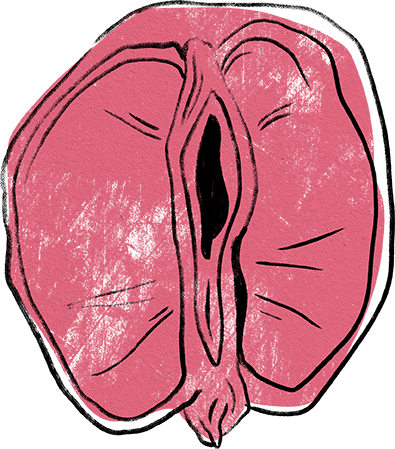
Mango is my favorite fruit.
I open my mouth
and suck it all,
Its flesh caught between my teeth
that turn soft not to hurt it
and I press it between my tongue and the roof of my mouth,
then I take it out to suck on every part of it
with the juice running down my mouth
drenching myself in this tasty nectar
and putting it all in my mouth again
because mango is seed and honey;
it is fiber and flavor.
And when it is over, I am entranced,
honeydewed, sweetened,
my lips all wet.
Ohhh, what is mango for if not for smearing.
Chupa Comigo?
A fruta que eu mais gosto é manga!
Porque eu abro a boca
E meto toda pra chupar!
Se os dentes a prendem
Fazem macio para não machucar
E eu pressiono entre minha língua e meu céu
Depois tiro pra sugar cada parte
Sentindo o caldo escorrer boca afora
Me molhando com esse néctar gostoso
E metendo toda na boca de novo
Pois manga é caroço e é mel,
É fiapo e sabor
E quando acaba, estou extasiada
Melada, docinha
Com os lábios molhados!
Aaahhh, manga é pra se lambuzar!
Introducing The Black Book of Senses
I’ll admit it: when Angélica and Fabi invited me to curate a collection of erotic texts by black women, I didn’t know what curatorship was. I understood the erotic well, but curatorship... I smiled, feeling shy and flattered. I think I thanked them – at least I hope I did – and thought to myself: what the fuck is it?! This fancy word I’ll have to learn the meaning of while doing it, what is it?
Now at this point, I know what it is to be a curator: it is making love with someone else’s texts, with someone else’s art, with the intention of putting a book together. And that is exactly what I did. I undressed each text of every author of this book with a literary lasciviousness. And I got involved in the words and senses of others. I was penetrated by poems I didn’t write; tales I didn’t even dare to imagine turned me upside down, messing with my feelings, with my libido. And it was a wonderful and unusual orgasm: ethereal, corporeal, sublime, at once intellectual and sensitive.
These texts pulsated like a clit hardened by desire, drenched, dripping joy in every reading. Words that swallowed me with their naughty significance, making me dive deeper into this wet universe.
These black women went to the bottom of their arousals and turned their deepest erotic fantasies into art. These works are impregnated with each writer’s own way of experiencing sexuality: freely, blackly, for ourselves, in our own way, empowered.
I chose to spread the texts throughout different parts of the book, each one organized according to the most delicate, explosive, evident, or implicit content they presented.
To open the door to this “invulved blackessence,” we have our Preliminaries section, with texts that introduce readers to this world of delights. It is a more general, delicate caress to acknowledge the subjects addressed by the texts in the rest of the book.
Then comes the heat of Touch, addressing what the skin can feel. That energy which burns or freezes our bodies, makes our hormones explode and starts to awaken the other senses. And although there are many of us who are voyeurs, the contact of skin with a wet and warm mouth is exciting, like wandering through the softness of whomever is with you. We are seduced by the firm or gentle touch that gives us goosebumps and that lovely discomfort that runs from the neck down to the back and only stops the next day. And the warmth of the lips, the mouth, the wet tongue on the skin – oh, the tongue in the ear, hmmm – or skin on skin, clothes moving over the body, almost like an extension of the other’s hand. If there is no urgency, that wildest arousal of the pressure of a tight grab, a bit of pain – or a lot, who knows?
The Sound – or melody? – section shows us that attraction also happens through hearing: the voice, the whispers, the music that enables the connection between the bodies and can become the theme of desire. For some of us, someone with a beautiful voice would only need their vocal cords, because that harsh or heavy or melodious sound would be auditory sex. Their loud swearing or sweet words whispered in the ear would be enough to give us hair-raising shivers from neck to coccyx.
In Flavor, we know the tongue does a good job tasting the most hidden places and wandering through the body to delight itself. Sometimes this organ is used, boldly, to taste the other’s nectar. The idea of someone sharing their strawberry or a delicious, juicy mango through bites and licks – or licks and bites – melts us. But nothing is more delicious than tasting the caves and hills of the person you are with. Stick your tongue deep inside to taste a piece of fruit... or spend hours tasting the head of a cock in your mouth, or suck on a delicious breast to taste the nipples. This is all about memorizing someone by their Flavor.
There are texts in which the nose is what triggers desire. The Smell, my dear readers, can awaken us to the delights of desire. Sometimes we meet a person who smells so good, we want to swallow them right through our nose. When you run through the other person’s body with your nose, starting with the neck – wow, that delightfully uncomfortable shiver that runs down the spine and undresses the soul! The shameless nose then moves to the back of the neck and captures the scent of the other in such a way that in the absence of that person, smelling their same scent evokes, or conversely, invades in us olfactory memories that bring the arousing smell of that person back.
We then get to Look – for me, the betrayer of senses – in which we perceive desire from a point of “view.” It is through sight that the texts present desire and arousal, through which the other senses are brought about. Sometimes a smile is all it takes to drive us crazy. The exchange of glances? That look that says “I want you now.” That look of possession that comes to an end when you stop fucking, or not. That one is very particular; it draws the other who won’t be able to look away for long. Or the sidelong glance – when one looks away when the other turns their head, like a cat-and-mouse game? Once we are caught red-handed, there’s nothing else to do besides breaking into a wide smile.
Finally, the explosion. Wandering through All senses, the texts mix feelings that seem like an alert, so there is the greatest pleasure, that orgasm.
Of course, there is nothing explicitly separating these poems and tales. Some are subtle. Arousal engages all our senses and, most importantly, our heads. That’s where it happens, and it connects our whole body. I organized the poems according to how they came to me in each reading. Feel free to disagree! But to me, there is a sense through which desire goes and then explodes. Realizing which one it is, is delightful.
Being able to turn arousal into art means freeing ourselves from all the prejudice, prisons, and stigma this white-centric society has trapped us in.
Every time a black writer transforms the erotic into art, she breaks these harmful racist chains that cripple her body, repress her sexuality, and turn us into the object of another’s greed. Writing erotic poetry is taking back the power over her own body and roaming fearlessly through the delights of desire for herself, for others, for life.
The literary erotic is who we are when turned into art. Here we show the best of us, our views of love drenched by pleasure, seasoned by the erogenous, spread through our bodies, and translated by our artistic consciousness. We are multiple and we share this multiplicity of sensations in words dripping with arousal. Yes, even our words drip with our sexual desire, drenching our verses, turning our sexual urges into paragraphs. To come, for us, is a breakthrough.
It is necessary to make our minds, bodies, and sexuality black, to reestablish our pleasure, and take back our orgasms. Only then will we be free. This whole process is a breakthrough, and it happens painfully. But there is happiness in finding ourselves to be very different from where we had been placed.
I feel like I am yours, I am ours. Taste, delight yourselves, feast on these beautiful words with us.
This text is adapted from the introductions to “O Livro Negro Dos Sentidos” [The Black Book of Senses], an erotic collection of poems by 23 black female writers.
ExploreTransnational Embodiments
This journal edition in partnership with Kohl: a Journal for Body and Gender Research, will explore feminist solutions, proposals and realities for transforming our current world, our bodies and our sexualities.
نصدر النسخة هذه من المجلة بالشراكة مع «كحل: مجلة لأبحاث الجسد والجندر»، وسنستكشف عبرها الحلول والاقتراحات وأنواع الواقع النسوية لتغيير عالمنا الحالي وكذلك أجسادنا وجنسانياتنا.