AWID es un organización feminista internacional de membresía, que brinda apoyo a los movimientos que trabajan para lograr la justicia de género y los derechos de las mujeres en todo el mundo.
Confrontando al extractivismo y al poder corporativo
Defensoras de derechos humanos de todo el planeta defienden sus tierras, medios de subsistencia y sus comunidades ante las industrias extractivas y el poder corporativo. Ellas hacen frente a fuertes intereses económicos y políticos que promueven el robo de tierras, el desplazamiento de comunidades, la pérdida de los medios de subsistencia y la degradación del medioambiente.
¿Por qué resistir a las industrias extractivas?
El extractivismo es un modelo económico y político de desarrollo que mercantiliza la naturaleza y prioriza la ganancia por sobre los derechos humanos y el medioambiente. Arraigado en la historia colonial, refuerza las desigualdades sociales y económicas tanto a nivel local como global. Muchas veces, las mujeres negras, rurales e indígenas son las más afectadas por el extractivismo, y además son notablemente excluidas de la toma de decisiones. Desafiando estas fuerzas patriarcales y neocoloniales, las mujeres se alzan en defensa de los derechos, las tierras, las personas y la naturaleza.
Riegos críticos y violencia específica de género
Las defensoras que enfrentan a las industrias extractivas, experimentan una diversidad de riesgos, amenazas y violaciones, incluidas la criminalización, la estigmatización, la violencia y laintimidación. Sus historias dan cuenta de marcados aspectos de violencia sexual y de género. Entre los perpetradores se incluyen autoridades estatales y locales, las corporaciones, la policía, el ejército, las fuerzas paramilitares y de seguridad privada, y en algunos casos, sus propias comunidades.
Actuar juntxs
AWID y la Coalición Internacional de Mujeres Defensoras de Derechos Humanos (WHRDIC por su sigla en inglés) tienen el placer de anunciar «Defensoras de derechos humanos confrontado al extractivismo y al poder corporativo»; un proyecto interregional de investigación que documenta las experiencias vividas por las defensoras de Asia, África y América Latina.
Alentamos a activistas, integrantes de movimientos sociales, la sociedad civil organizada, donantes y responsables de políticas públicas, a leer y utilizar estas producciones para el trabajo de incidencia, con fines educativos y como fuente de inspiración:
AWID reconoce con gratitud las invaluables contribuciones de cada Defensora de Derechos Humanos que ha sido parte de este proyecto. Esta guía ha sido posible gracias su generosidad y apertura al compartir sobre sus experiencias y lecciones. Su coraje, creatividad y resiliencia son una inspiración para todxs nosotrxs. ¡Muchas gracias!
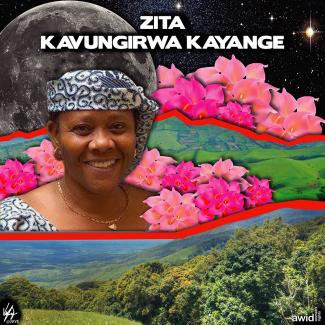
Zita était une défenseure des droits des femmes de la région du Grand Kivu.
Elle a été la première directrice exécutive d’UWAKI, une organisation de femmes bien connue. Par son travail avec le Réseau des Femmes pour la Défense des Droits et la Paix (RFDP) et le Caucus des femmes du Sud-Kivu pour la paix, elle a consacré sa vie à rétablir la paix dans l'est de la RDC. Elle a très fermement dénoncé l'utilisation de la violence sexuelle comme arme de guerre.
En 2006, elle s'est présentée comme candidate aux premières élections démocratiques en RDC. Bien qu’elle n’ait pas gagné, elle a continué à défendre les droits des femmes et la communauté du Sud-Kivu se souvient d’elle avec affection.
AWID Members Engaging at CSW61
Member states and women's rights advocates and organisations are gathering at the United Nations Headquarters in New York from 13 - 24 March for the 61st Commission on the Status of Women to address ‘women’s economic empowerment’ in the context of Sustainable Development Goal 5.
Whilst AWID is looking forward to physically meeting those of you who will be in New York, we want to engage with all those who cannot attend CSW, and as much as possible, amplify your voices in relevant spaces.
Continue reading to find out how to engage with AWID around CSW, whether you are attending physically or not.
Participate in an artistic takeover!
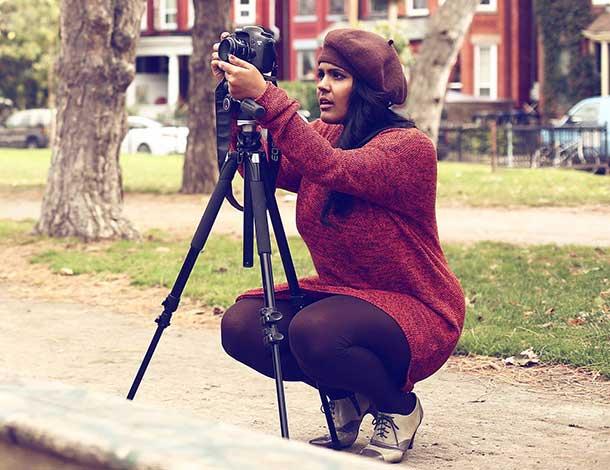
We are thrilled that AWID member Nayani Thiyagarajah is attending CSW this year and will take over the AWID Instagram. She will be available onsite to connect with other members for a possible feature on our Instagram. She will also explore possibilities of including some AWID members in a short film on the theme, ‘The personal is political’, a story of Nayani’s participation in this year’s CSW.
Nayani Thiyagarajah
Who is Nayani?
Nayani Thiyagarajah is a director, producer, and writer, dedicated to stories for the screen. A daughter of the Tamil diaspora, she calls Toronto home. For over 10 years, Nayani has worked in the arts and cultural industries. Her first independent feature documentary Shadeism: Digging Deeper (2015) had its World Premiere at the 2015 Zanzibar International Film Festival, where it won a Special Jury Prize. Nayani recently launched [RE]FRAME, with her producing partner Camaro West, a production company based out of Atlanta and Toronto, focused on re-framing the narratives around Black, Indigenous, and other people of colour through storytelling on screen.
On a more serious note, it should be noted that Nayani has a strange laugh, she's quite awkward, and her head is always in the clouds. She feels blessed beyond belief to create stories for the screen and play make believe for a living. Above all else, she believes in love.
Interested in meeting Nayani and being considered for inclusion in the film?
Send an email to membership@awid.org with the subject line “CSW Artistic Takeover”
By 13 March 2017
Please include your full name and country information.
Can't attend? Voice it!
If you are not able to attend CSW61 because of a travel ban, either due to the one imposed by the Trump administration or one you are facing from your own government, please share your story with us.
Send us messages you want heard in the United Nations spaces concerning funding, the impact of the reinstatement of the Global Gag Rule, and the need to push back against all types of religious fundamentalisms. You can send these in the following formats:
Video: no longer than two minutes and sent through a file sharing folder (for example dropbox, google drive)
Audio: no longer than two minutes and sent through a file sharing folder (for example dropbox, google drive)
Image: you can share a photo or a poster of your message
Text: no longer than 200 words and sent in the body of an email or in a word document
AWID members tell us that connecting with other members at CSW is valuable. In such a huge advocacy space, it is useful to connect with others including activists working on similar issues, or originating from the same country or region. Recognising the importance of connecting for movement building, we invite you to:
Interested in connecting with other members @CSW61?
If you are attending the CSW, we’d love to see what’s going on through your eyes!
Show us by capturing a moment you find speaks to the energy in the CSW space, be it on or off site. We hope to publish some of your ‘images’ on our social media channels and share on awid.org.
You can send us:
colour and/ or black and white photographs with a title (if you wish) and
a caption (no longer than 100 words) about the story your image tells.
Please also include:
your full name and country of origin and
let us know if we can publish the information you shared (in part or in full).
During the whole CSW or shortly after until Tuesday 28 March 2017.
¿Tengo que responder todas las preguntas a la vez o puedo hacerlo a lo largo de algún tiempo?
Si deseas guardar las respuestas y retomar la encuesta más tarde, puedes hacerlo todas las veces que lo necesites. KOBO guardará tus respuestas en la esquina superior izquierda de la página de la encuesta y recargará tu registro cuando regreses a la encuesta. Solo asegúrate de continuar desde la misma computadora y navegador.
Snippet FEA how important essential workers are (ES)
La pandemia de COVID-19 le mostró al mundo la importancia de lxs trabajadorxs esenciales. Estamos hablando de limpiadorxs, enfermerxs, paramédicxs, trabajadorxs del hogar, transportistxs, las personas que trabajan en los supermercados, entre muchísimas otras. Su trabajo es atender y garantizar el bienestar de lxs demás y hacer funcionar nuestras economías.
Marianne Mesfin Asfaw est une féministe panafricaine qui se consacre à la justice sociale et à la construction communautaire. Elle est titulaire d'une licence en études de genre et en relations internationales de l'Université de la Colombie-Britannique (UBC) et d'un master en études de genre et de droit de l'Université SOAS de Londres. Auparavant, elle travaillait dans l'administration universitaire et le soutien aux étudiant·e·s internationaux·ales, de même qu’à titre de chercheuse et d’animatrice dans des espaces féministes à but non lucratif. Elle a également travaillé et été bénévole auprès d'organisations non gouvernementales, notamment Plan International, dans des rôles administratifs. Avant d'occuper son poste actuel, elle a travaillé dans le soutien logistique et administratif à l'AWID. Elle est originaire d'Éthiopie, a grandi au Rwanda et est actuellement basée à Tkaronto/Toronto, au Canada. Elle aime lire, voyager et passer du temps avec sa famille et ses ami·e·s. Pendant les mois les plus chauds, on peut la trouver en train de se promener dans des quartiers familiers à la recherche de cafés et de librairies obscurs dans lesquels flâner.
Position
Coordonnatrice de l’Initiative de Construction d’Économies Féministes
Bessy Ferrera a défendu sans relâche les droits humains des personnes trans, travailleuses du sexe et séropositives au Honduras.
Bessy était aussi membre d’Arcoíris, une organisation qui soutient la communauté LGBTI+. Elle était en outre la personne référente de la plateforme Derechos aquí y Ahora (les droits ici et maintenant) au Honduras et plaidait fermement en faveur d’une pleine citoyenneté pour les personnes trans, ainsi que pour l’adoption d’une loi sur l’identité de genre qui permettrait aux personnes trans de changer légalement d’identité de genre.
« Depuis le début de l’année [2019], la communauté trans a été victime d’une série d’attaques, parce qu’elle a défendu et demandé des droits. » Rihanna Ferrera (sœur de Bessy)
Bessy était une travailleuse du sexe qui a été tuée par balle par deux hommes, au début du mois de juillet 2019, alors qu’elle travaillait dans les rues Comayagüela. Ses assaillants ont par la suite été arrêtés.
Bessy fait partie des nombreux·ses activistes des droits LGBTI+ du Honduras, assassiné·e·s en raison de leur identité et de leur travail, parmi qui se trouvent : Cynthia Nicole, Angy Ferreira, Estefania "Nia" Zuniga, Gloria Carolina Hernandez Vasquez, Paola Barraza, Violeta Rivas et Sherly Montoya.
Le cas de Bessy incarne l’injustice, de même qu’un problème plus large de violence systémique à laquelle se confronte la communauté LGBTI+ au Honduras, puisque l’État ne parvient pas à garantir l’offre de droits ni à fournir une protection. Cela est à l’origine d’une culture de l’impunité.
Malgré les risques auxquels sont confronté.e.s les activistes LGBTI+ au Honduras, tous et toutes continuent leur travail pour défier et résister à la violence, ainsi que pour combattre la stigmatisation et la discrimination au quotidien.
« Si je meurs, il faut que ce soit pour quelque chose de bien, pas pour une futilité. Je ne veux pas mourir en fuyant, en étant lâche. Si je meurs, je veux que les gens disent que je suis mort·e en me battant pour ce qui m’appartient » - membre d’Arcoíris
Background
Why this resource?
While active participants on the front lines of protests and uprisings in the Middle East and North Africa (MENA), women became invisible, absent from processes of formation of the new states, and excluded from decision-making roles, responsibilities, and positions in the aftermath of the uprisings. Except in rare cases, men dominated leadership positions in transitional structures, including the constitutional reform and electoral committees[i]. Subsequent elections brought very few women to parliamentary and ministerial positions.
Additionally, a strong and immediate backlash against women and women’s rights has clearly emerged in the aftermath. The rise of new religious fundamentalist groups with renewed patriarchal agendas aiming to obliterate previous gains of the women’s movements even in countries with longer histories of women’s rights, such as Tunisia, has been very alarming.
The varying contexts of governance and transition processes across the MENA countries presents an important opportunity for women human rights defenders to shape the future of these democracies. However, the lack of prioritization of women’s rights issues in the emerging transitions and the aforementioned backlash have posed a variety of complex challenges for the women’s movements. Faced with these enormous challenges and possibilities, women’s rights activists have been struggling to forge ahead a democratic future inclusive and only possible with women’s rights and equality. The particular historical and contextual legacies that impact women’s movements in each country continue to bear on the current capacities, strategies, and overall preparedness of the women’s movements to take on such a challenge. Burdened with daily human rights violations in one context, with lack of resources and tools in another, with organizational tensions in a third, in addition to the constant attacks on them as activists, women human rights defenders have voiced their desire to be more equipped with knowledge and tools to be effective and proactive in engaging with these fast-changing environments. Conceptual clarity and greater understanding of notions and practices of democratization, transitional justice tools and mechanisms, political governance and participation processes, international and local mechanisms, movement building strategies, constitutional reform possibilities, and secularization of public space and government are important steps to defining future strategic action.
It is clear that feminists and women’s rights activists cannot wait for women’s rights to be addressed after transitions – issues must be addressed as the new power configurations are forming. Experiences of earlier moments of transition, namely from colonial rule, have clearly demonstrated that women’s rights have to be inherently part of the transition movement towards a more just and equal society.
What is included?
This publication represents a research mapping of key resources, publications and materials on transitions to democracy and women’s rights in different countries of the world that have undergone such processes, such as: Indonesia, Chile, South Africa, Nepal, Mexico, Argentina, Poland, Ukraine, as well as within the Middle East and North Africa (MENA). It provides bibliographic information and short summaries of resources which succinctly identify the contextual changes and challenges facing women in those particular transitional moments, as well as clearly delineates the ways in which women’s rights activists sought to confront those challenges and what lessons were learned.
A key criterion in the selection process was the primacy of a women’s rights/feminist perspective; the few exceptions to this rule offer a unique and, we hope, useful, perspective on the issues that women’s rights organizations and activists face in the region. The texts have been selected to provide a wide range of information, relevant to women human rights defenders working from the grassroots to the international level, across issues (including different case studies and examples), from different perspectives (international human rights bodies, academic institutions, NGO contributions, activists’ experiences, etc.), and at a wide range of levels of complexity, in order to respond to the needs of as many readers as possible.
The mapping clusters resources under six major categories:
Transitions to Democracy
Political Participation
Movement Building
Transitional Justice
Constitutional/Legal Reform
Responses to Fundamentalisms
[i]This and other context points are drawn from the report from Pre AWID Forum meeting on Women’s Rights in Transitions to Democracy: Achieving Rights, Resisting Backlash, collaboratively organized by AWID, the Equality Without Reservation Coalition, Global Fund for Women and Women’s Learning Partnership
J’ai répondu aux questions de l’enquête mais j’ai changé d’avis et souhaite annuler notre participation, comment puis-je faire?
Si, quelle qu’en soit la raison, vous souhaitez que votre participation soit annulée et vos réponses supprimées, vous en avez le droit. Merci de nous contacter par le biais de ce formulaire, en indiquant « Enquête WITM (Où est l’argent?) » dans l’objet de votre message. Nous annulerons votre participation et supprimerons vos réponses.
Claudia is a feminist psychologist with a Masters degree in Development Equality and Equity. She has been a human rights activist for 30 years, and a women’s rights activist for the last 24.
Claudia works in El Salvador as the co-founder and Executive Director of Asociación Mujeres Transformando. For the past 16 years she has defended labour rights of women working within the textile and garment maquila sector. This includes collaborations to draft legislative bills, public policy proposals and research that aim to improve labour conditions for women workers in this sector. She has worked tirelessly to support organizational strengthening and empowerment of women workers in the textile maquilas and those doing embroidery piece-work from home.
She is an active participant in advocacy efforts at the national, regional and international levels to defend and claim labour rights for the working class in the global South from a feminist, anti-capitalist and anti-patriarchy perspective and class and gender awareness raising. She is a board member with the Spotlight Initiative and its national reference group. She is also part of UN Women’s Civic Society Advisory Group.
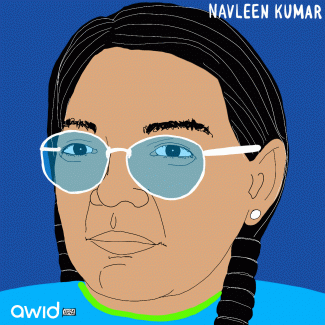
"She was not a person. She was a power."
- a fellow activist remembering Navleen Kumar
Navleen Kumar was a fervent land rights and social justice activist in India.
With commitment and integrity, she worked for more than a decade to protect and restore the lands of Indigenous people (adivasi) in Thane district, an area taken away by property and land developers using such means as coercion and intimidation. She fought this injustice and crime through legal interventions at different courts, realizing that manipulation of land records was a recurrent feature in most cases of land acquisition. In one of the cases, that of the Wartha (a tribal family), Navleen found out that the family had been cheated with the complicity of government officials.
Through her work, she helped restore the land back to the Wartha family and continued to pursue other cases of adivasi land transfers.
“Her paper on the impact of land alienation on adivasi women and children traces the history and complexities of tribal alienation from the 1970s, when middle class families began to move to the extended suburbs of Mumbai as the real estate value in the city spiralled.
Housing complexes mushroomed in these suburbs, and the illiterate tribals paid the price for this. Prime land near the railway lines fetched a high price and builders swooped down on this belt like vultures, to grab land from tribals and other local residents by illegal means.” -Jaya Menon, Justice and Peace Commission
During the course of her activism, Navleen received numerous threats and survived several attempts on her life. Despite these, she continued working on what was not only important to her but contributed to changing the lives and realities of many she supported in the struggle for social justice.
Navleen was stabbed to death on 19 June 2002 in her apartment building. Two local gangsters were arrested for her murder.
Twitter Test
@shalinikonanur sharing a comment by her colleague debbie @salco "we can talk about shattering the glass ceiling, but we have to talk about who are sweeping those broken glasses?" challenging the #G7 to truly see who's vulnerable domestically & globally #W7Canada@kramdas@AWIDpic.twitter.com/1rs0SpLYHp
Can I contact someone if I have questions or concerns?
If you have any questions or concerns, please contact us via the form here, indicating “WITM Survey” as the title of your message. You can also write to us at witm@awid.org.
Gopika es una activista y organizadora de campañas feminista de la India que se desenvuelve en el ámbito de la justicia de género y los derechos humanos. Su experiencia se asienta en el trabajo con mujeres y juventudes diversas en temáticas que incluyen el acceso a la justicia, la violencia sexual y de género, género y sexualidad, la dotación de recursos para el activismo feminista y los derechos laborales. Gopika ha desempeñado funciones de asesoramiento en financiamiento para los movimientos feministas, entre otras entidades, en FRIDA | Fondo de Jóvenes Feministas y Global Resilience Fund (Fondo Global para la Resiliencia) y, anteriormente, estuvo a cargo del programa de AWID Recursos para los Movimientos Feministas. Es una apasionada de la intersección entre el activismo feminista y la práctica creativa, y fue editora y jefa de Prácticas Equitativas para ‘Bystander Anthology’ del grupo de narrativa gráfica de Asia meridional, Kadak Collective. Recientemente, ha descubierto un profundo amor por la escalada al aire libre y sigue aprendiendo y creciendo en este recorrido. Gopika reside en Bangalore (India).
Lo personal es político, y la apasionada y valiente Nadyn Jouny personificó este mantra feminista. Nadyn experimentó de primera mano el dolor de la violencia estructural de los sistemas legales que despojan a las mujeres de sus derechos.
Cuando Nadyn decidió solicitar el divorcio, los tribunales religiosos chiítas, bajo las Leyes de Estatuto Personal Libanesas, le negaron la custodia de su joven hijo Karam. Nadyn, como tantas otras mujeres del Líbano y de otros países, se vio atrapada entre el dolor imposible de dejar una relación no deseada y abusiva y de perder a la vez los derechos sobre su hijo. Sin embargo, Nadyn se defendió, y lo habría de hacerlo hasta el último día.
Nadyn utilizó su habilidad con los medios de comunicación para convertirse en una voz franca a favor de las mujeres que luchan contra la discriminación en la legislación familiar, en el Líbano y a nivel internacional. Nadyn cofundó el grupo autofinanciado "Protecting Lebanese Women" [Protegiendo a las Mujeres Libanesas] (PLW, por sus siglas en inglés) y se unió a muchas otras madres libanesas que se enfrentaban a problemas similares de custodia. Juntas, trabajaron para crear conciencia sobre las injusticias extremas a las que se enfrentaban, a nivel nacional, protestaron ante los tribunales religiosos por sus derechos y, a nivel internacional, llamaron la atención de los medios de comunicación.
Nadyn también trabajó con ABAAD - Resource Center for Gender Equality [Centro de Recursos para la Igualdad de Género], otra organización por los derechos de las mujeres en el Líbano, para realizar campañas en favor de los derechos de las mujeres, la igualdad en la legislación familiar y relativa a las custodias y contra los matrimonios forzados y precoces.
Para muchxs de sus colegas, Nadyn llegó a "simbolizar la lucha de una madre libanesa contra la supresión y la misoginia de todo tipo" (en inglés), al utilizar "su experiencia personal y trayectoria individual de empoderamiento, dio a otras mujeres esperanza para que ellas también pudieran ser un catalizador para el cambio positivo" - ABAAD - Centro de Recursos para la Igualdad entre los Géneros, Líbano.
El 6 de octubre de 2019, Nadyn murió trágicamente en un accidente de automóvil cuando se dirigía a protestar por los injustos aumentos de impuestos en un país que ya se enfrentaba a una espiral de crisis financiera. Nadyn Jouny tenía solo 29 años en el momento de su muerte.