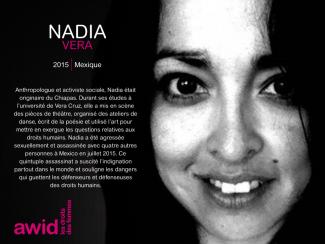
Nadia Vera
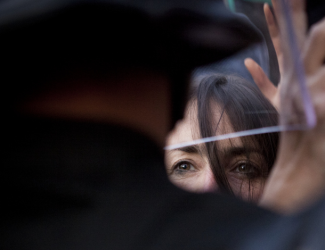
WHRDs are self-identified women and lesbian, bisexual, transgender, queer and intersex (LBTQI) people and others who defend rights and are subject to gender-specific risks and threats due to their human rights work and/or as a direct consequence of their gender identity or sexual orientation.
WHRDs are subject to systematic violence and discrimination due to their identities and unyielding struggles for rights, equality and justice.
The WHRD Program collaborates with international and regional partners as well as the AWID membership to raise awareness about these risks and threats, advocate for feminist and holistic measures of protection and safety, and actively promote a culture of self-care and collective well being in our movements.
WHRDs are exposed to the same types of risks that all other defenders who defend human rights, communities, and the environment face. However, they are also exposed to gender-based violence and gender-specific risks because they challenge existing gender norms within their communities and societies.
We work collaboratively with international and regional networks and our membership
We aim to contribute to a safer world for WHRDs, their families and communities. We believe that action for rights and justice should not put WHRDs at risk; it should be appreciated and celebrated.
Promoting collaboration and coordination among human rights and women’s rights organizations at the international level to strengthen responses concerning safety and wellbeing of WHRDs.
Supporting regional networks of WHRDs and their organizations, such as the Mesoamerican Initiative for WHRDs and the WHRD Middle East and North Africa Coalition, in promoting and strengthening collective action for protection - emphasizing the establishment of solidarity and protection networks, the promotion of self-care, and advocacy and mobilization for the safety of WHRDs;
Increasing the visibility and recognition of WHRDs and their struggles, as well as the risks that they encounter by documenting the attacks that they face, and researching, producing, and disseminating information on their struggles, strategies, and challenges:
Mobilizing urgent responses of international solidarity for WHRDs at risk through our international and regional networks, and our active membership.
New
As an online participant, you can facilitate activities, connect and converse with others, and experience first-hand the creativity, art and celebration of the AWID Forum. Participants connecting online will enjoy a rich and diverse program, from workshops and discussions to healing activities and musical performances. Some activities will focus on connection among online participants, and others will be truly hybrid, focusing on connection and interaction among online participants and those in Bangkok.
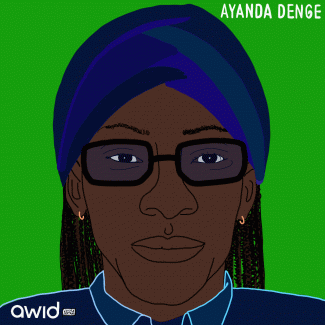
«Soy una maravilla... ¡Por lo tanto, he nacido de una madre! Cuando comienzo a balbucear, Mi vida ha sido como ninguna otra...» - Ayanda Denge (lee el poema completo más abajo)
Como comprometida y ferviente activista por la justicia social, luchó por los derechos de lxs trabajadorxs sexuales, de las personas trans y de quienes viven con VIH y SIDA. Era también conferencista motivacional para concientizar sobre el cáncer, y hacía campaña por viviendas sociales económicas, en especial, para la gente pobre y de clase trabajadora. Ayanda se erguía, alta como una montaña, contra los distintos y, a menudo, abusivos rostros de la discriminación.
«Ser transgénero no es una dosis doble, sino una dosis triple de estigmatización y discriminación. Te discriminan por tu identidad sexual, te discriminan por tu trabajo, y te discriminan por tu estatus de VIH.» - Ayanda Denge, 2016
Ayanda presidía la organización Sex Workers Education and Advocacy Taskforce (SWEAT) [ Grupo de Trabajo para la Educación y la Defensa de Trabajadorxs Sexuales], y trabajaba también como coordinadora de promoción comunitaria en Sisonke, un movimiento nacional de trabajadorxs sexuales de Sudáfrica.
«Desde nosotrxs, desde nuestra sede regional, hasta SWEAT, de la que integro la Junta Directiva, o hasta Sisonke, un movimiento de trabajadorxs sexuales de Ciudad del Cabo, todxs nos amalgamamos, tenemos un solo grito y es un grito que ha sido reconocido internacionalmente por lxs trabajadorxs sexuales internacionales. Queremos la descriminalización del trabajo sexual.» - Ayanda Denge, 2016
Vivía en la Ahmed Kathrada House, que estaba siendo ocupada por la campaña Reclaim the City [Recuperar la Ciudad] en favor de las viviendas sociales. En 2018, Ayanda fue elegida líder de la casa. El 24 de marzo de 2019 fue apuñalada en su habitación. El año anterior, otrx residente había sido asesinadx.
Reclaim the City señala una conexión entre la seguridad de lxs residentes de la casa, el corte del servicio de electricidad por parte del gobierno provincial, y el derecho humano al agua:
«No podemos separar la seguridad de las mujeres y de las personas LGBTQI que están viviendo en la casa ocupada de la negativa a reestablecer los servicios de electricidad y agua en la Ahmed Kathrada House por parte del gobierno de la Provincia del Cabo Occidental.
De noche, la casa está completamente oscura. Necesitamos luces para protegernos unxs a otrxs. Es como si la Provincia quisiera castigar a la gente pobre y de clase trabajadora, cuyo único crimen es necesitar un hogar. Si bien pueden estar en desacuerdo con nuestros motivos por ocuparla, deberían avergonzarse de priorizar la política en detrimento de la seguridad y la dignidad de lxs residentes de esta ciudad.
Descansa en paz, camarada Ayanda Denge. Te recordaremos mientras mantenemos viva la llama de la lucha por una vivienda decente y bien ubicada.»
Poema de Ayanda:
Soy una maravilla…
¡Por lo tanto, nací de una madre!
Cuando comienzo a balbucear,
Mi vida ha sido como ninguna otra.
Nacida en el dolor
Nutrida por la lluvia
Para mí ganar
Era vivir en un desagüe.
Mientras se me cae una lágrima
Me pongo de pie y empuño mi lanza.
Las voces hacen eco, no temas
Habrá desafíos dentro del año,
Desafíos de daño se ciernen sobre mí;
La comunidad aplaude porque asume que he ganado mi carrera;
Pero en realidad mi trabajo avanza a paso de tortuga;
De rodillas me inclino y pido gracia.
Porque el Señor
Es mi espada
Para recordar a la humanidad
Que Él brinda cordura.
¿Por qué Señor soy esta maravilla?
El Señor me responde con la lluvia y el trueno,
Por cuestionar a mi padre
Que tiene en el libro de los corderos
Un nombre llamado Ayanda.
Desde las calles mi vida nunca fue dulce
La gente que tenía que encontrar;
A veces yo nunca saludaba,
Aun a pesar de que tenía que comer;
Optaba por inclinarme
En lugar de sentarme
Escucha el poema en la voz de Ayanda
«Porque mi vida representa la de una flor de loto, ya que de las turbias y turbulentas aguas florecí para ser hermosa y fuerte...» - Ayanda Denge, mira y escucha
«Ayanda, quiero decirte que todavía eres una sobreviviente, en nuestros corazones y nuestras mentes. Te has ido, pero estás en todas partes, porque eres amor. Qué hermoso es ser amadx, y dar amor. Y Ayanda, ese es el regalo que nos has dado. Gracias por todo el amor, verdaderamente te necesitábamos. De ahora en adelante, te prometo que todxs nos comprometeremos a continuar la lucha a la que tanta energía y tiempo dedicaste. Y nos comprometeremos a buscar justicia por este horrible final de tu vida.» - transcripción de un mensaje en un tributo de despedida a Ayanda
«Ayanda era una activista por naturaleza. Sabía cuáles eran sus derechos y no le importaba pelear por los derechos de otrxs. Para mí, no fue una sorpresa que se involucrara en muchas organizaciones, y era sabido que era una persona de la gente. Ella representaba no solo los derechos de las personas LGBTI, representaba los derechos de todxs.» - hermana de Ayanda

Feminists have long asserted that the personal is political. Crear, Resister, Transform Festival created spaces for feminists to discuss issues around body, gender and sexualities, and explored the interconnections of how these issues are both deeply embodied experiences, and simultaneously a terrain where rights are constantly disputed and at risk in society.
The power of feminist movements lie in how we organise and take coordinated action, not only amongst our own communities and movements, but with allied social justice causes and groups. This space provided opportunities for movements to share and strengthen organizing and tactical strategies with each other.
The COVID-19 global health pandemic has made the failures of neo-liberal capitalism even more apparent than ever before, exposed the cracks in our systems, and highlighted the need and opportunities to build new realities. A feminist economic and social recovery requires all of us to make it together. This journal edition in partnership with Kohl: a Journal for Body and Gender Research, will explore feminist solutions, proposals and realities for transforming our current world, our bodies and our sexualities.
Explore the articles online or
Download PDF

Search for funders based on their requirements for groups to be registered.
Como movimientos feministas y sindicales, juntxs en solidaridad, articulamos los siguientes puntos como una visión colectiva de las economías de los cuidados con los derechos de lxs trabajadorxs domésticxs como eje central.
El trabajo doméstico y de cuidado estuvo en la primera línea de fuego durante y después de la pandemia de COVID-19, al proporcionar los medios para sobrellevar las múltiples crisis globales que se intersectan. El Banco Mundial, el Fondo Monetario Internacional y otras instituciones multilaterales también reconocen la importancia del trabajo doméstico y de cuidados para el sostenimiento de la economía. Sin embargo, vemos que esta atención adopta un enfoque utilitarista (es decir, el trabajo de cuidados contribuye a sostener a la economía "productiva") centrado en el lucro, sin reconocer los cuidados como un derecho humano y un bien público, ni prestar atención a lxs trabajadorxs que realizan la mayor parte de este trabajo.

We welcome applications across the full range of thematic areas and intersections important to feminist and gender justice movements. In the application form, you will be able to mark more than one theme that fits your activity.
by Chinelo Onwualu
On September 2nd, 2021, the amazing feminist and social justice activists of AWID’s Crear | Résister | Transform festival came together not only to share resistance strategies, co-create, and transform the world, but also to talk dirty on Twitter.
La construction d’économies féministes a pour objet de créer un monde où l’air est respirable et l’eau buvable, où le travail est significatif et où nous bénéficions de soins pour nos communautés et nous-mêmes, où chacun-e peut jouir de son autonomie économique, sexuelle et politique.
Dans ce monde où nous vivons aujourd’hui, l’économie continue de s’appuyer sur le travail de soins non rémunéré et sous-évalué des femmes au service des autres. La poursuite de la “croissance” ne fait que développer l’extractivisme--un modèle de développement fondé sur l’extraction et l’exploitation massives des ressources naturelles, qui continue de détruire les populations et la planète tandis qu’elle concentre les richesses entre les mains des élites mondiales. Parallèlement, l’accès aux soins de santé, l’éducation, les salaires décents et la sécurité sociale sont réservés à une poignée de privilégiés. Ce modèle économique repose sur la suprématie blanche, le colonialisme et le patriarcat.
En adoptant la seule « approche pour l’autonomisation économiques des femmes», on ne fait guère qu’intégrer davantage les femmes dans ce système. Cela peut constituer un moyen temporaire de survie. Nous devons semer les graines d’un nouveau monde possible pendant que nous abattons les murs du monde existant.
Nous croyons en la capacité des mouvements féministes à créer de vastes alliances entre mouvements qui leur permettent d’oeuvrer pour le changement. En multipliant les propositions et visions féministes, nous cherchons à construire les nouveaux paradigmes d’économies plus justes.
Notre approche doit être interconnectée et intersectionnelle, car nous ne pourrons jouir d’aucune autonomie sexuelle et corporelle tant que chacun·e d’entre nous ne jouira pas de ses droits économique ni d’une autonomie financière. Nous voulons travailler avec celles et ceux qui s’opposent à la montée mondiale de la droite conservatrice et des fondamentalismes religieux et la contrent, car tant que nous n’aurons pas ébranlé les fondements même du système actuel, aucune économie ne saura être juste.
Promouvoir des programmes féministes : Nous nous opposons au pouvoir des entreprises et à l’impunité concernant les violations des droits humains en travaillant avec des allié-e-s afin de nous assurer que les perspectives féministes, relatives aux droit des femmes et à la justice de genre sont intégrées dans les espaces politiques. A titre d’exemple, vous pouvez vous informer sur le futur instrument juridiquement contraignant concernant “les sociétés transnationales et autres entreprises en matière de droits humains” au Conseil des droits humains des Nations Unies.
Mobiliser des actions solidaires : Nous oeuvrons à renforcer les liens qui existent entre les mouvements féministes et les mouvements en faveur de la justice fiscale, y compris à réclamer les ressources publiques perdues à cause de flux financiers illicites afin de garantir une justice de genre et sociale.
Enrichir nos connaissances : Nous fournissons aux Défenseuses des droits humains (WHRD) des informations stratégiques qui s’avèrent vitales dans la lutte contre le pouvoir des entreprises et l’extractivisme. Nous contribuerons à développer une base de connaissances autour du financement local et mondial et les mécanismes d’investissements qui alimentent l’extractivisme.
Créer et élargir les alternatives : Nous participons et mobilisons nos membres et nos mouvements à envisager des économies féministes et à partager nos savoirs, nos pratiques et nos programmes féministes en faveur d’une justice économique.
« La révolution corporative s’effondrera si nous refusons d’acheter ce qu’ils nous vendent: leurs idées, leurs versions de l’histoire, leurs guerres, leurs armes, leur notion d’inéluctabilité. Un autre monde est non seulement possible, mais il est aussi déjà en bonne voie. Quand tout est tranquille, je peux l’entendre respirer. » Arundhati Roy, War Talk.
Participants will come together in Bangkok, Thailand. We can’t wait!
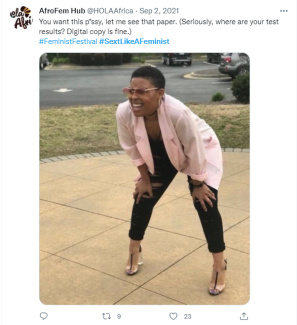
Si quieres esta concha, déjame ver ese papel (En serio, ¿dónde está el resultado de tu prueba? En versión digital está bien)
Feminist and women’s rights organizations don’t just rely on institutional funding, we resource ourselves. Our organizing is powered by passion, political commitment, solidarity and collective care.
These resources are self- generated and autonomous, and often invisible in our budgets, but they are the backbone of our organizing.
Tributo: Recordamos a lxs activistas feministas que cambiaron nuestro mundo
En esta galería en línea, rendimos homenaje a más de 450 valientes feministas y activistas de todas las regiones del mundo y 88 países que ya no están con nosotrxs.
Lxs traemos a todxs a nuestra memoria colectiva y llevamos su legado de lucha como nuestra antorcha en los movimientos feministas y por los derechos de las mujeres.
Usa los filtros para refinar tu búsqueda
ใหม่
ผู้เข้าร่วมประชุมจะได้เข้าร่วมตามสถานที่ต่างๆนอกเพื้นที่ในการจัดงานที่กรุงเทพฯ และตามส่วนต่างๆของ โลกในแต่ละวันของการประชุม สถานที่ประชุมที่ผู้เข้าร่วมจัดการเองทั้งหมดนั้นจะเชื่อมต่อกับสถานที่จัดงาน
จริงในกรุงเทพฯเช่นเดียวกับบุคคลที่เชื่อมต่อทางออนไลน์ ผู้เข้าร่วมในจุดศูนย์กลาง Hub นี้จะสามารถ ดำเนินรายการในหัวข้อกิจกรรมต่างๆ เข้าร่วมอภิปราย แลกเปลี่ยน และเพลิดเพลินไปกับโปรแกรม ที่หลากหลาย
ที่ตั้งจุดศูนย์กลาง Hub จะประกาศในปี 2567