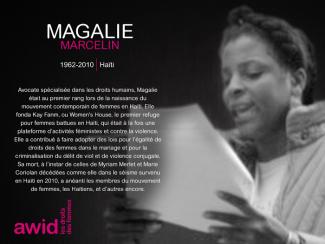
Magalie Marcelin
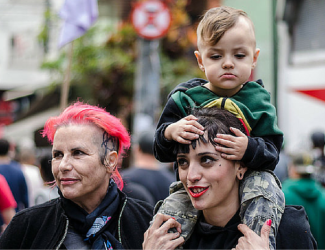
Over the past few years, a troubling new trend at the international human rights level is being observed, where discourses on ‘protecting the family’ are being employed to defend violations committed against family members, to bolster and justify impunity, and to restrict equal rights within and to family life.
The campaign to "Protect the Family" is driven by ultra-conservative efforts to impose "traditional" and patriarchal interpretations of the family, and to move rights out of the hands of family members and into the institution of ‘the family’.
Since 2014, a group of states have been operating as a bloc in human rights spaces under the name “Group of Friends of the Family”, and resolutions on “Protection of the Family” have been successfully passed every year since 2014.
This agenda has spread beyond the Human Rights Council. We have seen regressive language on “the family” being introduced at the Commission on the Status of Women, and attempts made to introduce it in negotiations on the Sustainable Development Goals.
AWID works with partners and allies to jointly resist “Protection of the Family” and other regressive agendas, and to uphold the universality of human rights.
In response to the increased influence of regressive actors in human rights spaces, AWID joined allies to form the Observatory on the Universality of Rights (OURs). OURs is a collaborative project that monitors, analyzes, and shares information on anti-rights initiatives like “Protection of the Family”.
Rights at Risk, the first OURs report, charts a map of the actors making up the global anti-rights lobby, identifies their key discourses and strategies, and the effect they are having on our human rights.
The report outlines “Protection of the Family” as an agenda that has fostered collaboration across a broad range of regressive actors at the UN. It describes it as: “a strategic framework that houses “multiple patriarchal and anti-rights positions, where the framework, in turn, aims to justify and institutionalize these positions.”
Día 3
Launch of the Intergovernmental preparatory process for the 3rd Financing for Development Conference, October 2014
.
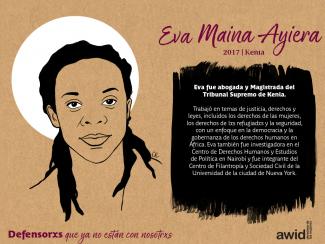
Ven a conocer a Aura Roig, activista feminista visionaria, antropologa y directora-fundadora de la cooperativa Metzineres.
Dedicó las últimas dos décadas a la investigación, el diseño y la implementación de políticas con perspectivas de reducción de daños, derechos humanos y feminismo interseccional.
Después de experimentar y aprender de comunidades que usan drogas a través del mundo, volvió a Barcelona y creó la Xarxa de Dones que Usen Drogues (la Red de Mujeres que Usan Drogas, XADUD). XADUD era un espacio de apoyo mutuo y de solidaridad con la lucha por los derechos de los grupos marginalizados que, más tarde, se convirtió en la cooperativa Metzineres.
Actualmente, Aura está trabajando para expandir el modelo Metzineres y brindar apoyo a grupos más grandes, al mismo tiempo que documenta ampliamente su prolífico viaje y aprendizaje.

¿Cuánto sabes sobre financiamiento feminista? 📊 Pon a prueba tu conocimiento sobre la movilización de recursos para el financiamiento de la organización feminista, respondiendo al cuestionario "¿Dónde está el dinero?":
Completa el quiz en línea Descarga la versión para imprimir
Queremos expresar nuestro más sincero agradecimiento a todos los diversos grupos, colectivos y organizaciones feministas de todo el mundo que respondieron a la encuesta WITM. Su participación y sus puntos de vista han sido inestimables y enriquecerán enormemente nuestra comprensión colectiva de los recursos feministas a nivel mundial.
Sesiones adicionales para redactar el Documento Final de Adís Abeba
Para saber más sobre este proceso, puedes consultar la CSO Hitchhiker’s Guide (en inglés).
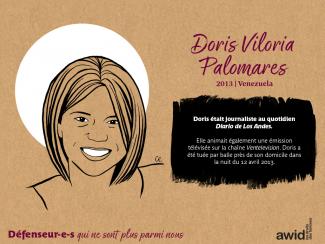
Si vous êtes de passage à Sao Paulo, au Brésil, visitez l'Occupation 9 de Julho et prenez un repas collaboratif. Vous pouvez aussi acheter leurs produits dans leur boutique en ligne depuis l'étranger.
Visitez la boutique en ligne de l'Association des Femmes Afro-Descendantes du Cauca du Nord où vous pouvez trouver de superbes produits faits à la main.
Il existe plusieurs façons de soutenir Metzineres : vous pouvez faire un don financier, offrir du matériel et des services, proposer une formation, un atelier ou une activité (pour plus d'informations, cliquez ici).
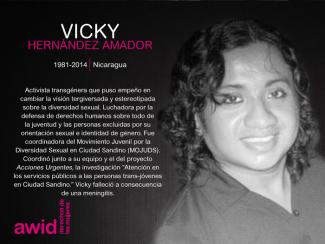

Pour rendre visible la diversité des formes de financement de l’organisation des mouvements féministes.
‘A geopolitical Analysis of Financing for Development’ by Regions Refocus 2015 and Third World Network (TWN) with DAWN.
The Zero Draft Language Map, by Regions Refocus
‘Addis Ababa financing conference: Will the means undermine the goals?‘ by RightingFinance
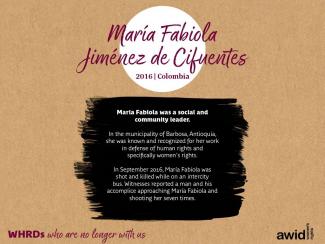

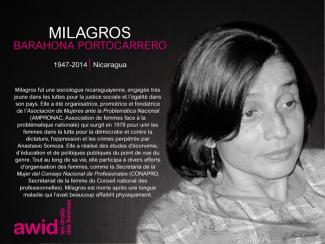
作為對AWID論壇各方面可訪問性承諾的一部分,我們接受那些無法提交書面申請的個人/組織/團體提交自己的音頻或視頻等。
如果您選擇以音頻/視頻格式提交提案,請按照相同的順序回答活動申請表格中詳細的問題。
若您要提交音頻/視頻文件,請與我們聯繫,選擇“論壇活動徵集”作為電子郵件的主題。
.
We are living in a world where the destruction of Nature fuels our current global economy. |
Even in times of climate crisis, governments continue to encourage large-scale agriculture industries to expand. These activities poison the land, threaten biodiversity, and destroy local food production and livelihoods. Meanwhile, while women produce the majority of our food in the world, they own almost none of the land. |
|
What if we perceived land and Nature not as private property to exploit, but as a whole to live in, learn from, and harmoniously coexist with? What if we repaired our relationships with the land and embraced more sustainable alternatives that nurture both the planet and its communities? Nous Sommes la Solution (We Are the Solution, NSS) is one of many women-led movements striving to do this. This is their story. |
|