Left
Half
Left

Special Focus

AWID is an international, feminist, membership organisation committed to achieving gender equality, sustainable development and women’s human rights

Memory as Resistance: A Tribute to WHRDs no longer with us

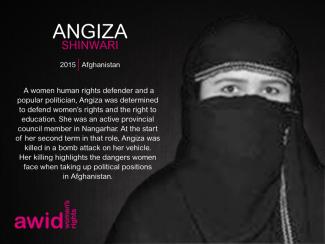
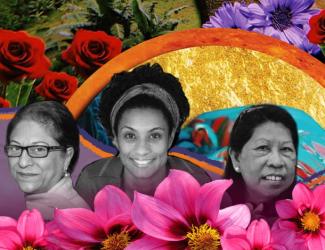
AWID’s Tribute is an art exhibition honouring feminists, women’s rights and social justice activists from around the world who are no longer with us. 


In 2020, we are taking a turn

This year’s tribute tells stories and shares narratives about those who co-created feminist realities, have offered visions of alternatives to systems and actors that oppress us, and have proposed new ways of organising, mobilising, fighting, working, living, and learning.

49 new portraits of feminists and Women Human Rights Defenders (WHRDs) are added to the gallery. While many of those we honour have passed away due to old age or illness, too many have been killed as a result of their work and who they are.

This increasing violence (by states, corporations, organized crime, unknown gunmen...) is not only aimed at individual activists but at our joint work and feminist realities.

The stories of activists we honour keep their legacy alive and carry their inspiration forward into our movements’ future work.

Visit the online exhibit

The portraits of the 2020 edition are designed by award winning illustrator and animator, Louisa Bertman

AWID would like to thank the families and organizations who shared their personal stories and contributed to this memorial. We join them in continuing the remarkable work of these activists and WHRDs and forging efforts to ensure justice is achieved in cases that remain in impunity.

“They tried to bury us. They didn’t know we were seeds.” - Mexican Proverb 


The Tribute was first launched in 2012

It took shape with a physical exhibit of portraits and biographies of feminists and activists who passed away at AWID’s 12th International Forum, in Turkey. It now lives as an online gallery, updated every year.

To date, 467 feminists and WHRDs are featured.

Visit the online exhibit

Related Content

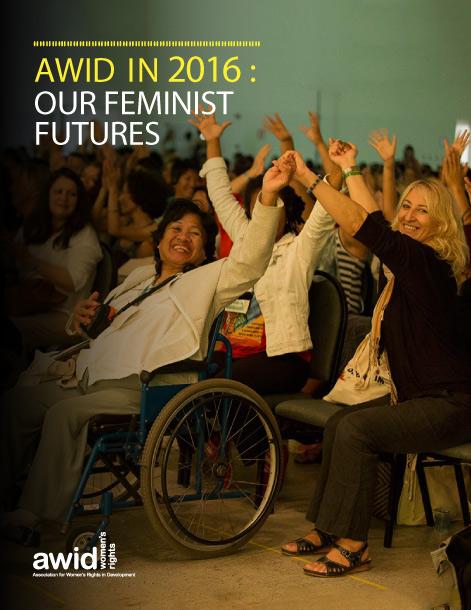
AWID in 2016: Co-Creating Feminist Futures

AWID is pleased to share our 2016 Annual Report.

2016 was an incredible year for AWID, we convened the 13th International AWID Forum in Bahia, Brazil, a space for strategizing and alliance building with feminists and other justice movements, which was attended by over 1800 participants from 120 countries and territories across the globe.

We know that women’s rights and feminist movements are key actors in creating sustainable transformative change. Within our movements, organizing, resisting and responding to the challenging context is sharpening, and in our increasingly connected world, the potential for collective action across diverse movements has dramatically grown.

This is the crucial work that AWID seeks to amplify and support every day.


What we achieved in 2016

We expanded solidarity and joint action across diverse movements

A highlight of 2016 was our ground-breaking 13th International Forum with the theme: “Feminist Futures: Building Collective Power for Rights and Justice”, where we harnessed the thinking and energy of nearly 500 partners, presenters, panelists, moderators, artivists, writers, facilitators, IT innovators, and performers, many of them leaders in their movements. We also supported the convening of the first and historical Black Feminisms Forum (BFF) organised by a working group of Black Feminists from across the world.

We strengthened knowledge of issues and strategies

We contributed to collective advocacy

AWID, in partnership with other feminist and women’s rights organisations, engaged in advocacy and dialogue to explore better solutions for women’s rights agendas including our work with the Count Me In! consortium .

We increased the visibility of movements

The experiences of women with disabilities, Black and Afro-descendant women, sex workers, Indigenous women, trans and intersex people, domestic workers and how their lives are impacted by multiple oppressions and violence were placed front and center of the Forum process.

We also launched the 2016 WHRD Tribute to commemorate defenders who are no longer with us, during the 16 Days of activism, and thanks to the contributions from our members,

We drove attention to groups and issues that do not usually receive adequate mainstream media coverage through our partnership with The Guardian and Mama Cash.


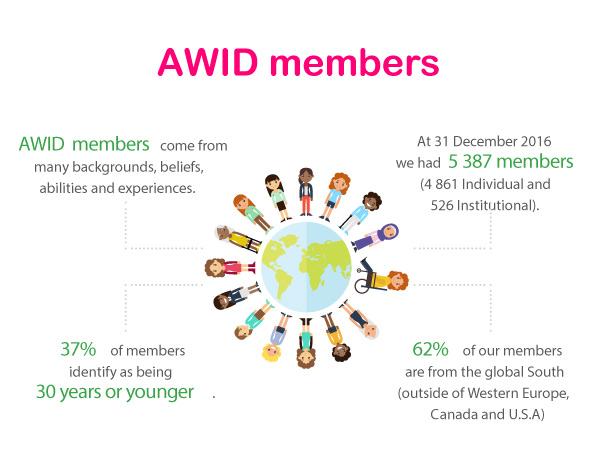
Our members


Доступен ли опрос для людей с ограниченными возможностями?

Да, опрос доступен людям с различными нарушениями слуха, зрения, движений и когнитивных способностей.

Dilma Ferreira Silva

Dilma Ferreira Silva fue una destacada activista por los derechos de las comunidades del Amazonas y luchó durante décadas por los derechos de las personas afectadas por las represas.

Ella misma fue una de las 32.000 personas desplazadas por el Tucuruí, una mega central hidroeléctrica, construida en Brasil durante la dictadura militar de 1964-1985.

En 2005 Dilma fue invitada a unirse al Movimiento de los Pueblos Afectados por las Represas en Brasil (MAB), y en 2006 formó el colectivo de mujeres, y eventualmente se convirtió en coordinadora regional del movimiento.

Al hablar de su activismo, sus colegas comentaban:

"Se destacó muy rápido porque siempre fue muy intrépida en la lucha".

Dilma vivió en el asentamiento rural de Salvador Allende, a 50 kilómetros de Tucuruí, y dedicó toda su vida a proteger a las comunidades y las tierras afectadas por la construcción de mega proyectos. Dilma se preocupaba especialmente por el impacto de género que esos proyectos podrían causar, y defendía los derechos de las mujeres.

En una reunión nacional del MAB en 2011, Dilma, dirigiéndose a las mujeres afectadas por las represas, dijo:

"Somos las verdaderas Marías, guerreras, luchadoras que están allí, enfrentando el desafío de la lucha diaria".

En los años siguientes, Dilma organizó grupos de base del MAB y trabajó con la comunidad para formar cooperativas agrícolas que condujeron a una mejor redistribución de los alimentos entre la comunidad. Conjuntamente, mejoraron la comercialización de la pesca y desarrollaron un proyecto de cisternas para el agua potable. También  fue defensora de la comunidad de agricultores cuyas tierras eran codiciadas por los "grileiros" (acaparadores de tierras).

El 22 de marzo de 2019, a la edad de 48 años, Dilma, su marido y su amigo fueron brutalmente asesinados. Los tres asesinatos fueron parte de una ola de violencia en la Amazonia contra el Movimento dos Trabalhadores Sem Terra (traducido como 'Movimiento de los Trabajadores Sin Tierra') y lxs activistas medioambientales e indígenas.

Snippet FEA Wage Parity (FR)

Illustration de deux personnes à la peau blanche portant des lunettes, à gauche en arrière-plan se trouve un mand et à droite au premier plan se trouve une femme. Le fond est turquoise.

LA PARITÉ SALARIALE

2021: Feminist Power in Action

In 2021, AWID, along with many other organizations, was coming to grips with the implications of the on-going global pandemic for how we work and our role in this particular time. The year taught us three critical lessons about navigating this moment as a global feminist movement-support organization.

Download the full 2021 Annual review


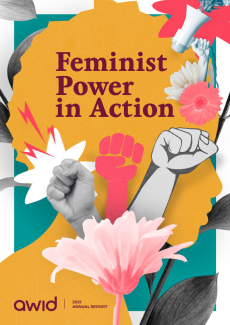
English language cover for the 2021 AWID Annual Report. It shows a collage of protests fists raised, along with flowers and a silhouette of a person with short hair in the back.

Through dialogue and exchanges critical to their work, AWID connected thousands to feminists from around the world.

Our experience in 2021 reaffirmed the importance of building and sustaining a global feminist community, and AWID’s core mission to support feminist movements as a whole. We believe that at this moment, a strong community bound by a shared vision and collective care is the foundation of all social change and transformation.

Download the full 2021 Annual review

Reason to join 2

Trouvez et créez des connexions. L’AWID compte plus de 9 000 membres, qui s’efforcent tou·te·s de résoudre des questions complémentaires et interconnectées. Cette diversité favorise la pérennité des mouvements et acteures féministes.

Quanto tempo demora a preencher o inquérito?

O tempo estimado para preencher o inquérito é 30 minutos.

Molara Ogundipe

« Mais quand le maître
s’est-il laissé éloigner du pouvoir?
Quand un système a-t-il jamais été brisé
par l’acceptation?
Quand le CHEF te remettra-t-il le pouvoir avec amour?
À Jobourg, à Cancun, à l’ONU? », Molara Ogundipe.

 Dans un entretien à la Foire internationale du livre du Ghana en 2010, Molara Ogundipe s’est présentée avec ces mots : « ... Je suis une Nigériane. J’ai vécu absolument partout, sauf en Union soviétique et en Chine ».

À travers les continents et les pays, la professeure Ogundipe a enseigné la littérature comparée, l’écriture, le genre et les études anglaises, se servant de la littérature comme outil de transformation sociale, de même que pour revisiter les relations de genre. 

Penseuse, écrivaine, rédactrice, critique sociale, poète et activiste féministe, Molara Ogundipe est parvenue à allier le travail théorique et l’action créative et la créativité. Elle est considérée comme l’une des principales voix critiques du(des) féminisme(s) africain(s), des études de genre et de la théorie littéraire.

Molara est connue pour avoir créé le concept de « stiwanisme », à partir de l’acronyme STIWA, pour Social Transformations in Africa Including Women (transformations sociales en Afrique incluant les femmes), reconnaissant la nécessité de « s’éloigner de la définition du ou des féminismes en lien avec l’Euro-Amérique ou avec toute autre région, et de la déclamation de loyautés ou déloyautés ».

Avec son ouvrage fondateur « Re-creating Ourselves » de 1994 (publié sous le nom de Molara Ogundipe-Leslie), Molara Ogundipe a laissé derrière elle un immense éventail de connaissances qui ont décolonisé le discours féministe et « recentré les femmes africaines sur leurs récits entiers et complexes... menées par une exploration de la libération économique, politique et sociale des femmes africaines et la restauration de la capacité d’agir féminine dans plusieurs cultures en Afrique ».

À propos des difficultés rencontrées en tant que jeune universitaire :

« Lorsque j’ai commencé à parler et à écrire sur le féminisme à la fin des années soixante et soixante-dix, on me considérait comme une bonne et admirable fille qui s’était égarée, une femme dont l’esprit avait été gâté par trop d’apprentissages ».

Molara Ogundipe s’est démarquée grâce à son leadership alliant activisme et université. En 1977, elle comptait parmi les fondatrices de l’AAWORD (Association of African Women for Research and Development). En 1982, elle fonde WIN (Women in Nigeria) pour défendre des « droits économiques, sociaux et politiques » entiers pour les Nigérianes. Elle crée et dirige ensuite la Foundation for International Education and Monitoring, et passe plusieurs années à oeuvrer au comité de rédaction de The Guardian.

Ayant grandi avec les Yoruba, leurs traditions, leur culture et leur langue, elle a un jour déclaré :

« Je pense que célébrer la vie, célébrer les personnes qui décèdent après une vie bien remplie est l’un des plus beaux aspects de la culture yoruba ». 

Le nom de fête « oiki » de Molara en yoruba était Ayike. Née le 27 décembre 1940, Molara est décédée à l’âge de 78 ans, le 18 juin 2019 à Ijebu Igbo, dans l’État d’Ogun au Nigeria.

Snippet FEA WE ARE LEGAL AND ALWAYS WERE (EN)

SPAIN

Sindicato OTRAS


WE ARE LEGAL AND

ALWAYS WERE

Ritu

Biography

Ritu is a feminist technologist who brings her experience in the non-profit sector, driven by a passion for utilizing innovative approaches to finding feminist technological solutions. Holding a Master's in Technology in Computer Applications from the Indian Institute of Technology, her role at AWID encompasses a diverse range of responsibilities. From overseeing digital security and server management to database administration, capacity building, technology evaluation, software implementation and cloud solutions, Ritu ensures that AWID's IT infrastructure is resilient and effective. Prior to joining AWID, she played a pivotal role in advancing technological initiatives in the Health Promotion and Environment sectors, fueled by her dedication to leveraging technology for social good.

Position
IT Manager
Add to stories
Off

Values - intersectionality

Intersectionality

We believe that for feminist movements to be transformative and strong we must continue to work across our similarities and differences. We also must interrogate power and privilege both within and outside our movements.

لا أشعر بالراحة لمشاركة اسمي او اسم مجموعتي، منظمتي و\ أو حركتي مع AWID, هل أستطيع مع ذلك تعبئة الاستطلاع؟

طبعاً! هذه الأسئلة اختيارية. نقدّر جداً حقكم بالسرية. الرجاء تعبئة الاستطلاع دون علاقة بقراركم/ن بمشاركة اسم المجموعة، المنظمة أو الحركة أو تفاصيل التواصل معكم/ن.

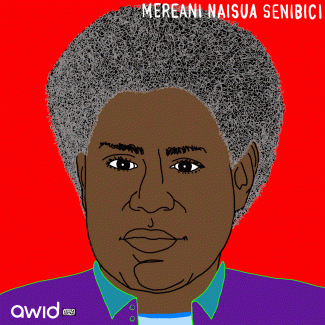
Mereani Naisua Senibici

Mereani Naisua Senibici, also called ‘Sua’, was a longstanding member of the Fiji Young Women’s Christian Association (YWCA) movement.

She worked with diverse groups of women in multi-racial, rural and urban settings and was committed to supporting and promoting women’s and young women’s rights.

In the Lautoka YWCA, she worked with women of Indian descent, and was  a leading figure in the sports development and participation of women and of trans athletes in Lautoka. 

“Sua is greatly loved by Fiji YWCA members for her dedication and long-time support towards all that the organisation endeavoured to do.” - Tupou Vere

Mereani was part of the House of Sarah (HoS), an initiative of the Association of Anglican Women (AAW), launched in 2009 and aimed at raising awareness of the issues around gender-based violence, as well as providing support to women who face violence. She started as a dedicated volunteer and offered support to women throughout the Pacific.

“A people’s person and an all-rounder in women's empowerment and movement work at community level. Rest in Peace, Sua.” - Tupou Vere

Snippet FEA Unio Otras Photo 2 (ES)

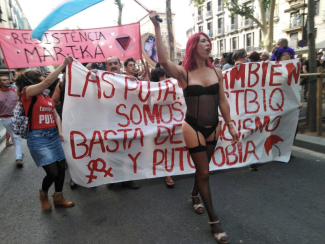
Foto de Sabrina Sánchez ondeando una bandera y encabezando una manifestación. Ella marcha en un conjunto de lencería y tacones. Hay personas con carteles detrás de ella.

Priscilla Hon

Biography

Priscilla posee prácticamente dos décadas de experiencia de trabajo en el sector sin fines de lucro con organizaciones por la justicia social abocadas a los derechos de las mujeres y las juventudes, la conservación, la consolidación de la paz y el desarrollo. Sus intereses se centran en establecer procesos y sistemas progresistas que ayuden a una organización a operar de acuerdo a sus valores y principios y a prosperar, así como en encontrar formas de ayudar a las organizaciones y los donantes a identificar y garantizar los recursos que necesitan para una buena labor. Priscilla se unió a AWID en 2018, como Gerente de Movilización de Recursos y, en julio de 2023, asumió el cargo de Directora de Operaciones y Alianzas para el Financiamiento.

Posee una Maestría en Política Internacional de la Escuela de Estudios Orientales y Africanos (SOAS), una pila cada vez más alta de libros para los que todavía intenta encontrar tiempo para leer e integra la Junta de Hodan Somali Community, una entidad benéfica radicada en Londres.

Position
Directora de Operaciones y Alianzas para el Financiamiento
Add to stories
Off

Membership why page page - to join as a member block

Afiliación paso a paso

  1. Lee y acepta las directrices sobre los Valores y la Comunidad de AWID.
  2. Completa el formulario de inscripción e indica tu contribución al menos a uno de los tipos de acción propuesta.
  3. Verifica tu casilla de correo donde recibirás un paquete de bienvenida digital con la confirmación de tu membresía.
  4. Completa tu compromiso de contribución según el(los) tipo(s) de acción que hayas escogido en el formulario de inscripción.

Могу ли я поделиться информацией об опросе с другими?

Да, пожалуйста! Мы просим распространить ссылку на опрос среди своих коллег по сети. Чем больше различных точек зрения мы соберем, тем более полным будет наше понимание финансового положения феминистских организаций.