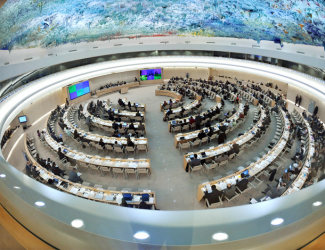
Jean-Marc Ferré | Flickr (CC BY-NC-ND 2.0)
A general view of participants at the 16th session of the Human Rights Council in Geneva, Switzerland.

Special Focus

AWID is an international, feminist, membership organisation committed to achieving gender equality, sustainable development and women’s human rights

Human Rights Council (HRC)

The Human Rights Council (HRC) is the key intergovernmental body within the United Nations system responsible for the promotion and protection of all human rights around the globe. It holds three regular sessions a year: in March, June and September. The Office of the UN High Commissioner for Human Rights (OHCHR) is the secretariat for the HRC.

The HRC works by:

  • Debating and passing resolutions on global human rights issues and human rights situations in particular countries

  • Examining complaints from victims of human rights violations or activist organizations on behalf of victims of human rights violations

  • Appointing independent experts (known as “Special Procedures”) to review human rights violations in specific countries and examine and further global human rights issues

  • Engaging in discussions with experts and governments on human rights issues

  • Assessing the human rights records of all UN Member States every four and a half years through the Universal Periodic Review

Learn more about the HRC


AWID works with feminist, progressive and human rights partners to share key knowledge, convene civil society dialogues and events, and influence negotiations and outcomes of the session.

With our partners, our work will:

◾️ Monitor, track and analyze anti-rights actors, discourses and strategies and their impact on resolutions

◾️ Raise awareness of the findings of the 2017 and 2021 OURs Trends Reports.

◾️Support the work of feminist UN experts in the face of backlash and pressure

◾️Advocate for state accountability
 
◾️ Work with feminist movements and civil society organizations to advance rights related to gender and sexuality.
 

Related Content

Membership why page - Paz Romero

Cette communauté est un endroit de connexions, où l’on comprend nos combats individuels comme faisant partie de luttes mondiales, et où l’on peut même parfois danser ! Il n’existe aucun endroit de la sorte en ligne, où être en contact avec des activistes de terrain, qui viennent du monde entier, et forger de la solidarité et de la sororité..- Paz Romero, Argentina

Body

Disintegration | Small Snippet AR

تَفَسُخ

وصلتني رسالة يوم الأربعاء
مصحوبة بعنوانٍ على ظهرها. 

اقرأ أكثر

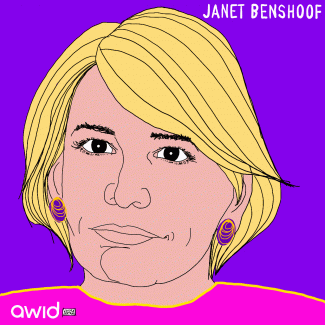
Janet Benshoof

Janet Benshoof was a human rights lawyer from the United States and an advocate for women’s equality, sexual and reproductive rights.

She campaigned to broaden access to contraceptives and abortions across the world, and battled anti-abortion rulings and in the American territory of Guam. She was arrested in 1990 for opposing her country’s most restrictive abortion law, but won an injunction at the local court in Guam that blocked the law and eventually won at the Ninth Circuit Court of Appeals, striking down the law for good.

“The women in Guam are in a very tragic situation. I never intend to be quiet about that.” - Janet Benshoof for People Magazine

Janet established landmark legal precedents including the US Food and Drug Administrations’ approval of emergency contraception, as well as the application of international law to ensure the rights of rape victims in the Iraqi High Tribunal’s prosecution of Saddam-era war crimes. 

Janet was President and founder of the Global Justice Center, as well as founder of the Center for Reproductive Rights, the world’s first international human rights organization focused on reproductive choice and equality. She served 15 years as Director of the American Civil Liberties Union’s Reproductive Rights Project, where she spearheaded litigation shaping US constitutional law on gender equality, free speech, and reproductive rights.

“Janet was known for her brilliant legal mind, her sharp sense of humor, and for her courage in the face of injustice.” - Anthony D. Romero

Named one of the “100 Most Influential Lawyers in America” by the National Law Journal, Janet was the recipient of numerous awards and honors. 

She was born in May 1947 and passed away in December 2017. 
Snippet - Intro CSW69_ES

#CongelarFascismos

#FreezeFascisms

A 30 años de la adopción de la Declaración y Plataforma de Acción de Beijing, existe una ola creciente de fascismos que ejercen gran poder e influencia en los espacios multilaterales, todo un retroceso para las conquistas de igualdad de género y la protección de los derechos humanos en el mundo entero.

En torno a la CSW69, estamos organizando, en conjunto y de forma horizontal, una serie de valientes espacios sobre el terreno y en línea a fin de compartir estrategias y forjar un poder feminista más allá de Beijing +30. Nuestra presencia colectiva trastorna las prácticas institucionales de exclusión en dichos espacios y, a la vez, apoya los procesos de organización de los movimientos en torno a las alternativas feministas a los sistemas de opresión.

Súmate a las conversaciones desde el 10 al 21 de marzo de 2025, mientras transformamos de forma colectiva la CSW69 en espacios para y sobre la resistencia y la solidaridad.

Body

Hospital | Content Snippet FR

Hôpital

« C’est peut-être le moment de repenser à ce à quoi peut ressembler une révolution. Peut-être qu’elle ne ressemble pas à une marche de personnes handicapées en colère dans les rues. Peut-être ressemble-t-elle plutôt à un monde qui s’immobilise parce que tous les corps qui le composent sont épuisés – parce qu’il faut donner la priorité aux soins avant qu’il ne soit trop tard. »- Johanna Hedva 

Les hôpitaux sont des institutions, des sites vivants du capitalisme, et ce qui se joue lorsque quelqu’un est censé se reposer est un microcosme du système lui-même.

Les institutions sont conçues pour nous séparer de nos systèmes de soins – nous nous retrouvons isolé.e.s dans des structures rigidement hiérarchisées, et nous avons souvent l’impression que les soins nous sont imposés plutôt que donnés ou pris dans le cadre d’une conversation. Les soins institutionnels, du fait de leur intégration dans la demande capitaliste, sont cloisonnés : une personne s’occupe de votre jambe et uniquement de votre jambe, une autre s’occupe de votre tension artérielle, etc. 

La photographe Mariam Mekiwi a dû subir une opération le mois dernier et documenté le processus. Ses portraits d’environnements aseptisés – néons blancs, rangées et rangées de structures répétitives – dans une palette de couleurs délavées reflètent un lieu vidé de toute vie et de tout mouvement. C’était l’une des façons pour Mariam de garder son esprit vivant. C’était une forme de protestation à l’intérieur des limites d’une institution avec laquelle elle devait s’engager.

Les photos forment le portrait de quelque chose d’incroyablement vulnérable, car regarder quelqu’un·e vivre l’effondrement de son propre corps est toujours un rappel sacré de notre propre fragilité. C’est aussi un rappel de la fragilité de ces systèmes de soins, qui peuvent nous être refusés pour de multiples raisons – allant du manque d’argent au fait de ne pas être dans un corps considéré comme suffisamment précieux, un corps peut-être trop féminin, trop homosexuel ou trop brun.  

Des soins vécus comme désincarnés et solitaires, susceptibles d’être révoqués à tout moment, ne nous aident pas à nous épanouir. Et c’est très différent de la façon dont les êtres humains se comportent réellement lorsqu’iels prennent soin les un.e.s des autres. À quoi ressemblerait notre monde si nous nous engagions à démanteler les structures capitalistes actuelles qui entourent notre santé? À quoi ressemblerait-il, si nous le réimaginions radicalement?

Juli Dugdale

Juli Dugdale fue una feminista australiana que practicaba un liderazgo intergeneracional arraigado en los principios del feminismo, la inclusión y la igualdad. Fue líder, colega y mentora para muchas mujeres, especialmente, para las mujeres jóvenes de todo el mundo.

Juli fue una integrante comprometida del equipo del movimiento Young Women's Christian Association [Asociación Cristiana de Mujeres Jóvenes] (YWCA, por su siglas en inglés), una voluntaria y una ferviente defensora del liderazgo de las mujeres jóvenes por más de 30 años.

Se convirtió en un vínculo fuerte entre el movimiento australiano y la Oficina de la YWCA Mundial. Su confianza en la capacidad de liderazgo de las mujeres jóvenes llevó a establecer una asociación de varios años con el Departamento de Asuntos Exteriores y Comercio de Australia y a la creación del manual Rise Up (Rebélate), una guía global para el liderazgo transformador de las mujeres jóvenes, lanzada en 2018.

Juli falleció en Ginebra el 12 de agosto de 2019.


Tributos:

"Para quienes llegaron a trabajar con Juli, fue un privilegio.  Quienes no lo hicieron,  pueden tener la certeza de que su legado continúa en el trabajo que hacemos cada día y en la misión del movimiento de la YWCA". - YWCA Australia

"Juli Dugdale siempre ocupará un lugar profundo en el corazón de muchas personas en el movimiento de la YWCA, especialmente aquí, en Aotearoa, y a través del Pacífico. Juli tenía una relación especial con el Pacífico y fue un apoyo increíble para las mujeres jóvenes de allí. Ella era humilde, amable, cariñosa, dedicada, apasionada y tenía un corazón generoso. Ella encarnó la visión de la YWCA de "liderazgo transformador" con una extraordinaria visión y previsión de futuro, y ayudó a empoderar a generaciones de mujeres jóvenes líderes de todo el mundo". - YWCA Nueva Zelanda

Snippet - CSW69 spaces to watch out for - FR

Les espaces de la CSW69 sur lesquels garder un œil

Apprenez-en davantage sur les prochains événements CSW69 co-organisés par l'AWID ci-dessous

Body

Impression collective d’amour | Small Snippet FR

Impression collective d’amour

« Si on peut hériter de traumatismes, peut-on aussi hériter d’une impression en lien avec l’amour? »

Lire plus

Maritza Quiroz Leiva

Maritza Quiroz Leiva était une activiste sociale, leader communautaire et défenseure des droits des femmes afro-colombienne. Comptant parmi les 7,7 millions de Colombien·ne·s déplacé·e·s internes par 50 années de conflit armé, Maritza a dédié son travail de plaidoyer au soutien des droits des autres, particulièrement au sein de la communauté afro-colombienne ayant souffert deviolations et déplacements similaires.

Maritza était responsable adjointe du Conseil de victimes  Santa Marta et une voix importante pour celles et ceux qui défendaient la justice dans leur communauté, réclamant réparation pour la torture, les enlèvements, les déplacements et les violences sexuelles subis par les victimes tout au long du conflit armé. Elle aégalement été active au sein du mouvement pour la redistribution des terres et la justice foncière en Colombie. 

Le 5 janvier 2019, Maritza a été tuée par deux personnes armées qui se sont introduites à son domicile. Elle avait 60 ans. 

Maritza s’ajoute ainsi aux cinq autres activistes et leaders colombien·ne·s assassiné·e·s au cours de la seule première semaine de 2019. Un total de 107 défenseur·e·s des droits humains ont été tué·e·s cette année-là dans le pays. 
 

Snippet - Feminist Community Evening - FR

Une soirée communautaire féministe 

✉️ Sur inscription uniquement. Inscrivez-vous ici

📅 Mercredi 12 mars 2025
🕒 17.00h-19.00h EST

🏢 Chef's Kitchen Loft with Terrace, 216 East 45th St 13th Floor New York

Organisé par : Women Enabled International et AWID

Clone of Crear | Résister | Transform: A Walkthrough of the Festival! - smaller snippet

Ghiwa-Sayegh-visite guidee du festiva

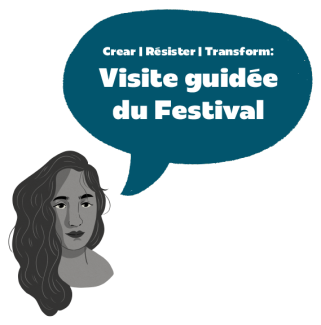
Crear | Résister | Transform : 
visite guidée du Festival

Alors que le capitalisme hétéropatriarcal s’acharne à nous contraindre au consumérisme et à la conformité, nous constatons que nos luttes sont cloisonnées et séparées par des frontières aussi bien physiques que virtuelles.

Lire plus

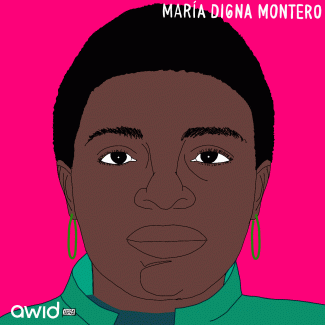
María Digna Montero

María Digna Montero was a Garifuna (Afro-descendent and indigenous) land defender and a member of the National Black Fraternal Organization of Honduras (OFRANEH), a grassroots organization working to protect the Garifuna communities, their ancestral rights, culture, resources and territory.

María also taught in the local school and was a member of the OFRANEH Intercultural Bilingual Education working group.

On the Day of Indigenous Resistance, October 12, 2019, unknown assailants shot María multiple times in the backyard of her house.  

She was one of six Garifuna women defenders murdered between September and October 2019 and according to OFRANEH, there was no investigation by the authorities into these crimes. In an official statement, the organization also highlighted the connection between the violence against Garifuna leaders and the increase in extractive industries which exploit natural resources in their communities calling this violence part of a “strategy of intimidation and systematic expulsion” by the Honduran State. 

“The heightened tension and growing risks to the security and human rights of the leaders in the communities and ancestral territories is a product of the dispossession, displacement and criminalization of the communities and of the extractive mega projects promoted by the State together with the national and international corporations.” - OFRANEH communique, October 12, 2019