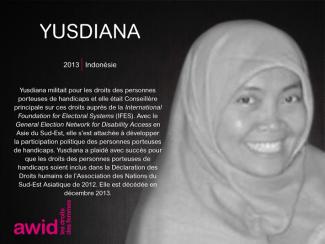
Yusdiana
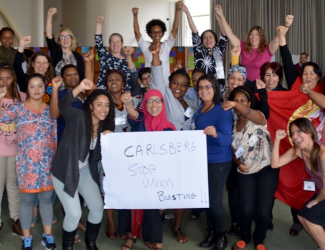
Women human rights defenders (WHRDs) worldwide defend their lands, livelihoods and communities from extractive industries and corporate power. They stand against powerful economic and political interests driving land theft, displacement of communities, loss of livelihoods, and environmental degradation.
Extractivism is an economic and political model of development that commodifies nature and prioritizes profit over human rights and the environment. Rooted in colonial history, it reinforces social and economic inequalities locally and globally. Often, Black, rural and Indigenous women are the most affected by extractivism, and are largely excluded from decision-making. Defying these patriarchal and neo-colonial forces, women rise in defense of rights, lands, people and nature.
WHRDs confronting extractive industries experience a range of risks, threats and violations, including criminalization, stigmatization, violence and intimidation. Their stories reveal a strong aspect of gendered and sexualized violence. Perpetrators include state and local authorities, corporations, police, military, paramilitary and private security forces, and at times their own communities.
AWID and the Women Human Rights Defenders International Coalition (WHRD-IC) are pleased to announce “Women Human Rights Defenders Confronting Extractivism and Corporate Power”; a cross-regional research project documenting the lived experiences of WHRDs from Asia, Africa and Latin America.
"Women Human Rights Defenders confronting extractive industries: an overview of critical risks and Human Rights obligations" is a policy report with a gender perspective. It analyses forms of violations and types of perpetrators, quotes relevant human rights obligations and includes policy recommendations to states, corporations, civil society and donors.
"Weaving resistance through action: Strategies of Women Human Rights Defenders confronting extractive industries" is a practical guide outlining creative and deliberate forms of action, successful tactics and inspiring stories of resistance.
The video “Defending people and planet: Women confronting extractive industries” puts courageous WHRDs from Africa, Asia, and Latin America in the spotlight. They share their struggles for land and life, and speak to the risks and challenges they face in their activism.
Challenging corporate power: Struggles for women’s rights, economic and gender justice is a research paper outlining the impacts of corporate power and offering insights into strategies of resistance.
AWID acknowledges with gratitude the invaluable input of every Woman Human Rights Defender who participated in this project. This project was made possible thanks to your willingness to generously and openly share your experiences and learnings. Your courage, creativity and resilience is an inspiration for us all. Thank you!
It is a community hub, where one can take courses and train in creative income-generation activities like local hairdressing, cooking and artmaking. Children can also enjoy cultural and educational activities. The MSTC doesn't work alone. It collaborates with institutions and art collectives to produce cultural, athletic and educational experiences, alongside critical access to health care. Since its inception, this participatory project has been led and carried out by mostly women, under the leadership of Afro-Brazilian activist Carmen Silva, who was once a homeless person herself.
📅Lundi 11 mars
🕒16 h 30 - 18 h HNE
Organisateurs : AWID, IJSC et NAWI
🏢 Church Center des Nations Unies, 777 United Nations Plaza, New York, 11e étage
(Interprétation en français et en espagnol disponible)
An online community for and by young feminists working on women’s human rights, gender equality and social justice around the world.
The platform is the go-to place for information and resources on safeguarding the universality of rights in international and regional human rights spaces.
Provides funding for young feminist-led initiatives. It aims to strengthen the capacity of young feminist organizations to leverage resources for their work and to increase donors’ and allies’ commitments to resourcing young feminist activism.
A go-to site to learn about the urgent responses undertaken to protect women human rights defenders and to find tools and resources to support the work and wellness of WHRDs.
A regional initiative created to prevent, respond, document and make public all cases of violence against women human rights defenders in the Mesoamerican region.
The WHRD IC is a resource and advocacy network for the protection and support of women human rights defenders worldwide.
A Coalition of feminist, women´s rights, women´s development, grassroots and social justice organisations working to challenge and reframe teh global development agenda.
The role of the Women’s Major Group is to assure effective public participation of women’s non-governmental groups in the UN policy processes on Sustainable Development, Post2015 and Environmental matters.
An alliance of women’s organizations and networks to advocate for the advancement of gender equality, women’s empowerment and human rights in the Financing for Development (FfD) related UN processes.
La organización comunitaria de mujeres negras en la región del Norte del Cauca en Colombia se remonta al pasado colonial del país, que está marcado por el racismo, el patriarcado y el capitalismo que sustentaron la esclavitud como un medio para explotar los ricos suelos de la región.
Estas organizadoras son las heroínas de un amplio movimiento por la autonomía negra, que lucha por el uso sostenible de los bosques y los recursos naturales de la región como elementos vitales para su cultura y sustento.
Durante 25 años, la Asociación de Mujeres Afrodescendientes del Norte del Cauca (ASOM) se ha dedicado a impulsar la organización de mujeres afrocolombianas en el Norte del Cauca. Se establecieron en 1997 como respuesta a las continuas violaciones de derechos humanos, la ausencia de políticas públicas, el manejo inadecuado de los recursos naturales y la falta de oportunidades para las mujeres en el territorio.
Han forjado la lucha para asegurar los derechos étnico-territoriales, para poner fin a la violencia contra las mujeres y obtener el reconocimiento del papel de las mujeres en la construcción de la paz en Colombia.
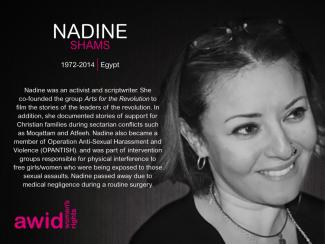
Jour 3
English article created from Spanish site
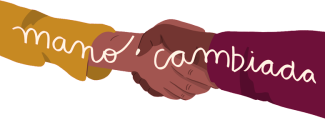
(« main échangée »)
Terme des communautés noires du Cauca du Nord pour la minga, le travail collaboratif dans les fermes, basé sur l'entraide et la solidarité.
Thanks to our global feminist community! From May to August 2024, nearly 1,200 organizations working for Women's rights, gender justice, and LBTQI+ equality shared their experiences in the WITM survey. The results offer a unique picture of how feminist movements are resourced and where gaps remain.
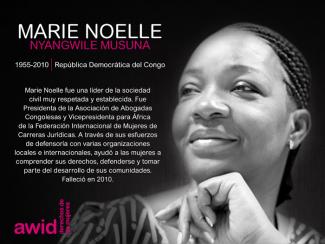
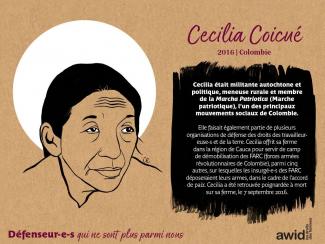
The data from our tribute indicate that Mexico is a particularly dangerous country for defenders. Out of the 12 Mexican Women Human Rights Defenders (WHRDs) we commemorate in this years’ Tribute, 11 were murdered. They were journalists, women’s rights advocates, trans* rights and social activists. Join us in remembering and honoring these WHRDs, their work and legacy by sharing the memes below and tweeting by using the hashtags #WHRDTribute and #16Days.
Please click on each image below to see a larger version and download as a file


|
383 people |