L´AWID est une organisation féministe mondiale qui consacre ses efforts à la justice de genre, au développement durable et aux droits humains des femmes
Forum de l'AWID : Co-créer nos horizons féministes
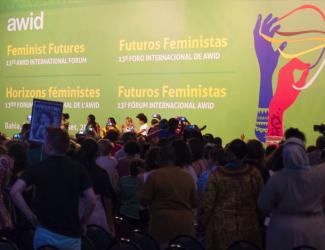
En septembre 2016, 1800 féministes et défenseur-e-s des droits des femmes venu-e-s des quatre coins de nos mouvements se réunissaient sur les côtes de Bahia à l’occasion du 13ème Forum international de l’AWID.
Cette section met l’accent sur les victoires, les enseignements et les ressources qui ont couronné nos conversations. Nous vous invitons à l’explorer, la partager et laisser vos impressions.
L’un des principaux éléments à retenir de ce Forum a été la nécessité d’élargir et d’approfondir notre travail de collaboration entre mouvements pour faire face à une montée des fascismes et des fondamentalismes, une exacerbation de la cupidité des entreprises et un changement climatique en progression.
L’AWID a donc travaillé avec plusieurs allié-e-s pour ériger ces semences de résistance :
Les mouvements peuvent aussi bénéficier d’une nouvelle méthodologie pour envisager nos horizons féministes. (à venir bientôt !)
A travers son prochain plan stratégique et le processus de son Forum, l’AWID s’engage à poursuivre et approfondir les rapports, les apprentissages et les processus amorcés lors du Forum 2016, tout en s’inspirant de l’actualité.
Et maintenant ?
Le monde est bien différent de celui qu’il était l’an dernier et il continuera à changer dans les années à venir.
Le prochain Forum de l’AWID se tiendra dans la région Asie-Pacifique (les dates et le lieu exacts seront annoncés en 2018). Nous attendons avec impatience de vous y retrouver !
A propos du Forum de l’AWID
Les Forums de l’AWID ont vu le jour en 1983, à Washington DC. Depuis, ils revêtent de nombreux aspects et incarnent, selon les personnes, tantôt un processus itératif visant à affiner nos analyses, notre vision et nos actions, un évènement clé galvanisant les féminismes des participant-e-s et leurs organisations ou un espace politique offrant refuge et solidarité aux défenseur-se-s des droits humains.
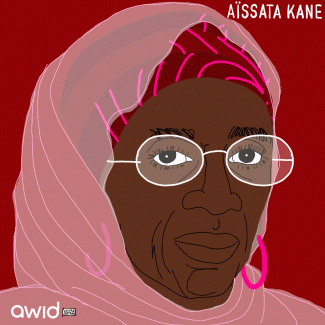
Aïssata Kane, also fondly known as “Yaye Kadia” (Mother Kadia), was a feminist with a lifelong committment in advocating for African and especially Mauritanian women’s rights.
In her career as a politician, she was appointed Minister of Family Protection and Social Affairs in 1975, the first time a woman held such a position and in which Aïssata fervently worked to improve the status of women in her country.
This work included advancing girls’ and women’s education, fighting against the practice of force-feeding of young women, lobbying for an inclusion of a marital rights provision, and advocating for a female representation quota to be created in the Parliament.
“[Aïssata] realized all her passions with humility, courage and determination. She didn’t want to disturb anyone by her fight on all these fronts at the same time.” Ball Halimata Dem, Aïssata’s niece
She founded the National Union of Women of Mauritania (UNFM), co-creating and publishing Marienou for them, a magazine dedicated to the emancipation of Mauritanian women. Aïssata also directed several sub-regional and local organizations, including as the President of the International Association of Francophone Women (AIFF) and as a resolute ecologist, she was President of the Association for the Protection of the Environment in Mauritania (APEM).
In 2018 she received the Pioneer Woman Award. It honors her work in advancing Mauritania’s women’s status and recognizes her strong leadership and sense of innovation.
Nous tenons à remercier le collectif Amar.ela de femmes féministes militantes et créatives qui ont rendu cette série possible, et tout particulièrement Natalia Mallo (le poulpe de l'équipe) pour son soutien et son accompagnement dans ce voyage.
Nous exprimons également notre profonde gratitude et notre admiration à tous les groupes et personnes qui ont participé à ce projet, et nous les remercions d'avoir partagé leur temps, leur sagesse, leurs rêves et leurs illusions avec nous. Nous les remercions de faire de ce monde un monde plus juste, féministe et durable.
Nous espérons que leurs histoires inspireront le reste du monde autant qu’elles nous ont inspirés.
كلمة العدد | التجسيدات العابرة للحدود
فقدان الكلام
ترجمة رولا علاء الدين
تشينيلو أونوالو
غوى صايغ
«لمّا نكون مُستَقتِلين للتغيير، لِكوننا في حالة مرضٍ وتمرّدٍ في آنٍ واحد، تخلو لغتنا من التعقيد وتنصقل لتعكس أبسط ركائزها. (...) لكن، ومع استمرار المرض والثورة، تصبح اللغة المُصاغة في هذه الحالة وعنها أكثرَ عمقاً وأكثرَ تعبيراً عن الفوارق الدقيقة، وتكون منغمسة انغماساً شديداً في التجربة الإنسانية التي يواجه فيها المرءُ حدودَه عند نهاية العالم».
بدأنا التخطيط لعدد المجلّة هذا مع نانا داركوا قُبيل مهرجان «ابدعي، قاومي، غيٍّري: مهرجان للحراكات النسوية» لجمعية «حقوق المرأة في التنمية» AWID، وانطلقنا وقتها من سؤالٍ هو بالأحرى ملاحظة حول حالة العالم، ورغبة في تغيير الاعتقادات السائدة: لماذا لا تزال جنسانيّاتنا وملذّاتنا تخضع للترويض والتجريم مع أنّه يتمّ تذكيرنا مراراً وتكراراً بأنّها لا تأتي بأيّ قيمة أو تطوّر؟ واستنتجنا أنّ جنسانيّاتنا، لمّا تتجسّد، فيها ما يتعارض مع النظام العالمي الذي ما زال يتجلّى من خلال ضوابط الحدود، والتمييز العنصري في توزيع اللقاح، والاستعمار الاستيطاني، والتطهير العرقي، والرأسمالية المُستشرية. هل يمكننا إذاً القول إنّ لجنسانيّاتنا قدرةٌ تعطيليّة؟ وهل يصحّ هذا القول عندما ننظر إلى واقع حركاتنا التي يتمّ الاستيلاء عليها ومأسستها في سعيها للتزوّد بالموارد؟
عندما يصبح عملنا المتجسّد مادةً ربحية في أيدي الأنظمة التي نسعى إلى إزالتها فلا عجب أنّ جنسانيّاتنا وملذّاتنا توضَع جانباً من جديد، لا سيّما أنّها ليست مُربِحة بما فيه الكفاية. لقد تساءلنا، في مواقف عدّة خلال إنتاج هذا العدد، ما الذي سيحدث إذا رفضنا مراعاة خدمات الرأسمالية الأساسية؟ لكن هل نجرؤ على هذا التساؤل وقد أنهكنا العالم؟ ربما يتمّ تجاهل جنسانيّاتنا بهذه السهولة لأنها لا تُعتَبَر أشكالاً من أشكال الرعاية. ربما ما نحتاجه هو أن نعيد تصوّر الملذّة كشكلٍ من أشكال الرعاية الجذرية، تكون أيضاً مناهضة للرأسمالية وللمؤسساتية.
بدأنا العام الثاني على التوالي لحالة الجائحة العالمية وكان لا بدّ أن تركّز مقاربتنا للتجسيدات العابرة للحدود القومية على ملاحظة سياسيّة واحدة: أنّ الرعاية هي شكل من أشكال التجسيد. وبما أنّ جزءاً كبيراً من عملنا يتمّ حالياً من دون أيّ اعتبار للحدود بيننا وفينا فنحن جميعاً متجسّدون بشكلٍ عابرٍ للحدود القومية، ونحن جميعاً نفشل. نحن نفشل في رعاية ذاتنا، والأهمّ أننا نفشل في رعاية الآخرين.
هذا الفشل ليس من صنع أيدينا.
إنّ الكثير من أهالينا اعتبروا العملَ مقايضةً، أي أنّه شيءٌ يُعطى مقابل أجرٍ وضمانة بالحصول على الرعاية. صحيحٌ أنّه تمّ الإخلال بهذه المقايضة أحياناً، لكنّ أهالينا ما كانوا يأملون أنّ عملهم سيوفّر لهم الرِضا الذاتي، وكانوا يعتمدون لهذا الغرض على نشاطهم الترفيهي وهواياتهم ومجتمعاتهم. أمّا اليوم، فنحن، أولادهم الذين تمّت تهيأتنا لنعتبر العمل متشابكاً مع الشغف، توقّعاتنا مختلفة تماماً. نحن لا نفرّق بين العمل والترفيه ونعتبرهما عنصراً واحداً، وبالنسبة للكثيرين بيننا، العمل بات يجسّد الذات بكاملها.
إنّ الرأسمالية القائمة على الأبويّة والمغايَرة الجنسية لا ترى لنا أيّ قيمة، ناهيك عن عملنا وجنسانيّاتنا. إنّه نظامٌ سيستمر في طلب المزيد والمزيد منك إلى يوم مماتك، وبعدها سيستبدلك بشخصٍ آخر. يُنتَظَر منّا أن نكون على اتصال بالإنترنت في كلّ الأوقات، ما يعني أنّه لا يمكننا الانصراف عن العمل حتى لو شئنا ذلك. إنّ هذا التَتْجير للعمل وفصله تماماً عن الشخص قد تسلّل إلى كلّ ناحية من نواحي حياتنا، ويتمّ ترسيخ هذا التَتْجير حتى في الأوساط الأكثر نسويّة والأكثر تمرّداً وتشدّداً.
لطالما حمَلَت تطلّعات الرأسمالية ضرراً كبيراً بالأجساد التي لا تتوافق مع النموذج المثالي، وأولئك الذين يسعون إلى ترسيخ سلطتهم استغّلوا الجائحة كفرصة لاستهداف النساء والأقلّيات الجنسية وكلّ مَن يعتبرونه دون المستوى.
تمّ إعداد هذا العدد الخاص بفعل هذا الواقع، وطبعاً، رغماً عن هذا الواقع.
لقد قدّم المساهمون/ المساهمات والعاملون/ العاملات كلّهم تقريباً مجهوداً يفوق طاقاتهم، وكلٌّ من الأعمال الواردة هنا هو نتاجُ سعيٍ شغوف ولكن أيضاً نتاج حالة إنهاكٍ شديد. يشكّل هذا العدد، بطريقة غايةً في الواقعية، تجسيداً للعمل العابر للحدود القومية، علماً أنّ أيّ عمل في عصرنا الرقمي أصبحَ عابراً لتلك الحدود. وفيما فُرِضَ علينا تقبّل حدود جديدة، وهي حدود لا تخالف النظام القائم سابقاً بل تعزّزه، اختبرنا مباشرةً، إلى جانب مساهمينا، كيف تستنزف الرأسمالية طاقاتنا القصوى – كيف يصبح من الصعب بناء الحجج المتماسكة لا سيّما حينما تكون خاضعة لموعد التسليم. إننا نعاني بشكلٍ جَماعي من فقدان الكلام لأننا أساساً نعاني من فقدان العوالم.
الشعور بالضياع والوحدة في عالم الرأسمالية القائمة على الأبوية والمغايَرة الجنسية هو بالتحديد ما يجعل من الضروري أن نعيد تقييم أنظمة الرعاية التي نتّبعها وأن نُعيد النظر فيها. لقد حوّلنا هذا العدد بوسائل عدّة إلى مهمّة لإيجاد الملذّة في الرعاية. فبما أنّه بات من الصعب بناء الحجج المتماسكة، برزت الوسائط البصرية والمبتكرة وقد لجأ كثرٌ ممن اعتادوا الكتابة إلى هذه الوسائط كطرقٍ لإنتاج المعرفة واختراق الضباب الفكريّ الذي أحاط بنا. لقد ضمّينا في هذا العدد أصواتاً أخرى، بالإضافة إلى أصواتٍ عدّة استمعتم إليها في المهرجان، كوسيلة لإطلاق حوارات جديدة وتوسيع آفاقنا.
بما أنّ كلماتنا قد سُرِقَت منّا، يقضي واجبنا السياسي بأن نستمر في إيجاد الوسائل للحفاظ على أنفسنا والآخرين والاهتمام بأنفسنا وبالآخرين. بالتالي، يصبح تجسّدنا نوعاً من المقاومة إذ هو بداية إيجادنا لسبيل الخروج من الذات ودخولها.
Esmeralda aux contrôles d’Internet : comment les réseaux sociaux aident les femmes roms à gagner en visibilité
par Émilie Herbert-Pontonnier
Vous vous souvenez d’Esmeralda? Cette héroïne « gitane » et exotique née sous la plume de Victor Hugo, géant de la littérature française, et rendue célèbre par les studios Disney et leur Bossu de Notre-Dame. (...)
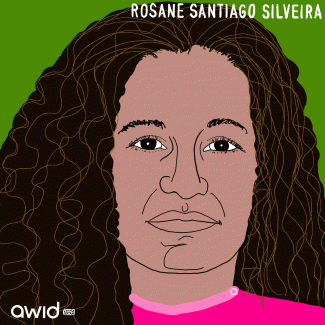
Rosane Santiago Silveira era conocida afectuosamente como «Rô Conceição». Fue una activista ambiental y por los derechos humanos que luchó fervientemente para proteger el medio ambiente en las zonas más amenazadas.
Esta lucha incluyó la defensa así como también la protección ambiental en la isla de Barra Velha, cuando estuvo amenazada por la exploración petrolera, mediante campañas contra la apropiación de tierras y la expansión de las plantaciones de eucaliptus en el Estado de Bahía, donde Rosane integraba el Consejo de la Reserva Extractivista de Cassurubá.
«La Reserva Extractiva es un área protegida donde las familias residentes se ganan la vida con productos naturales extraídos del bosque. Estas actividades ayudan a mantener la integridad del bosque.» - Global Justice Ecology Project (fuente original: Rede Brasil Atual)
Rosane participó en actividades sindicales, y en movimientos culturales y por los derechos humanos. Dedicó gran parte de sí misma, no solamente a las causas que la afectaban directamente, sino a problemas de la tierra, los bosques, los ríos y las comunidades cuyos derechos y vidas están continuamente en riesgo.
Fue torturada y asesinada el 29 de enero de 2019 en Nova Viçosa, una ciudad del sur de Bahía.
«Lamentablemente, hoy existe un sentimiento de inseguridad total, por la ausencia del Estado en la investigación de estos delitos. Estuvimos con ella en Navidad, todos se dieron cuenta de que estaba preocupada, y ahora sabemos que había recibido tres amenazas de muerte.» - Tuian, hijo de Rosane, en una entrevista con Rádio Brasil Atual (fuente original: Rede Brasil Atual)
Tshegofatso Senne is a Black, chronically-ill, genderqueer feminist who does the most. Much of their work is rooted in pleasure, community, and dreaming, while being informed by somatic abolitionism and disability, healing, and transformative justices. Writing, researching, and speaking on issues concerning feminism, community, sexual and reproductive justice, consent, rape culture, and justice, Tshegofatso has 8 years of experience theorising on the ways in which these topics intersect with pleasure. They run their own business, Thembekile Stationery, and their community platform Hedone brings people together to explore and understand the power of trauma-awareness and pleasure in their daily lives. Tshegofatso believes deeply in the individual and collective potential of regenerative and sustainable change, pleasure, and care work.
The body. The most permanent home we have.
The body, not the thinking brain, is where we experience most of our pain, pleasure, and joy, and where we process most of what happens to us. It is also where we do most of our healing, including our emotional and psychological healing. And it is where we experience resilience and a sense of flow.
These words, said by Resmaa Menakem in his book My Grandmother’s Hands, have stayed with me.
The body; it holds our experiences. Our memories. Our resilience. And as Menakem has written, the body also holds our traumas. It responds with spontaneous protective mechanisms to stop or prevent more damage. That is the power of the body. Trauma is not the event; it is how our bodies respond to events that feel dangerous to us. It is often left stuck in the body, until we address it. There’s no talking our body out of this response – it just is.
Using Ling Tan’s Digital Superpower app, I tracked how my body felt as I travelled around different parts of my city, Johannesburg, South Africa. The app is a gesture-driven online platform that allows you to trace your perceptions as you move through locations by logging and recording the data. I used it to track my psychosomatic symptoms – physical reactions connected to a mental cause. Whether that be flashbacks. Panic attacks. Tightness in the chest. A fast heartbeat. Tension headaches. Muscle pain. Insomnia. Struggling to breathe. I tracked these symptoms as I walked and travelled to different areas in Johannesburg. And I asked myself.
Where can we be safe? Can we be safe?
Psychosomatic responses can be caused by a number of things, and some are not as severe as others. After experiencing any kind of trauma you may feel intense distress in similar events or situations. I tracked my sensations, ranked on a scale of 1-5, where 1 were the instances I barely felt any of these symptoms – I felt at ease rather than on-guard and jumpy, my breath and heart rate were stable, I was not looking over my shoulder – and number 5 being the opposite – symptoms that had me close to a panic attack.
As a Black person. As a queer person. As a genderqueer person who could be perceived as a woman, depending on what my gender expression is that day.
I asked myself.
Where can we be safe?
Even in neighbourhoods one might consider “safe,” I felt constantly panicked. Looking around me to make sure I wasn’t being followed, adjusting the way my T-shirt sat so my breasts wouldn’t show up as much, looking around to make sure I knew multiple routes to get out of the place I was should I sense danger. An empty road brings anxiety. A packed one does too. Being in an Uber does. Walking on a public road does. Being in my apartment does. So does picking up a delivery from the front of the building.
Can we be safe?
Pumla Dineo Gqola speaks of the Female Fear Factory. It may or may not be familiar, but if you’re someone socialised as a woman, you’ll know this feeling well. The feeling that has you planning every step you take, whether you’re going to work, school, or just running an errand. The feeling that you have to watch how you dress, act, speak in public and private spaces. The feeling in the pit of your stomach if you have to travel at night, get a delivery, or deal with any person who continues to socialise as a cis man. Harassed on the street, always with the threat of violence. Us existing in any space comes with an innate fear.
Fear is both an individual and a socio-political phenomenon. At an individual level, fear can be present as part of a healthy well developing warning system […] When we think about fear, it is important to hold both notions of individual emotional experience and the political ways in which fear has been used in different epochs for control. - Pumla Dineo Gqola, in her book Rape: A South African Nightmare
South African women, femmes, and queers know that every step we take outside – steps to do ordinary things: a walk to the shops, a taxi to work, an Uber from a party – all of these acts are a negotiation with violence. This fear, is part of the trauma. To cope with the trauma we carry in our bodies, we develop responses to detect danger – watching the emotional responses of those around us, reading for “friendliness.” We’re constantly on guard.
Day after day. Year after year. Life after life. Generation after generation.
On the additional challenge of this learned defence system, author of The Body Keeps Score, Bessel Van Der Kolk, has said
It disrupts this ability to accurately read others, rendering the trauma survivor either less able to detect danger or more likely to misperceive danger where there is none. It takes tremendous energy to keep functioning while carrying the memory of terror, and the shame of utter weakness and vulnerability.
As Resmaa Menakem has said, trauma is in everything; it infiltrates the air we breathe, the water we drink, the foods we eat. It is in the systems that govern us, the institutions that teach and also traumatise us, and within the social contracts we enter into with each other. Most importantly, we take it with us everywhere we go, in our bodies, exhausting us and eroding our health and happiness. We carry that truth in our bodies. Generations of us have.
So, as I walk around my city, whether an area is considered “safe” or not, I carry the traumas of generations whose responses are embedded in my body. My heart palpitates, it becomes difficult to breathe, my chest tightens – because my body feels as though the trauma is happening in that very moment. I live hyper vigilant. To the point where one is either too on-guard to mindfully enjoy their life, or too numb to absorb new experiences.
For us to begin to heal, we need to acknowledge these truths.
These truths that live in our bodies.
This trauma is what keeps many of us from living the lives we want. Ask any femme or queer person what safety looks like to them and they’ll mostly share examples that are simple tasks – being able to simply live joyful lives, without the constant threat of violence.
Feelings of safety, of comfort and ease, are spatial. When we embody our trauma, it affects the ways we perceive our own safety, affects the ways we interact with the world, and alters the ways we are able to experience and embody anything pleasurable and joyful.
We have to refuse this burdensome responsibility and fight for a safe world for all of us. Walking wounded as many of us are, we are fighters. Patriarchy may terrorise and brutalise us, but we will not give up the fight. As we repeatedly take to the streets, defying the fear in spectacular and seemingly insignificant ways, we defend ourselves and speak in our own name. - Pumla Dineo Gqola, in her book Rape: A South African Nightmare
Where can we be safe? How do we begin to defend ourselves, not just in the physical sense, but in the emotional, psychological, and spiritual senses?
“Trauma makes weapons out of us all,” adrienne maree brown has said in an interview conducted by Justin Scott Campbell. And her work, Pleasure Activism, offers us multiple methodologies to heal that trauma and ground ourselves in the understanding that healing, justice, and liberation can also be pleasurable experiences. Especially those of us who are the most marginalised, who may have been raised to equate suffering with “The Work.” The Work that so many of us have gone into as activists, community builders and workers, those serving the most marginalised, The Work that we struggle in order to do, burning ourselves out and rarely caring for our minds and bodies. The alternative is becoming more informed about our trauma, able to identify our own needs, and becoming deeply embodied. That embodiment means we are simply more able to experience the world through the senses and sensations in our bodies, acknowledging what they tell us rather than suppressing and ignoring the information it is communicating with us.
Being constantly in conversation with our living body and intentionally practising those conversations connects us to embodiment more deeply; it allows us to make tangible the emotions we feel as we interact with the world, befriend our bodies, and understand all that they try to teach us. When understanding trauma and embodiment paired, we can begin to start the healing and access pleasure more holistically, healthily, and in our daily lives without shame and guilt. We can begin to access pleasure as a tool for individual and social change, tapping into the power of the erotic as Audre Lorde described it. A power that allows us to share the joy we access and experience, expanding our capacity for happiness and understanding that we are deserving of it, even with our trauma.
Tapping into pleasure and embodying the erotic gives us the expansion of being deliberately alive, feeling grounded and stable and understanding our nervous systems. It allows us to understand and shed the generational baggage we’ve been carrying without realising; we can be empowered with the knowledge that even as traumatised as we are, as traumatised as we potentially could be in the future, we are still deserving of pleasurable and joyful lives, that we can share that power with our people. It is the community aspect that is missing from the ways we care for ourselves; self-care cannot exist without community care. We are able to feel a deeper internal trust, safety, and power of ourselves, especially in the face of future traumas that will trigger us, knowing how to soothe and stabilise ourselves. All this understanding leads us to a deep internal power that is resourced to meet any challenges that come your way.
As those living with deep generational traumas, we have come to distrust and perhaps think we are incapable of containing and accessing the power we have. In “Uses of the Erotic: The Erotic as Power,” Lorde teaches us that the erotic offers a source of replenishment, a way to demand better for ourselves and our lives.
For the erotic is not a question only of what we do; it is a question of how acutely and fully we can feel in the doing. Once we know the extent to which we are capable of feeling that sense of satisfaction and completion, we can then observe which of our various life endeavours brings us closest to that fullness.
I don’t say any of this lightly – I know that this is easier said than done. I know that many of us are prevented from understanding these truths, from internalising or even healing them. Resistance comes with acts of feeling unsafe, but is not impossible. Resisting power structures that keep the most powerful safe will always endanger those of us shoved to the margins. Acknowledging the traumas you’ve faced is a reclamation of your lived experiences, those that have passed and those that will follow; it is resistance that embodies that knowledge that we are deserving of more than the breadcrumbs these systems have forced us to lap up. It is a resistance that understands that pleasure is complicated by trauma, but it can be accessed in arbitrary and powerful ways. It is a resistance that acknowledges that our trauma is a resource that connects us to each other, and can allow us to keep each other safe. It is a resistance that understands that even with pleasure and joy, this is not a utopia; we will still harm and be harmed, but we will be better equipped for survival and thrive in a community of diverse care and kindness. A resistance that makes way for healing and connecting to our full human selves.
Healing will never be an easy and rosy journey, but it begins with the acknowledgment of the possibility. When oppression makes us believe that pleasure is not something that we all have equal access to, one of the ways that we start doing the work of reclaiming our full selves — our whole liberated, free selves — is by reclaiming our access to pleasure.
Leah Lakshmi Piepzna-Samarasinha has said in her article in Pleasure Activism (to which she contributed),
I know that for most people, the words “care” and “pleasure” can’t even be in the same sentence. We’re all soaking in ableism’s hatred of bodies that have needs, and we’re given a really shitty choice: either have no needs and get to have autonomy, dignity, and control over your life or admit you need care and lose all of the above.
The power that this has? We understand our traumas, so we understand those of others; we embody the sensations we experience and tend to them rather than distract and avoid. We access pleasure in ways that make us want to share that joy with those in our communities. When we are trauma-informed, we give ourselves more room to experience all this and give ourselves, and others, permission to heal. Imagine, a community in which everyone has access, resources, and time to live pleasurable lives, in whichever way they want and deserve. In which spatial traumas are lessened because the people that occupy them are trauma-aware, are filled with a tender care. Isn’t that healing? Is that not working through generational traumas? Does that not build and sustain healthier futures for us all?
It is time we reconnected with the ancestral knowledge that we deserve to live full lives. We need to get back in touch with our natural right to joy and existing for ourselves. To feel pleasure simply for the sake of it. To not live lives of terror. It sounds radical; it feels radical. In a world where we have been socialised and traumatised to numb, to fear, to feel and remain powerless, to be greedy and live with structural issues that lead to mental illness, what a gift and wonder it is to begin to feel, to be in community with those who feel, to be healthily interdependent in, to love each other boldly. Feeling is radical. Pleasure is radical. Healing is radical.
You have permission to feel pleasure. You have permission to dance, create, make love to yourself and others, celebrate and cultivate joy. You are encouraged to do so. You have permission to heal. Don’t bottle it up inside, don’t try to move through this time alone. You have permission to grieve. And you have permission to live. - adrienne maree brown, “You Have Permission”
Somatic embodiment allows us to explore our trauma, work through it and make meaningful connections to ourselves and the collective. Doing this over time sustains our healing; just like trauma, healing is not a one-time only event. This healing helps move us toward individual and collective liberation.
In “A Queer Politics of Pleasure,” Andy Johnson speaks about the ways in which the queering of pleasure offers us sources of healing, acceptance, release, playfulness, wholeness, defiance, subversion, and freedom. How expansive! When we embody pleasure in ways that are this holistic, this queer, we are able to acknowledge the limitation.
Queering pleasure also asks us the questions that intersect our dreaming with our lived realities.
Who is free or deemed worthy enough to feel pleasure? When is one allowed to feel pleasure or pleased? With whom can one experience pleasure? What kind of pleasure is accessible? What limits one from accessing their full erotic and pleased potential? - Andy Johnson, “A Queer Politics
of Pleasure”
When our trauma-informed pleasure practices are grounded in community care, we begin to answer some of these questions. We begin to understand the liberating potential. As pleasure activists, this is the reality we ground ourselves within. The reality that says, my pleasure may be fractal, but it has the potential to heal not only me and my community, but future bloodlines.
I am a whole system; we are whole systems. We are not just our pains, not just our fears, and not just our thoughts. We are entire systems wired for pleasure, and we can learn how to say yes from the inside out. - Prentis Hemphill, interviewed by Shar Jossell
There’s a world of pleasure that allows us to begin to understand ourselves holistically, in ways that give us room to rebuild the realities that affirm that we are capable and deserving of daily pleasure. BDSM, one of my deepest pleasures, allows me a glimpse into these realities where I can both feel and heal my trauma, as well as feel immeasurable opportunities to say yes from the inside out. While trauma keeps me stuck in a cycle of fight or flight, bondage, kneeling, impact, and breath play encourage me to stay grounded and connected, reconnecting to restoration. Pleasure that is playful allows me to heal, to identify where traumatic energy is stored in my body and focus my energy there. It allows me to express the sensations my body feels through screams of pain and delight, to express my no with no fear and revel in the fuck yes. With a safety plan, aftercare, and a deeper understanding of trauma, kink offers a place of pleasure and healing that is invaluable.
So whether your pleasure looks like cooking a meal at your leisure, engaging in sex, having bed days with your people, participating in disability care collectives, having someone spit in your mouth, going on accessible outings, having cuddle dates, attending an online dance party, spending time in your garden, being choked out in a dungeon,
I hope you take pleasure with you wherever you go. I hope it heals you and your people.
Recognising the power of the erotic within our lives can give us the energy to pursue genuine change within our world. - Audre Lorde, “Uses of the Erotic: The Erotic as Power”
ExploreTransnational Embodiments
This journal edition in partnership with Kohl: a Journal for Body and Gender Research, will explore feminist solutions, proposals and realities for transforming our current world, our bodies and our sexualities.
نصدر النسخة هذه من المجلة بالشراكة مع «كحل: مجلة لأبحاث الجسد والجندر»، وسنستكشف عبرها الحلول والاقتراحات وأنواع الواقع النسوية لتغيير عالمنا الحالي وكذلك أجسادنا وجنسانياتنا.
If you’re looking to have an impact through your work in feminist, social justice and other non-profit organizations, we hope this page provides a start.
Here you will find open vacancies and call for applications from AWID and the Alliance for Feminist Movements, when available. Follow us on social media to be in the loop.
« Je suis un miracle… Je suis donc née d’une mère! Moi qui commence à bégayer, J’ai eu une vie à nulle autre pareille... » - Ayanda Denge (lisez le poème entier ci-dessous)
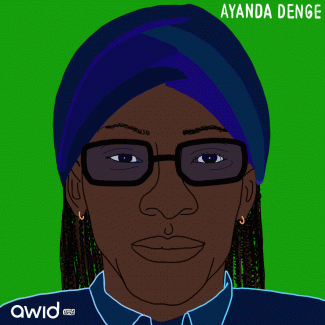
Ayanda Denge était une femme trans, travailleuse du sexe, activiste et poète. Elle était une Xhosa de Port Elizabeth, dans la province du Cap-Oriental en Afrique du Sud. Après avoir traversé différentes villes du pays, elle s'est installée au Cap.
En tant qu’activiste fervente et engagée de la justice sociale, elle s'est battue pour les droits des travailleures du sexe, des personnes trans et des personnes vivant avec le VIH et le sida. Elle a également été une conférencière motivatrice sur la sensibilisation au cancer ainsi que fait campagne en faveur de logements sociaux et abordables, en particulier au profit des pauvres et des travailleures. Ayanda s'est dressée comme une montagne contre les différents visages souvent violents de la discrimination.
« Lorsque vous êtes transgenre, ce n’est pas une double dose, mais une triple dose de stigmatisation et de discrimination que vous recevez. Vous êtes discriminé·e en raison de votre identité sexuelle, en raison de votre travail et en raison de votre statut sérologique VIH. » - Ayanda Denge, 2016
Elle a été présidente par intérim de la Sex Workers Education and Advocacy Taskforce (SWEAT, groupe de travail sur l’éducation et la défense des travailleures du sexe) et coordonnatrice de liaison pour Sisonke, un mouvement national de travailleures du sexe sud-africain.
« D’ici, de notre siège régional à SWEAT, où je siège au conseil d'administration, en passant par Sisonke, un mouvement de travailleures du sexe au Cap, nous ne faisons qu’un. Nous avons un même cri et c'est un cri qui est reconnu dans le monde entier par les travailleures du sexe de toute la planète. Nous voulons la décriminalisation du travail du sexe ». - Ayanda Denge, 2016
Elle vivait dans la maison Ahmed Kathrada, qui était occupée par la campagne Reclaim the City en faveur de logements sociaux. En 2018, Ayanda avait été élue responsable de la maison. Le 24 mars 2019, elle a été poignardée à mort dans sa chambre. L'année précédente, un autre résident avait été tué.
Reclaim the City fait le lien entre la sécurité des résident·e·s des maisons et le gouvernement de province qui les prive d'électricité et du droit humain à l'eau potable :
« Nous ne pouvons dissocier la sécurité des femmes et des personnes LGBTQI vivant dans le squat du refus du gouvernement de la province du Cap-Occidental de rétablir l'électricité et l'eau potable dans la maison Ahmed Kathrada.
La maison est dans le noir complet le soir. Nous avons besoin de lumière pour nous protéger les un·e·s les autres. On a l'impression que la province veut punir les pauvres et les ouvrier·ère·s, dont le seul crime était d'avoir besoin d'un toit. Certes, ils ont le droit de ne pas être d’accord avec nos raisons de squatter, mais ils devraient avoir honte de faire passer la politique avant la sécurité et la dignité des résident·e·s de cette ville.
Repose en paix, camarade Ayanda Denge, nous reprenons le flambeau et nous nous souviendrons de toi dans cette lutte pour un logement décent et central. »
Poème d’Ayanda :
Je suis un miracle…
Je suis donc née d’une mère!
Moi qui commence à bégayer,
j’ai eu une vie à nulle autre pareille.
Née dans la douleur
Nourrie par la pluie
Pour gagner en hauteur
Je vivais dans les égouts.
Là je verse une larme,
je me relève et brandis ma lance.
Les voix résonnent, n’ayez pas peur
Des défis à relever dans l’année,
Des défis de souffrance dans mon dossier;
La communauté applaudit, croyant que j’ai gagné la course;
Mais en réalité mon travail avance à pas de tortue;
À genoux je m’incline et demande grâce.
Car le Seigneur
Est mon épée;
Pour rappeler à l’humanité
Qu’il apporte la sérénité.
Pourquoi, Seigneur, suis-je ce miracle?
Le Seigneur me répond par la pluie et le tonnerre,
Pour avoir interrogé mon père
Qui a dans le livre des agneaux
Un prénom nommé Ayanda.
Dans la rue ma vie n’a jamais été douce
Les personnes que j’ai dû croiser;
Parfois, je ne les saluais jamais;
Et même lorsque j’avais besoin de manger;
Je préférais tirer ma révérence
Plutôt que de prendre place.
« Car ma vie est pareille à celle d’une fleur de lotus, hors des eaux sombres et troubles, j'ai fleuri pour être belle et forte… »- Ayanda Denge, regardez et écoutez
Hommages :
« Ayanda, je voudrais te dire que dans nos coeurs, dans nos esprits, tu es toujours une survivante. Tu n’es plus là mais tu es partout, parce que tu es amour. Comme c’est merveilleux d’être aimé·e, et de donner de l’amour. Et c’est là, Ayanda, le cadeau que tu nous as fait. Merci pour tout cet amour, nous avions vraiment besoin de toi. Je te promets qu’à l’avenir, nous nous engageons tou·te·s à poursuivre la lutte à laquelle tu as consacré tant d’énergie et de temps. Et nous nous engagerons à obtenir justice pour cette fin de vie abominable que tu as connue. » - Transcription d’un message, lors d’un hommage d'adieu à Ayanda
« Ayanda était une activiste par nature. Elle connaissait ses droits et n’hésitait pas à se battre pour les droits des autres. En ce qui me concerne, je n’ai pas été surprise qu’elle s’implique auprès de nombreuses organisations, il était évident qu’elle aimait les gens. Elle ne défendait pas nécessairement les droits des LGBTI, mais les droits de toutes et de tous. » - la soeur d’Ayanda
Snippet Forum Stories Title
Stories of Change: AWID Forums
Clone of Corporalidades Transnacionales | Nota de lxs editorxs
Sin palabras
Chinelo Onwualu
Ghiwa Sayegh
«Cuando estamos desesperadxs por el cambio, como sucede tanto en la enfermedad como en la insurrección, nuestro lenguaje se vacía de complejidad, se queda con sus componentes más esenciales… Sin embargo, a medida que la enfermedad y la revolución persisten, el lenguaje que se hizo en ellas y sobre ellas se profundiza, admite más matices, inmerso en la aguda experiencia humana de encontrar los propios límites en el lugar del fin del mundo».
Cuando comenzamos a delinear este número con Nana Darkoa, antes de Crear | Résister | Transform: un festival para movimientos feministas! de AWID, partimos de una pregunta que es más bien una observación sobre el estado del mundo, un deseo de cambiar el terreno: ¿por qué nuestras sexualidades y placeres siguen siendo domesticados y criminalizados incluso cuando nos dicen, una y otra vez, que no tienen valor ni contribuyen al progreso? Llegamos a la conclusión de que cuando se corporizan, hay algo en nuestras sexualidades que opera contra un orden del mundo que sigue manifestándose en los controles fronterizos, los apartheids en relación a las vacunas, el colonialismo de asentamiento, la limpieza étnica, y el capitalismo descontrolado. ¿Podemos hablar, entonces, del potencial disruptivo de nuestras sexualidades? ¿Podemos seguir haciendo eso cuando, para poder obtener recursos, nuestros movimientos deben ser cooptados e institucionalizados?
Cuando el trabajo de nuestros cuerpos se convierte en ganancias en las manos de los sistemas que buscamos desmantelar, no sorprende que nuestras sexualidades y placeres queden relegados una vez más a las márgenes, especialmente cuando no son lo suficientemente rentables. En muchos momentos durante la producción de este número, nos preguntamos qué sucedería si nos negáramos a dar cabida a los servicios esenciales del capitalismo. Pero ¿podemos atrevernos a hacer esa pregunta cuando estamos agotadxs por el mundo? Quizás nuestras sexualidades son desestimadas con tanta facilidad porque no son vistas como formas de cuidado. Quizás lo que necesitemos sea reimaginar el placer como una forma radical de cuidado, una que también es anticapitalista y anti-institucional.
Estamos entrando en nuestro segundo año completo de pandemia global y nuestro abordaje de la corporalidad transnacional ha tenido que concentrarse en un único descubrimiento político: que cuidar es una forma de habitar la corporalidad. Y como ahora tanto de nuestro trabajo se hace sin tomar en cuenta los límites entre y dentro de nosotrxs, todxs somos Corporalidades Transnacionales, y eso a todxs nos sale mal. Estamos fallando en cuanto a cuidarnos y, lo que es más grave, en cuidar a lxs otrxs.
Ese fracaso no es producto de nuestras acciones.
Muchxs de nuestras madres y padres pensaban que el trabajo era transaccional, algo que debía darse a cambio de una compensación y una garantía de cuidado. Y si bien ese intercambio no siempre se cumplió, nuestrxs madres y padres no esperaban que su trabajo les diera satisfacción. Para eso tenían su ocio, sus pasatiempos, y sus comunidades. Hoy, nosotrxs, sus hijxs, que hemos sido condicionadxs para pensar en nuestro trabajo como entrelazado con nuestra pasión, no tenemos esas expectativas. Pensamos el trabajo y el ocio como una sola y misma cosa. Para demasiadas personas, el trabajo ha llegado a encarnar todo lo que somos.
Sin embargo, el capitalismo heteropatriarcal no nos valora, ni hablar de que valore nuestro trabajo o nuestras sexualidades. Este es un sistema que solo te exigirá más y más hasta que mueras. Y cuando mueras, te reemplazará por otra persona. Que se espere que estemos en línea todo el día significa que simplemente no podemos tomar distancia del trabajo, ni siquiera cuando queremos hacerlo. Esta comercialización del trabajo, divorciándolo de la persona, ha permeado cada aspecto de nuestras vidas y está siendo perpetuado incluso en los círculos más feministas, más radicales y más revolucionarios.
Las expectativas capitalistas siempre han sido particularmente dañinas para los cuerpos que no se ajustan a su ideal. Y quienes buscan consolidar sus poderes han utilizado la pandemia como una oportunidad para concentrar sus ataques en las mujeres, las minorías sexuales y cualquier otrx a quien subestimen.
Este número especial existe debido a eso y ciertamente a pesar de eso.
Casi todxs lxs colaboradorxs e integrantes del equipo se estaban presionando para ir más allá de su capacidad. Cada una de las colaboraciones fue producida desde un lugar de pasión, pero también de un increíble agotamiento. De una forma muy real, este número encarna el trabajo transnacional y, en el mundo digital en el cual vivimos, todo trabajo se ha convertido en trabajo transnacional. A medida que nos enfrentamos a nuevas fronteras que no han roto un viejo orden sino que lo reifican, experimentamos de primera mano, junto a nuestrxs colaboradorxs, cómo el capitalismo vacía nuestros límites, cómo se hace difícil construir argumentos coherentes, especialmente cuando tenemos una fecha límite para hacerlo. Nos quedamos colectivamente sin palabras, porque nos quedamos sin mundos.
Es precisamente porque nos sentimos perdidxs y solxs en el mundo del capitalismo heteropatriarcal que tenemos que reevaluar y repensar nuestros sistemas de cuidado. En muchos sentidos, hicimos de este número una misión de encontrar placer en el cuidado. Porque se ha vuelto más difícil construir argumentos coherentes, los medios visuales y creativos han pasado al primer plano. Muchas personas que solían escribir se han volcado a estos medios como una vía para producir conocimiento y atravesar la niebla mental que nos ha envuelto a todxs. Trajimos otras voces a este número, además de muchxs a quienes ya escucharon en el Festival, como una manera de abrir nuevas conversaciones y ampliar nuestros horizontes.
Dado que nos roban nuestras palabras, es nuestro deber político seguir encontrando maneras de mantenernos y cuidarnos a nosotrxs mismxs y a lxs otrxs. Muchas de nuestras realidades actuales están tratando de borrarnos y desplazarnos, mientras que siguen explotando nuestro trabajo. Nuestra corporización, por lo tanto, se convierte en una forma de resistencia; es el comienzo de que encontremos nuestro camino hacia afuera y hacia nosotrxs mismxs.
Delante mío hay una foto vieja, borrosa. En ella, estoy toda vestida de blanco, desde las perlas sujetas en mi cabello y apretadas contra mis orejas, hasta las que rodean holgadamente mis pequeñas muñecas. (...)
Boil them down to communications language preferences
Snippet Forum Quoate Jac s m Kee, Malaysia (EN)
No hay nada como estar en un espacio compartido, intercambiar energías corporales, mirar a alguien a los ojos y establecer conexiones, ver el mundo y hacer algo juntxs. Eventos como el Foro se encuentran entre los más fuertes del movimiento feminista mundial... - Jac s m Kee, Malasia