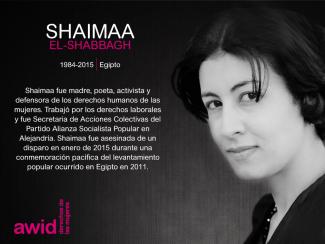
Shaimaa El-Shabbagh
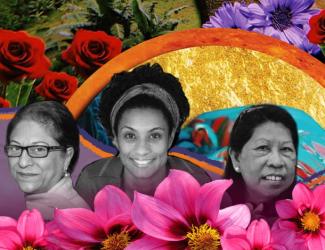
El Tributo de AWID es una exhibición de arte que honra a feministas, a activistas por los derechos de las mujeres y de la justicia social de todo el mundo que ya no están con nosotrxs.
El Tributo de este año cuenta y comparte las historias y narraciones de quienes crearon conjuntamente realidades feministas, ofrecieron visiones de alternativas a los sistemas y actores que nos oprimen, y propusieron nuevas formas de organizarnos, de movilizarnos, de luchar, de trabajar, de vivir y de aprender.
Se agregan a la galería 49 retratos nuevos de feministas y defensorxs de derechos humanos. Aunque muchxs feministas y defensorxs han fallecido debido a edad avanzada o enfermedad, muchísimxs han sido asesinadxs debido a su trabajo y por ser quienes eran.
Esta violencia creciente (de parte de Estados, empresas transnacionales, crimen organizado, sicarios no identificados, etc.) no se dirige solo a activistas individuales sino a nuestro trabajo común y a las realidades feministas.
Visita nuestra exhibición en línea
Lors retratos de 2020 fueron diseñados por la ilustradora y animadora galardonada, Louisa Bertman.
En AWID nos gustaría agradecer a las familias y organizaciones que nos compartieron sus historias personales, y así haber contribuido a este memorial. Nos unimos a ellxs para continuar el extraordinario trabajo de estxs activistas y defensorxs, y en el esfuerzo para asegurarnos de que se logre justicia en los casos que permanecen en la impunidad
"Ellos trataron de enterrarnos pero no sabían que éramos semillas."‐ Proverbio Mexicano
Primero tomó forma como una exposición física de retratos y biografías de feministas y activistas que habían fallecido, en el 12º Foro Internacional de AWID, en Turquía. Ahora vive como una galería en línea, que actualizamos cada año.
Desde 2012 hemos presentado más de 467 feministas y defensorxs.
The feminist reality that I want to share is about weaving networks in which we uphold one another. Networks which come together in different ways, which emerge from our shared vulnerability, and which make all of us stronger.
The streets of Chamberí, my neighbourhood in Madrid, became much more of a home following the gatherings in the plazas organized by the citizens movement that originated in a rally on May 15, 2011. I think about how, during those years, we met each other and were able to associate faces, voices, smiles with so many neighbours who previously were only silhouettes without names or pasts, and who we passed by without seeing or hearing each other. I think about how we’ve become involved and dedicated; how we’ve woven a palpable, tangible community; how we’ve been advancing hand in hand towards building a new more inhabitable world, which we want and that we urgently need to create.
A group of activists and utopian neighbours, (in the best sense of the word utopian) – that moves us to action to do something real – that group for me was practically the first that reacted differently when I shared a part of my history and identity with them. With these women I shared my psychiatric diagnosis, my multiple hospital stays, the number of daily pills that accompanied me, my disability certificate, my difficulty in preserving that vital link that periodically disintegrates in my hands.
These neighbours, friends, comrades, links, loves –did not only not distance themselves from me once they got to know someone who many others had labelled as problematic, manipulator, egotistical – but became my principal network of affection and mutual support. They decided to navigate with me when the sea became agitated with storms. These people have given a different meaning to my days.
Building our feminist reality also encompasses carrying the “I believe you, sister” that we use when a friend has suffered a macho attack to the violence experienced by psychiatrized women at the hands of the very psychiatric system and institutions that are supposed to help us (and instead are often the new abuser who traumatizes and hurts us all over again). And this reality must include respect for our decisions, without taking away our agency and capacity to direct our own steps to one space or another; to listen to our narratives, desires, needs…without trying to impose others that are alien to us. It means not delegitimizing our discourse, not alluding to the label of our diagnosis, nor our madness.
With these transformation, each stay in the psychiatric institute did erase the ties that we had been able to build, but instead this network stayed by my side, its members took turns so that each day there would be no lull in calls, in visits, so that I could feel them as close as one can feel another person separated by locked doors (but unfortunately open for abuse) within the confines of the psychiatric ward. Through the warmth and kindness from my people I could rebuild that vital link that had once again been broken.
The even bigger leap happened when I was already aware of the numerous violent acts and abuse (where among other assaults, I spent days strapped to a bed, relieving myself where I lay), I decided that I would not go back to being interned.
This network of care, these women neighbours-friends-loves-comrades, they respected my refusal to return to the hospital and supported me through each crisis I’ve been through since then. Without being interned, without violence.
They took turns accompanying me when my link to life was so broken that I felt such a huge risk which I couldn’t handle on my own. They organized WhatsApp group check-ins. They coordinated care and responsibilities so that no one would feel overwhelmed - because when an individual feels overloaded, they make decisions based on fear and the need for control instead of prioritizing accompaniment and care.
That first crisis that we were able to surmount together in this way – without being admitted to the psychiatric institute, represented a dramatic change in my life. There were months when my life was at risk, of intense suffering and of so much fear for my people and for me. But we overcame it together, and all that I thought was that if we could get over that crisis, then we could also find ways to face all the difficulties and crises that may come.
These feminist realities that we’re building day by day keep expanding, growing and taking different forms. We’re learning together, we’re growing together. Distancing ourselves from a welfare mentality, one of the first lessons was that, in reality, there wouldn’t be anyone receiving care (because of a psychiatric label) or anyone helping, from the other side of the sanity/insanity line. We learnt – we’re learning – to move to a different key – that of mutual support, of providing care and being cared for, of caring for each other.
We’ve also explored the limits of self care and the strength of collectivizing care and redistributing it so it’s not a burden that paralyzes us; we learnt – and we keep learning today – about joy and enjoying care that is chosen.
Another recent learning is about how difficult it was to start integrating money as another component of mutual support that we all give and receive. It was hard for us to realize how internalized capitalism kept on reverberating in our relationship with money, and that even though no one expected any payment for the containers of lentils we cooked amongst us when eating and cooking were difficult tasks, our expectation regarding money was different. Phrases like “how much you have is how much you’re worth” become stuck inside of us without critically analyzing them. It’s easy to keep thinking that the money each one has is related to the effort made to earn it, and not due to other social conditioning distant from personal merit. In fact, within this well-established mutual support network – redistributing money based on needs without questioning – was still a remote reality for our day to day. That’s why this is something that we’ve recently started to work on and think through as a group.
We want to get closer to that anti-capitalist world where mutual support is the way that we have chosen to be in the world; and that entails deconstructing our personal and collective relationship with money and internalized capitalism.
In these feminist realities we also know that learning never stops, and that the road continues to be shaped as we travel upon it. There is still much to do to keep caring for ourselves, to keep expanding perspectives and to make ourselves more aware of the persistent power imbalances, of privileges that we hold and continue to exercise, without realizing the violence that they reproduce.
Though we’ve already travelled so far, we still have a long way to go to get closer to that new world that we hold in our hearts (and for some within our crazy little heads too). Racism, classism, adult-centrism, fat-phobia, and machismo that persists among our partners.
Among the pending lessons, we’ve needed for a long time already to build a liveable future in which feminism is really intersectional and in which we all have space, in which the realities and oppressions of other sisters are just as important as our own. We also need to move forward horizontally when we build collectively – getting rid of egos, of protagonisms, to live together and deal with the need for recognition in a different way. And to also keep making strides grounded in the awareness that the personal is always, always political.
How we relate to and link with each other cannot be relegated to the private domain, nor kept silent: other loves are possible, other connections and other families are necessary, and we are also inventing them as we go.
This new world which we want to create, and that we need to believe in – is this kind world – in which we can love, and feel pride in ourselves – and in which all worlds will fit. We’ll keep at it.
Looking at activists and feminists as healers and nourishers of the world, in the midst of battling growing right wing presence, white supremacy and climate change. This piece highlights how our feminist reality puts kindness, solidarity, and empathy into action by showing up and challenging the status quo to liberate us all.

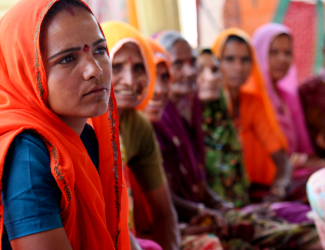
L’AWID propose la Boîte à outils « Où est l’argent pour les droits des femmes? » (« Where Is The Money for Women's Rights? », WITM) pour soutenir les individus et les organisations qui souhaitent mener leur propre recherche sur les tendances de financement en adaptant la méthodologie de recherche de l’AWID à une région, une question ou une population spécifique.
La Boîte à outils WITM de l’AWID est le produit de dix ans de recherches. La rméthologie WITM de l’AWID proposent une démonstration politique et pratique des ressources et des étapes qu’exige une solide recherche-action.
L’équipe 'Ressources des mouvements féministes' offre également un soutien technique et politique, avant et pendant le processus de recherche. Parcourez la boîte à outils et contactez fundher@awid.org si vous souhaitez plus de renseignements.
É claro que sim. As suas respostas serão eliminadas no final do processamento e da análise dos dados, e só serão usadas para fins de investigação. Os dados NUNCA serão divulgados fora da AWID e serão processados apenas por colaboradores e consultores da AWID que trabalham no projeto WITM connosco. Damos prioridade à sua privacidade e ao seu anonimato. Consulte a nossa política de privacidade detalhada aqui.
Binta Sarr fue una activista por la justicia social, económica, cultural y política, y una ingeniera hidráulica en Senegal. Después de 13 años en la administración pública, Binta dejó ese camino para trabajar con mujeres rurales y marginadas.
Fue de este compromiso que surgió la Association for the Advancement of Senegalese Women [Asociación para el Avance de las Mujeres Senegalesas] (APROFES, por sus siglas en inglés), un movimiento y organización de base que Binta fundó en 1987. Uno de sus principales enfoques fue la formación de dirigentes, en relación no solo con las actividades económicas, sino también con los derechos de las mujeres y el acceso a los puestos de toma de decisiones.
"Las poblaciones de base deben organizarse, movilizarse, asumir el control ciudadano y exigir la gobernabilidad democrática en todos los sectores del espacio público. La prioridad de los movimientos sociales debe ir más allá de la lucha contra la pobreza y debe centrarse en programas de desarrollo articulados y coherentes en consonancia con los principios de los derechos humanos, teniendo en cuenta al mismo tiempo sus necesidades y preocupaciones tanto a nivel nacional como subregional y desde una perspectiva de integración africana y mundial". - Binta Sarr
Partiendo de la convicción de Binta de que el cambio fundamental de la condición de la mujer requiere una transformación de las actitudes masculinas, APROFES adoptó un enfoque interdisciplinario, al utilizar la radio, los seminarios y el teatro popular, además de proporcionar una educación pública innovadora y brindar apoyo cultural a las acciones de sensibilización. Su compañía de teatro popular representó piezas originales sobre el sistema de castas en el Senegal, el alcoholismo y la violencia conyugal. Binta y su equipo también analizaron la conexión crucial entre la comunidad y el mundo en general.
"Para APROFES, se trata de estudiar y tener en cuenta las interacciones entre lo micro y lo macro, lo local y lo global y también, las diferentes facetas del desarrollo. Desde la esclavitud hasta la colonización, el neocolonialismo y la mercantilización del desarrollo humano, la mayor parte de los recursos de África y del Tercer Mundo (petróleo, oro, minerales y otros recursos naturales) están todavía bajo el control de carteles financieros y las otras multinacionales que dominan este mundo globalizado". - Binta Sarr
Binta fue una de las integrantes fundadoras de la sección femenina de la Asociación Cultural y Deportiva Magg Daan. Recibió distinciones del Gobernador Regional y del Ministro de Hidrología por su "devoción por la población rural".
Nacida en 1954 en Guiguineo, un pequeño pueblo rural, Binta falleció en septiembre de 2019.
"La pérdida es inconmensurable, el dolor es pesado y profundo, pero resistiremos para no llorar a Binta; no lloraremos a Binta, mantendremos la imagen de su amplia sonrisa en todas las circunstancias, para resistir e inspirarnos en ella, para mantener, consolidar y desarrollar su obra..." - Página de Facebook de Aprofes, 24 de septiembre de 2019.
"¡Adiós Binta! Creemos que tu inmenso legado será preservado." - Elimane FALL , presidente de ACS Magg-Daan
Cette œuvre est la collaboration photographique et illustrative réalisée par Siphumeze et Katia pendant le confinement. Elle se penche sur les récits de sexe et de plaisir des queers noirs, le bondage, le sexe protégé, les jouets, la santé mentale et le sexe et bien d'autres choses encore. Elle a été créée pour accompagner l'anthologie Touch.
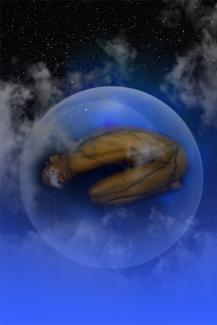
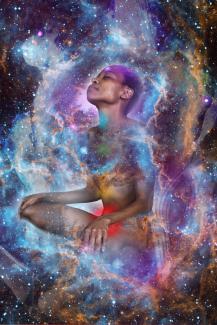
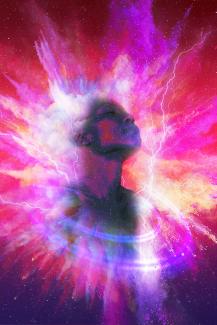
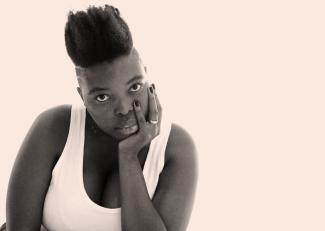
Siphumeze Khundayi est une créatrice d'art, photographe et animatrice qui s'intéresse aux moyens créatifs de réunir le dialogue et la pratique artistique en relation avec l'identité queer africaine.
Elle est directrice créative de HOLAAfrica!, un collectif panafricaniste féministe en ligne.
Ses travaux de performance en solo et collaboratifs ont été présentés dans un certain nombre de festivals et d'espaces théâtraux tels que le festival Ricca Ricca au Japon.
Elle a mis en scène deux productions nominées aux Naledi Awards en 2017 et 2018. Elle a aussi mis en scène un spectacle qui a remporté un prix Standard Bank Ovation en 2020.
En tant que photographe, elle a participé à une exposition de groupe intitulée Flowers of my Soul (Fleurs de mon âme) en Italie, organisée par le Misfit Project. Elle a produit trois publications pour HOLAAfrica et a été publiée dans le deuxième volume, pour lequel elle a fourni la couverture: As You Like des Gerald Kraak Anthologies.
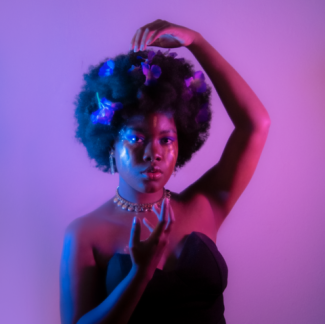
Katia Herrera est une artiste visuelle numérique de 21 ans originaire de la ville bruyante de Saint-Domingue, en République dominicaine. Bien que Herrera soit une introvertie autoproclamée, ses œuvres d'art sont remarquablement fortes dans un monde qui tente de faire taire les voix des personnes noires. Avec des titres comme Black Woman (Femme Noire), You Own the Moon (La Lune t’Appartient), Earth Goddess (Déesse de la Terre), Forever (Pour Toujours) et Universe Protector (Protecteur.rice de l’Univers), l'héritage de Herrera sera marqué par sa volonté passionnée de mettre en lumière l'endurance et la persévérance des Noir·e·s d'hier et d'aujourd'hui, afin de contrer le discours selon lequel la peau noire ne devrait être associée qu'à l'esclavage.
L'une de ses œuvres la plus belle et la plus vivante, Universe Protector, dépeint l'âme noire comme une entité divine pleine de force, de puissance et de grandeur. C’est dans sa jeunesse que son amour du graphisme a été stimulé grâce à l'art de ses parents et le Photoshop qu'ils avaient téléchargé sur leur ordinateur pour leur photographie professionnelle.
by Karina Ocampo
In a hidden corner of Chiapas, Mexico, women and sexual dissidents have come to organize our actions. (...)
< artwork by Sonia Carolina Madrigal Loyola
نهدف للوصول الى 2000 رد، وهذا تقريباً ضعف الردود التي جمعناها من استطلاع "أين المال" الأخير عام 2021.
Laurie Carlos était une comédienne, réalisatrice, danseuse, dramaturge et poétesse aux États-Unis. Artiste hors pair et visionnaire, c’est avec de puissants modes de communication qu’elle a su transmettre son art.
« Laurie entrait dans la pièce (n’importe quelle pièce/toutes les pièces) avec une perspicacité déroutante, un génie artistique, une rigueur incarnée, une féroce réalité – et une détermination à être libre... et à libérer les autres. Une faiseuse de magie. Une devineresse. Une métamorphe. Laurie m’a dit un jour qu’elle entrait dans le corps des gens pour trouver ce dont ils et elles avaient besoin. » - Sharon Bridgforth
Elle a employé plusieurs styles de performance alliant les gestes rythmiques au texte. Laurie encadrait les nouveaux·elles comédien·ne·s, performeur·euse·s et dramaturges, et a contribué à développer leur travail dans le cadre de la bourse Naked Stages pour les artistes émergent·e·s. Associée artistique au Penumbra Theatre, elle a participé à la sélection de scripts à produire, dans l’objectif « d’intégrer des voix plus féminines dans le théâtre ». Laurie faisait également partie des Urban Bush Women, une compagnie de danse contemporaine reconnue qui contait les histoires de femmes de la diaspora africaine.
Elle fit ses débuts à Broadway dans le rôle de Lady in Blue, en 1976, dans la production originale et primée du drame poétique For colored girls who have considered suicide / when the rainbow is enuf de Ntozake Shange. L’oeuvre de Laurie inclut White Chocolate, The Cooking Show et Organdy Falsetto.
« Je raconte les histoires à travers le mouvement – les danses intérieures qui se produisent spontanément, comme dans la vie – la musique et le texte. Si j’écris une ligne, ce n’est pas forcément une ligne qui sera dite ; ce peut être une ligne qui sera bougée. Une ligne à partir de laquelle de la musique est créée. Le geste devient phrase. Tant de ce que nous sommes en tant que femmes, en tant qu’êtres, tient aux gestes que nous exprimons les un·e·s par rapport aux autres, tout le temps, et particulièrement dans les moments d’émotion. Le geste devient une phrase, ou un état de fait. Si j’écris “quatre gestes” dans un script, cela ne signifie pas que je ne dis rien;cela veut dire que j’ai ouvert la voie à ce que quelque chose soit dit physiquement. » Laurie Carlos
Laurie est née et a grandi à New York, a travaillé et vécu à Minneapolis-Saint-Paul. Elle est décédée le 29 décembre 2016, à l’âge de 67 ans, après un combat contre le cancer du côlon.
« Je pense que c’était exactement l’intention de Laurie. De nous sauver. De la médiocrité. De l’ego. De la paresse. De la création artistique inaboutie. De la paralysie par la peur.
Laurie voulait nous aider à briller pleinement.
Dans notre expression artistique.
Dans nos vies. » - Sharon Bridgforth pour le Pillsbury House Theatre
« Quiconque connaissait Laurie aurait dit que c’était une personne singulière. Elle était sa propre personne. Elle était sa propre personne, sa propre artiste ; elle mettait en scène le monde tel qu’elle le connaissait avec un vrai style et une compréhension fine, et elle habitait son art. » – Lou Bellamy, Fondatrice de la Penumbra Theatre Company, pour le Star Tribune
Lire un hommage complet par Sharon Bridgforth (seulement en anglais)
Incluso en tiempos de crisis climática, los gobiernos continúan alentando el crecimiento de las industrias agrícolas a gran escala. Estas actividades envenenan la tierra, amenazan la biodiversidad y destruyen la producción de alimentos y los medios de vida locales. Mientras tanto, aunque las mujeres producen la mayoría de nuestros alimentos en el mundo, casi no poseen tierra.
¿Qué pasaría si percibiéramos la tierra y la Naturaleza no como una propiedad privada para ser explotada, sino como una totalidad con la cual aprender y coexistir en armonía? ¿Y si repararíamos nuestras relaciones con la tierra y adoptaríamos alternativas más sostenibles que nutran tanto al planeta como a sus comunidades?
Nous Sommes la Solution (Somos la Solución, NSS) es uno de los muchos movimientos liderados por mujeres que se esfuerzan por lograr este objetivo.
Esta es su historia.
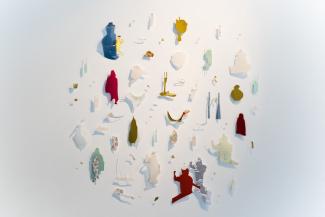
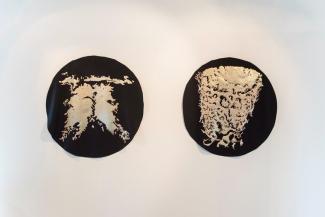
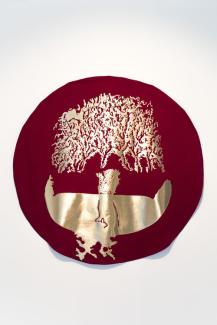
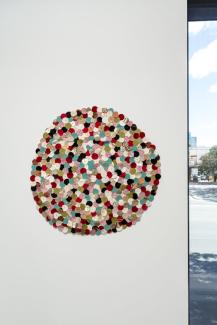
An exhibition by Nicole Barakat, embodying her reconnection with the diaspora of objects from her ancestral homelands in the South West Asia and North Africa (SWANA) region.
Barakat presents a collection of textile works as manifestations of her practice of engaging with displaced, and often stolen objects held within Western museum collections including the Louvre, British Museum and Nicholson Museum.
To by-pass the gatekeepers and breach the vitrines holding these ancestral objects, Barakat reclaims pre-colonial, non-linear, receptive forms of knowing that are often devalued and dismissed by colonial and patriarchal institutions - engaging with coffee cup divination, dream-work, intuitive listening and conversations with the objects themselves (source).
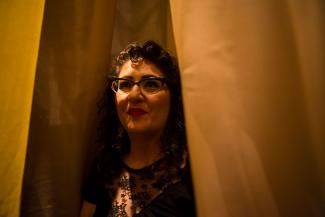
por Alejandra Laprea
Vivo en un país de lo imposible, donde no caen bombas pero padecemos una guerra. (...)
arte: «Entretejidas», Surmercé >AWID Community is an online social networking platform for specifically for AWID members. It’s a feminist space for connection, resistance and celebration. A space for critical feminist conversations, collective power and solidarity. It is also a space for post-event dialogues, navigating difficult political learnings and community care
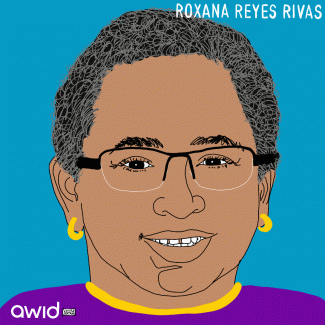
Roxana Reyes Rivas, philosopher, feminist, lesbian, poet, politician and LGBT and women’s rights activist from Costa Rica. Owner of a sharp pen and incisive humour, a laugh a minute. She was born in 1960 and raised in San Ramón of Alajuela, when it was a rural town, and her whole life she would break away from the mandates of what it meant to be a woman.
With El Reguero (Costa Rican lesbian group) she organized lesbian festivals for over a decade, fun-filled formative spaces to come together at a time when the Costa Rican government and society persecuted and criminalized the lesbian existence. For hundreds of women the lesbian festivals where the only place they could be themselves and come together with others like them.
Roxana would often say founding political parties was one of her hobbies. “It’s important for people to understand there are other ways to do politics, that many issues need to be solved collectively”. She was one of the founders of the New Feminist League and VAMOS, a human rights focused political party.
“The philosophical trade is meant to jab, to help people ask themselves questions. A philosopher who doesn’t irritate anyone is not doing her job”. For 30 years Roxana taught philosophy at several Costa Rican public universities. Through her guidance, generations of students reflected about the ethical dilemmas in science and technology.
Roxana’s favourite tool was humour, she created the Glowing Pumpkin award, an acknowledgement to ignorance that she would bestow upon public figures, through her social media channels, mocking their anti-rights expressions and statements.
An aggressive cancer took Roxana at the end of 2019, before she could publish a compilation of her poems, a departing gift from the creative mind of a feminist who always raised her voice against injustice.
Gender Impact Investing (GII) is now trending as a solution to gender inequality. Yet, as our report indicates, it is actually part of the problem. Public and private institutions marketing GII equate it with promotion of gender equality and with increased resources for women and girls.
Rather, GII is another expression of subjecting our lives and societies to the same financial logic that has shaped, and continues shaping, the profound inequalities in our world.
With this report, AWID offers the readers - feminists, gender justice advocates and stakeholders in gender impact investing - a critical analysis and substantiated evidence to understand GII, its narratives, and economic and political implications for feminist movements.