AWID es un organización feminista internacional de membresía, que brinda apoyo a los movimientos que trabajan para lograr la justicia de género y los derechos de las mujeres en todo el mundo.
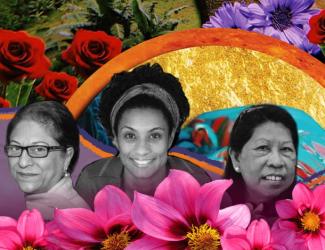
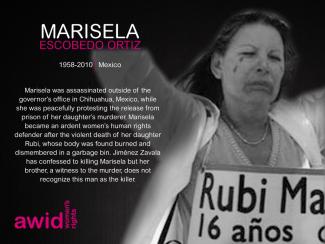
El Tributo de AWID es una exhibición de arte que honra a feministas, a activistas por los derechos de las mujeres y de la justicia social de todo el mundo que ya no están con nosotrxs.
En 2020, hacemos un cambio
El Tributo de este año cuenta y comparte las historias y narraciones de quienes crearon conjuntamente realidades feministas, ofrecieron visiones de alternativas a los sistemas y actores que nos oprimen, y propusieron nuevas formas de organizarnos, de movilizarnos, de luchar, de trabajar, de vivir y de aprender.
Se agregan a la galería 49 retratos nuevos de feministas y defensorxs de derechos humanos. Aunque muchxs feministas y defensorxs han fallecido debido a edad avanzada o enfermedad, muchísimxs han sido asesinadxs debido a su trabajo y por ser quienes eran.
Esta violencia creciente (de parte de Estados, empresas transnacionales, crimen organizado, sicarios no identificados, etc.) no se dirige solo a activistas individuales sino a nuestro trabajo común y a las realidades feministas.
Al compartir las historias de lxs activistas en este Tributo, mantenemos vivo su legado y nos inspiran para el trabajo futuro de nuestros movimientos.
Lors retratos de 2020 fueron diseñados por la ilustradora y animadora galardonada, Louisa Bertman.
En AWID nos gustaría agradecer a las familias y organizaciones que nos compartieron sus historias personales, y así haber contribuido a este memorial. Nos unimos a ellxs para continuar el extraordinario trabajo de estxs activistas y defensorxs, y en el esfuerzo para asegurarnos de que se logre justicia en los casos que permanecen en la impunidad
"Ellos trataron de enterrarnos pero no sabían que éramos semillas."‐ Proverbio Mexicano
Presentamos el Tributo por primera vez en 2012
Primero tomó forma como una exposición física de retratos y biografías de feministas y activistas que habían fallecido, en el 12º Foro Internacional de AWID, en Turquía. Ahora vive como una galería en línea, que actualizamos cada año.
Desde 2012 hemos presentado más de 467 feministas y defensorxs.
As part of AWID’s Feminist Realities journey, we invite you to explore our newly launched Feminist Film Club: a collection of short and feature films selected by feminist curators and storytellers from around the world, including Jess X. Snow (Asia/Pacific), Gabrielle Tesfaye (Africa/African Diaspora), and Esra Ozban (South West Asia, North Africa). Alejandra Laprea is curating the Latin & Central American program, which we’ll launch in September during AWID’s Crear, Résister, Transform: A Festival for Feminist Movements. In the meantime, look out for announcements on special films screenings and conversations with filmmakers!
Nos solicitan el nombre de la agrupación, organización o movimiento que está respondiendo la encuesta, así como nuestra información de contacto, ¿por qué?
Solicitamos estos datos para facilitar el análisis de las respuestas, para evitar duplicaciones y para contactar a su organización en caso de que no hayan podido completar el cuestionario o de que tengan dudas u otras preguntas. Puedes consultar más detalles acerca de cómo utilizamos la información personal que recolectamos a través de nuestro trabajo aquí.
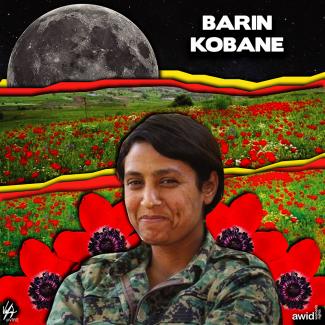
Barin was a member of the all-women fighting unit of the Kurdish People’s Protection Unit (YPG)
She was killed while on active duty.
Lebanese journalist Hifaa Zuaiter wrote: “Barin represents everything we have heard about the courage of the Kurdish female fighters, and her death is far more than the killing of a rival, or the result of a political or ethnic struggle. The horror of displaying her body only because she is a woman stems from the fact that she dared to threaten male hegemony by becoming a female fighter on a battlefield meant for men”.
An alternative future is possible, we just have to keep believing
The space created by this festival has been so necessary. Necessary for the souls of those who are seeking comfort during these bleakest of times. Necessary for those craving community in what feels like an increasingly isolating world and above all, necessary for those fighting against the very systems that have brought many of us to our knees, especially over the past two years.
“Crisis is not new to feminist and social movements, we have a long history of surviving in the face of oppression and building our communities and our own realities.”
Advocating for alternative visions and alternative realities to the one we are currently living in is a fundamental building block of the feminist agenda. So many amazing people are doing the work of exploring different ways for us to exist in this world. These alternatives are people-centred. They are equitable and just. These worlds are filled with love, tenderness and care. The visions outlined are almost too beautiful to imagine, yet we must force ourselves to imagine because this is the only way we can continue.
Over the past 10 months, I have been incredibly fortunate to be working with a feminist collective that is not just imagining an alternative reality but actively living it. We are inspired by the work of so many other feminist movements across the globe who have not let the white supremacist, capitalist patriarchy deter their visions. This collective has held me together when all I wanted to do was fall apart. Much like the story shared by Maria Bonita on Day 4 of the festival, the liberation I have found in feminist movements is far too great to only be experienced by me. This is something we need to share, that we need to shout from the rooftops as we invite others to join.
Day 4 of the festival brought with it a captivating conversation between Felogene Anumo, Dr Dilar Dirik, Nana Akosua Hanson and Vandana Shiva who encouraged festival attendees to believe that not only is an alternative future possible - but that it is indeed urgent. Feminists have been talking about alternative worlds for so many years and hearing about these from the panellists was not just eye-opening but also comforting. Comforting in the sense that it made me feel safe to know that there are indeed strong, global feminist networks working across international and national borders, seeking to decolonise the established frameworks of our current realities.
What does an alternative reality look like?
During the session, Dr Dirik highlighted the fact that belief, sacrifice and patience are most needed to abolish the oppressive systems we currently live in. Collaboration, partnership, creativity, solidarity and autonomy. These are key pillars to building a global feminist society and they should be embraced by all feminist movements around the world.
Practical examples of these realities can be found across the globe, including the Soulaliyate Women's Land-Use Rights Movement. Referring to the tribal women in Morocco who live on collective land, the Soulalyate Women’s Movement is the first grassroots nationwide mobilisation for land rights in Morocco. Whilst initially the movement was quite small, it grew into a nationwide agenda that challenged the gendered nature of laws regulating land in the country. In 2019, the group contributed to overhauling the national framework legislation on the management of community property through the adoption of three sets of laws guaranteeing the equality of women and men.
Knowing about these feminist movements who are doing the work to make alternative futures a reality is incredibly inspiring and just what is needed, especially as I struggle to grapple with the neverending stream of bad news that seems to flow uninterrupted.
“Capitalist patriarchy is like a cancer. It doesn’t know when to stop growing” - Dr Vandana Shiva
AWID has always been a movement inspired by the feminist realities that we can live in. Through their festivals, as well as feminist realities magazine and toolkit, we have been shown a different way of doing things. We can imagine a world where care is prioritised, where feminist economies and gender justice are the norm. Creating alternative futures is how we fight back, it’s how we resist the violence that is perpetrated against our bodies every day.
The Crear | Resister | Transform Festival has allowed me to feel so connected to a global community, many of whom I will never meet. Knowing that we are all working towards and claiming another world has lit a fire in my soul and I cannot wait to see what the next festival will have in store.
If you missed it, make sure to watch the: "She is on her way: Alternatives, feminisms and another world" session from Day 4 of the festival below. And remember, as Dr Shiva said so eloquently: “Women’s energies will continue life on earth. We will not be defeated.”
Will you be opening a call for proposals?
Yes! Please read the Call for Activities and apply here. Deadline is February 1st, 2024.
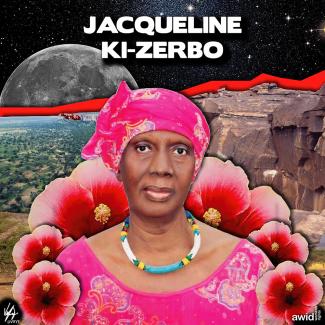
Jacqueline fue una feminista pionera malí-burkinesa, nacionalista y educadora.
Enseñó inglés en Senegal antes de ser convocada en 1961 como maestra de inglés en el Lycée Philippe Zinda Kaboré en Ouagadougou, Burkina Faso. Debido a su activismo, estuvo involucrada en el alzamiento popular del 3 de enero de 1966. Entre 1961 y 1966 fue responsable de la prensa del sindicato docente, Voces de lxs Maestrxs. Fue nombrada directora del Curso Normal para Niñas Jóvenes (ahora conocida como Escuela Secundaria Nelson Mandela), cargo que ocupó hasta 1974, dedicándose a la educación de las niñas y a la promoción de los derechos de las mujeres.
En 1984 recibió el Premio Paul G. Hoffmann por su destacado trabajo para el desarrollo nacional e internacional.
Carta de amor a los movimientos feministas #4
A mis queridxs feministas que viven con el VIH:
Llevamos juntxs más de 20 años; el amor y apoyo de ustedes me es muy entrañable. Es interesante pensar que ustedes también tienen una edad similar a la de AWID, que somos contemporáneas, tratando de descubrir cómo comprometernos y apoyar a la comunidad. A las madres del movimiento: sus liderazgos y orientación han sido inigualables. Pienso en Prudence Mabele, Kate Thompson, Darien Taylor, Patricia Pérez, Martha Tholanah, Deloris Dockery, Iris De La Cruise, Doris Peltier, Cecilia Chung y tantxs otras. Aunque no son perfectxs (ya que ningunx de nosotrxs lo es), ustedes siempre ponen a su comunidad en primer lugar y abogan por la inclusión de TODXS lxs mujeres que viven con el VIH en los espacios feministas.
Amo la forma en que me sostuvieron cuando nadie más había podido hacerlo, pero lo más importante es cómo nos sostuvimos mutuamente. Ustedes comprenden el estigma, la discriminación, la violencia y el dolor, y también comprenden la alegría, el amor y el perdón. Como feministas que vivimos con el VIH, somos gloriosas y poderosas en nuestra interseccionalidad. Entendemos que el feminismo incluye y que está liderado por comunidades — las de nuestras hermanas negras, marronas e indígenas, las comunidades trans y de género diverso, lxs trabajadorxs sexuales, lxs queer/lesbianas, lxs que han sido encarceladxs y lxs que usan drogas —, tal y como se establece en los principios de la MPPVS (mayor participación de las personas que viven con el VIH y el sida). Practicamos un feminismo incluyente. Hablamos de los temas difíciles y de las comunidades criminalizadas, porque como personas que vivimos con el VIH, nosotrxs mismxs estamos criminalizadxs.
Sería muy desconsiderada si no le enviara un cariño especial a lxs mujeres jóvenes que viven con el VIH, que son el latido del movimiento. Lxs veo, Kia Lebejia, Keren Dunaway, Liz Onyango, Faith Ona, Sara Thapa Maga, Doreen Moraa, Yana Panfilova y millones de otrxs increíbles activistas que viven con el VIH. Ustedes son la energía que nos seguirá impulsando y que nos permitirá ser consideradxs importantes en los movimientos feministas hegemónicos. Gracias por hacer avanzar cada vez más a nuestro movimiento para incluir SIEMPRE a las personas trans y de género diverso, para hablar de las relaciones entre el cambio climático y la salud y los derechos sexuales y reproductivos.
Lxs quiero, quiero, quiero mucho. Para bien o para mal, avancemos juntxs porque esta es nuestra comunidad, esta es mi comunidad.
¿Es necesario ser afiliadx de AWID para participar en el Foro?
No, no es necesario ser afiliadx de AWID para participar, pero lxs afiliadxs de AWID reciben una tarifa de inscripción con descuento, así como otros beneficios.
A living collection of resources to support feminist movements, policy-makers, and allies to resist fascisms, fundamentalisms, and anti-rights trends.
Snippet - WITM Who should - RU
КОМУ СТОИТ ПРОЙТИ ЭТОТ ОПРОС?
Опрос предназначен для групп, организаций и движений, работающих исключительно или главным образом по вопросам защиты прав женщин, ЛГБТКИ+, гендерной справедливости во всех контекстах, на всех уровнях и во всех регионах. Если одно из этих направлений является основным видом деятельности вашей группы, коллектива, сети или любого другого типа организации – независимо от того, зарегистрирована она или нет, недавно создана или существует уже давно, мы приглашаем вас принять участие в этом опросе.
* На данном этапе мы не ожидаем ответов от частных лиц или женских и феминистских фондов.
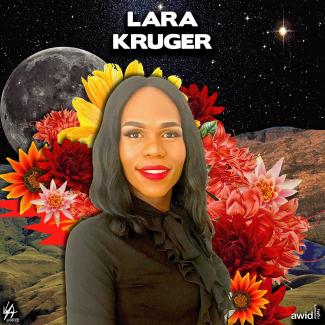
Lara était une DJ bien connue et appréciée de la Motsweding, une radio FM d’Afrique du Sud.
Lara a été l’un des premières animatrices ouvertement transgenre d’une radio grand public. Elle a œuvré sans relâche pour que lumière soit faite sur les questions LGBTI.
L’activisme de Lara a commencé très tôt, alors qu’elle revendiquait son droit de s’habiller et de se comporter afin de se sentir à l’aise auprès des membres de sa communauté qui ne comprenaient pas encore ce que signifiait être transgenre.
Lettre d'amour aux mouvements féministes #6
De l’amour pour un mouvement
Comment un mouvement nait-il ?
des fantômes nous expulsent d’une maison, d’une famille ou d’une nation
on arrive éreintées dans un espace (parfois une vraie adresse) mais surtout dans un état d’être
précédées par une étoile déchue
notre arrivée n’est peut-être pas accompagnée par la fatigue,
mais bien par la peur
notre arrivée n’est peut-être pas accompagnée par la peur
mais bien par la colère
de problèmes qui se répètent en boucle :
un coup au cœur (entendez douleur sentimentale)
un coup dans le dos (entendez trahison)
des disparitions forcées
des corps condamnés par le mariage, la défiguration et la fatigue chronique
mais quand on arrive, on se rassemble, on chuchote, on parle et on pleure.
C’est comme ça que naissent nos mouvements lorsque l’on arrive l’une à l’autre
Nous devenons des graines,
C’est comme ça que naissent nos mouvements lorsque l’on se sème l’une l’autre
Devenant des fleurs, parfois juste des épines, parfois des fruits,
nous sommes nos oasis mutuelles
où nous chantons pour le combat
où nous préparons des remèdes
où nous déposons le visage de l’être aimé, la forme de son visage, le son de son rire
le secret qui transforme des silences en un langage
les instructions détaillées des sorcières
notre mouvement est : pour nous toutes
lorsque nous arrivons en tant que graines dans l’objectif de fleurir.
¿Quieren juntar a distintas personas para fortalecer la resistencia? Esta metodología de talleres ofrece ejercicios grupales para incrementar el conocimiento y el poder colectivos, con opciones para adaptarlos a las distintas necesidades.