
Paula Ettelbrick
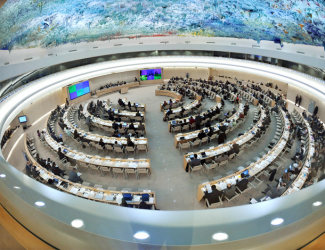
El Consejo de Derechos Humanos (CDH) es el cuerpo intergubernamental del sistema de las Naciones Unidas responsable de la promoción y protección de todos los derechos humanos en todo el mundo. El HRC se reúne en sesión ordinaria tres veces al año, en marzo, junio y septiembre. La La Oficina del Alto Comisionado para los Derechos Humanos (ACNUDH) es la secretaría del Consejo de Derechos Humanos.
Debate y aprueba resoluciones sobre cuestiones mundiales de derechos humanos y el estado de los derechos humanos en determinados países
Examina las denuncias de víctimas de violaciones a los derechos humanos o las de organizaciones activistas, quienes interponen estas denuncias representando a lxs víctimas.
Nombra a expertos independientes que ejecutarán los «Procedimientos Especiales» revisando y presentado informes sobre las violaciones a los derechos humanos desde una perspectiva temática o en relación a un país específico
Participa en discusiones con expertos y gobiernos respecto a cuestiones de derechos humanos.
A través del Examen Periódico Universal, cada cuatro años y medio, se evalúan los expedientes de derechos humanos de todos los Estados Miembro de las Naciones Unidas
Se está llevarando a cabo en Ginebra, Suiza del 30 de junio al 17 de julio de 2020.
AWID trabaja con socios feministas, progresistas y de derechos humanos para compartir conocimientos clave, convocar diálogos y eventos de la sociedad civil, e influir en las negociaciones y los resultados de la sesión.
AWID gratefully acknowledges the many people whose ideas, analysis and contributions have shaped the “Where is the Money for Feminist Organizing?” research and advocacy over the years.
First and foremost, our deepest thanks goes to the AWID members and activists who engaged in WITM consultations and piloted this survey with us, sharing so generously of their time, analysis and hearts.
Our appreciation to feminist movements, allies and feminist funds, including but not limited to: Black Feminist Fund, Pacific Feminist Fund, ASTRAEA Lesbian Foundation for Justice, FRIDA Young Feminist Fund, Purposeful, Kosovo Women’s Network, Human Rights Funders Network, Dalan Fund and PROSPERA International Network of Women's Funds - for your rigorous research on the state of resourcing, sharp analysis and continued advocacy for more and better funding and power for feminist and gender justice organizing in all contexts.
Yes! Please read the Call for Activities and apply here. Deadline is 15 January 2024
Groups, organizations and/or movements working specifically or primarily for women, girls, gender justice, LBTQI+ and allied people’s rights in all regions and at all levels, both newly formed and long-standing.
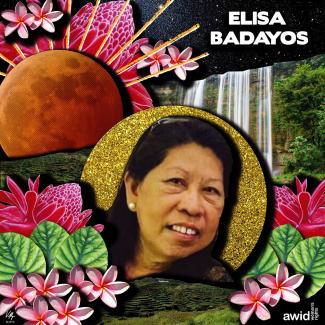
También era organizadora de comunidades urbanas empobrecidas de la Provincia de Cebú, y trabajaba con Desaparecidos, una organización de familiares de personas desaparecidas.
Elisa y dos de sus colegas fueron asesinadxs el 28 de noviembre de 2017 por dos hombres no identificados en Barangay San Ramón, en la ciudad de Bayawan de la Provincia de Negros Oriental, durante una misión que investigaba presuntas violaciones de derechos territoriales en la zona.
La sobreviven cuatro hijxs.
Ester Lopes est une danseuse et une écrivaine dont les recherches portent sur le corps, le genre, la race et les rapports de classe. Elle est professeure de Pilates et enseigne l’art. Ester est diplômée en théâtre contemporain – processus créatifs (à la FAINC) et en danse et conscience du corps (à l’USCS). Parmi ses spécialisations musicales figurent le chant populaire et les percussions. Elle a suivi une formation à Novos Brincantes avec Flaira Ferro, Mateus Prado et Antonio Meira à l’Institut Brincante en 2015 et 2016.
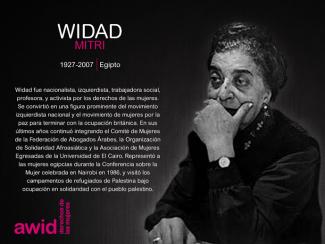
¡Sí! Reconocemos y valoramos las distintas razones por las que los feminismos en sus contextos respectivos no cuentan con financiamiento externo, ya sea por no reunir los requisitos para solicitar donaciones o para recibir dinero del exterior, o bien porque se financian con recursos generados de manera autónoma como estrategia política en sí misma. Deseamos saber de ustedes con independencia de su experiencia de financiamiento externo.
Sí, por favor. El mundo ha cambiado desde 2021, y te invitamos a proponer una actividad que refleje tus realidades y prioridades actuales.
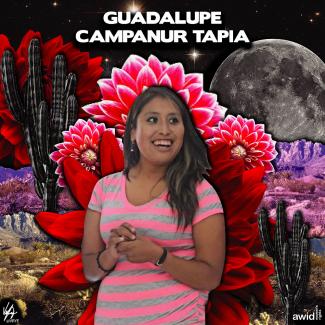
Guadalupe était une activiste environnementale impliquée dans la lutte contre le crime à Cherán, au Mexique.
En 2011, Guadalupe a aidé à renverser le gouvernement local. Elle participait à des patrouilles de sécurité locale, notamment dans les forêts municipales et faisait partie des dirigeant-e-s autochtones de Cherán qui ont appelé les gens à défendre leurs forêts contre l’abattage implacable et illégal. Son travail pour les aînés, les enfants, les travailleurs-euses a fait d'elle une icône dans sa communauté.
Elle a été assassinée à Chilchota, au Mexique, à environ 30 kilomètres au nord de Cherán, sa ville natale.
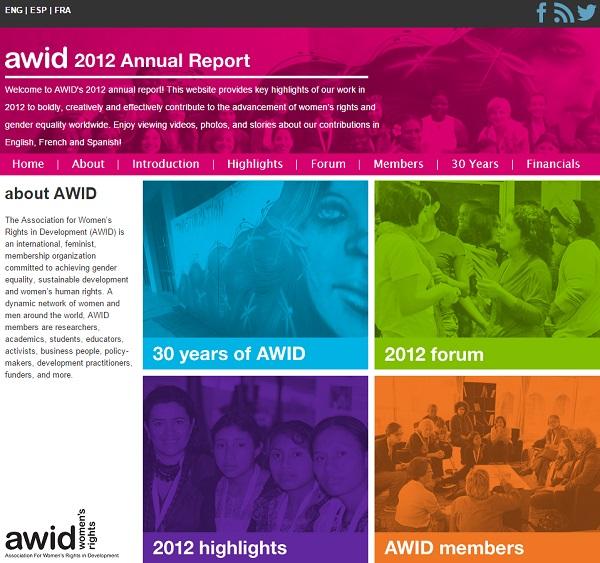
Our 2012 Annual Report provides key highlights of our work during the year to boldly, creatively and effectively contribute to the advancement of women’s rights and gender equality worldwide.
Enjoy viewing videos, photos, and stories about our contributions.
Visit our 2012 Annual Report site
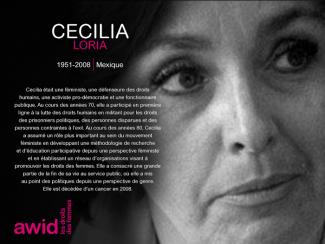
À l’heure actuelle, l’enquête est disponible sur KOBO en français, anglais, arabe, espagnol, portugais et russe. Vous pouvez choisir votre langue au début du questionnaire.
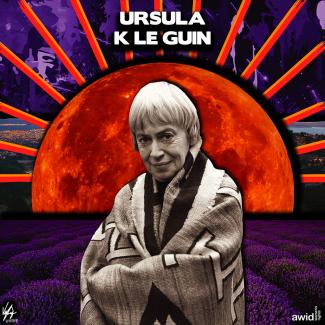
Ursula was an American novelist who worked mainly in the genres of fantasy and science fiction.
She found fame with The Left Hand Of Darkness, which imagines a future society where people are ambisexual – they have no fixed sex. It explores the effects of gender and sex in society, and was one of the first major feminist science fiction books. Ursula was inspiring in her subversive and original writing, and also for the themes of feminism and freedom she held so dearly.
In a 1983 address at Mills College in California, she told graduates: “Why should a free woman with a college education either fight Macho-man or serve him? Why should she live her life on his terms? I hope you live without the need to dominate, and without the need to be dominated.”
“Now might be a good time to rethink what a revolution can look like. Perhaps it doesn’t look like a march of angry, abled bodies in the streets. Perhaps it looks something more like the world standing still because all the bodies in it are exhausted—because care has to be prioritized before it’s too late.”
- Johanna Hedva (https://getwellsoon.labr.io/)
Hospitals are institutions, living sites of capitalism, and what gets played out when somebody is supposed to be resting is a microcosm of the larger system itself.
Institutions are set out to separate us from our care systems – we find ourselves isolated in structures that are rigidly hierarchical, and it often feels as if care is something done to us rather than given/taken as part of a conversation. Institutional care, because of its integration into capitalist demand, is silo-ed: one person is treating your leg and only your leg, another is treating your blood pressure, etc.
Photographer Mariam Mekiwi had to have surgery last month and documented the process. Her portraits of sanitized environments – neon white lights, rows after rows of repetitive structures – in a washed-out color palette reflect a place that was drained of life and movement. This was one of the ways Mariam kept her own spirit alive. It was a form of protest from within the confines of an institution she had to engage with.
The photos form a portrait of something incredibly vulnerable, because watching someone live through their own body’s breakdown is always a sacred reminder of our own fragility. It is also a reminder of the fragility of these care systems, which can be denied to us for a variety of reasons – from not having money to not being in a body that’s considered valuable enough, one that’s maybe too feminine, too queer or too brown.
Care experienced as disembodied and solitary, that is subject to revocation at any moment, doesn’t help us thrive. And it is very different from how human beings actually behave when they take care of each other. How different would our world look like if we committed to dismantling the current capitalist structures around our health? What would it look like if we radically reimagined it?